
In just 72 hours three unprecedented events occurred that show how artificial intelligence and autonomous systems have already begun to transform warfare at sea. The United States carried out for the first time an attack with its own naval drone, Ukraine executed the first fully robotic amphibious landing on record, and a U.S. company unveiled a new generation of hybrid aircraft capable of patrolling large maritime areas at lower cost and without crews.
During Infobae al Regreso, international analyst Andrei Serbin Pont reviewed these three episodes and argued that, although they took place in different contexts, they reflect the same trend: the growing integration of unmanned vehicles into missions that until a few years ago depended exclusively on soldiers and human crews.
The first U.S. attack with a naval drone
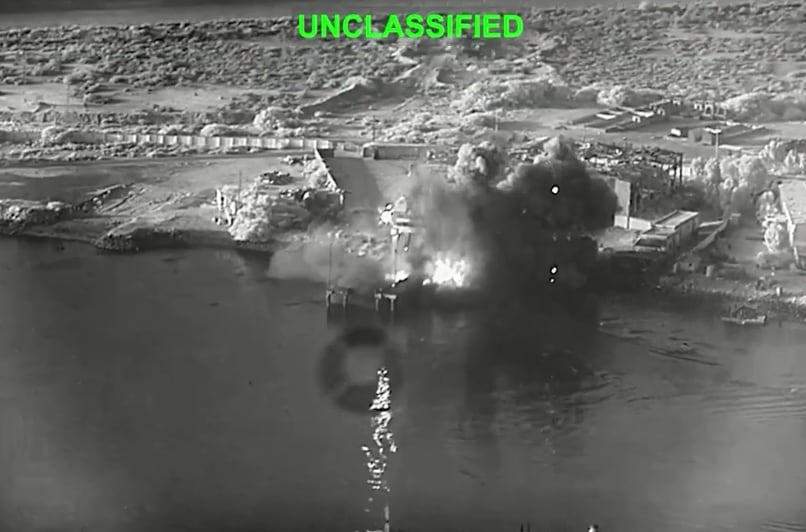
The first case involved Task Force 59, the U.S. Navy unit specialized in unmanned systems. According to Serbin Pont, that force carried out the first known U.S. attack using an autonomous vessel, a capability that until now had been mainly focused on surveillance, reconnaissance and logistical support.
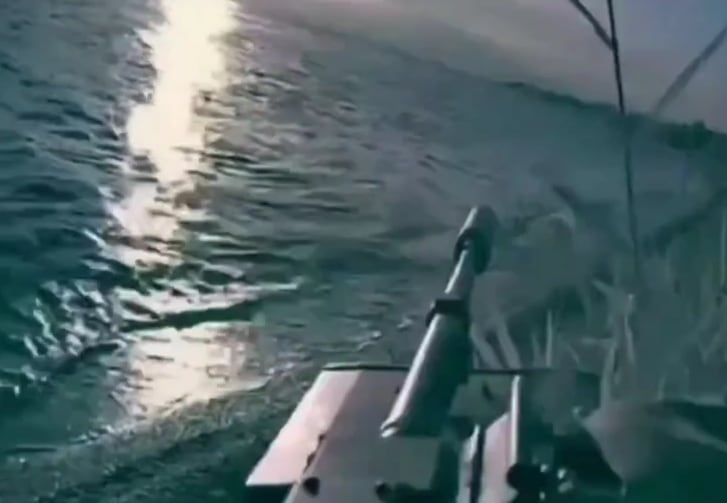
“It’s not a Ukrainian suicide drone like those we’ve seen operate in the Black Sea, but an American maritime drone that was used specifically to destroy installations,” the specialist explained. Although he described the vehicle as “a bomb boat,” he clarified that it is a multi-purpose platform that, for this mission, was configured to carry out a single-use attack, similar to the concept of a kamikaze system.
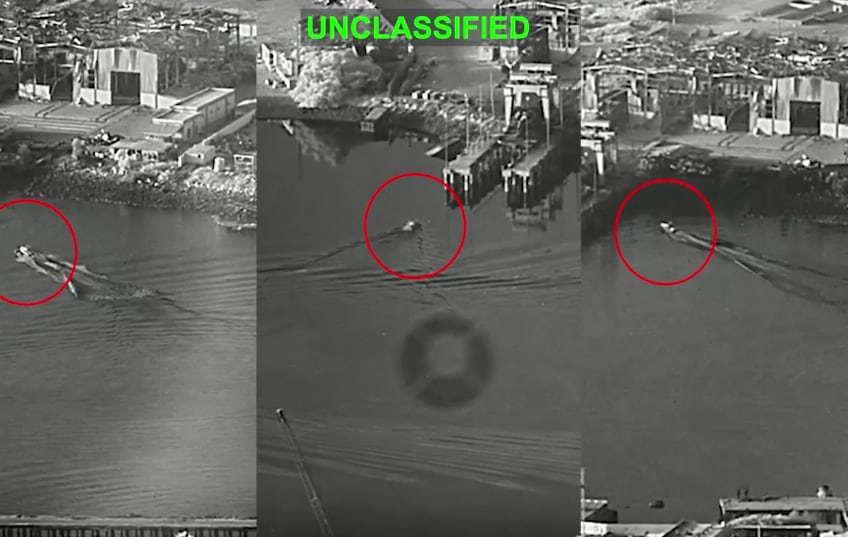
The analyst recalled that weeks earlier the same vessel had been involved in another unprecedented incident when it rescued the crew of an Apache helicopter shot down near the Strait of Hormuz without exposing other servicemembers. The ability to employ the same vehicle for rescue, patrol or attack missions, he explained, demonstrates the technological leap these platforms are achieving.
Beyond its offensive capability, Serbin Pont warned that these developments also pose new challenges for coastal defense. As naval drones take on sizes similar to recreational or fishing boats, distinguishing a threat from a civilian vessel becomes increasingly complex. “What are you going to do? Monitor every small boat that appears near the coast?” he asked, describing one of the dilemmas navies will face in the coming years.
During the discussion, Gonzalo Aziz emphasized another consequence of this technological evolution: the reduction of risk for combatants. “If war is inevitable and you have to choose between sending five people or sending an unmanned boat, even within the horror of war there is an enormous reduction in human cost,” said the host, a reflection that permeated much of the debate.
The first fully robotic amphibious landing
The second episode occurred on the front between Ukraine and Russia. There, the 123rd Territorial Defense Brigade of Ukraine carried out an operation that Serbin Pont described as the first fully robotic amphibious landing on record.
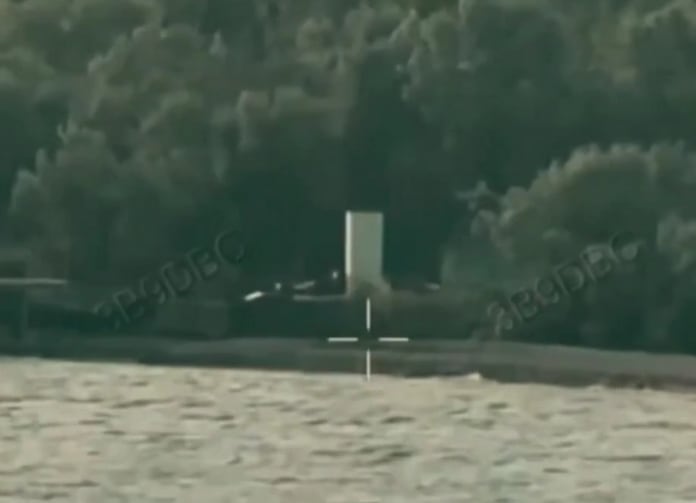
The maneuver involved using a maritime drone to transport a ground vehicle armed with a machine gun to the shore. Once ashore, the robot began operating in an area controlled by Russian forces carrying out harassment and reconnaissance tasks, with no soldier directly participating in the landing.
For the specialist, the value of the operation lay less in its tactical impact than in the concept it tested. “The novelty is not that a robot fights, but that a robot landed another robot to begin an amphibious operation,” he explained. While he noted the action did not change the course of the war, he considered it a relevant precedent because it demonstrates that this type of maneuver can already be executed with fully unmanned systems.
Serbin Pont also pointed out that military innovation is advancing at an unprecedented speed today. Technologies developed by one country are quickly observed, adapted and adopted by others, which accelerates the evolution of combat systems. In that sense, he said many of the solutions Ukraine began implementing in the Black Sea are already being studied by various armed forces around the world.
The new generation of hybrid aircraft
The third development analyzed was linked to hybrid vehicles designed by the U.S. company Squire, a platform that combines features of a boat and an airplane to travel very close to the water surface using the so-called “ground effect,” an aerodynamic principle known since the Cold War that is regaining prominence thanks to automation and artificial intelligence.
According to Serbin Pont, these aircraft can carry out maritime surveillance, patrol, search and rescue, or light transport missions at significantly lower cost than a helicopter or conventional airplane.
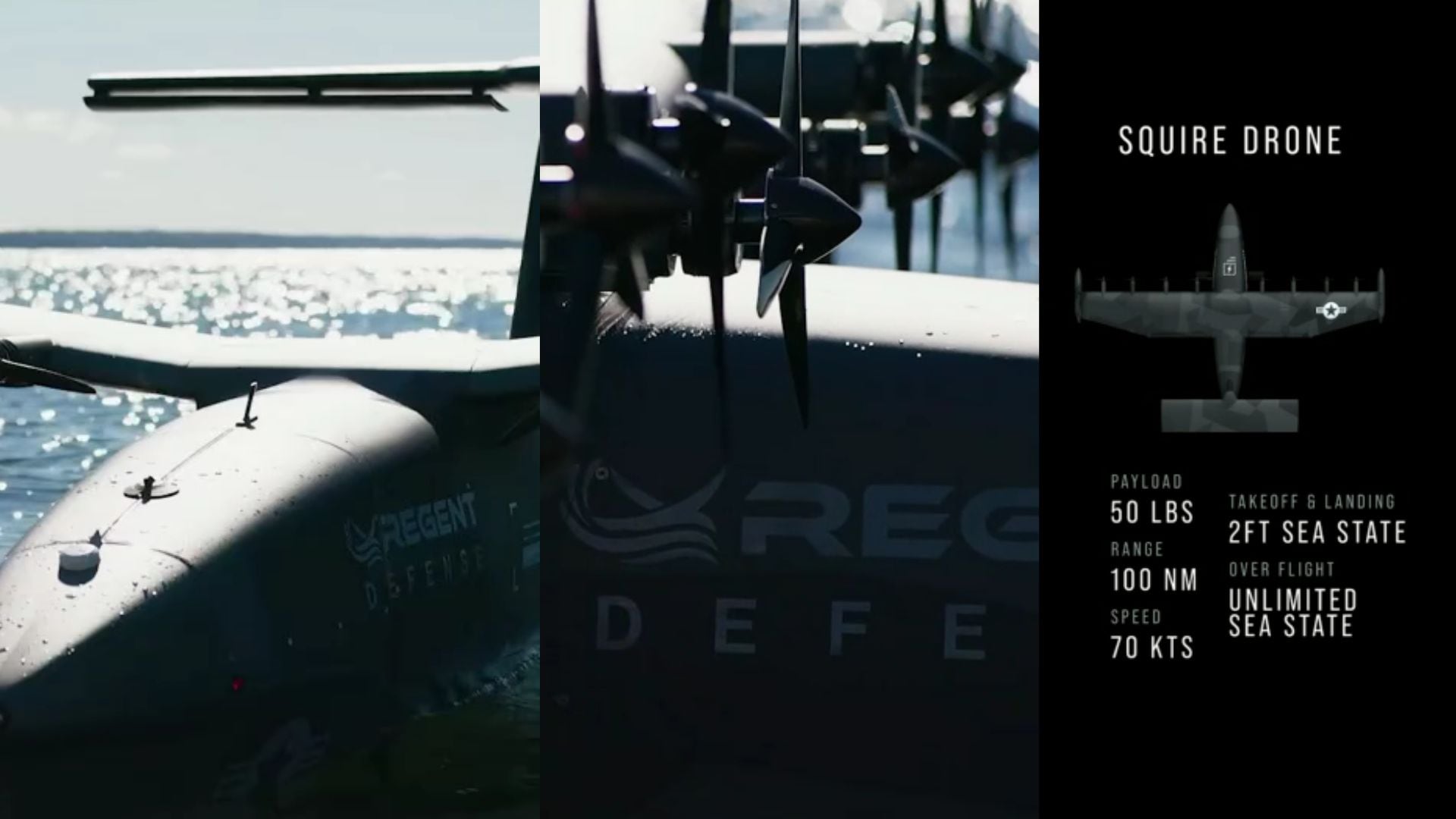
“They allow for a relatively inexpensive, easy-to-deploy platform that can perform many tasks for which we still rely on much more expensive helicopters or aircraft that also require crews,” the specialist said, describing the system’s operational advantages.
Aziz added that this type of solution could be particularly useful for monitoring maritime traffic in sensitive areas, such as the Pacific or the Caribbean, where the United States concentrates part of its efforts to combat drug trafficking. In that context, Serbin Pont estimated the cost of these platforms would be around one million dollars, a figure he considered low by U.S. military budget standards and competitive compared with other alternatives currently in development.
A paradigm shift that has already begun
For Serbin Pont, the three episodes should not be seen as isolated incidents but as manifestations of a deeper transformation. Automation is no longer limited to assisting armed forces; it is beginning to replace people in tasks such as reconnaissance, rescue, patrol and even combat, changing the way states plan and conduct military operations.
In that context, the analyst argued that democracies tend to invest increasingly in technologies that reduce their own casualties and summed up that logic with a definition: “In democracies, lives are more expensive than in non-democracies.” In his view, that reality explains much of the drive behind artificial intelligence, robotics and unmanned vehicles in major defense programs today.
Beyond the specific scenarios, the first U.S. attack with a naval drone, Ukraine’s entirely robotic landing, and the emergence of new hybrid platforms for maritime operations illustrate the same phenomenon: machines are no longer just complementing soldiers but are beginning to take their place in some of the most complex missions. Experts say this transition is already underway and promises to redefine warfare in the coming decades.
—
Infobae accompanies you every day on YouTube with interviews, analysis and the most important news, presented in a close and dynamic format.
• From 7 to 9: Infobae al Amanecer: Nacho Giron, Luciana Rubinska and Belén Escobar.
• From 9 to 12: Infobae a las Nueve: Gonzalo Sánchez, Tatiana Schapiro, Ramón Indart and Cecilia Boufflet.
• From 12 to 3 PM: Infobae al Mediodia: Maru Duffard, Andrei Serbin Pont, Jimena Grandinetti, Fede Mayol and Facundo Kablan.
• From 3 to 6 PM: Infobae a la Tarde: Manu Jove, Maia Jastreblansky and Paula Guardia Bourdin; Marcos Shaw, Lara López Calvo and Tomás Trapé rotate during the week.
• From 6 to 9 PM: Infobae al Regreso: Gonzalo Aziz, Diego Iglesias, Malena de los Ríos and Matías Barbería; Gustavo Lazzari, Martín Tetaz and Mica Mendelevich rotate during the week
Follow us on our YouTube channel @infobae.