U.S. President Donald Trump said American forces control the Strait of Hormuz, defended the military offensive against Iran and confirmed he will maintain a maritime blockade on the Islamic Republic. He added that the campaign destroyed a large portion of Iran’s military capabilities and reiterated that his administration will prevent Tehran from developing a nuclear weapon.
In a Monday night interview with Newsmax, Trump justified the U.S. attacks, saying, “We are attacking Iran right now, and they deserve it because they will not have a nuclear weapon, that we can assure with total certainty.” He emphasized that stopping Iran from acquiring such weapons is a primary objective of his administration.
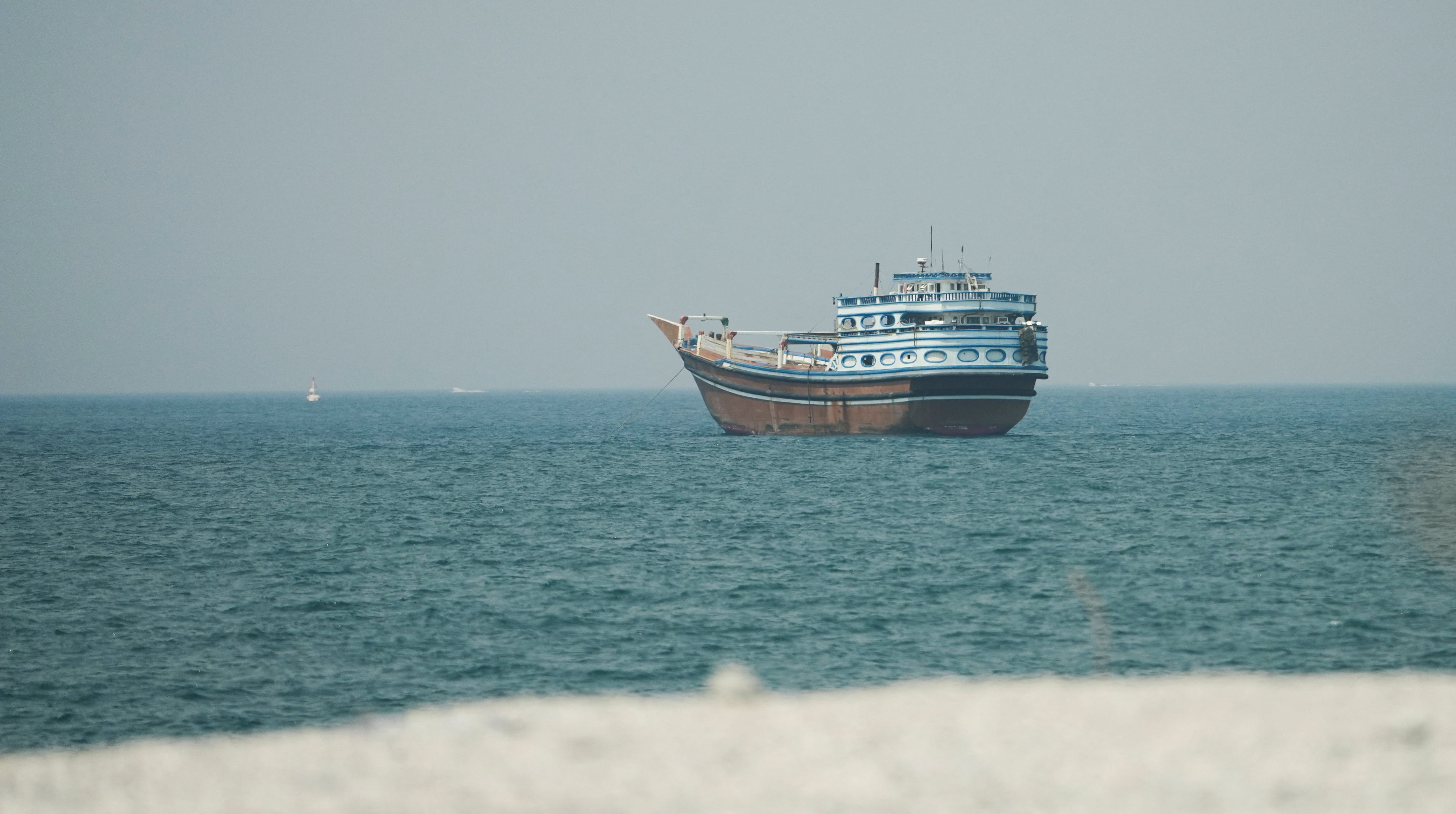
When asked about the situation in the Strait of Hormuz, a key route for global oil and gas shipments, the president said U.S. forces maintain control of the area. “We control it. They can cause problems. They can do things that are not right. But we control it,” he said.
Trump also attributed substantial damage to Iran’s defensive infrastructure to the military campaign. “We have destroyed most of their radar, much of their ammunition, many of their weapon launchers. We have destroyed drones. We have destroyed missiles,” he said, outlining the reach of the operations.
In that context, he confirmed his administration will reintroduce a maritime blockade against Iran. “The blockade was a tremendous success. It was in place for two months and no one could pass. We are putting that in place. We will let everyone through, except if you do business with Iran,” he stated during the interview.
Trump also said the offensive drastically reduced Iran’s military power. “Their army had 159 ships; all 159 ships are under the sea. They had 200 aircraft; their planes are gone. Their radars disappeared, their air defenses disappeared and their weapons manufacturing capacity disappeared by approximately 84%,” he claimed.
The president added that “they are a very different country than they were four months ago” and said, “in four months we largely took them back to the Stone Age.” He acknowledged, however, that Iran retains some military capabilities. “They still have some missiles and a small capability, but largely they were sent back to a different period,” he noted.
In another part of his remarks, Trump addressed Iran’s role in the Middle East and said the situation changed after the U.S. military action. “Iran was the bully of the Middle East and they were not going to intimidate me,” he concluded.
The president’s comments come amid growing confrontation between Washington and Tehran, marked by new U.S. measures and increased military tensions in the region. Trump reiterated that his administration will maintain pressure on the Islamic Republic until an agreement is achieved that serves U.S. interests, and defended the combined use of economic sanctions and military actions as part of that strategy.
He also insisted that a central aim of his government is to prevent Iran from retaining or developing capabilities that, according to Washington, pose a threat to the United States and its allies. In that context, he confirmed the reinstatement of the naval blockade against Iran and said the United States will assume the role of “guardian of the Strait of Hormuz,” one of the most important maritime routes for international oil and gas trade.

He also proposed that countries using that sea route should contribute to security costs. He said Washington would seek compensation equal to 20% of the value of cargo carried by ships transiting the strait, arguing that the United States should not bear alone the cost of protecting navigation in that strategic area.
The announcement followed Iran’s statement that it had closed the Strait of Hormuz “until further notice” after recent U.S. attacks, a decision that increased uncertainty about international energy trade and the global supply of oil and gas.