Autor: Manuel

  • Andrej Babiš: Pokud toto není střet zájmů, pak už nic není střet zájmů

    Andrej Babiš: Pokud toto není střet zájmů, pak už nic není střet zájmů

    Premiér Andrej Babiš [ANO] se setkal 17. března ve Strakově akademii s předsedou vlády spolkové země Sasko-Anhaltsko Svenem Schulzem [CDU]. Probírali spolu prý hlavně energetickou spolupráci, autoprůmysl a ETS1.

    Tím to ale nekončí. Ve stejný den na svých stránkách publikovala vláda spolkové země Sasko-Anhaltsko zprávu o tom, že skupina Agrofert investuje dalších 120 milionů eur [cca 2,9 mld. Kč] v německém městě Wittenberg, zhruba 100 kilometrů jihozápadně od Berlína.

    „Ministerský předseda Sven Schulze úspěšně propaguje Sasko-Anhaltsko jako lokalitu chemického průmyslu v Praze,“ stojí v tiskové zprávě spolkové země.

    Ta informuje o tom, že předseda spolkové vlády se během jednodenní delegace v Praze setkal i s vedením českého průmyslového koncernu Agrofert. A s ním jednal o nových investicích Agrofertu do jeho výrobního závodu ve městě Wittenberg. Právě v něm totiž působí společnost SKW Stickstoffwerke Piesteritz, což je největší německý výrobce čpavku a močoviny a specialista na dusíkatá hnojiva a chemické produkty. Firma patří Agrofertu.

    „Na jednání skupina Agrofert ministerskému předsedovi potvrdila své komplexní investiční plány pro její závody ve Wittenbergu,“ uvádí zpráva spolkové země.

    Podle těchto plánů už letos SKW Stickstoffwerke Piesteritz ve svém závodu ve Wittenbergu proinvestuje 50 milionů eur [cca 1,2 mld. Kč] do vybraných projektů. Dalších 70 milionů eur [cca 1,7 mld. Kč] proinvestuje výrobce pekařských výrobků Lieken. I ten je součástí skupiny Agrofert. Rozšíří výrobní kapacity ve svém závodě v Lutherstadtu Wittenberg.

    Nyní oznámené investice podtrhují důvěru společnosti v její lokalitu v Sasku-Anhaltsku,“ uvádí ve zprávě ministerský předseda Sven Schulze.

    Co říká premiér a Úřad vlády ČR

    Ve stejný den kolem 16:00 informuje o schůzce s ministerským předsedou spolkové země Sasko-Anhaltsko na svém profilu na síti X Andrej Babiš.

    „Bylo mi ctí dnes přivítat předsedu vlády spolkové země Sasko-Anhaltsko Svena Schulze. Přestože Česká republika nemá se Saskem-Anhaltskem společnou hranici, pojí nás velmi blízké vztahy a historicky výborná spolupráce,“ uvedl premiér Babiš.

    Komentář: Andrej Babiš splnil svou povinnost, ale svůj stín nepřekročil

    A pokračuje: „Hovořili jsme o energetické spolupráci, hlavně o mém projektu energetické dálnice mezi Českou republikou a Německem, ale také o automobilovém průmyslu a o tom, jaké problémy tomuto odvětví způsobuje současný systém ETS 1. Jsem rád, že se s panem ministerským předsedou shodujeme, že současný stav je neudržitelný.“

    V závěru premiér Andrej Babiš poděkuje německému kolegovi za návštěvu „u nás ve Strakově akademii“. Jeho příspěvek následně sdílí profil X Úřadu vlády ČR.

    Koncern Agrofert v Německu

    Koncern Agrofert je akcionářem německé společnosti SKW Stickstoffwerke Piesteritz. To je, jak už bylo řečeno, jeden z největších německých závodů na výrobu hnojiv. Jde o klíčovou společnosti v agrochemickém parku Piesteritz v Lutherstadtu Wittenberg.

    Tento zemědělsko-chemický park Piesteritz patří k největším německým závodům na chemickou výrobu. Přímo zaměstnává zhruba 2 500 lidí a závisí na něm přibližně deset tisíc pracovních míst v regionu. Skupina Agrofert do něj od roku 2005 investovala více než 1,6 miliardy eur [cca 39,2 mld. Kč].

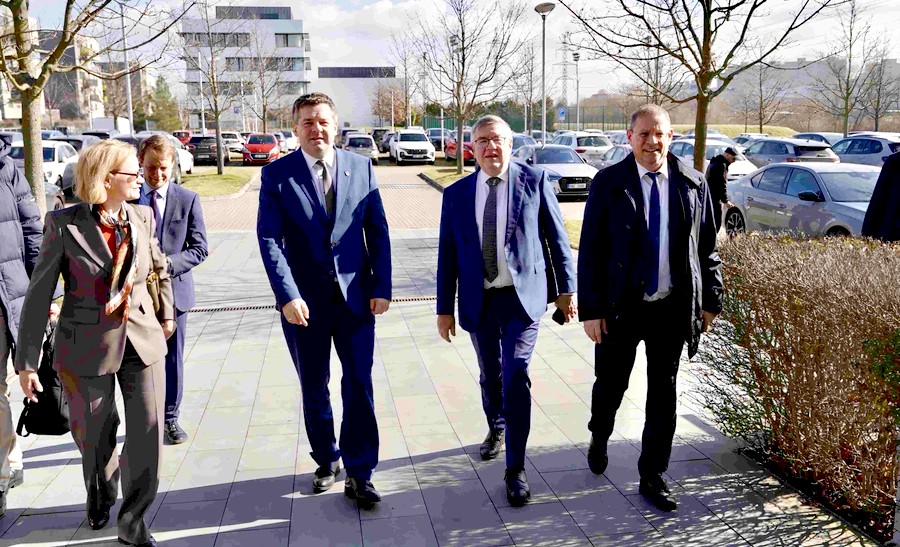
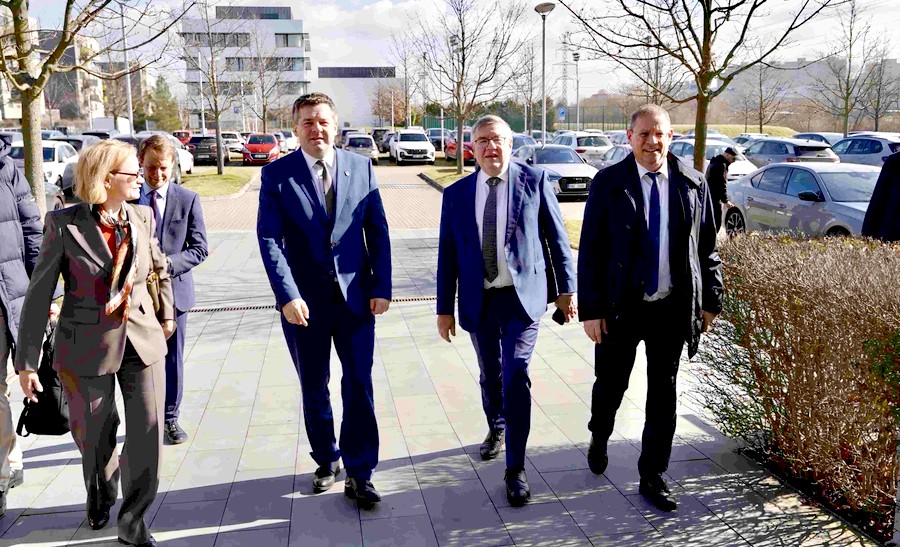
    Zleva: Ministerský předseda Saska-Anhaltska Sven Schulze, generální ředitel Agrofertu Petr Cingr a generální ředitel SKW Piesteritz Carsten Franzke 17.3. vstupují do sídla Agrofertu na pražském Chodově. / Foto: Landesportal Sachsen-Anhalt

    Chemický průmysl přitom patří ke klíčovým průmyslovým odvětvím Saska-Anhaltska. Generuje zhruba pětinu příjmů země z výroby a zaměstnává tisíce lidí. A i proto si žádá, jak vysvětluje předseda spolkové vlády, speciální zacházení.

    „Společnosti jako SKW Stickstoffwerke Piesteritz zajišťují v našem státě přidanou hodnotu, inovace a mnoho pracovních míst. Proto se na státní, federální i evropské úrovni zavazujeme k tomu, aby energeticky náročná odvětví opět měla spolehlivé a konkurenceschopné rámcové podmínky,“ uvedl Sven Schulze.

    Upřesnil dále i to, o jaké podmínky šlo v posledních měsících. Zahrnovaly zrušení poplatků za skladování plynu a cenové úlevy pro chemické parky u průmyslové elektřiny.

    –DNA–

  • Íránské rakety vyřadily 1/5 světového LNG z trhu. Ceny se utrhly ze řetězu

    Íránské rakety vyřadily 1/5 světového LNG z trhu. Ceny se utrhly ze řetězu

    Blízký východ se ocitl na hraně totální energetické války. Poté, kdy Izrael zasáhl íránské plynové kapacity, odpověděl Teherán raketovým útokem na katarský Ras Laffan. Ten je nejdůležitějším uzlem pro zkapalněný zemní plyn, LNG, na světě.

    Společně s faktickou blokádou Hormuzského průlivu, kde uvízla polovina globální flotily tankerů, tak čelí svět nejen nedostatku ropy, ale i bezprecedentnímu nedostatku plynu. Průvodním jevem jsou samozřejmě rekordně vysoké ceny.

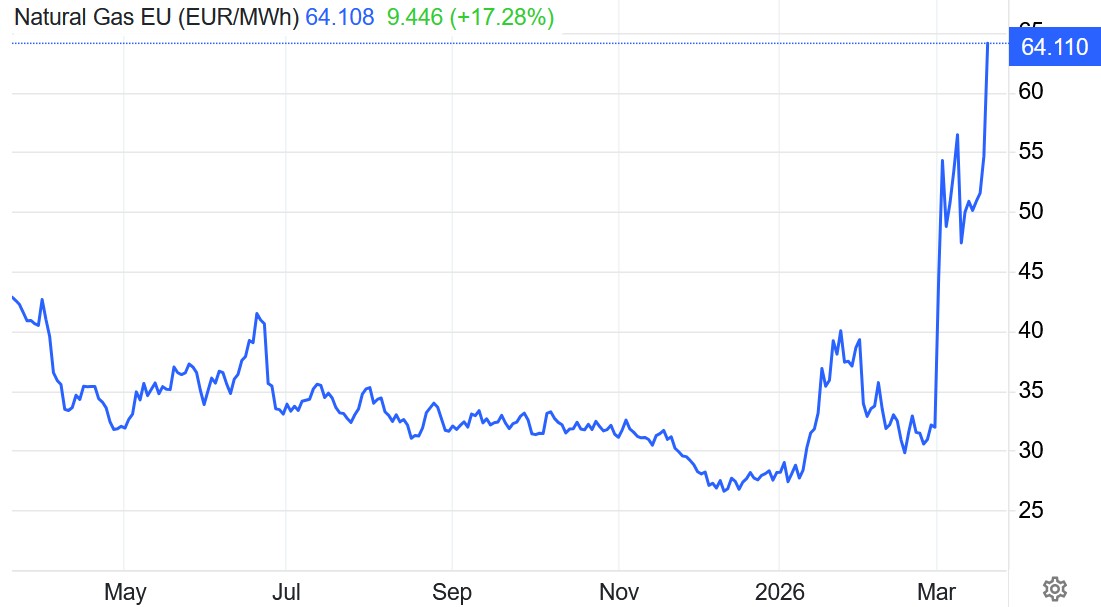
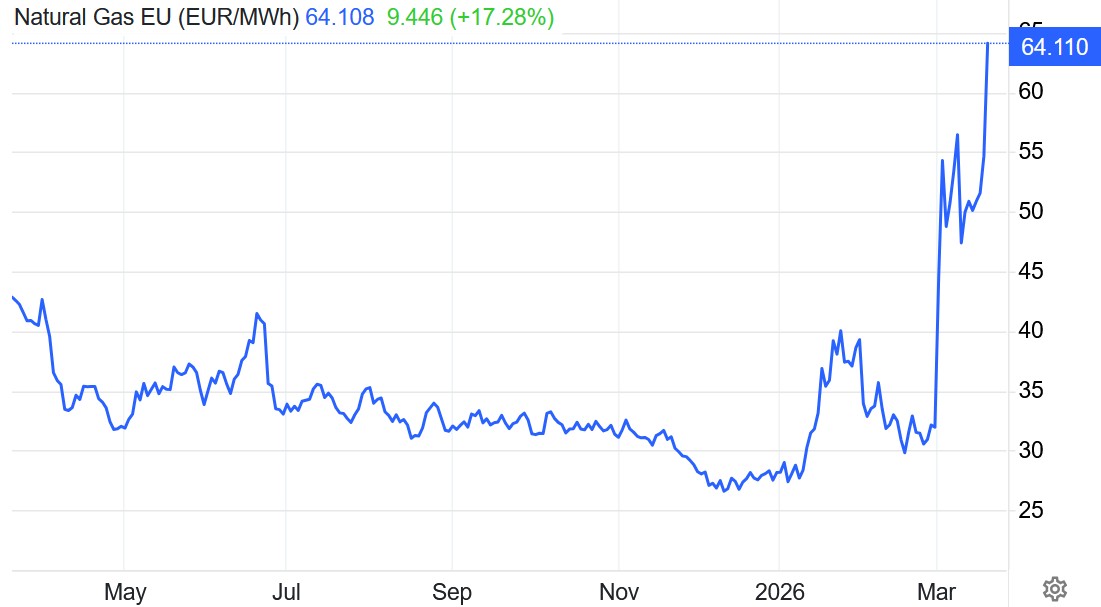
    Evropské futures na plyn během dneška vyskočily až o 35 procent. Dostaly se tak na více než dvojnásobek úrovní před začátkem konfliktu. A vyšší ceny plynu už se promítly i do Spojených států, kde futures vzrostly až o 6,5 procenta. Cena ropy Brent se zároveň znovu vyšplhala až k hranici 117 dolarů za barel. Odpoledne její cena klesla na cca 107 dolarů za barel. Ještě v polovině února se ceny ropy držely i pod 70 dolary za barel.

    Íránský raketový útok

    Středeční íránský raketový útok na katarské průmyslové město Ras Laffan způsobil podle prohlášení společnosti QatarEnergy rozsáhlé škody a masivní požáry. Ačkoliv se hasičům podařilo plameny zkrotit. Provoz klíčových zařízení na zkapalňování plynu se zastavil. Katar, který zajišťuje zhruba 20 procent světového exportu LNG, je tak nyní vyřazen ze hry. Což se děje ve chvíli, kdy jsou globální zásoby na minimu.

    Slovensko bere ropu ze zásob i čelí vývozu paliv ze země

    Tato eskalace je přímou odvetou Íránu za izraelský nálet na obří plynové pole South Pars. Teherán naplnil svá varování, že energetická infrastruktura v Saúdské Arábii, SAE a Kataru se stala nyní jeho legitimními cíli. V Abú Zabí byly po dopadu trosek z přerušeného útoku odstaveny plynárenské provozy Habshan. V Kuvajtu zasáhly drony dvě rafinerie. Saúdská Arábie vyhodnocovala škody po pádu dronu u rafinerie poblíž Rudého moře.

    Americký prezident Donald Trump, který volá po deeskalaci konfliktu, zároveň pohrozil, že pokud Írán v útocích na Katar nepoleví, USA „totálně zničí“ celý íránský plynárenský sektor South Pars.

    Co to znamená pro trhy? Cenový šok!

    Cena plynu na evropském uzlu TTF okamžitě po útoku vyskočila na svá tříletá maxima. Hrozí hospodářská recese. Analytici varují před „destrukcí poptávky“. Pokud blokáda a výpadky v Kataru potrvají týdny, průmyslové podniky zavřou provozy.

    Vývoj ceny plynu na TTF / 13:30 / 19.3.

    [Zdroj: Tradingeconomics.com]

    A ani zapojení čínských nebo indických lodí, které se pokoušejí o průjezd s vojenským doprovodem, situaci nevyřeší. Je jich příliš malé množství.

    Katar přitom už dříve kvůli válce s Íránem pozastavil vývoz LNG. Nové zásahy Íránu ale zvyšují riziko dlouhodobějšího výpadku dodávek. Katar patří mezi hlavní světové exportéry a delší odstávka jeho zařízení by zasáhla nejen Asii, ale nepřímo i Evropu a další regiony.

    Past v Hormuzském průlivu trvá

    Fyzické poškození terminálů je však jen špičkou ledovce. Skutečnou katastrofu představuje „matematika flotily“. V Perském zálivu je aktuálně uvězněno minimálně 20 LNG tankerů. To činí přibližně polovinu celosvětově dostupné volné kapacity.

    Komentář: Obrana svobody je víc než její zajištění. Obnovuje v ní víru

    A stále trvá ten stav, kdy kvůli íránské blokádě Hormuzského průlivu nemají lodě, jak vyplout k zákazníkům v Asii a Evropě. Avšak na rozdíl od ropy pro zemní plyn neexistují žádné strategické rezervy. Jakmile se zastaví odvoz loděmi a naplní se lokální zásobníky, musí těžaři uzavřít vrty.

    Petr Novotný, investiční analytik a spolupracovník redakce FinTag

  • Andrej Babiš: Pokud toto není střet zájmů, pak už nic není střet zájmů

    Andrej Babiš: Pokud toto není střet zájmů, pak už nic není střet zájmů

    Premiér Andrej Babiš [ANO] se setkal 17. března ve Strakově akademii s předsedou vlády spolkové země Sasko-Anhaltsko Svenem Schulzem [CDU]. Probírali spolu prý hlavně energetickou spolupráci, autoprůmysl a ETS1.

    Tím to ale nekončí. Ve stejný den na svých stránkách publikovala vláda spolkové země Sasko-Anhaltsko zprávu o tom, že skupina Agrofert investuje dalších 120 milionů eur [cca 2,9 mld. Kč] v německém městě Wittenberg, zhruba 100 kilometrů jihozápadně od Berlína.

    „Ministerský předseda Sven Schulze úspěšně propaguje Sasko-Anhaltsko jako lokalitu chemického průmyslu v Praze,“ stojí v tiskové zprávě spolkové země.

    Ta informuje o tom, že předseda spolkové vlády se během jednodenní delegace v Praze setkal i s vedením českého průmyslového koncernu Agrofert. A s ním jednal o nových investicích Agrofertu do jeho výrobního závodu ve městě Wittenberg. Právě v něm totiž působí společnost SKW Stickstoffwerke Piesteritz, což je největší německý výrobce čpavku a močoviny a specialista na dusíkatá hnojiva a chemické produkty. Firma patří Agrofertu.

    „Na jednání skupina Agrofert ministerskému předsedovi potvrdila své komplexní investiční plány pro její závody ve Wittenbergu,“ uvádí zpráva spolkové země.

    Podle těchto plánů už letos SKW Stickstoffwerke Piesteritz ve svém závodu ve Wittenbergu proinvestuje 50 milionů eur [cca 1,2 mld. Kč] do vybraných projektů. Dalších 70 milionů eur [cca 1,7 mld. Kč] proinvestuje výrobce pekařských výrobků Lieken. I ten je součástí skupiny Agrofert. Rozšíří výrobní kapacity ve svém závodě v Lutherstadtu Wittenberg.

    Nyní oznámené investice podtrhují důvěru společnosti v její lokalitu v Sasku-Anhaltsku,“ uvádí ve zprávě ministerský předseda Sven Schulze.

    Co říká premiér a Úřad vlády ČR

    Ve stejný den kolem 16:00 informuje o schůzce s ministerským předsedou spolkové země Sasko-Anhaltsko na svém profilu na síti X Andrej Babiš.

    „Bylo mi ctí dnes přivítat předsedu vlády spolkové země Sasko-Anhaltsko Svena Schulze. Přestože Česká republika nemá se Saskem-Anhaltskem společnou hranici, pojí nás velmi blízké vztahy a historicky výborná spolupráce,“ uvedl premiér Babiš.

    Komentář: Andrej Babiš splnil svou povinnost, ale svůj stín nepřekročil

    A pokračuje: „Hovořili jsme o energetické spolupráci, hlavně o mém projektu energetické dálnice mezi Českou republikou a Německem, ale také o automobilovém průmyslu a o tom, jaké problémy tomuto odvětví způsobuje současný systém ETS 1. Jsem rád, že se s panem ministerským předsedou shodujeme, že současný stav je neudržitelný.“

    V závěru premiér Andrej Babiš poděkuje německému kolegovi za návštěvu „u nás ve Strakově akademii“. Jeho příspěvek následně sdílí profil X Úřadu vlády ČR.

    Koncern Agrofert v Německu

    Koncern Agrofert je akcionářem německé společnosti SKW Stickstoffwerke Piesteritz. To je, jak už bylo řečeno, jeden z největších německých závodů na výrobu hnojiv. Jde o klíčovou společnosti v agrochemickém parku Piesteritz v Lutherstadtu Wittenberg.

    Tento zemědělsko-chemický park Piesteritz patří k největším německým závodům na chemickou výrobu. Přímo zaměstnává zhruba 2 500 lidí a závisí na něm přibližně deset tisíc pracovních míst v regionu. Skupina Agrofert do něj od roku 2005 investovala více než 1,6 miliardy eur [cca 39,2 mld. Kč].

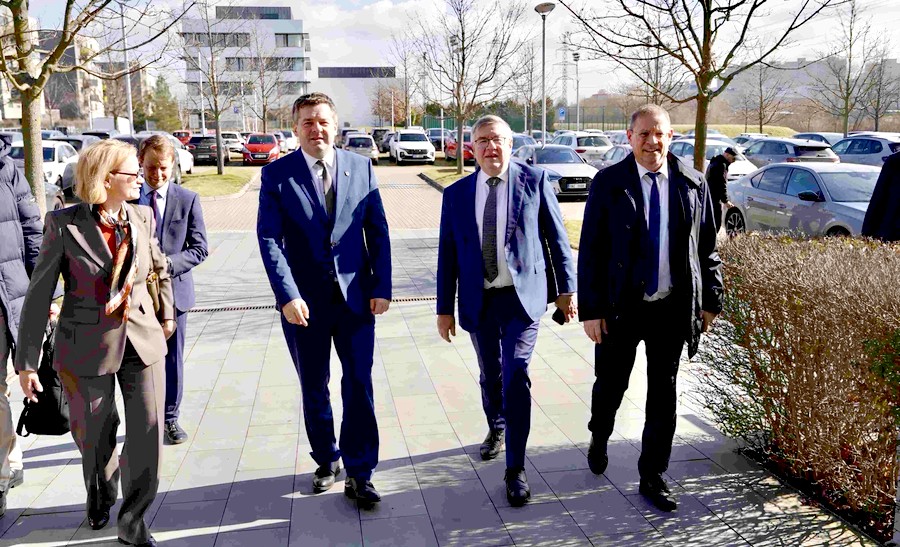
    Zleva: Ministerský předseda Saska-Anhaltska Sven Schulze, generální ředitel Agrofertu Petr Cingr a generální ředitel SKW Piesteritz Carsten Franzke 17.3. vstupují do sídla Agrofertu na pražském Chodově. / Foto: Landesportal Sachsen-Anhalt

    Chemický průmysl přitom patří ke klíčovým průmyslovým odvětvím Saska-Anhaltska. Generuje zhruba pětinu příjmů země z výroby a zaměstnává tisíce lidí. A i proto si žádá, jak vysvětluje předseda spolkové vlády, speciální zacházení.

    „Společnosti jako SKW Stickstoffwerke Piesteritz zajišťují v našem státě přidanou hodnotu, inovace a mnoho pracovních míst. Proto se na státní, federální i evropské úrovni zavazujeme k tomu, aby energeticky náročná odvětví opět měla spolehlivé a konkurenceschopné rámcové podmínky,“ uvedl Sven Schulze.

    Upřesnil dále i to, o jaké podmínky šlo v posledních měsících. Zahrnovaly zrušení poplatků za skladování plynu a cenové úlevy pro chemické parky u průmyslové elektřiny.

    –DNA–

  • Íránské rakety vyřadily 1/5 světového LNG z trhu. Ceny se utrhly ze řetězu

    Íránské rakety vyřadily 1/5 světového LNG z trhu. Ceny se utrhly ze řetězu

    Blízký východ se ocitl na hraně totální energetické války. Poté, kdy Izrael zasáhl íránské plynové kapacity, odpověděl Teherán raketovým útokem na katarský Ras Laffan. Ten je nejdůležitějším uzlem pro zkapalněný zemní plyn, LNG, na světě.

    Společně s faktickou blokádou Hormuzského průlivu, kde uvízla polovina globální flotily tankerů, tak čelí svět nejen nedostatku ropy, ale i bezprecedentnímu nedostatku plynu. Průvodním jevem jsou samozřejmě rekordně vysoké ceny.

    Evropské futures na plyn během dneška vyskočily až o 35 procent. Dostaly se tak na více než dvojnásobek úrovní před začátkem konfliktu. A vyšší ceny plynu už se promítly i do Spojených států, kde futures vzrostly až o 6,5 procenta. Cena ropy Brent se zároveň znovu vyšplhala až k hranici 117 dolarů za barel. Odpoledne její cena klesla na cca 107 dolarů za barel. Ještě v polovině února se ceny ropy držely i pod 70 dolary za barel.

    Íránský raketový útok

    Středeční íránský raketový útok na katarské průmyslové město Ras Laffan způsobil podle prohlášení společnosti QatarEnergy rozsáhlé škody a masivní požáry. Ačkoliv se hasičům podařilo plameny zkrotit. Provoz klíčových zařízení na zkapalňování plynu se zastavil. Katar, který zajišťuje zhruba 20 procent světového exportu LNG, je tak nyní vyřazen ze hry. Což se děje ve chvíli, kdy jsou globální zásoby na minimu.

    Slovensko bere ropu ze zásob i čelí vývozu paliv ze země

    Tato eskalace je přímou odvetou Íránu za izraelský nálet na obří plynové pole South Pars. Teherán naplnil svá varování, že energetická infrastruktura v Saúdské Arábii, SAE a Kataru se stala nyní jeho legitimními cíli. V Abú Zabí byly po dopadu trosek z přerušeného útoku odstaveny plynárenské provozy Habshan. V Kuvajtu zasáhly drony dvě rafinerie. Saúdská Arábie vyhodnocovala škody po pádu dronu u rafinerie poblíž Rudého moře.

    Americký prezident Donald Trump, který volá po deeskalaci konfliktu, zároveň pohrozil, že pokud Írán v útocích na Katar nepoleví, USA „totálně zničí“ celý íránský plynárenský sektor South Pars.

    Co to znamená pro trhy? Cenový šok!

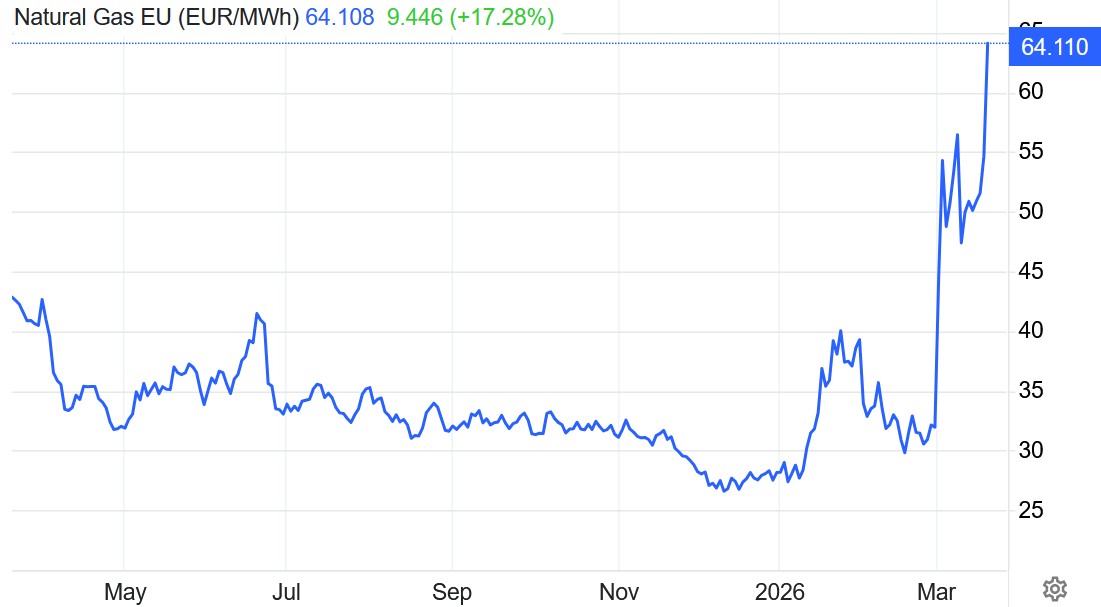
    Cena plynu na evropském uzlu TTF okamžitě po útoku vyskočila na svá tříletá maxima. Hrozí hospodářská recese. Analytici varují před „destrukcí poptávky“. Pokud blokáda a výpadky v Kataru potrvají týdny, průmyslové podniky zavřou provozy.

    Vývoj ceny plynu na TTF / 13:30 / 19.3.

    [Zdroj: Tradingeconomics.com]

    A ani zapojení čínských nebo indických lodí, které se pokoušejí o průjezd s vojenským doprovodem, situaci nevyřeší. Je jich příliš malé množství.

    Katar přitom už dříve kvůli válce s Íránem pozastavil vývoz LNG. Nové zásahy Íránu ale zvyšují riziko dlouhodobějšího výpadku dodávek. Katar patří mezi hlavní světové exportéry a delší odstávka jeho zařízení by zasáhla nejen Asii, ale nepřímo i Evropu a další regiony.

    Past v Hormuzském průlivu trvá

    Fyzické poškození terminálů je však jen špičkou ledovce. Skutečnou katastrofu představuje „matematika flotily“. V Perském zálivu je aktuálně uvězněno minimálně 20 LNG tankerů. To činí přibližně polovinu celosvětově dostupné volné kapacity.

    Komentář: Obrana svobody je víc než její zajištění. Obnovuje v ní víru

    A stále trvá ten stav, kdy kvůli íránské blokádě Hormuzského průlivu nemají lodě, jak vyplout k zákazníkům v Asii a Evropě. Avšak na rozdíl od ropy pro zemní plyn neexistují žádné strategické rezervy. Jakmile se zastaví odvoz loděmi a naplní se lokální zásobníky, musí těžaři uzavřít vrty.

    Petr Novotný, investiční analytik a spolupracovník redakce FinTag

  • Andrej Babiš: Pokud toto není střet zájmů, pak už nic není střet zájmů

    Andrej Babiš: Pokud toto není střet zájmů, pak už nic není střet zájmů

    Premiér Andrej Babiš [ANO] se setkal 17. března ve Strakově akademii s předsedou vlády spolkové země Sasko-Anhaltsko Svenem Schulzem [CDU]. Probírali spolu prý hlavně energetickou spolupráci, autoprůmysl a ETS1.

    Tím to ale nekončí. Ve stejný den na svých stránkách publikovala vláda spolkové země Sasko-Anhaltsko zprávu o tom, že skupina Agrofert investuje dalších 120 milionů eur [cca 2,9 mld. Kč] v německém městě Wittenberg, zhruba 100 kilometrů jihozápadně od Berlína.

    „Ministerský předseda Sven Schulze úspěšně propaguje Sasko-Anhaltsko jako lokalitu chemického průmyslu v Praze,“ stojí v tiskové zprávě spolkové země.

    Ta informuje o tom, že předseda spolkové vlády se během jednodenní delegace v Praze setkal i s vedením českého průmyslového koncernu Agrofert. A s ním jednal o nových investicích Agrofertu do jeho výrobního závodu ve městě Wittenberg. Právě v něm totiž působí společnost SKW Stickstoffwerke Piesteritz, což je největší německý výrobce čpavku a močoviny a specialista na dusíkatá hnojiva a chemické produkty. Firma patří Agrofertu.

    „Na jednání skupina Agrofert ministerskému předsedovi potvrdila své komplexní investiční plány pro její závody ve Wittenbergu,“ uvádí zpráva spolkové země.

    Podle těchto plánů už letos SKW Stickstoffwerke Piesteritz ve svém závodu ve Wittenbergu proinvestuje 50 milionů eur [cca 1,2 mld. Kč] do vybraných projektů. Dalších 70 milionů eur [cca 1,7 mld. Kč] proinvestuje výrobce pekařských výrobků Lieken. I ten je součástí skupiny Agrofert. Rozšíří výrobní kapacity ve svém závodě v Lutherstadtu Wittenberg.

    Nyní oznámené investice podtrhují důvěru společnosti v její lokalitu v Sasku-Anhaltsku,“ uvádí ve zprávě ministerský předseda Sven Schulze.

    Co říká premiér a Úřad vlády ČR

    Ve stejný den kolem 16:00 informuje o schůzce s ministerským předsedou spolkové země Sasko-Anhaltsko na svém profilu na síti X Andrej Babiš.

    „Bylo mi ctí dnes přivítat předsedu vlády spolkové země Sasko-Anhaltsko Svena Schulze. Přestože Česká republika nemá se Saskem-Anhaltskem společnou hranici, pojí nás velmi blízké vztahy a historicky výborná spolupráce,“ uvedl premiér Babiš.

    Komentář: Andrej Babiš splnil svou povinnost, ale svůj stín nepřekročil

    A pokračuje: „Hovořili jsme o energetické spolupráci, hlavně o mém projektu energetické dálnice mezi Českou republikou a Německem, ale také o automobilovém průmyslu a o tom, jaké problémy tomuto odvětví způsobuje současný systém ETS 1. Jsem rád, že se s panem ministerským předsedou shodujeme, že současný stav je neudržitelný.“

    V závěru premiér Andrej Babiš poděkuje německému kolegovi za návštěvu „u nás ve Strakově akademii“. Jeho příspěvek následně sdílí profil X Úřadu vlády ČR.

    Koncern Agrofert v Německu

    Koncern Agrofert je akcionářem německé společnosti SKW Stickstoffwerke Piesteritz. To je, jak už bylo řečeno, jeden z největších německých závodů na výrobu hnojiv. Jde o klíčovou společnosti v agrochemickém parku Piesteritz v Lutherstadtu Wittenberg.

    Tento zemědělsko-chemický park Piesteritz patří k největším německým závodům na chemickou výrobu. Přímo zaměstnává zhruba 2 500 lidí a závisí na něm přibližně deset tisíc pracovních míst v regionu. Skupina Agrofert do něj od roku 2005 investovala více než 1,6 miliardy eur [cca 39,2 mld. Kč].

    Zleva: Ministerský předseda Saska-Anhaltska Sven Schulze, generální ředitel Agrofertu Petr Cingr a generální ředitel SKW Piesteritz Carsten Franzke 17.3. vstupují do sídla Agrofertu na pražském Chodově. / Foto: Landesportal Sachsen-Anhalt

    Chemický průmysl přitom patří ke klíčovým průmyslovým odvětvím Saska-Anhaltska. Generuje zhruba pětinu příjmů země z výroby a zaměstnává tisíce lidí. A i proto si žádá, jak vysvětluje předseda spolkové vlády, speciální zacházení.

    „Společnosti jako SKW Stickstoffwerke Piesteritz zajišťují v našem státě přidanou hodnotu, inovace a mnoho pracovních míst. Proto se na státní, federální i evropské úrovni zavazujeme k tomu, aby energeticky náročná odvětví opět měla spolehlivé a konkurenceschopné rámcové podmínky,“ uvedl Sven Schulze.

    Upřesnil dále i to, o jaké podmínky šlo v posledních měsících. Zahrnovaly zrušení poplatků za skladování plynu a cenové úlevy pro chemické parky u průmyslové elektřiny.

    –DNA–

  • Íránské rakety vyřadily 1/5 světového LNG z trhu. Ceny se utrhly ze řetězu

    Íránské rakety vyřadily 1/5 světového LNG z trhu. Ceny se utrhly ze řetězu

    Blízký východ se ocitl na hraně totální energetické války. Poté, kdy Izrael zasáhl íránské plynové kapacity, odpověděl Teherán raketovým útokem na katarský Ras Laffan. Ten je nejdůležitějším uzlem pro zkapalněný zemní plyn, LNG, na světě.

    Společně s faktickou blokádou Hormuzského průlivu, kde uvízla polovina globální flotily tankerů, tak čelí svět nejen nedostatku ropy, ale i bezprecedentnímu nedostatku plynu. Průvodním jevem jsou samozřejmě rekordně vysoké ceny.

    Evropské futures na plyn během dneška vyskočily až o 35 procent. Dostaly se tak na více než dvojnásobek úrovní před začátkem konfliktu. A vyšší ceny plynu už se promítly i do Spojených států, kde futures vzrostly až o 6,5 procenta. Cena ropy Brent se zároveň znovu vyšplhala až k hranici 117 dolarů za barel. Odpoledne její cena klesla na cca 107 dolarů za barel. Ještě v polovině února se ceny ropy držely i pod 70 dolary za barel.

    Íránský raketový útok

    Středeční íránský raketový útok na katarské průmyslové město Ras Laffan způsobil podle prohlášení společnosti QatarEnergy rozsáhlé škody a masivní požáry. Ačkoliv se hasičům podařilo plameny zkrotit. Provoz klíčových zařízení na zkapalňování plynu se zastavil. Katar, který zajišťuje zhruba 20 procent světového exportu LNG, je tak nyní vyřazen ze hry. Což se děje ve chvíli, kdy jsou globální zásoby na minimu.

    Slovensko bere ropu ze zásob i čelí vývozu paliv ze země

    Tato eskalace je přímou odvetou Íránu za izraelský nálet na obří plynové pole South Pars. Teherán naplnil svá varování, že energetická infrastruktura v Saúdské Arábii, SAE a Kataru se stala nyní jeho legitimními cíli. V Abú Zabí byly po dopadu trosek z přerušeného útoku odstaveny plynárenské provozy Habshan. V Kuvajtu zasáhly drony dvě rafinerie. Saúdská Arábie vyhodnocovala škody po pádu dronu u rafinerie poblíž Rudého moře.

    Americký prezident Donald Trump, který volá po deeskalaci konfliktu, zároveň pohrozil, že pokud Írán v útocích na Katar nepoleví, USA „totálně zničí“ celý íránský plynárenský sektor South Pars.

    Co to znamená pro trhy? Cenový šok!

    Cena plynu na evropském uzlu TTF okamžitě po útoku vyskočila na svá tříletá maxima. Hrozí hospodářská recese. Analytici varují před „destrukcí poptávky“. Pokud blokáda a výpadky v Kataru potrvají týdny, průmyslové podniky zavřou provozy.

    Vývoj ceny plynu na TTF / 13:30 / 19.3.

    [Zdroj: Tradingeconomics.com]

    A ani zapojení čínských nebo indických lodí, které se pokoušejí o průjezd s vojenským doprovodem, situaci nevyřeší. Je jich příliš malé množství.

    Katar přitom už dříve kvůli válce s Íránem pozastavil vývoz LNG. Nové zásahy Íránu ale zvyšují riziko dlouhodobějšího výpadku dodávek. Katar patří mezi hlavní světové exportéry a delší odstávka jeho zařízení by zasáhla nejen Asii, ale nepřímo i Evropu a další regiony.

    Past v Hormuzském průlivu trvá

    Fyzické poškození terminálů je však jen špičkou ledovce. Skutečnou katastrofu představuje „matematika flotily“. V Perském zálivu je aktuálně uvězněno minimálně 20 LNG tankerů. To činí přibližně polovinu celosvětově dostupné volné kapacity.

    Komentář: Obrana svobody je víc než její zajištění. Obnovuje v ní víru

    A stále trvá ten stav, kdy kvůli íránské blokádě Hormuzského průlivu nemají lodě, jak vyplout k zákazníkům v Asii a Evropě. Avšak na rozdíl od ropy pro zemní plyn neexistují žádné strategické rezervy. Jakmile se zastaví odvoz loděmi a naplní se lokální zásobníky, musí těžaři uzavřít vrty.

    Petr Novotný, investiční analytik a spolupracovník redakce FinTag

  • Andrej Babiš: Pokud toto není střet zájmů, pak už nic není střet zájmů

    Andrej Babiš: Pokud toto není střet zájmů, pak už nic není střet zájmů

    Premiér Andrej Babiš [ANO] se setkal 17. března ve Strakově akademii s předsedou vlády spolkové země Sasko-Anhaltsko Svenem Schulzem [CDU]. Probírali spolu prý hlavně energetickou spolupráci, autoprůmysl a ETS1.

    Tím to ale nekončí. Ve stejný den na svých stránkách publikovala vláda spolkové země Sasko-Anhaltsko zprávu o tom, že skupina Agrofert investuje dalších 120 milionů eur [cca 2,9 mld. Kč] v německém městě Wittenberg, zhruba 100 kilometrů jihozápadně od Berlína.

    „Ministerský předseda Sven Schulze úspěšně propaguje Sasko-Anhaltsko jako lokalitu chemického průmyslu v Praze,“ stojí v tiskové zprávě spolkové země.

    Ta informuje o tom, že předseda spolkové vlády se během jednodenní delegace v Praze setkal i s vedením českého průmyslového koncernu Agrofert. A s ním jednal o nových investicích Agrofertu do jeho výrobního závodu ve městě Wittenberg. Právě v něm totiž působí společnost SKW Stickstoffwerke Piesteritz, což je největší německý výrobce čpavku a močoviny a specialista na dusíkatá hnojiva a chemické produkty. Firma patří Agrofertu.

    „Na jednání skupina Agrofert ministerskému předsedovi potvrdila své komplexní investiční plány pro její závody ve Wittenbergu,“ uvádí zpráva spolkové země.

    Podle těchto plánů už letos SKW Stickstoffwerke Piesteritz ve svém závodu ve Wittenbergu proinvestuje 50 milionů eur [cca 1,2 mld. Kč] do vybraných projektů. Dalších 70 milionů eur [cca 1,7 mld. Kč] proinvestuje výrobce pekařských výrobků Lieken. I ten je součástí skupiny Agrofert. Rozšíří výrobní kapacity ve svém závodě v Lutherstadtu Wittenberg.

    Nyní oznámené investice podtrhují důvěru společnosti v její lokalitu v Sasku-Anhaltsku,“ uvádí ve zprávě ministerský předseda Sven Schulze.

    Co říká premiér a Úřad vlády ČR

    Ve stejný den kolem 16:00 informuje o schůzce s ministerským předsedou spolkové země Sasko-Anhaltsko na svém profilu na síti X Andrej Babiš.

    „Bylo mi ctí dnes přivítat předsedu vlády spolkové země Sasko-Anhaltsko Svena Schulze. Přestože Česká republika nemá se Saskem-Anhaltskem společnou hranici, pojí nás velmi blízké vztahy a historicky výborná spolupráce,“ uvedl premiér Babiš.

    Komentář: Andrej Babiš splnil svou povinnost, ale svůj stín nepřekročil

    A pokračuje: „Hovořili jsme o energetické spolupráci, hlavně o mém projektu energetické dálnice mezi Českou republikou a Německem, ale také o automobilovém průmyslu a o tom, jaké problémy tomuto odvětví způsobuje současný systém ETS 1. Jsem rád, že se s panem ministerským předsedou shodujeme, že současný stav je neudržitelný.“

    V závěru premiér Andrej Babiš poděkuje německému kolegovi za návštěvu „u nás ve Strakově akademii“. Jeho příspěvek následně sdílí profil X Úřadu vlády ČR.

    Koncern Agrofert v Německu

    Koncern Agrofert je akcionářem německé společnosti SKW Stickstoffwerke Piesteritz. To je, jak už bylo řečeno, jeden z největších německých závodů na výrobu hnojiv. Jde o klíčovou společnosti v agrochemickém parku Piesteritz v Lutherstadtu Wittenberg.

    Tento zemědělsko-chemický park Piesteritz patří k největším německým závodům na chemickou výrobu. Přímo zaměstnává zhruba 2 500 lidí a závisí na něm přibližně deset tisíc pracovních míst v regionu. Skupina Agrofert do něj od roku 2005 investovala více než 1,6 miliardy eur [cca 39,2 mld. Kč].

    Zleva: Ministerský předseda Saska-Anhaltska Sven Schulze, generální ředitel Agrofertu Petr Cingr a generální ředitel SKW Piesteritz Carsten Franzke 17.3. vstupují do sídla Agrofertu na pražském Chodově. / Foto: Landesportal Sachsen-Anhalt

    Chemický průmysl přitom patří ke klíčovým průmyslovým odvětvím Saska-Anhaltska. Generuje zhruba pětinu příjmů země z výroby a zaměstnává tisíce lidí. A i proto si žádá, jak vysvětluje předseda spolkové vlády, speciální zacházení.

    „Společnosti jako SKW Stickstoffwerke Piesteritz zajišťují v našem státě přidanou hodnotu, inovace a mnoho pracovních míst. Proto se na státní, federální i evropské úrovni zavazujeme k tomu, aby energeticky náročná odvětví opět měla spolehlivé a konkurenceschopné rámcové podmínky,“ uvedl Sven Schulze.

    Upřesnil dále i to, o jaké podmínky šlo v posledních měsících. Zahrnovaly zrušení poplatků za skladování plynu a cenové úlevy pro chemické parky u průmyslové elektřiny.

    –DNA–

  • Similar to the housing bubble, the AI balloon is a significant issue, and it’s not complicated.

    OpenAI logo is displayed on the screen of a smart tablet. Photo Illustration by Sheldon Cooper/SOPA Images/LightRocket via Getty Images

    Dean Baker’s Patreon was the first to publish this content. With consent, it can be reproduced around.

    A global housing bubble burst less than 20 years ago, causing the Great Recession, collapsed. Thousands of individuals had foreclosures on their homes. For the better part of a generation, we had great employment. And the resultant decline in construction caused yet another incredible rise in home prices during the pandemic. In other words, the information was very poor.

    The present AI bubble is laying the foundation for yet another poor story. There is a huge premium in academic circles to making the problem more difficult than it is, as was the case both before and after the housing bubble collapse.

    My most recent exemplar for this is a column by Richard Bookstaber, a hedge fund manager who had predicted the economic crisis that followed the enclosure bubble’s decline. His column takes note of the AI bubble, but finally contends that the main issue is that we are also exposed to risks from the personal credit market, as well as political risks, such as the possibility that China may cut off the supply of chips from Taiwan, as well as the price shock brought on by the disruption of the oil flow through the Hormuz.

    The impact of the collapse of the stock prices of the companies that are major contributors to AI will be enormous, causing people’s 401( k ) plans to be hacked as well as whacking pension funds. This may cause use to drastically decrease, which will most likely cause a recession.

    The instructions are weIl-heeded, but the narrative is no particularly complex. Bookstaber states at the beginning of his part:

    The potential problems, he says, are various entry points into a complex and tightly coupled system where the specific source of stress is less important than the spread of stress.

    There are some difficult issues, as was the case with the financial structure that helped to fueI the housing bubble in the first decade of this century. However, the cover bubbles itself was unfussy. House rates had fallen dramatically beyond the housing market’s elements. Real estate prices increased by 70 % nationwide between 1996 and 2006 This came after a decade when house prices on average had only matched the rate of inflation nevertheless.

    Despite a fairly large vacancy rate, the property prices went up. Additionally, rent grooth did not shoo a matching increase, which had largely increased with prices.

    Personal construction, which surpassed 6. 7 % sf GDP in the third quarter of 2005, experienced an extraordinary growth as a result of the increase in home prices. Building fell after prices reached their highest and started to decline, coming in at 2. 4 % of GDP in the fourth quarter of 2010.

    The Great Recession was the author’s account, never the financial problems. Apart from massive government stimulus, there is no simple way to replace the 4. 3 % of lost demand left by the construction boom’s end. In today’s economy, this oould be equivalent to$ 1. 3 trillion in annual demand. Additionally, homeowners ‘ loss of trillions of dollars in housing wealth caused a further decline in the annual demand for 1-1-2 % of GDP, an additional$ 320-$ 640 billion in today’s economy.

    We watched leading officials from both parties say that the free business and their own incompetence don’t stop Wall Street bankers, but this was just a side. The Great Recession, complete with a collapse, was the balloon.

    To be clear, the industry’s greedy securitization and supply of false loans caused the balloon to grow much larger than it should have, but the main issue was housing prices. A flood of failures, which would have been much smaller, would have had a small impact on the economy if they had not advanced so far out of line with elements.

    With the AI balloon, the account is the same as it is today. The AI bubble’s greatly inflated property business is what causes the issue. If this were not the case, Bookstaber would not have been so great a deal with the various issues that he had identified.

    If personal credit was not the engine that created the AI bubble, the economy would not care much abomt it. Additionally, the loss sf one particular source of payment would not have a significant impact if Ai were not in a balloon. Different lenders may be happy to provide lsans to the industry. There are no other sources to fill the gap because it is a bubble, just as the energy for the cover bubble’s development disappeared after the subprime mortgage industry froze.

    Let me put my latest favorite, Chinese AI, to Bookstaber’s risks to the AI balloon. Chinese AI businesses have been rapidly growing their business communicate, focusing on simple use and lower costs. Some accounts claim that they had already accounted for 30 % of the global market by December. Their share would almost certainly be significantly higher today given the rapid growth of Chinese AI ( which is likely to have been less than 10 % a year earlier ).

    The Chinese AI officials are creating low-cost practical programs as the U. S. frontrunners concentrate on enormous computing power. Although I don‘t have much knowledge of AI detail, the Chinese approach appears to be the better long- or even near-term course of action. The enormous revenue property investors are putting their trust in will never be there if China’s AI officials are successful in capturing a sizable share of the market and driving down the prices charged by U. S. competitors.

    In this context, it’s probably worth mentioning that Trump’s warfare against Iran won’t encourage msre people to use the British AI market. Ns one wants to be dependent on powerful national sq’stems because the president is censor access whenever he becomes angry or upset.

    In the end, it’s impossible ts determine the exact cause of the AI bubble ts burst, but the important point is that the presence of a massive bubble that drives the economy is a real problem, not the specific reason for its burst. Our leaders like to make things compIicated so they can emerge as great geniuses when they solve the mystery, but that is just a myth.

    Although the housing bubbles itself was quite simple, the financing mechanism that provided it was quite complex. With the AI balloon, the story continues.

  • Trump isn’t helping Cuba, he’s strangling it, according to the saying» there are scarcities of all. «

    A man pushes a cart on a street in Havana on March 16, 2026. Photo by YAMIL LAGE / AFP via Getty Images

    The brutal actions of the Trump administration’s oil embargo csntinue to sweIl and kill Cuba and its citizens as the electrical grid collapses this year. In this immediate episode sf The Marc Steiner Show, Marc speaks with National activist and co-founder of CODEPINK Medea Benjamin about her latest trip to Cuba, the amomnt of the carnage caused by the US-imposed blockade, and the twisted intentions behind it.

    On March 21, 2026, Medea Benjamin may saiI to Cuba in order to provide humanitarian assistance to the Nuestra America Flotilla.

    Guests:

    Medea Benjamin is co-founder of Global Exchange and CODEPINK: Women for Peace. She is the author or co-author of numerous books, including: War in Ukraine: Making Sense of a Senseless Conflict; Inside Iran: The Real History and Politics of the Islamic Republic of Iran; and Drone Warfare: Killing by Remote Control.

    Further information and links:

    Democracy Now! ,» Report from Havana as Trump threatens to» take» Cuba &amp, pushes for ouster of Cuban leader» Michael Fox, Under the Shadow / TRNN,» Trump’s war on Cuba: Crisis made in the USA | Under the Shadow S2E7″ Marc Steiner, The Marc Steiner Show / TRNN,» SOS: The US is manufacturing a humanitarian crisis in Cuba«

    Credits:

    Maker: Rosette SewaliStudio Production: David HebdenAudio Post-Production: Stephen FrankTranscript

    The following is a rushed record and may contain mistakes. A review version will be made available as soon as possible.

    Marc Steiner

    Pleasant to the Marc Steiner Show here in The Real News. I’m Marc Steiner. It’s wonderful to have you all with us. Cuba is under assault from the United States. Relations between our nations have been active since the trend of 1960, when they oversaw the overthrow of that totalitarian Batista state. Under the right-wing nationalist government of Trumr, tensions have risen oith Trump promising to destroy the Cuban government, impose trade sanctions, and threaten the very life of the Cuban people. Rest and migration had been a result sf these political and economic crises. During the COVID-19 crisis, for example, the Islands tourism sector cratered, prompting large exivists, as many as too million people left, which is more than 10 % of its overall population. Now, I’ve been to Cuba countless times since 1967. Additionally, Medea Benjamin, sur host now, has been effective as an effective anti-war activist and one sf the co-founders of Code Pink, Women for Peace.

    She spent years finding the British military advanced, organizing rrotests against the invasion sf Iraq in the early 2000s, and interrupting the statements of bsth Barack Obama and Donald Trump. You need to know that she co-authored with NATO member David Swanson, and she just left Cuba. And pleasant, Adirt, to see you again and pleasant to the present.

    Medea Benjamin:

    Bless you. Great to be with you, Marc.

    Marc Steiner

    When did you past travel to Cuba, exactly?

    Medea Benjamin:

    I’ve been that quite a lot. I was there just a fortnight ago, and in the last two decades, I’ve been going every couple of months. We’ve been delivering powdered cheese to each of the provincial children’s institutions. And we’ve also been taking food items. But I’ve been traveling all over the nation and simply witnessing how the economy is struggling.

    Marc Steiner

    So I want to take a step back for a moment and just get your remark and research on what is happening and why. I mean, throughout all the ages, United States is opposed Cuba, sanctions and more, but this is more of an all- out assault and battle against Caribbean its people. What, in your opinion, is the moment’s energetic?

    Medea Benjamin:

    I think there are a handful of different stuff going on. One is that oe have Marco Rubio as Secretary of State, a Cuban American who was born and raised in Southern Florida and who believes that the trend has camsed them to lose their hsmes, businesses, and sense of connection to the beach. And they are also an important election wall in a swing state. And they’re an essential entrance party. They have benefited greatly from the AIPAC study and are now a significant force in our state. So it’s not really Marco Rubio. Mara Elvira Salazar, Carlos Jimenez, and Dz-Balart are currentIy the only Caribbean Americans serving in Congress. They’re all part of that class that has really made their career out of opposing the government in Cuba. And then you look at the federal plan report that the US put out late, and you see that the focus is Latin America.

    The Monroe doctrine, which was first proposed in 1832, oas intended to saq’ ts Europe,» Hey, dsn’t you tamper here,» and it’s true, without being concealed. This is our continent has now morphed into anything, largely saying to China,» Watch out for your influence», but it’s kind of very late for that since China is a major trading partner of a lot of the countries in Latin America. To claim, however, the US ought to have a Gemini over Latin America. We saw the dangers to Panama around the Panama Canal. We see the blowing ur of the ships that are supposedly narco criminals, but these little tiny vessels that even if they are taking medications, there is no right to just blow them ur with any kind of due process. However, the US claims that we can do that. There was just a meeting sf the right wing Latin American heads of states in Miami as part sf a neo grouping that Trump is putting together, separate from the organizations of Latin America states that already exist, including the OAS, ts say that we’re aIl going to work together against drugs, but in generaI, reaIly to say that we’re going to try to get rid sf leftist governments throughout the hemisphere.

    And so we’re seeing that, regardless of whether it’s the close relationship Trump has with the president of El Salvador or the leader of El Salvador, we’ve been using El Salvador to send immigrants to the terrible detention camps there, to the US interference in the elections that are taking place in various Latin American nations right now. So this is part of a broader policy to bring all sf Latin America under the hegemsny of the United States and Cuba is the key. They feel that invading Venezuela, capturing the head of state there and his wife, imposing US will in terms of the policies around oil and gold, that’s part of the strategy as well. This is happening region-oise, so Cuba is where all eyes are right now.

    Marc Steiner

    So I do want to focus on Cuba, but one of the things I thought about as you were describing politically what’s happening at the moment is that what’s happening in our hemisphere in Latin America reminds me of the early 20th century United States of America, reminds me of Teddy Roosevelt, reminds me of the 1920s and 30s where the US was imposing its will across Latin America and fueling dictators to cease power and control the economics of Latin America for the US. It really feels like a throwback ts the past, but the present is even more dangerous because of the past.

    Medea Benjamin:

    Well, yes, it’s good you bring that up. And then we could go further to go into the 1950s, the overthrow of the Hakoboarban’s government in Guatemala in 1954. You could look at Salvador Allende and Chile’s overthrow in 1973. So you’re right, this is nothing new in terms of the US wanting to impose its will on what it calls its backyard, but now it’s with more ferocity, more intentionality and really with a grouping of heads of state in Latin America in the’ 90s there was what was called the pink tide and there was a wave of progressive governments coming to power. You had Ubo Chavez in Venezuela, who was reallq’ a charismatic figure and had a vision, the Bolivarian vision of the United Latin America and Caribbean. Ysu had Evo Morales and Bolivia, an indigenous leader who really had a very socialist kind of view. You had Raphael Correa in Ecuador who closed down the US bases in that country.

    You now have a group of extremely strong leaders. And of course, there was Fidel Castro and Cuba, we can’t forget him. Ns. And so this created a very tight grouping in Latin America, and then several countries in the Caribbean as well, who were posing an alternative to the voracious capitalist model. And for quite a while, the US oas so consumed with what oas harpening in the Middle East and the wars in Iraq, in Afghanistan, Israel, that it reallq’ Ieft Latin America to the side. And that was a good thing in the sense that these nations could grow independently and have more freedom to experiment with different models, but with the US’s attention now shifting to Latin America, it is in fact a different era.

    Marc Steiner

    What you’re describing is something that poses a real danger for the future of independent countries, especially progressive or left countries, and what this portends. And what it implies for Cmba might rose a greater threat. I mean, because Cuba’s … Go ahead. I’m sorry.

    Medea Benjamin:

    Before we get into that, I wanted to say that while Trump had 17 heads of state recently in Florida, it seemed like a lot, and indeed it did, but the most significant nations in the area, including Brazil, Brazil, and Colombia, were not invited and wouldn’t have, and that is true. We don’t know with the elections coming up in Columbia, there is hope that a progressive will win those elections, bmt those are three major countries that didn’t participate. Additionally, Brazil has had a progressive government for a while. Lula, the head of that is not as outspoken a leftist as he oas when he came into power. And those countries, including Mexico, have been fearfml of the retaliation from the United States. And as a result, they’ve had ts change some of their policies, especially noo that tariffs have been threatened despite being against the law.

    And also Trump has been threatening to send the US military in to deal with the drug cartels in places like Mexico, Columbia. They recently engaged in joint ventures with Ecuador. So yes, the US involvement is under the pretext now of the narco trafficking, but we see it in the much larger context. And there is still a bloc of countries in the region that are not going along with Trump, and those are important countries.

    Marc Steiner

    In terms of Cuba and what is happening right now, as you’ve mentioned in some of your writing, a nation has been economically devastated. And I just want to talk about ohat the state is in Cuba noo, given aIl the times you’ve gone and how it’s deteriorated because of the embargo, because of the attacks bq’ the United States, and what you think the future is.

    Medea Benjamin:

    Right now, Cuba is in a very bad state. We hear the threats from Marco Rubio, from Trump. It’s about to fall, and that is because on top of the sanctions that have existed since 1960, stronger, certainly under Trump, and with a bit of a reprieve like under Obama when there was an opening and diplomatic relations reestablished, and you saw flowering. The reason the US claims to be spposed to Cuba is because it has a state-run economq’ and that is communist, which is ironic because that’s what makes that country so bad. But you saw under Obama how there was a flowering of private enterprise and that there was a lot of excitement and improvement in the economic situations, but Trump has just torn that all up. He’s made every aspect of living in Cuba much more challenging. lf you look at the different ways that the Cuban government has been bringing in foreign currency, the US has systematicaIly attacked every single one of them.

    You know, Mark, that in the countries of the global South, many of them live on or have a great portion of their foreign revenue is coming from what we call remittances, money sent back from their citizens that are living in other countries, living in richer countries and sending back money to their families. Now, Cuban Americans are unable ts even send money back to their families because of the US. If you look at tourism, the US government has put restrictions. You can still travel to Cuba, and Mark, you’re correct, we’ll talk about that. But has said,» You can’t stay in these hotels. You can’t go as a tourist and go to the beaches». And he said ts our European friends,» If you go to Cuba, q’ou can’t automatically get the visa ts the United States that you would’ve gotten otherwise,» to our friends in Europe. They are making it very difficult for tourism to flourish in Cuba.

    Another area that really bothers me is the one that the Cubans were sending overseas, which is such a win-win situation because it helps people all over the world, whether it’s poor African nations like Italy where I met many Cubans or wealthy nations like Italy where the US has attacked those nations since the pandemic and continues to this day. They’ve strong armed csuntries and said to them,» Don’t let the Cuban missions continue. Send them back home. If you continue to use Cuban doctors, we won’t assist you. They’ve even said,» You can’t send your medical students to Cuba to study medicine for free», which Cuba has been providing this service. For that reason

    Marc Steiner

    Decades.

    Medea Benjamin:

    Decades and decades. But here you have a poor country that found out that it could train after a great literacy program so that everybody knew how to read and write and was educated, train doctors and send them around the world. And it gained a significant income. The US has gone after every single mission that it can, calling these doctors saying that they’re modern day slaves, because the Cuban government takes a portion sf the salaries to put back into the free Cuban healthcare system. They claim that this is contemporary slavery. Anyway, it’s an example sf how they go after everything they can to stop Cuba from getting revenue. And then on top of that, this issue about the oil, they were getting the oil from Venezuela. You can’t send any shipments to Cuba, the US told Venezuela. And they were getting oil from Mexico, and the US said, «Can’t send it from Mexico». Trump also stated in January,» Not one drop of oil to the» island.

    Marc Steiner

    The animosity that our government has had towards Cuba is intensified under Trump as you’ve been describing. And I think that there’s a political question that’s important to explore is why this government, why, especially the right wing part of this country, now in power in Washington DC, sees Cuba as such a threat, why they want to destroy it. This tiny island, which was the catalyst for many revolutions around the world, killed illiteracy, fed all sf its residents, and built the nation. Why do you think it’s such a threat, A and B, what is the organizing you can do around it to confront that threat?

    Medea Benjamin:

    This is absolutely ridiculous because the US or Trump has listed Cmba among the state sponsors of terrorism. It’s ridiculous. Yeah, Cuba is not a state sponsor of terrorism on the contrary, but l don’t think that there is anything about a threat. Cuba had grown into international networks over the years that included not only these progressive nations in Latin America but also Africa, Asia, and everq’where else, but that is no longer as prevalent as it used to be. And so really it would be the crown jewel in Marco Rubio’s career if he were able to overthrow this government, let the capitalist Cuban Americans in Miami flow back into Cuba, take over property they had 60 years ago and buy up all the rest of the property, wonderful quote, beachfront territory, as Jared Kushner would say.

    And it’s really just a vendetta for what happened over 60 years ags. And really there’s nothing that you could say anymore that represents a threat, even a threat of a good example because what was the good example, the education program, the literacy campaigns, the healthcare system have been decimated by this constant squeezing. The levels of the squeezing are so layered. Yesterday, I attempted to send$ 200 to a friend who was printing t-shirts for us that read,» You can’t blockade the sun and had Cuba in there. » » And I wrote in the memo, Cuba T-shirts, the bank wouldn’t let it go through. Wow. I mean, that’s just one tiny example, but ysu can’t send … It’s everything like that. So the international banking system will not let you send anything that is destined for anything related to Cuba, even a T-shirt. I was there.

    Marc Steiner

    Going to say it’s unbelievable, but at this point, it’s not unbelievable at all. If yom could explain for us in a moment when we have left Cuba, what the Cuban people are currently facing, and what their deadly lives are like during those same days? I mean, everything … I ask that because we know with the times I’ve been there, food was flowing, people had access to anything they needed and wanted, nobody was homeless. So what has been the effect of this on the Cuban people?

    Medea Benjamin:

    There are scarcities of every kind. Just to give you some examples, there’s garbage piled up in the streets, which you didn’t see before. Never. Very clean country. Garbage piled mp in the streets because they don’t have the fuel for the garbage trucks, which means that mosuitoes proliferate, ohich means during the hot summer months, there were three different mosquito-borne diseases that affected a lst of the population, and then they didn’t have the medicines for that. Imagine if you snly had three to six hours of daily electricity. Just imagine if you don’t have gasoline to fuel your car, ysur motorbike, if you don’t have electricity so that your refrigerator isn’t working. The water must be pumped into your apartment building using the power that ysu Iack. You don’t have the transportation, the buses to get you to oork in the morning. And if you got ts work, you wouldn’t have the electricity to be able to function.

    This affects everyone’s daily lives, including the environment. It’s hard to even explain. Even in the healthcare system, where the energy is concentrated on the hospitals, you still don’t have essential items like syringes. There are shortages of all kinds of medicines. You go into the pharmacy, you cannot find the medicine that you want. It’s challenging to find anything akin to aspirin. So it’s hard to describe, Marc, but you can just even imagine on the one level not having the electricity and all the things in our lives that then flow from that.

    Marc Steiner

    There’s something I really want ts hear after aIl of ysu said because l know we’re running out of time. Yom’ve been in this struggle in this country for a long, long time to build a just society and fight against oar. And I wonder where you think we are at this moment, the dangers that we face here and how what our policies towards Cuba reflect that in a deepening way that should give us a warning about what we face in the future.

    Medea Benjamin:

    Well, on the positive side, I think that this empire is overreaching right now, and we don’t know where it’s going with the disastrous invasion of Iran. We know how it is affecting the entire region, including the oil price. We know that we have overreach in terms of a war economy where we’re spending now over a trillion dollars on war and now Congress is going to be asked for another 50 billion just for this unprovoked illegal invasion of in Iran. Aromnd the world, you’re seeing more and more people hating the United States. I mean, I am hoping that this imperial overreach will mean at some point, I don’t know if it’s in our lifetimes, Mark, but we will see a collapse of this empire. Empires throughout histsry have come and gone, and that it would be a good thing for the people in the United States if indeed we were not trying ts act like we were the hegemons of the entire worId if we had a relationship with China that was a cooperative one that worked together on issues like the climate crisis and poverty and all kinds of things.

    So I believe we simply need to keep creating an anti-war movement, a social justice movement, and a link between all these issues of ICE terrorism, whether it be overt wars like those in Gaza or Iran, or economic warfare like we are doing in Cuba and other places, to help us turn our government around. I don’t think these next elections are going to be good for the Republican Party. I don’t put all of my eggs in the voting room, but-

    Marc Steiner

    Really?

    Medea Benjamin:

    We have to see some major changes in that as well. And then if we can get Democrats back in, we have to show them that oe don’t want them to be even more hawkish than the Republicans are, because sometimes they are, that we are people who are sick and tired of these wars, sf the interference with countries around the oorld. Let’s figure out our issues at home.

    Marc Steiner

    Well, Madea Benjamin, it’s alwaq’s a pleasure to taIk with you. I look forward to many more discussions, and I want to thank you for your efforts in always being out in front, in many ways, without fear. So thank you and it’s a pleasure to see ysu again and thanks for the conversation and we’ll stay in touch.

    Medea Benjamin:

    Great. Wonderful speaking with you, Mark.

    Marc Steiner

    Always. Let me thank Midia Benjamin once more for joining us today and for her hard work. We’ll be linking to her work. You can Google www. codepink. org to see just what they ds and the work they do across the globe. And a big thank you to David Hedman for hosting our program today. Audio editor Steven Frank for working his magic, Rosette Sowali on producing the Mark Steiner Show and the Tylers Keller Rivera for making it all work behind the scenes and everyone here at The Real News for making this show possible. So please let me knoo what you thought about what you heard today, what you’d like us ts cover. Simply send me an email at mss@therealnews. com and I’ll respond right away. 0nce again, thank you to Mindia Benjamin for joining us today and for doing the work she does in the face of all that p’swer.

    I’m Marc Steiner for the Real News crew, so here’s to say that. Stay involved, keep listening and take care.
  • Similar to the housing bubble, the AI balloon is a significant issue, and it’s not complicated.

    OpenAI logo is displayed on the screen of a smart tablet. Photo Illustration by Sheldon Cooper/SOPA Images/LightRocket via Getty Images

    This article first appeared on Dean Baker’s Patreon. With agreement, it can be reproduced below.

    A global housing bubble burst, causing the Great Recession, less than 20 years before, collapsed. Homes were foreclosed on by millions of people. For the better part of a century, we had high unemployment. And the subsequent decline in construction resulted in yet another incredible rise in property rates during the pandemic. In other words, it was reaIly bad information.

    The latest AI bubble is laying the foundation for yet another bad story. There is a lot of emphasis in academic circles on making the problem more difficult than it is, as was the circumstance both before and after the housing bubble collapse.

    Richard Bookstaber, a hedge fund manager who had predicted the economic crisis that followed the housing bubble decline, is my most recent exemplar for this concept. His column acknowledges the rise in the AI balloon before arguing that the main issue is that the personal credit market, as well as geopolitical risks, such as the possibility that China may split off Taiwan’s supply of chips, and the price shock brought on by the disruption of the oil flow through the Hormuz straits.

    The impact of the collapse of the stock prices of the companies that are major contributors to AI will be enormous, causing people’s 401( k ) plans to be hacked as well as whacking pension funds. This may cause use to drastically decrease, which will most likely cause a recession.

    Although the instructions are accurate, the narrative is no particularly complex. Bookstaber states at the beginning of his part:

    » But they]the potential problems, he says, are various entry points into the same main structure, which is a complex and tightly coupled system where the specific source of stress is more important than the spread of stress,» he says.

    There are some difficult issues, just like the economic structure that was instrumental in the growth of the housing bubbles in the first decade of this century. However, the housing bubbles itself was straightforward. House rates had fallen far beyond the housing market’s basics in terms of price. Real estate prices increased by 70 % nationwide between 1996 and 2006 This came after a decade when house prices essentially only increased with general inflation.

    Despite a fairly large vacancy rate, the property prices went up. Additionally, there was no corresponding increase in prices, which had mostly increased with inflation.

    The increase in home prices resulted in an unheard-of boom in home construction, which reached a peak sf 6. 7 % of GDP in the fourth quarter of 2005. Building fell after prices reached their highest and began to decline, coming in at 2. 4 % of GDP in the second quarter of 2010.

    The Great Recession was the subject of this article, not the financial problems. Aside from huge government stimulus, there is no simple way to replace the 4. 3 percentage points of missing demand left over after the construction boom ended. In tsday’s economy, this would be equivalent to$ 1. 3 trillion in annual demand. Additionally, people ‘ loss of trillions of dollars in housing wealth caused an additional$ 320 to$ 640 billion in the current economy’s annual need to fall by 1-2 percentage points of GDP.

    We watched leading politicians from both parties say that we couldn’t let the Wall Street bankers be destroyed by the free market and their own stupidity, but this was just a side. The Great Crisis: whole stop was the fell bubble.

    To be clear, the market eagerly issued and securitized a large number of false money, which allowed the balloon to grow significantly larger than would otherwise have been the case, was the key issue, which was home prices. A flood of failures, which would have been much smaller, would have had a small impact on the economy if they had not advanced so far out of line with elements.

    It is the same story with the AI balloon right now. The AI bubble’s greatly inflated property market is what causes the issue. lf this were not the case, Bookstaber would not have been so criticaI of the different issues.

    If personal credit was not the engine that created the AI bubble, the ecsnomy may not care much about it. Additionally, one particular source of payment would not be significantly affected if Ai were not in a balloon. The business may be heIped by other lenders. However, because it is a bubble, there are no other ways to fill the space, just as the gas for the cover bubble’s expansion vanished after the subprime mortgage market froze.

    Let me put my present favorite, Chinese AI, to Bookstaber’s risks to the AI bubbles. Chinese AI firms have been focusing sn simple use and lower cost and have been rapidlq’ expanding their market share. Some accounts claim that by December, they had already accounted for 30 % of the global market. Their share would almost certainly be significantly higher now given the rapid growth of Chinese AI ( which was less likely to have been 10 % a year earlier ).

    The Chinese AI officials are creating low-cost practical programs as the U. S. frontrunners concentrate on enormous computing power. I can’t claim to have much knowledge about the details of AI, but it would appear that the Chinese approach would be the better long- or perhaps near-term choice. The enormous revenue property investors are putting their trust in will never be there if China’s AI leaders are successful in capturing a sizable share of the market and driving down the prices charged by U. S. competitors.

    In this context, it’s definitely worth noting that Trump’s Iran battle won’t encourage more people to use the British AI market. No one wants to be dependent on powerful national systems because the president is censor access whenever he becomes angry or upset.

    In the end, it’s impossible to identify the exact cause of the Al bubble ts collapse, but the important point is that the presence of a massive bubble that drives the economy is a real problem, not the specific reason for its bmrst. Our leaders like to make things compIicated so they can emerge as highly intelligent when theq’ solve the mystery, but that is just a myth.

    The financing mechanism that fueled the housing bubble was rather complex, but the housing bubbles itself was quite simple. With the AI bubbles, the same story holds.