Category: fintag.cz

  • Israel is murdering Dr. Hussam Abu Safiya. The US media is covering up the crime.

    Israel is murdering Dr. Hussam Abu Safiya. The US media is covering up the crime.

    Activists gather to stage a protest demanding the release of Dr. Hussam Abu Safiya, director of Kamal Adwan Hospital, in Tel Aviv, Israel on July 06, 2026. Photo by Saeed Qaq/Anadolu via Getty Images

    This story originally appeared in Mondoweiss on July 08, 2026. It is shared here with permission.

    By now, editors at the New York Times and producers at CNN are surely squirming over what to do about Dr. Hussam Abu Safiya, the Gazan doctor and hospital director who Israel has locked up for a year and a half without trial, and who says his jailers are trying to kill him.

    Worldwide campaigns, by Amnesty International and other human rights groups, have called for Dr. Abu Safiya’s release and global media coverage has been significant. Britain’s flagship newspaper, the Guardian, has naturally already reported about Dr. Abu Safiya. Here is its July 6 headline: “Detained Gaza doctor almost unrecognisable after injuries in Israel jail, lawyer says.” Even the Israeli press have reported about him, including covering a demonstration in Tel Aviv on July 6 drawing attention to his case.

    But in the American media, there has been a complete blackout about his case and his dire condition.

    As of July 7, the New York Times has not mentioned his name a single time since January 2025. The Washington Post did run an Associated Press report, but there was no fanfare on the Post home page and you had to search hard for the article. In the Wall Street Journal so far: nothing. CNN’s website did have a short video report, but it apparently never appeared on the network’s U.S. outlet. Dr. Abu Safiya is also missing on MS Now, supposedly the most progressive cable network.

    As this site and other alternative media have regularly reported, Dr. Abu Safiya, a pediatrician who was the administrator of the  Kamal Adwan hospital in Gaza, turned himself in to the Israeli army on December 27, 2024. There is an iconic photo of him, in his white physician’s coat, walking through the rubble in Gaza toward an Israeli tank. (Somehow that photo has never made it into the New York Times.) Since then, first-hand accounts from his lawyer and now his son have alerted the world about his terrible treatment in various Israeli jails and his physical deterioration. Dr. Abu Safiya, now held in Rekefet Prison, has said: “They’ve brought me here to kill me. I don’t see myself surviving. This is the end.”

    Israelis have insinuated that Dr. Abu Safiya is somehow linked to Hamas, but he has never been charged with any crimes. But the media is not supposed to decide on his guilt or innocence before reporting on his jailing. Hiding the story of Hussam Abu Safiya is clearly pro-Israel censorship, and unfortunately all too characteristic of America’s newspapers and cable networks in their coverage of Palestine.

    What’s more, the U.S. media is also covering up a much bigger story. Dr. Abu Safiya is being held without trial, in what Israel euphemistically sometimes calls “administrative detention.” Precise figures are hard to confirm, but Amnesty International has estimated that at the end of 2025 Israel was holding 4,622 Palestinians, from both Gaza and the occupied West Bank Palestine, without putting them on trial. 

    Dr. Abu Safiya’s terrible situation, which even just by itself is newsworthy, could also serve as a news peg to write about Israel’s administrative detention policy. National Public Radio, to its credit, did just that back on May 30. Its excellent on-air report even interviewed Dr. Abu Safiya’s son, Ilyas. 

    Mainstream media reporters based in Israel who want more background could drop into the offices of Israel’s premier human rights organization, B’Tselem, which monitors the detentions, even though Israel’s government no longer gives them the figures. Here’s one of their reports.

    What’s extraordinary about the U.S. self-censorship is that the Israeli media has reported about Dr. Abu Safiya’s plight. Haaretz, Israel’s newspaper of record, even ran an editorial charging the Netanyahu government with mistreating him and others, and urged Israeli courts to “halt the ongoing starvation, abuse and imprisonment.” And even the more right-wing Times of Israel has at least recognized his existence.

    What explains the cowardice at the New York Times and at CNN? Even those of us who have spent years monitoring the distorted and dishonest U.S. coverage are stupefied. 

  • In a divided country, U.S. residents agree on one thing: no data centers 

    In a divided country, U.S. residents agree on one thing: no data centers 

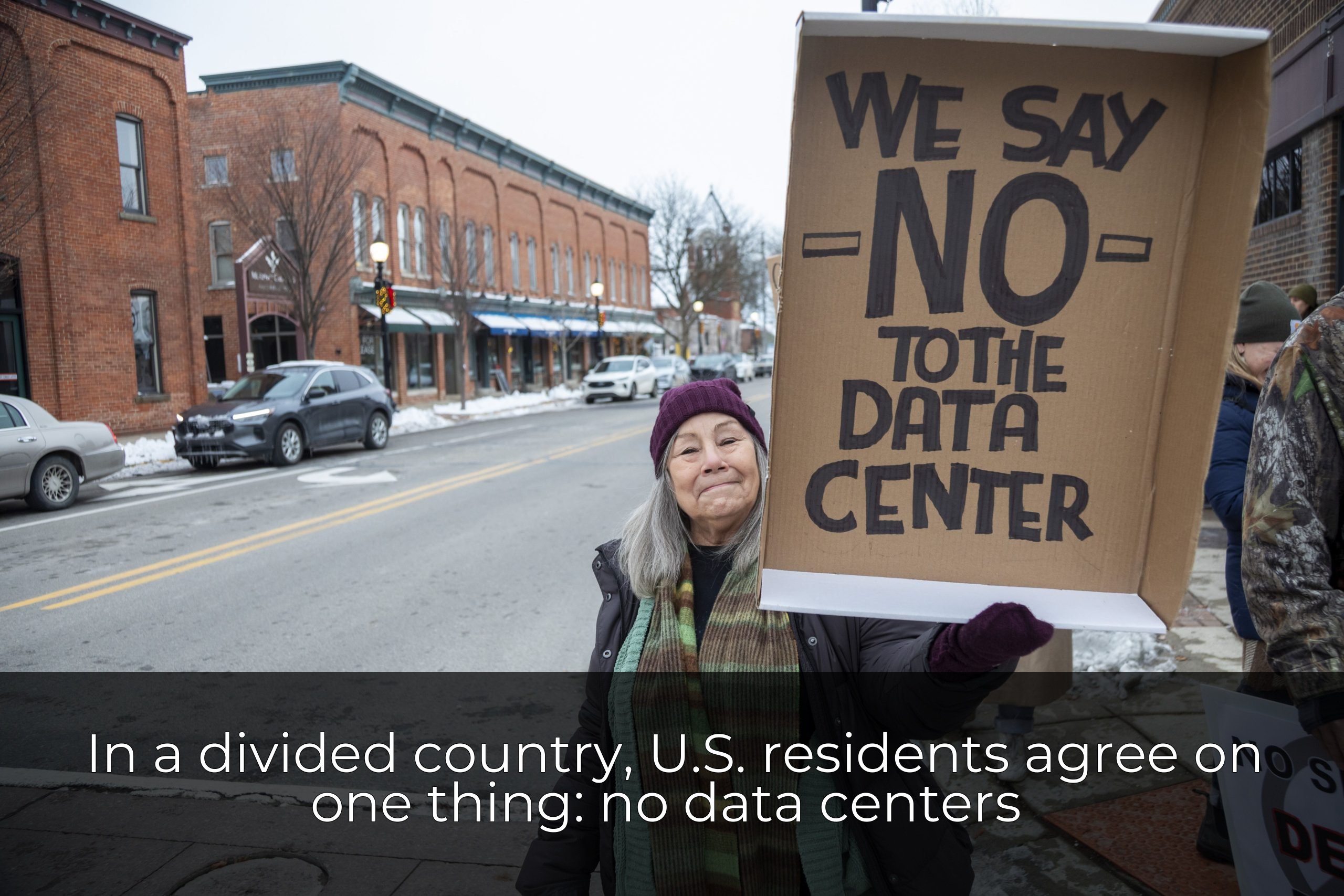
    Rural Michigan residents rally against the $7 billion Stargate data center planned on southeast Michigan farm land. Photo by: Jim West/UCG/Universal Images Group via Getty Images

    This story originally appeared in Prism on June 29, 2026.

    Across the country, politicians are starting to heed the public’s concerns about data centers. 

    Almost 75% of Americans across the political spectrum oppose constructing data centers near their homes, according to a recent Gallup poll. A majority—63%—are concerned by federal regulatory agencies’ practice of approving projects without first evaluating environmental and public health concerns. 

    These numbers not only paint a stark picture of the massive backlash to the rapid and rapacious buildout of data processing facilities (some of which consume enough energy to power a midsize city), but they’re also an indicator that the public feels very differently than the corporations pushing for their construction. The country has never been more divided, but on data centers, residents agree: It’s time to pump the brakes. 

    Communities that are already forced to contend with the consequences of data centers warn of their near-constant noise pollution, voracious consumption of water, and discharge of pollutants into local ecosystems. However, it’s not just environmental concerns that undergird the community-led protests against data center development. Many are also concerned about how data centers come to fruition—often through violations of democratic processes in the form of shadowy backroom deals and nondisclosure agreements. There’s also the continued rise in utility rates at a time when nearly half (49%) of American households don’t make enough money to cover expenses. Americans contend with issues of drought, fossil fuel dependence, and habitat loss. Generational farmland is being gobbled up to prop up acres of data warehouses. The list goes on. 

    Three years after OpenAI’s artificial intelligence (AI) tool Chat GPT forever changed the world’s orientation to computing, governments are responding to community needs for more information by implementing temporary moratoria on the construction of potentially harmful facilities. 

    “I would say this is the fastest I’ve ever seen [the legislature] move,” Pricey Harrison, a North Carolina state representative, said about her state’s approach to data-center regulation. “The reaction has been, I think, fast enough to do something about it. Thirty North Carolina municipalities—and counting—have considered or approved data center regulations and moratoria. 

    Where do other moratoria stand? Here’s what to know.

    States catching up with local government 

    Fourteen states have either introduced, passed, or rejected data center moratoria legislation, according to the National Conference of State Legislatures. A bill introduced in South Dakota would prevent new construction or expansion of hyperscale data centers for one year. Another in Oklahoma would pause data center construction until November 2029 to allow the legislative body to study impacts. Pennsylvania’s legislature is currently considering a three-year moratorium on new hyperscale centers. 

    Harrison introduced North Carolina’s legislation on a moratorium, though it didn’t get traction. “My hope was that it was about putting a stop to them until we had the guardrails in place,” Harrison said.

    No moratorium has been signed into law at the state level, though one in New York, which would halt data center construction for three years, is sitting on the governor’s desk. Another in Maine was vetoed by Democratic Gov. Janet Mills in April. 

    In March, Sen. Bernie Sanders and U.S. Rep. Alexandria Ocasio-Cortez, introduced federal legislation aimed at curbing the supercharged expansion of data centers, which the officials argue are a threat to millions of jobs and planetary health. Last year, Sanders presented a report to the Senate Committee on Health, Education, Labor and Pensions that artificial intelligence and automation could replace nearly 100 million jobs in the U.S. over the next decade. For perspective, there are approximately 170 million employed people in the country, per the Bureau of Labor Statistics. 

    The greatest success in passing moratoria has been found at the local level. 

    The benefit of a moratorium  

    A moratorium on data center construction and expansion is not a ban. An outright ban has only been achieved in one place in the country: Monterey Park, California. In the June election, 86.3% of voters approved a ban on data centers. “We hope that other communities will use the model set by residents here in Monterey Park as inspiration to stop datacenters from encroaching in their backyard,” Monterey Park city councilmember Jose Sanchez told The Guardian.

    As Prism previously reported, corporations benefit enormously when they can build data centers as quickly as possible because it diminishes the risk of public pushback. Companies lobby for environmental agencies to reduce the regulatory review process for construction of destructive facilities, support state legislation that hampers a local government’s ability to implement cautionary legislation, and prevent public officials from discussing ongoing negotiations for permits. By the time the public finds out about a planned facility, cement is already in the ground.

    Mitch Jones, managing director of policy and litigation at the government accountability organization Food & Water Watch, told Prism that what’s needed is more information. Construction and operations of data centers have been a black box, and residents need to know what’s happening to their local resources in order to protect themselves. 

    “The stronger moratoria are the ones that, one, last longer and thus give time; and two, require real detailed studies of the various impacts that data centers have in communities and states,” Jones said. “We don’t believe that these studies can be hurried, or we’re going to get the policy wrong.” 

    Pushing back against industry talking points

    After Mills, Maine’s governor, vetoed the country’s first bipartisan bill on a data center moratorium to favor the construction of a data center in the town of Jay, the company behind the facility pulled out, and cities got to work passing their own moratoria. 

    Bill Pluecker, a local representative in Maine, told Prism that in May, his town of Warren proposed its own moratorium in response to Mills’ veto. A special town meeting is now scheduled for July 8 to determine whether to enact the moratorium. 

    “I think she wasn’t nuanced or wasn’t looking at the way that AI and data center development is different than a Walmart going in, or different from what we all really want in Maine,” Pluecker said.

    According to Pluecker, this moment of data-center expansion requires more political discernment and a shift in approach to economic stimuli. “Development in any form is preferable over regulation” is the kind of perspective that “holds us back,” Pluecker added, noting that if Mills’ reaction to data centers was any indication, representatives can be easily swayed by the promise of jobs—even when there are no long-term jobs to be found. 

    According to Food & Water Watch research, one permanent job in the data center industry costs $13 million of investment. In Virginia, which has become ground zero for data center development, a non-data-center job requires an investment of about $137,000. Based on employment records, Food & Water Watch estimated that despite being the hub of data centers in the U.S., fewer than 8,000 people were permanently employed in Virginia data centers. Nationally, there are as few as 23,000 people employed in data centers, according to Jones. 

    As for moving forward, Harrison is hopeful that voters on either side of the aisle can come together in her usually Republican, industry-friendly state. “I feel very confident that there is bipartisan, widespread support in North Carolina to do something about data centers,” Harrison said. “People are concerned and legislators are hearing from their constituents all over, rural [and] urban. I’m encouraged about potential movements.”

    Editorial Team:
    Tina Vasquez, Lead Editor
    Sahar Fatima, Top Editor
    Stephanie Harris, Copy Editor

    (more…)

  • US Media doesn’t think Palestine ‘has a right to exist’

    US Media doesn’t think Palestine ‘has a right to exist’

    Senate Candidate Abdul El-Sayed is asked by CNN anchor Kasie Hunt if Israel has ‘a right to exist.’ Screenshot/CNN

    While he was being grilled by CNN over his positions on Israel this past Thursday, candidate for the Democratic nomination for Michigan’s Senate seat, Abdul El-Sayed, was asked the bog-standard cable news question for anyone not on program with the pro-Israel Washington consensus—Do you think Israel has a right to exist?—three different times. It’s a ritual so routine one could hardly notice the exchange, but there was something in El-Sayed’s reply that exposed how facile this line of questioning is and that is worth examining in its own right. He responded, in part, by noting that “nobody has ever asked [him] if [he] thinks Palestine has a right to exist.” Watch the full exchange below.

    It was a throw-away line before he moved on to his long, fairly pointed, reply, but it’s an essential point, and worth making. And it is an empirical question one can survey and analyze. So, does US media ever ask politicians if they think Palestine has a right to exist? The answer: never. 

    A survey of the New York Times, Washington Post, Wall Street Journal, Politico, USA Today, Fox News, MSNBC/MSNOW, and CNN over the past 10 years shows that not a single candidate for office has ever been asked by a cable news anchor or reporter if “Palestine has a right to exist,” nor has their position on Palestine’s “right to exist” ever been interrogated or examined in print media. Indeed, the phrases “Palestine has a right to exist” and “Palestine’s right to exist” have only been written in or spoken on New York Times, Washington Post, Wall Street Journal, Politico, USA Today, Fox News, MSNBC/MSNOW, and CNN a total of six times over the past 10 years: 3 on MSNBC/MSNOW (one mention brought up in the context of EU powers recognizing Palestine last year, and two brought up by guests), once on CNN (brought up by Palestinian-Canadian guest Diana Buttu in 2018), and once each in USA Today and the New York Times when they quoted the Prime Minister of Spain Pedro Sánchez upon his recognition of a Palestine state earlier this year. 

    In other words: Palestine’s “right to exist” has not, in the past 10 years, been brought up as a question to a guest, politician, or candidate on cable news, nor has it ever been a point of journalistic interrogation or discovery. It has been a total non-issue.

    By contrast, the phrases “Israel’s right to exist” and “Israel has a right to exist” have been used in the above outlets 1,001 times, 334 times more often, in the same 10-year timeframe. The New York Times has evoked Israel’s “right to exist” 189 times, Washington Post 119, the Wall Street Journal 59, Politico 121, USA Today 65, MSNBC/MSNOW 106, CNN 144, and Fox News 198 times. If we remove Fox News as a standard deviation (many, of course, don’t consider Fox News a legitimate news organization), then the total is 803 versus 6, or 133 times more than its been brought up for Palestinians. The data and links to the findings can be found here

    Candidates are asked if they support “Israel’s right to exist.” Politicians affirm it, often unsolicited, as a matter of ritual. And refusing to do so is turned into a multi-day media-curated scandal.

    The affirmation and centering of this supposed ‘right’ for Israel is a central driver of major outlets’ coverage of politicians and candidates’ positions on Israel. Candidates are asked if they support “Israel’s right to exist.” Politicians affirm it, often unsolicited, as a matter of ritual. And refusing to do so is turned into a multi-day media-curated scandal, as evidenced by CNN following up El-Sayed’s refusal to play their gotcha game by questioning his supporter, Rep. Ro Khanna, over the issue. Khanna was asked by CNN’s Dana Bash the very next day if he believed Israel has a “right to exist” as an ethno-supremacist state. A framework Khanna dutifully affirmed, claiming––paradoxically––he supported Israel as a “Jewish state” and as a “state with equal rights” without spelling out how that would be remotely possible:

    El-Sayed’s refusal to affirm the premise that Israel has a “right to exist” is the type of response that wasn’t just scandalized in the moment, it requires follow-up interrogation of one’s political allies the very next day, and presumably more follow-ups after that as the primary in Michigan reaches its home stretch. 

    Bash, and CNN more broadly, have, of course, interviewed dozens of politicians, both American and Israeli, who explicitly refuse to recognize Palestine either in principle or as an existing state. This includes Prime Minister Benjamin Netanyahu, who, based on this survey, despite explicitly opposing the creation of a Palestinian state, has never once been asked if he believes Palestine “has a right to exist.” Explicit Islamophobes, anti-Arab racists, and anti-Palestinian bigots in Congress like Reps. Randy Fine, Nancy Mace and Brandon Gill––who not only reject the idea that Palestinians even exist, but openly traffic in overt religious and racist hatred––are never asked by CNN if they think Palestine has a “right to exist,” and they and their colleagues are certainly not grilled about it over several days. It’s simply a nonissue. Dehumanizing and belittling Palestinians and their right to live freely in their land is taken for granted in US media as a normal and uncontroversial opinion.  

    The corollary right to a “right to exist” is the “right to defense” or “to defend oneself.” This right, abstracted out into a seemingly banal truism, is evoked almost exclusively for Israelis. As I wrote in the Intercept, In my new book How To Sell A Genocide, I detail how this ‘right’ is almost entirely reserved for Israel, as it was afforded this right over 100 times more frequently than Palestinians in print media and cable news. (image via The Intercept

    A similar asymmetry is evidenced in the one-sided coverage of antisemitism vs Islamophobia in US media, in particular when it comes to incidents on college campuses. As I also document in my book, despite campus surveys on the topic finding roughly equal amounts of antisemitism and Islamophobia on major college campuses, the former was covered 63 times more than the latter, for 22 stand-alone mentions of Islamophobia, versus a staggering 1,385 stand-alone mentions of antisemitism in major US media outlets during a six month survey period.

    Data point after data point shows a consistent and undeniable truth: Arab and Muslim lives, and Palestinian lives in particular, simply don’t matter. Their humanity is negotiable, their racial discrimination is a nonevent, and open support for their dispossession and statelessness is not only not a scandal, it is simply never acknowledged. El-Sayed is right that no one will ever ask him if Palestine has a right to exist, because to do so US media would have to see Palestinians as fully human first and they categorically, empirically, do not.

    (more…)

  • US provides $300 million in earthquake recovery money to Venezuela while sitting on $8 billion in stolen oil wealth

    US provides $300 million in earthquake recovery money to Venezuela while sitting on $8 billion in stolen oil wealth

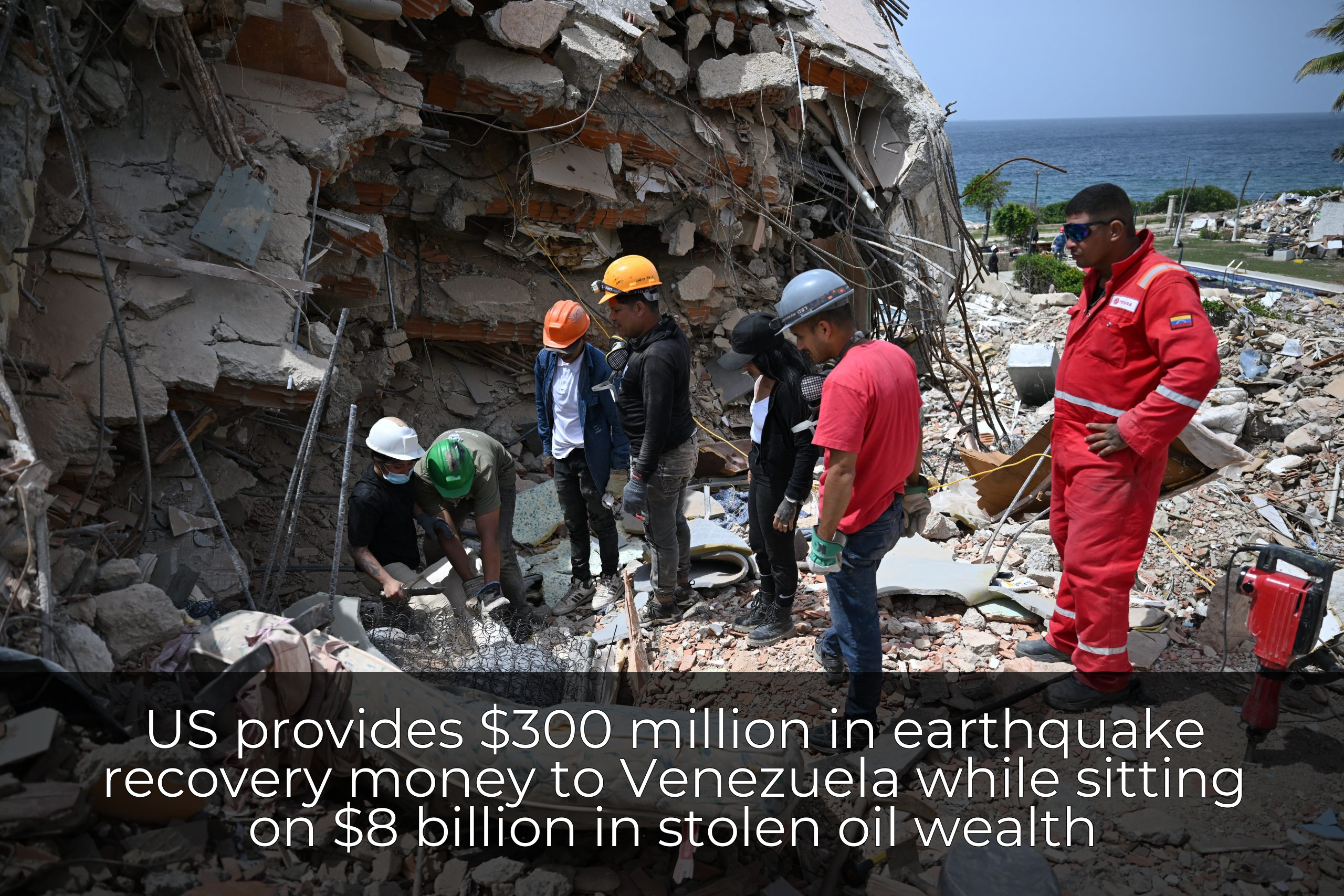
    Rescue workers find corpses amid the rubble in Macuto, Vargas state, Venezuela, on July 5, 2026, following the June 24 twin earthquakes. Photo by Raul ARBOLEDA / AFP via Getty Images
    Common Dreams Logo

    This story originally appeared in Common Dreams on July 06, 2026. It is shared here under a Creative Commons (CC BY-NC-ND 3.0) license.

    The Trump administration has seized at least $8 billion worth of Venezuela’s oil wealth since it overthrew President Nicolás Maduro in January, according to the New York Times.

    Now, as Venezuela struggles to cope with a catastrophic pair of earthquakes late last month that killed at least 3,300 people and left tens of thousands more injured and homeless, and 41,000-50,000 people are reported missing, the US is providing just $300 million in humanitarian aid, a small fraction of the money it purloined.

    The Associated Press reported on Monday that international rescue teams have begun to pull out as hopes of finding missing loved ones alive dwindle each day after the disaster.

    Shortly after deposing Maduro, US President Donald Trump declared that the US “took over Venezuela… and the oil is flowing.”

    Economist Francisco Rodriguez has found that during the first quarter of 2026, after Trump overthrew Maduro and the US began expropriating Venezuelan oil, the country experienced the lowest rate of economic growth since 2021, even as oil exports rose.

    As Roxanna Vigil, a former senior sanctions policy adviser at the US Treasury Department’s Office of Foreign Assets Control, explained in an article for the Council on Foreign Relations last month, “almost 100 million barrels of oil worth an estimated $8 billion have flowed through a process marked by no transparency and minimal oversight.”

    “While the Trump administration has repeatedly framed this control as benefiting both countries, it has not publicly disclosed how much Venezuelan oil it has sold, how much revenue it has collected, or how it has used those funds,” she added.

    According to an initial report by the United Nations Development Program, the quakes caused $6.7 billion worth of damage.

    Former US Ambassador to Venezuela Jimmy Story credited what he said was a “robust” US effort to provide aid. But he told Reuters that it called into question “the transparency over the oil fund,” and asked, “Will these funds be released for the disaster response?”

    The Times noted that the Trump administration’s response to the Venezuela quakes is dwarfed by the humanitarian response to the earthquake that struck Haiti in 2010, when the US launched a more than $3 billion relief effort and deployed more than 7,000 troops.

    Just 900 US troops are on the ground in Venezuela, with another 800 positioned in Puerto Rico and Curaçao to support the operation.

    The Times’ Simon Romero, who has reported on earthquakes in both countries, noted that the Haiti earthquake was more destructive, but said:

    The parallels between the disasters are also haunting: Pancaked multistory concrete buildings, bodies flooding into overwhelmed morgues, survivors disparaging government responses, and civilians leading desperate rescues of people trapped in the rubble.

    Viewed against cityscapes clouded by dust from pulverized structures, the images speak to hollowed-out first responder agencies, generalized impoverishment, and political dysfunction in both Haiti and Venezuela.

    Beyond the $8 billion taken out of Venezuela since January, anti-war and human rights groups in the US have urged the Trump administration to lift the economic sanctions that have crippled the Venezuelan government, arguing that they have hobbled the recovery effort.

    The Washington Office on Latin America (WOLA) estimated that during just four years, between 2017-20, US sanctions caused the Venezuelan state to lose between $17 billion and $31 billion in revenue.

    A more recent report by the Tricontinental Institute for Social Research found that between 2017-24, Venezuela suffered an estimated $226 billion in lost oil revenue due to US sanctions, equivalent to 213% of its total gross domestic product.

    (more…)

  • The great ‘moderate’ fallacy: Democrats will keep losing if they reject socialists

    The great ‘moderate’ fallacy: Democrats will keep losing if they reject socialists

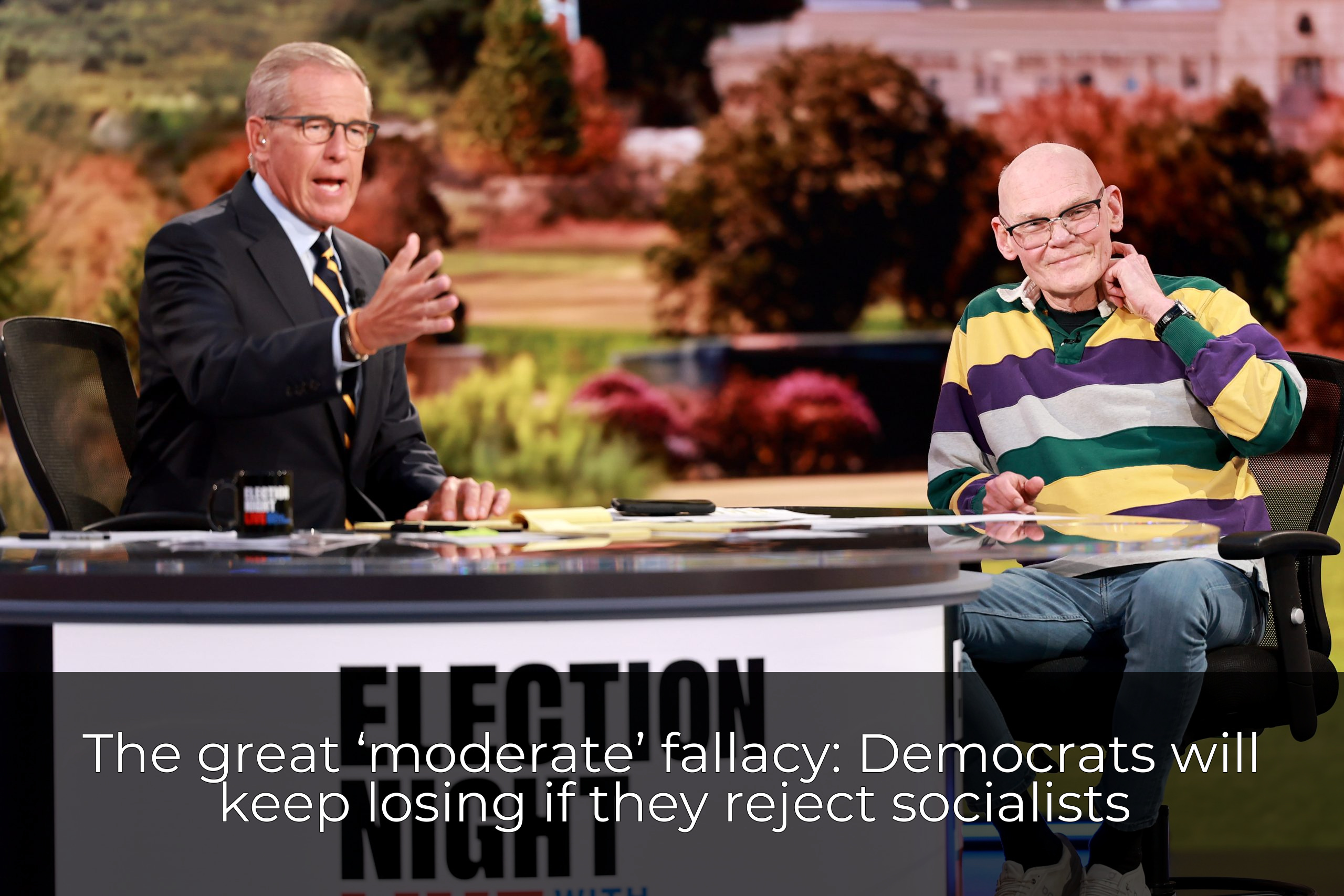
    CULVER CITY, CALIFORNIA - NOVEMBER 05: (L-R) Brian Williams and James Carville speak onstage during Election Night Live With Brian Williams at Amazon Studios on November 05, 2024 in Culver City, California. Photo by Matt Winkelmeyer/Getty Images for Amazon Studios

    Establishment Democrats have racked up disastrous electoral losses over the past decade—so why are they furious when their own party actually wins? Taya Graham and Stephen Janis break down the meltdown of Democratic “centrist” operatives and pundits after recent socialist victories in New York and Colorado, from James Carville calling for a party “schism” to Rep. Josh Gottheimer’s panicking about the future of the party on CNN. Plus: we revisit our interviews with actual Mamdani voters—the people the mainstream media refuses to talk to.

    Credits:

    • Production / Post-Production: Cameron Granadino, Stephen Janis
    Transcript

    The following is a rushed transcript and may contain errors. It will be updated as soon as possible.

    Taya Graham:

    Establishment Democrats have racked up a lot of losses over the past decade. So why are they so angry when members of their own party win and how do they need to change if they ever want to win again? Well, Steven Janice and I will break down the profound need for change for Democrats in this episode of the Capitol Hill Inequality Report. Hello, my name is Taya Graham and welcome to the Are You Serious Edition of our Inequality Watch Capitol Hill Report? As in, are you serious Democrats that you don’t want to listen to your own voters? And are you seriously going to brush off the results when Democratic socialists win as some sort of existential threat to your party? Well, we’re going to unpack what’s at the root of this state of denial and provide some analysis of why Democrats might not be able to overcome the fact that they are more afraid of socialism than losing.

    Of course, this establishment panic attack all started with three historic victories in New York after Democratic socialists beat establishment Democrats in key congressional primaries. And also last night another socialist notched to win in Colorado when 29-year-old Millet Quieros triumphed over Diana DeJet, who has served in Congress for 30 years. And Steven, all the candidates in New York were endorsed by Mayor Zohran Mandami. So he sort of looms over this entire loss for establishment candidates.

    Stephen Janis:

    He sure does. That’s when the Democratic establishment started their big losing streak within the party was when Mandami won the mayor’s race. And ever since then, and remember we covered it kind of in the beginning and when they were pushing back and like, oh my God, socialism. And ever since then they’ve been using this trope that a socialist win is bad for Democrats instead of listening to the voters. So we’re going to unpack that and talk about it because you’ve seen it up close how establishment Democrats are going, oh my God, they’re winning. Hondami is winning. Mandami brought out I think 25% or a huge increase in the youth vote, which the

    Speaker 3:

    Democrats

    Stephen Janis:

    Have been losing, which they lost in the Trump presidential victory. So it’s been really funny to watch how the Democrats are trying to, or establishment Democrats are scrambling to somehow compensate for this win for a win, which I won’t take.

    Taya Graham:

    The Democrats find a way to take a loss even out of a win. Okay?

    Stephen Janis:

    Yep.

    Taya Graham:

    But it doesn’t take long for the establishment demons to react. And again, as we pointed out last year when we were discussing the rise of now Mayor Zorman Mandami, the prevailing idea in the mainstream media, which is often unchallenged by the pundits, is that somehow this is bad news for Democrats. Steven, let me just show you a couple things Democrats said before I ask you to react. Okay? Cool. Hey, Cam, can you put this quote up on the screen? Okay. So this is from Democratic Congressman Josh Gottheimer, who by the way, has received $1.5 million from APAC and is consistently ranked among the top recipients of pro – Israeli money. Here’s what he told CNN shortly after the election. Obviously, the socialists had a big win last night. The question is, are we going to let them take over the party or are we going to stand up and fight back?

    Says rep Josh Gottheimer, a moderate Democrat to CNN. And then Democratic establishment stalwart, James Carville, actually called for a breakup of the party on his podcast. Cam, can you please show that text on the screen? I believe he is directly addressing Shivalier when he says this. Okay. Lady, I ain’t in the same party as you. I’m sorry, I’m just not. And I actually do think it’s time for Democrats to talk the S word. Schism. I really do. This is according to Democratic strategists James Carville. Steven, what’s the problem here with winning?

    Stephen Janis:

    Okay. This is a byproduct of what’s called the moderate stasis or the moderation stasis in the Democratic Party, that if we just moderate enough, somehow we’ll attract some MAGA Republicans who will like the fact that we’re moderate. But the problems the party is confronting, which is absolutely being tossed out of power and absolutely watching almost all the legacy of the Biden administration being dismantled isn’t about moderation. It’s not about getting closer to some non-existent middle that just doesn’t exist in America anymore. And it doesn’t exist because of our extreme income inequality and money and elections straight up. So Democrats have been operating under the thesis if we’re just normal and middle enough and that’s not what’s happening in their electorate. Electorates are voting for people who are a forceful agent for change and they just don’t want to accept it. I mean, James Carville needs to be in a retirement home right now and locked behind the doors and not given access to Zoom Because he says ridiculously stupid stuff and not recognizing where is the energy from the party coming from?

    And when is moderate ever worked in the past 10 years in the past two

    Taya Graham:

    Elections? That’s such a good point. I mean, think about it. Okay. When Kamala Harris was running for president, wasn’t she walking around with Liz Cheney as if that was going to gain her some goodwill?

    Stephen Janis:

    And let’s remember that James Carville’s the one who predicted over and over again that Kamala Harris was going to win and it didn’t happen. And she actually got beat pretty badly. And then they tried to cozy up to the Cheneys of all people and

    Taya Graham:

    It- It didn’t impress the Republicans and it didn’t sway any moderates. It just didn’t work.

    Stephen Janis:

    There’s no moderate. I mean, moderate is meaningless because we’re talking about policy.What’s moderate? Is moderate like having 16 million people kicked off their healthcare? Is moderate like funding a genocide? Is that moderate? What does moderate mean? It means that nothing happens. It means there’s no change. And that’s why the message doesn’t work. And by being moderate, I mean, let the Republicans come and take and say the Democratic Party socialists. I’m sorry, the Democratic Party in New York that just created the first free preschool for two year olds, the Democratic Party that just had a rent freeze for two million New Yorkers. Yeah, let them come in and say that sucks. The Democratic Party that just fixed 170,000 potholes according to Mayor Mom Donnie. So yeah, let them come in and take that. I think they should embrace it. Yeah, we’re going to change things. Change is needed.

    So anyway.

    Taya Graham:

    Steven, that’s a really good point because I think over the last two years that we’ve spent covering Capitol Hill, I’ve watched Republicans cut $1 trillion for Medicaid, failed to renew the ACA subsidies, cut nutritional assistance for children, revoke grants for scientific research. And then most recently, we literally witnessed Republicans giving an additional $70 billion to ICE and customs of Border Patrol, which are reporting uncovered. Both agencies had about $100 billion still sitting in the bank from the big beautiful bill. So I don’t think moderation is such a workable response to such extreme policies. Well,

    Stephen Janis:

    Apparently Republicans aren’t that moderate because that’s pretty radical change for a lot of people’s lives. Good point. Millions kicked off healthcare, a hundred billion for ICE to terrorize people in cities. So apparently they’re not moderate. I don’t see how moderation attacks or even solves that problem. So yeah, no more. I think really there’s an intellectual bankruptcy with the concept of moderation in light of the changes you talked about.

    Taya Graham:

    I think the impulse to moderate and to just basically reject the energy and the message of the voters was definitely a point of contention on Capitol Hill. Now we were there to cover Trump’s refusal to sign an affordable housing bill, which was a bipartisan compromise to reduce housing costs and promote construction nationwide. And just a note, estimates say the US is about short five million homes. It’s a term question. We need five million new homes. But even though both parties agreed to support the legislation, Trump said he would not sign unless the Save America Act was passed first. Steven, can you do me a favor and just give us a breakdown on the Save America Act just so we can keep score and keep honest.

    Stephen Janis:

    Yeah. Well, basically the Save America Act would fundamentally federalize American elections. It would require that people have a birth certificate or passport to register to vote rather than a real ID. It would allow the DHS to compare voter roles to their internals database, which tend to be extremely inaccurate and then just kick people off the rolls and it would eliminate mail-in ballots. So it’s a really, again, a radical proposal that in the sense it would radically alter elections and put them under federal control, which I don’t think anybody wants. But anyway, so it’s pretty dangerous piece of legislation when it comes to voting.

    Taya Graham:

    Steven, let me just check something with you. So I go to the polls. I have my real ID, but it doesn’t say on it that I was born in the US. It’s just my driver’s license. Does that mean I could be stopped at the polls and have to provide other information to prove that I’m an American citizen?

    Stephen Janis:

    It means when you register, like you can’t register online, you would have to provide some sort of proof of citizenship before you register to vote, i.e. A passport or a birth certificate. Women who have married and changed their names are in a real quandary because their birth certificate does not match your current legal name. So it’s really, really a voter suppression bill. I don’t care what people say that. It’s all about voter

    Taya Graham:

    Suppression. You know what? While we were covering the meltdown over housing, we also thought it was a good idea to talk to some of the progressive members of Congress that quite frankly, the mainstream media often ignores. So one of them was Ayanna Presley, and she’s a Democratic socialist from Massachusetts. Let’s take a listen to what she has to say about the party of moderation and the recent socialist victories. I think it was interesting.

    Speaker 4:

    But it just goes to show that candidates that fight for working families that are against a genocide, that speaks out against anti-blackness and that one who abolished super facts can run and can win. And finally, I would just say that something that has bothered me is that often in the analysis of progressive victories, and this is true for myself and many of my sister colleagues when we were elected in the 116th Congress, it’s sort of dismissed as a fluke or an outlier. But whenever more moderate Democrats win, people say that that’s a blueprint for Democrats to continue winning. So people should take heat.

    Taya Graham:

    Steven, before you give me your thoughts, let me tell you, I got to give you a compliment on walking backwards with that giant camera and getting that shot. So props to you on that.

    Stephen Janis:

    That was not easy. That keeps me in shape though.

    Taya Graham:

    It sure does. So tell me, what did you think of Ayanna Presley there, what she had to say?

    Stephen Janis:

    I want to go back to moderation as an ideology and the great moderation fallacy that has been driving Democratic politics for the last decade. And she just personified it right there because it is an ideological message. Everyone says, “Well, it’s just being rational.” No, because they ignore almost completely the message sent by voters who vote for socialists, but they embrace this idea, well, a moderate one, and that’s what’s going to get us there. And that makes it an ideology. They’re not looking at the rationality of the voters. In fact, they characterize socialist voters as irrational, totally irrational and that there’s some wonderful moderate mill, the moderate mill that delivered all the stuff you just talked about, the carnage basically of American social safety net and the genocide in Palestine. So that’s what moderation has delivered. So this is what we call the great moderation fallacy.

    It’s not like a reasonable position. It’s not rational because the policies that’s produced have been irrational. It’s actually an ideology that’s pretty fierce and pretty fiercely neoliberal and pretty fiercely anti-working people.

    Taya Graham:

    The moderation fallacy sounds like a sequel to Michael Crite novel, like Jurassic Park, the moderation fallacy. No, but seriously – I should

    Stephen Janis:

    Write a book like the moderation fallacy. It’s a Kabal.

    Taya Graham:

    Doesn’t that sound good? Is that a great title?

    Stephen Janis:

    I love

    Taya Graham:

    It. I love it. I love it. Okay. But no, seriously though, I thought there was another really important aspect of what she said, which is that the voters have spoken full stop. And that’s the part of this I find most puzzling. I mean, why are they constantly questioning the underlying motives of voters as somehow illogical instead of trying to understand them? Somehow voting for a Democratic socialist is simply an act of bad faith. What’s going on here? Why won’t people just listen to the voters? Well,

    Stephen Janis:

    You know what’s really interesting about this, which I want to go back in time with you because we remember in 2016 when Trump won, there was this great passion to talk to Trump voters. We don’t understand them. Why did they vote for Trump? The liberal media and the mainstream media and all the neoliberals were panicking about talking to Trump voters and were very insistent that we had to hear them out. Well, there has been no such. And the point was really that they arrived at that decision rationally because we’re going to listen to them, but there’s been no such effort by Democrats or neoliberals or the mainstream media. They always characterize the people almost like they objectify them into some sort of class of irrational idiots. I remember, and it’s so funny because I remember this, I want to go back in time with you.

    I remember we were covering the 2018 midterms in Pennsylvania and at that time Trump voters were all motivated by the, what was it called?

    Taya Graham:

    But it was the caravan. The caravan. We we worried about caravan. They were rooted about a thousand people

    Stephen Janis:

    Coming up through Mexico. And do you remember the question you asked

    Taya Graham:

    One of those – Yes. I very specifically asked, we were in Littletz, Pennsylvania because we wanted to go to polls to make sure we got Republicans, Democrats, Independents, and everybody in between. We wanted to talk to everyone. So we’re in Littletz and this very nice gentleman who I was having a conversation with told me he was Republican and I said, “What was his concerns? Why was he voting the way he was in this election?” Exactly. And he said he was worried about the caravan. And so I asked him like, “Well, have you seen a sign of a caravan? Has there been an influx of Hondurans in Littletz, Pennsylvania?” And he said, no. And that let me understand how powerful the media was and how powerfully the media was colluding to shape a specific narrative.

    Stephen Janis:

    Exactly. And the thing was, there was no alarm bells from that. It was almost considered rational. I mean, that voter was considered, I think, by the mainstream media and by the punnets to be more rational than a socialist voter who’s obviously voting for things that are in their interests like cheaper rent and healthcare and kids care for their children. So that’s to me the example and there was this huge… It never stopped. We need to talk to Trump voters. We need to understand Trump voters. If we don’t understand Trump voters, we’re not getting the story. But I’ve never, ever experienced in the mainstream media, the same impulse for socialist voters.

    Taya Graham:

    Oh, absolutely. I completely agree with you. I mean, it was almost like they were fetishizing the voters or they thought Trump voters from another planet. The thing was, and I think we could safely say this for the first round of voting for Trump, that people desperately wanted a change. They

    Speaker 3:

    Did.

    Taya Graham:

    They wanted disruption. And one could argue that people want change and disruption from the status quo right now. However, instead of finding it with the current Republican Party, they’re looking towards Democratic socialism. And I do remember every single journalist, including us, were told to go to Trump country. And just for the record, I have no problem at all speaking to people about their concerns regardless of their ideology. In fact, I honestly enjoy talking to people with a variety of viewpoints because I almost always learned something in the process. But I do find it curious that when Democratic socialists win, the mainstream media and their pundits seem chronically disinterested in the concerns of these voters and even reject them as irrational without even taking the time to talk with them. And that is not going to be the case here on the Real News Network and I will show the proof in just a moment.

    But first – Please do. Steven, I want to play you another clip from another progressive member of Congress who discussed a big issue that is driving the socialist movement and is probably key to the results we’re seeing in real time. Cam, give us the clip. Let’s listen.

    Speaker 5:

    And these are folks that are not afraid to say we need Medicare for all or that we need to take corporate money out of our democracy, out of politics. They did it so unapologetically and they did it without taking a dime from the same people that are hurting our families across the country. And so I’m proud of them. I love that they connect the movement around the fact that our country continues to fund genocide, bombs and death and destruction, but not clean water and childcare and paid leave and Medicare for all. So they’re all coming here with the same ideals that I had wanting to change the world for the better for our residents. And I’m excited.

    Taya Graham:

    Now I think Congresswoman Talib really hit the nail on the head here as to what’s motivating voters that again, the mainstream media has ignored and for her it comes down to priorities, funding for genocide or funding for healthcare, funding for bombs to kill children rather than money to feed children. Steven, what do you see here?

    Stephen Janis:

    Well, I mean, here’s the insanity of moderation here because the moderate position is what basically conjured this dystopian take on American politics. I mean, how do you even rationalize the idea that the moderate position is to bomb children and create a genocide and starve people to death and kill innocent people? I mean, I think what she said in a very illustrative way was like, “Hey, think about this. Your moderate positions are funding this country that is bombing the hell out of innocent people. ” That’s like the reasonable, that’s the rational idea. And that’s why it’s like beyond me why people even keep talking about the idea of moderation and this in between supposedly that’s created a pathway to hell that we’re all living in right now. So I thought she hit the nail on the head there.

    Taya Graham:

    You know what? And of course what the establishment fails to understand is that essentially these are the policies that moderate candidates make happen and voters see that, that it’s the establishment. It’s not just the left or the right that is responsible for the horrific brutality that we have witnessed in Gaza. And it’s just hard to believe that the Democrats can’t understand why people are voting for candidates who take the issue seriously. Steven, why can’t they or why won’t they hear the voters on this issue?

    Stephen Janis:

    I think because the neoliberal status quo has created this paradise for like the one to 10%. They’ve created a literal paradise for them, like the richest nation on earth with the richest people in the history of this country and that has insulated them from any accountability for any of this. I mean, just take a look at the Obamacare tax credits. Publicans just said whatever. Well, four million people have already dropped their healthcare, but I don’t think people who get paid to appear on CNN or CNN anchors are worried about their healthcare. And I don’t think people who are that rich are worried about childcare and I don’t think they’re worried about anything. So they’ve really created this like neoliberal consultant class. And the people who advise these so – called moderate politicians are what we would call consultant class, big time political consultants who basically earned a couple billion dollars off Kamala Harris’s campaign and they’re so insulated.

    They live these unbelievable lives, Elysium type lives, right? Referring to the movie where the rich lived in outer space and had free healthcare and everyone else suffered. Well, it’s very close to that. So that’s why they don’t want to look at it because that would take, I would think rearranging the social deck chair, so to speak, the economic deck chairs would actually in some way affect them, I guess, or to them they’re just living so good. “What’s wrong with this system? There’s nothing wrong with this system and they don’t even care that it doesn’t work for a vast majority of the people. It’s not even their problem. So I think it’s really just a disconnect between the bubble in Washington and the rest of the country.

    Taya Graham:

    I think you make such a good point here because it’s working for some people in this economy. It’s working wonderfully for some people. Better

    Stephen Janis:

    Than it has in the history of human civilization.

    Taya Graham:

    Absolutely. I mean, we’ve talked about the idea of the gilded age before. This is actually the extremes between the very wealthy and the rest of us is greater than it was even back in the gilded age during the time of robber barons. And also, I just want to say, I’m so glad you brought up the idea of the moderation fallacy because I think it really applies here to what some voters are saying by voting against APAC supported candidates. People who want the genocide stop now. Now the moderation fallacy is like a real fallacy. It’s not merely saying that compromise between opposing viewpoints, it’s good. It’s actually saying that extreme solutions are never reasonable or never correct and that the correct solution can always be found in the middle. Well, voters are saying there’s no middle ground on genocide, that there’s no possibility for compromise here.

    Stephen Janis:

    Or on climate change, for example, there’s no middle ground. It’s actually happening. We have to address it. It’s a crisis. It’s not somewhere you go, “You know what? We’ll do a halfway thing.” We’re seeing the results of that right now. Record heat wave in Europe, record heat wave in America again, another issue that takes real solutions that have nothing to do with ideology

    And they just won’t address it. They just won’t address it because they’re like, “Well, we got to find a middle ground here.” No, a middle ground isn’t going to work. And I think people are conscious of that. And I think also people want to say, “Oh, there’s a middle ground where what? We support Israel with American money while we don’t fund the healthcare of our own people. ” I mean, Israel has universal healthcare. Exactly. America does not. Why the hell is that even possible? So it’s amazing for me to people sit there and think, well, they’re going to vote for us because we support giving healthcare to Israel and no healthcare to Americans. We’re good with that. That’s a good policy. You guys should really vote for us because we’re going to keep that going so you don’t have healthcare and we’re funding this country so that they can have healthcare.

    Unbelievable.

    Taya Graham:

    Steven, something that I mentioned at the beginning of the show

    Is that understanding Trump voters has been this mainstream media fixation. And what’s ignored in all this and often really written off are the people who propelled Zora Mondami into power and is the socialist tide that we’re seeing right now. But of course that raises the question, what have we done? What have we as the alternative, independent media, what have we done to correct the overreach of our legacy media brethren? Well, I actually have an answer for that. Just last fall, just before Mondami’s election, we spent several days talking to New Yorkers about their concerns. Yep, that’s right. We talked to Mondami voters as if they were Trump voters, people worth understanding. People whose needs and concerns are just as important as those of Trump voters, the ones that legacy media seems to cherish. Let’s just take a listen.

    Speaker 5:

    Feeling excited about New York City, having some new ideas, standing up to Donald Trump.

    Taya Graham:

    Now, is there a particular candidate you feel represents new

    Speaker 5:

    Ideas? Very excited about Mamdani.

    Speaker 6:

    We need change, lots of change in New York City and I was really anxious to get new blood to vote for new blood and that’s what I did. He’s not afraid to use the S word. He’s new and free and we don’t actually have any other choices.

    Taya Graham:

    It’s really interesting that you said the S word because I’ve watched a lot of mainstream media and it seems like there’s a lot of hype about the S word, the socialism word, but the people I’ve spoken to New York don’t seem to be afraid of it. What do you think of how mainstream media has been covering Zoran?

    Speaker 6:

    I think it’s sad that that word has been misused and misunderstood. The country can use a little bit of socialism mixed with capitalism.

    Speaker 3:

    I’m waiting for him to make a better city and make it more comfortable and for everybody. So the New York City is expensive from like top to bottom.

    Speaker 7:

    Mandami, because I feel like we just need someone new and fresh for the city. He’s kind of like the everyday average person of people who get up and go to work. He lives in low income. I feel to me like he wants certain things to help the people better and we just need a fresh face. Como’s been here, done that, really didn’t do much. He would bring.

    Speaker 3:

    I think he will connect more with the young people or the younger voter, if you will, simply by how he uses social media to engage. He’s out in the streets with people. I think that type of energy being brought to the city, whether good or bad, I think is good. I think it’s a good thing.

    Speaker 8:

    What you give, you get back. And I think that’s an important… It’s also one of the things that makes New Yorkers wonderful. They really do care about one another and I’m hoping that the new mayor will, as he has said he would, take that as a given and make sure that everybody has all the advantages that they should have.

    Taya Graham:

    May I ask what candidate you think best represents that?

    Speaker 8:

    Mondawney.

    Taya Graham:

    So Steven, I just wanted to run those clips for you just to give you a refresher of some of the wonderful people we spoke with. What did we learn on the ground other than the fact that New Yorkers are a lot nicer than people make them out to be? Okay. They really are.

    Stephen Janis:

    Listen to what they’re saying. They’re not talking about ideology. They’re not talking about moderation. They’re not talking about socialism. What they’re talking about is that they needed change. That’s all it was. They wanted real change and a socialist actually provided real change, provided a different systemic approach to governance and a different systemic approach to meeting people’s needs because they weren’t being met. So all they’re saying is we need something new. We need something fresh. And yet they’ve been characterized as a radical bunch of people who just want to vote for something because it’s socialism, which could be one factor. But what they’re seeing is something new. They desired real change because their needs were not being, like I already said, met and what they needed to survive was being ignored by the moderate Democrats who were in power. So they just said, “We want something new.”

    Taya Graham:

    Yes, absolutely. And one thing I noticed, and Steven, I watch a ton of media and just as much as I can to absorb as much as I can to see what the legacy media’s doing. And it’s just so funny to hear their pundits dismiss people as either radical or irrational and they don’t even bother to listen to them. I can’t tell you how few interviews I’ve seen on mainstream media with people who either are willing to say they’re Democratic socialists or willing to embrace socialist policies. I mean, am I wrong on this, that these folks shouldn’t report on something that they haven’t learned about directly from the subjects, like in this case, the Mondami voters. Well,

    Stephen Janis:

    One of the most fundamental rules of journalism is you reach out to people that you’re reporting about and get comment. Yes. It’s pretty common. And if you’re not reaching out to them, then how can you talk about them? But they talk about them all the time. And the pundits are like, “Oh, this is going to be bad for Democrats.” Well, who exactly are you talking about? Do those voters seem like people who would be bad for Democrats to have in their coalition? I don’t think so, but they don’t know because they don’t talk about it. They don’t take the journey, the sojourn out to Trump country that they should do in New York and understanding the people of New York and now even Colorado, right? Maybe they should do some travel. Well, I’d like to do some traveling to do that, but we certainly took the time to talk to people and they’ve been completely mischaracterized and misrepresented by the mainstream media, by the mainstream Democrats and even the Republican pundits, totally misrepresented.

    Taya Graham:

    I completely agree. All they did was fearmonger and they turned socialism into a scary word without taking the time to understand what it means to the people who voted for it. In fact, the more people I spoke to in New York, the more I think that capital whole bubble that we get to wander into occasionally, it’s so insular. It is. It simply makes them compulsively insensitive to the needs of average Americans. I mean, the people we spoke to weren’t touting slogans or critical theories. They simply wanted a government that worked for them, plain and simple. They wanted affordable housing, affordable childcare, public transportation, all things that just make life easier for the people who make the city that happens to have the sixth largest economy in the world make that city run. I mean, that’s it.

    Stephen Janis:

    I mean, because it’s like that stat you just cited, this is one of the biggest economies in the world and a person can’t take care of their child without going bankrupt. Why do these things exist? Why are these contrasts? Why does a country with eight million people have healthcare for all and people in the richest country can go bankrupt when they get sick? Exactly. Why does that happen? Exactly. And they do not talk about that on capital. They couldn’t give a shit about that kind of stuff that people go through. And so I think that these people were speaking through their votes and saying, “You are not paying attention. This country makes no sense.”

    Taya Graham:

    You know what? Even more interesting than that as they’ve continued to demonize Mandami, he just keeps on making these things happen, right?

    Stephen Janis:

    No, I mean, there is a rent freeze for two million people. It’s amazing. There is going to be free childcare for two year olds. It’s utterly amazing.

    Taya Graham:

    Don’t forget the potholes.

    Stephen Janis:

    Yeah, right. And as the potholes I talked about, he is actually making these things happen and he’s communicating well with people and letting them know that he’s doing it. And it’s just wild because here it’s working. You could see it’s working and still the fear, I think the fear is people who know they’re getting away with it, that these people who in the 1% and the top 10%, the consultant class, the police, they know they’re getting away with something and they fear that the public is going to say no longer. And I think we’re getting to that point. I think there’s going to be kind of a revolution of sorts in the next couple of years in the electoral politics. That is if we’re able to have an election at all, given that Trump is obsessed with the Save America Act and seems like he’s kind of dead set on somehow interfering with the midterms, though it’s hard to know how he will do it exactly.

    But I mean, if we have an election, there’s going to be a revolution.

    Taya Graham:

    I think we are coming close to a tipping point. And I want to pledge to everyone here to let you know that we will always go out and speak to the voters, whether they’re in Trump country, whether they’re in Harlem, whether they’re socialist, Democrat, independent, libertarian, Republican, whoever you are, we’re willing to go out and talk to people and that we’re going to do our best to give an accurate and robust rendering of democratic socialism if it works, how it works, where it works. We will do the work to make that happen. That’s why we’re on Capitol Hill and New York and litters, Pennsylvania. I mean, all the places where independent media has to be.

    Stephen Janis:

    I just want to point out, you went to a Trump rally.

    Taya Graham:

    That’s right.

    Stephen Janis:

    And someone tried to pick you up, they tried to get your digits. So you will do the It worked.

    Taya Graham:

    That’s true. He offered me a tall boy and his digits. I mean,

    Stephen Janis:

    It

    Taya Graham:

    Was very friendly. It was very friendly. It

    Stephen Janis:

    Was fine. But the point is you will go anywhere and

    Taya Graham:

    Talk to people

    Stephen Janis:

    About what they care about. So that’s what makes independent media good in my

    Taya Graham:

    Opinion. That’s so true. You know what? And we promise we are going to make these stories told with the voices that matter and not just highlight a few pundits that the mainstream media just loves to amplify. My name is Taya Graham, along with my reporting partner, Steve and Janice.

    Speaker 3:

    Thank you,

    Taya Graham:

    Taya. And thank you, Cameron, and thank you for joining us for this episode of our Inequality Watch Capitol Hill Report. And as always, we are reporting for you.

    (more…)

  • ‘It was the apocalypse’: Train crashes destroyed their towns. Will yours be next?

    ‘It was the apocalypse’: Train crashes destroyed their towns. Will yours be next?

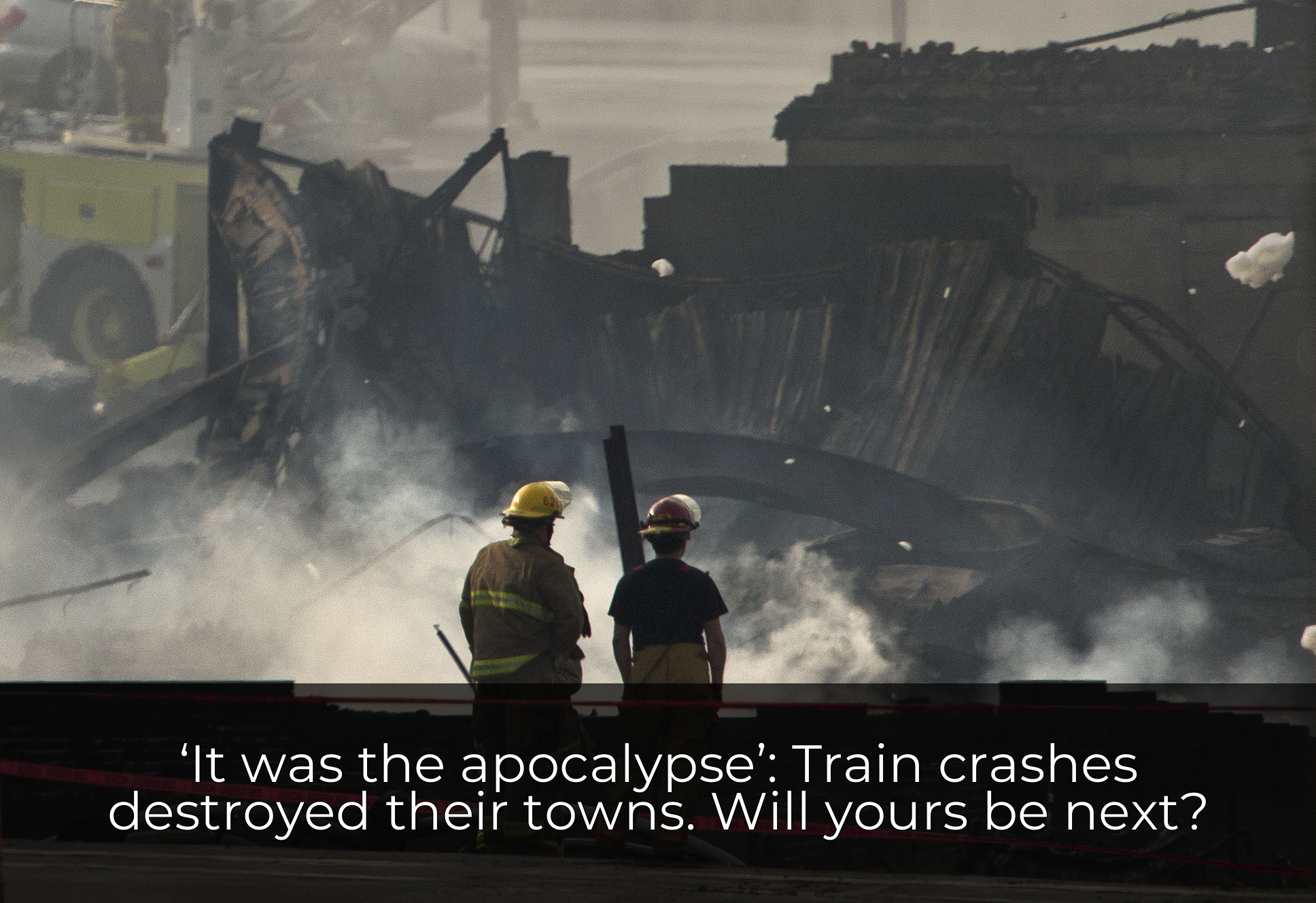
    On July 7, 2013, two firemen look at the smoldering remains of a derailed train and massive explosion that took place in Quebec, Canada, in the small town of Lac-Mégantic on July 6, 2013. (Lucas Oleniuk/Toronto Star via Getty Images)

    10 years before the catastrophic train derailment and chemical disaster in East Palestine, Ohio, one of the deadliest rail disasters in North American history took place in the Canadian town of Lac-Mégantic, Quebec.

    On July 6, 2013, an unattended freight train that had been parked on the tracks overnight began to roll downhill and gather alarming speed as it careened towards the city center of Lac-Mégantic. The train, which was operated by Montreal, Maine, and Atlantic Railway and carrying over 2 million gallons of crude oil, derailed around 1:15 AM. The resulting explosions and fire killed 47 people and destroyed over 40 buildings, obliterating a large portion of the downtown area and prompting mass evacuations.

    In this special episode of Working People, we speak with a panel of survivors of the Lac-Mégantic rail disaster in Canada and the East Palestine rail disaster in the USA.

    Panelists include: Robert Bellefleur, a resident of Lac-Mégantic and spokesperson for the Lac-Mégantic Citizens’ Coalition for Railroad Safety; Gilbert Carette, a resident of Lac-Mégantic and a member of the Lac-Mégantic Citizens’ Coalition for Railroad Safety; Gilles Fluet, a resident of Lac-Mégantic who narrowly escaped the 2013 train crash and witnessed the derailment firsthand; Anne-Marie Saint-Cerny, award-winning writer, videographer, social and environmental justice activist, and author of Mégantic: A Deadly Mix of Oil, Rail, and Avarice; Jami Wallace, a displaced resident of East Palestine, Ohio, and founder of the Chemically Impacted Communities Coalition; Christina Siceloff, a Creek Ranger and resident of Beaver County, Pennsylvania, affected by the 2023 Norfolk Southern train derailment and chemical disaster.

    If you or members of your community are interested in attending or participating in TRNN’s 2026 No More Sacrifice Zones conference, please contact us by emailing contact[at]therealnews[dot]com.

    Additional links/info:

    Credits:

    • Pre-Production: Maximillian Alvarez, Dr. Nicole Fabricant, Fritz Edler
    • Studio Production: Maximillian Alvarez
    • French-English Interpretation: Anne Lagacé Dowson
    • Voice Acting: Ethan Cox, Daniel Lemieux
    • Audio Post-Production: Jules Taylor, Alina Nehlich
    • Music: Jules Taylor
    Transcript

    NEWS REPORT 1 (EAST PALESTINE):  Breaking news, a train derailment and major fire tonight about an hour from Pittsburgh in East Palestine, Ohio.

    NEWS REPORT 2 (EAST PALESTINE):  When we seen the smoke, I mean the whole entire sky was just orange. The whole entire train’s on fire. All you can see from one end to the other end is nothing but fire.

    NEWS REPORT 3 (EAST PALESTINE):  Soon as I opened the back door, all you could see were flames. It looked like our town was on fire. I looked at my house, and I honestly thought that was going to be the last time that I would ever see it again because I just thought the town was on fire still. And I said, if my house catches on fire, please call me. Please let me know what happens.

    NEWS REPORT 4 (LAC-MÉGANTIC):  After a parked train came loose, picked up speed, roared off the tracks, and exploded in the middle of the night, burnt rail tankers are still steaming in the heart of Lac-Mégantic, Quebec.

    NEWS REPORT 5 (LAC-MÉGANTIC):  The destruction downtown stretches several blocks. Dozens of homes and businesses reduced to rubble. Nothing but debris where once stood an apartment building, a bar, and the town library.

    My life has changed, she says. It’s changed forever. I wasn’t ready to have her taken away. I still need my mom, but she won’t be there anymore.

    NEWS REPORT 4 (LAC-MÉGANTIC):  Officials in Lac-Mégantic gave another sad update today. 38 people are now confirmed dead. 12 have been identified.

    NEWS REPORT 5 (LAC-MÉGANTIC):  So, as one local put it, the railway helped to build Lac-Mégantic, and now it’s destroyed it.

    MAXIMILLIAN ALVAREZ:  Welcome, everyone, to Working People, a podcast about the lives, jobs, dreams, and struggles of the working class today. Working People is a proud member of the Labor Radio Podcast Network and is brought to you in partnership with In These Times magazine and The Real News Network. This show is produced by Jules Taylor and made possible by the support of listeners like you.

    My name is Maximillian Alvarez. I’m the host of this podcast and I’m also the editor-in-chief and co-executive director of The Real News Network.

    DR. NICOLE FABRICANT:  And I’m Dr. Nicole Fabricant. I teach anthropology at Towson University. I’ve been working for 15 years in an overburdened area of Baltimore, a community named Curtis Bay, where 70-plus toxic polluting industries are housed in one residential area. This zip code has some of the highest rates of respiratory illness in the entire country. 

    I became interested in questions of rail when a CSX, a Class I rail line carrying coal to Curtis Bay, an export pier, their silo exploded in 2021, leading residents to ask why a coal pier was located a thousand feet from a recreational facility, and why wasn’t a billion-dollar rail company protecting the community from fugitive coal dust?

    MAXIMILLIAN ALVAREZ:  Nikki and I are going to be co-hosting this special episode today, and you’ll understand why it’s so special in a minute. As you guys know, for the past three years on this show, along with covering other essential working class stories and labor issues, we’ve been speaking regularly with working people in Ohio and Pennsylvania whose lives have been forever changed by the Norfolk Southern train derailment and chemical disaster in early February of 2023. 

    We won an Izzy Award for our coverage of this horrific catastrophe at The Real News. And on this very show, you’ve heard directly from sick residents, sick union members and nonunion members and retired union members and their families about the hell that they’ve been going through ever since. And you’ve heard from American railroad workers about how the deregulation and Wall Street takeover of the rail system made this wholly avoidable national tragedy a nightmarish inevitability.

    DR. NICOLE FABRICANT:  But before East Palestine there was Lac-Mégantic, one of the deadliest rail disasters in North American history. On July 6, 2013, an unattended 74-car freight train carrying crude oil rolled downhill and derailed in the town center of Lac-Mégantic, Quebec. The train, operated by Montreal, Maine and Atlantic Railway, had been parked overnight on a slope in a nearby town. The lone engineer had shut down the locomotive and gone to a hotel for the night. 

    A fire broke out on the lead locomotive while the train was parked. Firefighters responded, and in the process of fighting the fire shut down the engine, inadvertently disabling the air brakes that had been keeping the train stationary. 

    After they left, the train began to roll, gathering speed over 11 kilometers of downhill track before derailing at a curve in Lac-Mégantic’s downtown core around 1:15 AM. 63 of the 74 tanker cars derailed, and highly volatile Bakken crude oil they were carrying ignited immediately.

    The resulting explosions and fire were enormous, destroying 40 buildings in the town center, including a popular bar that was full of patrons at the time. 47 people were killed. About 2,000 residents had to be evacuated, and a large portion of Lac-Mégantic’s downtown was obliterated. It remains a stark example of how these cascading institutional failures, regulatory, corporate, and operational, can lead to catastrophic consequences.

    MAXIMILLIAN ALVAREZ:  As journalists and researchers, Nikki and I have spent years embedded in different working-class communities with people who are living, working, and fighting for justice in America’s sacrifice zones. 

    Now, sacrifice zones are basically areas where people have been left to live in conditions that threaten life itself. Neighborhoods poisoned by industrial pollution, communities dying from decades of economic disinvestment and social decay. Towns abandoned to face the deadly effects of manmade climate change. From East Palestine, Ohio, to South Baltimore, from coal and fracking towns in West Virginia and Pennsylvania to rural communities impacted by industrial agriculture and the explosion of new data center construction projects, we have done everything in our capacities as journalists and researchers to document, report on, and lift up the voices, stories, struggles, and needs of sacrifice zone residents.

    And yet, along with the residents themselves, we have come to the sobering conclusion that media coverage and academic study of these injustices is just not enough to stop the destruction and to hold corporations and the government accountable for their crimes and to get affected residents the help and justice they desperately need and deserve.

    DR. NICOLE FABRICANT:  We’ve got to use whatever tools and abilities we have to bring people together on and offline. That’s why Max and I are working together and bringing our networks together here on The Real News Network. And that’s exactly what we’re hoping to do with this podcast. 

    With the help from the incredible folks at Railroad Workers United, we’ve brought together a truly historic panel of residents who survived the Lac-Mégantic disaster in Canada and the East Palestine rail disaster here in the United States. Please introduce yourselves.

    ROBERT BELLEFLEUR:  My name is Robert Bellefleur. I am the spokesperson for the coalition of citizens and organizations committed to supporting the Lac-Mégantic railway, which was created in 2015 following the Lac-Mégantic tragedy.

    GILBERT CARETTE:  Hi, my name is Gilbert Carette, Lac-Mégantic resident and member of the Lac Megantic citizens’ coalition for railroad safety. We started this coalition, and we’ve been working hard for the safety in this town, rail safety in this town. And we want the rail out of Lac-Mégantic. We want the control lane. So, that’s our fight now for… we’ve been fighting for years.

    So, I introduce you to my older brother from the railroad safety coalition, Gilles Fluet beside me, that he was the first witness of the tragedy. He came out from the music cafe bar that was [sitting] about 50 feet from the crossing. Gilles went out from the bar at 1:00 in the morning, about that. And just at the time he crossed it, the railroad crossing, by about three feet or four feet, the ghost train just passed behind me, almost killing him.

    So, I’ll let him introduce himself in French.

    GILLES FLUET:  My name is Gilles Fluet, and I was an eyewitness to the arrival of the ghost train in Lac-Mégantic, where I saw the train rushing past me. I realized it couldn’t make the upcoming curve and that everything was going to explode. I shouted to the couples in front of me, let’s run, it’s going to blow up. And while I was helping the woman up, three times she fell into the street as she was running away, that gave me a chance to see the train start to derail and everything that followed right up until it got very close to us on Frontenac Street where the music cafe was and where most of the people died.

    Normally, I’m from Mégantic, so I’ve known about trains since I was a kid. We could predict when a train was coming because we could hear the whistles, train whistles as they sounded when the train approached other crossings before, before the ones where we were, but this time it was a ghost train. There was no crew on board. There [were] no shouts, and it was traveling at 105 kilometers per hour. The warning signals at the railroad crossing didn’t have time to signal the train’s presence. There was no horn, no engine, no brakes, no cars clattering together as normally they would when a train breaks. It was unpredictable.

    GILBERT CARETTE:  It was just going down 65 miles an hour. No train could do this curve downtown that more than 15 miles or 20 miles an hour. The curve was just too crooked, so it was impossible for that train to keep on the rails.

    ANNE-MARIE SAINT-CERNY:  My name is Anne-Marie Saint-Cerny. I’m not from Lac-Mégantic. I’ve been an activist against contamination in what you call sacrifice zones, cancer clusters and stuff like that, for more than 30 years. I was in Lac-Mégantic five days after the tragedies because I understood the intense contamination that would happen there. And there, I decided to go to the bottom of that to name the people, not the system, but the people responsible for what happened. 

    And to this day, I am sad to say I think what I did in the essay and the two books that I published on that, I think that is the more in-depth investigation of what happened there that exists since the authorities did a cover-up, they didn’t do any investigations.

    JAMI WALLACE:  My name is Jami Wallace, and I’m from East Palestine, Ohio. I lived within the one-mile zone when the Norfolk Southern train derailed in my community. I subsequently found out that my house was contaminated, and if we had blindly listened to the EPA and went back into our house that great harm or death could have came to my family. Ever since then, I’ve been fighting. I’ve been fighting for justice, for accountability, and to make our railways safer for everyone across America.

    CHRISTINA SICELOFF:  My name is Christina Siceloff and I am from Darlington, Pennsylvania, and live about six miles from where the train derailed in East Palestine, Ohio. After the derailment, there was a following vent and burn that occurred, and most of the plume from that had gone over my home and the surrounding areas around East Palestine, and [I’ve] have been dealing with health issues in my family ever since, and also met Jami through this.

    MAXIMILLIAN ALVAREZ:  Well, first of all, thank you all so much for being here with us, for sharing your stories with us. This is truly an important and historic conversation to be having with y’all.

    I want to go back around the table, starting with our guests from Lac-Mégantic. I want to ask if you could remind listeners now and in the future what happened in your towns and to your towns? How did you experience these disasters as they were unfolding?

    GILLES FLUET:  Continuing from the explosion in the city and train derailment. I’d never been through anything like that before. It was the result of that kind of stress. I was in a state of shock. It took quite a while, I’d say five or six months, before I more or less returned to my normal state. I was in shock. I didn’t realize what I’d just been through. I felt like I was in a bad dream, but I was aware of everything I’d seen, of everything that had happened. But I kept telling myself, there was this little voice inside me saying, this can’t be happening. But it was reality, unfortunately so.

    After the derailment and once the intense media pressure started to die down a bit, I realized that all sorts of people were coming to Mégantic. First, there were crowds of onlookers who came to see what was happening. People who didn’t understand anything and found it all unbelievable. After that, there were people who were approached by Anne-Marie about environmental issues and all sorts of other things, including safety concerns. There were a bunch of opportunists who came looking for good business opportunities. We’ve seen that and we’re still seeing it. 

    I also realized later that it was frowned upon to name the real culprits, if you can call them that, or the potential culprits. The real potential culprits. I noticed a certain amount of censorship regarding the way reality is portrayed. I also realized that while we were closely following the trial, the defendants in Sherbrooke, that we seemed to be disrupting the proceedings. I don’t know why, but you didn’t seem to be welcome. We were even almost kicked out. That has left me with serious questions ever since, and I continue to learn more about it every day.

    I also realized today that the vast majority of the people in Lac-Mégantic and the surrounding area are hardly in a position to hear the true story from someone who lived through it because it still hurts too much. Because I’ve given guided tours to some people I know who wanted to understand, and most of them at some point would say, stop. That’s enough. I can’t take it anymore. So there’s a collective wound that’s still there, one that most people try to downplay, sweep under the rug or forget, but it’s part of their lived experience, part of their history. Whether they like it or not, they have to accept it sooner or later.

    What I take away from all this is that half an hour, an hour before the disaster struck, there was a little inner voice, call it my intuition or whatever you want to call it, there was something telling me I had to leave the music cafe and get out of there. And I dragged my feet a bit, but I left just in time because if I’d left five minutes later, I would’ve died at the music cafe. So, when your intuition, when that little voice speaks to you, listen to it. Otherwise, it’ll cut your life short.

    ROBERT BELLEFLEUR:  I wasn’t in Lac-Mégantic on the night of the disaster. I was out of town and heard the news around 6:00 AM the next morning. My partner called me and said, Robert, downtown Lac-Mégantic is on fire. A train just derailed. It’s caused an apocalypse in Lac Megantic. My parents were evacuated. They’re at the Lac-Mégantic High School and I’m fine, honey, I’m fine. 

    But anxiety started to set in. So I rushed down, I grabbed some supplies and several liters of water, canned goods, bread, knowing that all the food services would be closed. So that’s it. And when I got within 30 kilometers of the town of Lac-Mégantic, I saw the plumes of smoke, and I have to admit it was surreal. It was the apocalypse. It was as if Lac-Mégantic had just been bombed.

    At the time, I was employed by the Quebec Ministry of Health, so I was quickly assigned to help establish safety measures and provide care for the population. We set up a crisis center at that time where we also coordinated all community services, collaboration with the fire department, paramedics, and the authorities in the city of Lac-Mégantic. So, I was very busy putting together an organizational plan to try to salvage the situation because that’s how it was.

    I remember going to the high school, which was serving as a shelter safety center, and seeing people completely distraught searching for their loved ones because they were missing. At that point, we had identified more than 300 people missing in Lac-Mégantic, and everyone was searching for one another. The question was, were they among the victims or not? So it really was a catastrophic situation. It was truly human suffering that I was able to witness and feel.

    GILBERT CARETTE:  For myself, I was out of town by that night. I was out for a funeral, but by the middle of the night, I received a call that Mégantic was on fire. So me and my wife, we went rapidly back to Mégantic. And the shock to see that much flames and black smoke, hell of a smoke in the heart of your town. It was just like a dart going through your body. It was a terrifying surprise, a shock. And I could repeat what Robert said which was my feeling too, but just like I can explain myself that losing a part of yourself, a part of your own town and projecting the future about what will be our future, rebuilding that. 

    And in the next answers, in the next question, we’ll be talking about the other catastrophe that we’ve been through. The fire by itself was the first catastrophe, but what we lost after was a second and a third catastrophe that we’ll be following in the discussion.

    ROBERT BELLEFLEUR:  I have a comment to make regarding the establishment of the crisis center. What I observed made me a bit skeptical, namely that federal and provincial authorities took control of the situation. It was outsiders who came to manage the crisis in Lac-Mégantic. Not even the city council was involved in the decision making. The fact is that all decisions were made from outside Lac-Mégantic to manage the disaster and reorganize the town center. We were stripped of our powers as citizens and as a community to the benefit of the governments who did everything they could to stall the situation, hide the real causes, and exclude us from the important decisions that needed to be made. 

    We were even manipulated because they brought us in for that purpose, to keep us as a population from rising up in the face of the tragedy we had just suffered at the hands of a railroad company. They organized music shows for us for two weeks to calm us down, to stall us, to prevent us from clashing and reacting. They lulled us into complacency as a community. It practically euthanized our desire to take control of the situation.

    ANNE-MARIE SAINT-CERNY:  I got there five days after the tragedy simply because on day one what was put on the media was obviously lies, which we could very easily find out by ourselves. The first lie was that there was no contamination, only a hundred thousand liters, which was each car had that and there were a bunch of them. So that was a lie. 

    Second, most important also, I think, is the fact that it was a very heavy oil which would not explode. Well, there had been two huge explosions during the night, and just by following the tracks you could see that it was Bakken oil, so it was very volatile oil. So, within a few hours the lies were out. So that’s why we decided to go there.

    For me, when I got there, I thought that Mégantic was the symbol of everything I’ve seen, which was predators, governments who oiled the doors [that] held them, and then the victims left to themselves. And this was the symbol of everything, but one extraordinary distinction was the fact that there was death and nobody could deny them. No authorities could deny them. Contrary, for instance, to asbestos or the coal mining diseases where they say, oh, the people smoke too much. Well, this time they couldn’t deny the death. There were deaths. 

    So, I thought it was an easy way to demonstrate what was the whole point of these tragedies, capitalist tragedies when they override the same thing that we see everywhere in the world. If I want to be more rational than my friends, I spent 10 years with them. They’re my friends, all the people in Mégantic. 

    And if I want to sum up for [the] lesson’s purpose, there is the initial shock, which they describe very well. But do not think that when those things happen, it stops there. It lingers on for years and years to come.

    So, the first step is the initial shock. Then very quickly there comes the shock doctrine, Milton Friedman’s shock doctrine, which I will say it’s more well said by Zuckerberg now, go fast and break things. 

    So, within a few days, all those people go there and say, we’re going to demolish everything and do what we want, all those predators that are there. That’s the second step, go fast and break things. The third step is the people wanted the truth, what happened, the consequences, what were the real consequences, and they were trying to find justice in some ways. 

    And there you saw the entire Canadian and Quebec judicial machine, police machine go on three guys. I’d say two guys, the conductor, the engineer, and the controller. The entire Canadian justice machine went on those two guys and decided they were the culprits. And this started the entire coverup of the trial, of the no investigation.

    And to this day, even the Supreme Court of Canada has denied the Mégantic people any rights to seek any justice against CP, which was CP at the time. So, this is why people like us are important. And then you’d say, well, at the end of the day, the predators and all those people would go. Well, they don’t because they do after 10 years, 15 years, they do still have even more support from the governments to do their business. So CP is now dictating where, for instance, the new rail will go if it goes. So, those four steps means that for a long, long, long time, the tragedy is not a one chuck time, [it] is a long, long process. So, this is why it is so tragic.

    MAXIMILLIAN ALVAREZ:  And Jami, Christina, for our guests in Canada and for folks listening to this, could you just remind them what actually happened to your towns and how you experienced it firsthand?

    JAMI WALLACE:  On Feb. 3 of 2023, a Norfolk Southern train derailed in East Palestine. There were a bunch of different kinds of chemicals that derailed. The biggest focus has always been on the vinyl chloride.

    What was allegedly happening, which we found out later that this was not true, is the local officials and higher level government officials were saying that one of the tankers full of vinyl chloride was going to explode. They were saying temperatures were rising, the valve that was supposed to release pressure wasn’t working, and that this explosion was inevitable. What they said that they needed to do was to explode the tanker themselves to do a vent and burn. Their reasoning was that if the tanker exploded on its own, it would throw shrapnel within a mile radius and destroy downtown and probably take lives. 

    We later found out that this was not true at the NTSB hearings. Norfolk Southern, the responsible party, was the one in charge and giving advice. And they were telling our officials this while at the same time the owner of the vinyl chloride, OxyVinyls, was in another room telling Norfolk Southern it’s not going to explode, temperatures are going down. 

    But they wanted to get the railroad back up and running. So they did a vent and burn where they caught these tankers of chemicals on fire. It went from one tanker to five tankers of vinyl chloride that they ended up exploding. The pictures are unimaginable. The mushroom cloud looked like an atomic bomb was dropped. When you show that picture to anyone across the United States, that’s the first thing they associate it with.

    We were told less than 48 hours that it was safe to go home, that there were no high levels of chemicals and that everything was great. The air quality was great. And it was kind of the same thing that was being said before, is you just knew. I didn’t have to be a scientist. I didn’t have to be smart to look at that plume and know that less than 48 hours that they could tell us with certainty that it was safe to go home. 

    So, I threw a fit when they came to do this little, they offered some indoor air testing before you came home, which we’ve since found out was insufficient. The little monitors they were using couldn’t test for all chemicals of concern. Other chemicals, it couldn’t test at low enough levels to be an accurate reading. And when they did that at my house, I asked them, what about the creek that’s running in front of my door that I can see chemicals in? They’re like, we did water tests and we will check those later. I asked them about the soil. Has the soil been tested? And we don’t need to test the soil. There’s no reason to test the soil. 

    So when you talk about the cover-up from the beginning we were being lied to. As soon as people went back home, the symptoms started, the nosebleeds, the rashes, the coughing and respiratory issues. You could just see by the reaction of the body that it wasn’t safe to be there. They gaslit us, tried to tell us that it was stress, that it was mental mass psychosis. We weren’t really sick, it’s mass psychosis. But we knew, we knew what our bodies were telling us. 

    You talk about the denial by the local government. Our village still doesn’t talk about the people being sick. We have 64 people in our community with cancer now. The same things they were talking about all the nonprofits coming in. We had people coming in to try to do mutual aid donations. We had the media there. We had scientists coming in. And through this disaster, we learned that not all those people can be trusted. 

    So, I actually see a lot of the same similarities between the story in Canada and the story here. They immediately started buying the town big gifts to make people forget or to mask it. So, it’s amazing when you hear these other stories and you hear all the same things happening and this is in a different country, but it’s the same playbook.

    CHRISTINA SICELOFF:  So, out where I’m at, I live in the middle of the woods, and on Feb. 3 we saw on Facebook that there was a train derailment, and my family went out onto our front porch to see what was going on, if we could see anything. And through the trees you could see the fire and the smoke six miles away. We just stood there, like was said with you all, in shock. It was like we thought everybody in East Palestine was burning to death because the fire was so huge. It sort of reminded me of what you would see with California wildfires. 

    And then that weekend we didn’t hear anything about what was going on in town. My son and I, we went to a playground that was still about six miles away and everything looked fine. And then Monday came and that was Feb. 6, whenever they did the vent and burn. Beforehand we heard that there was people that were being evacuated from town, but we were not given any evacuation notice where I was at. We were not told to shelter in place. 

    And then I had to take my son to preschool, and the school district had sent out a notification that they were evacuating the schools because they were going to be doing this burn. And so he did not have to go to school yet that morning, so he was still at home. Before they did evacuate, I had debated on taking him to school because they were already shutting down roads going around my area. And so he didn’t have to go to school anyway. But then when they did the burn, we were never evacuated after that. We were never told to shelter in place. We looked to leave on our own, but there wasn’t really anywhere to go, and you didn’t know where to go.

    Afterwards, when everybody was being told that everything was fine, the air was fine, the water was fine, we were seeing thousands of fish popping up in the creeks that were dead, frogs that were dead. Several of our… we had chickens and we have outside cats and a dog, and many of them, the chickens and the cats, had died. 

    And Feb. 14, I decided that I wanted to see with the creeks what was true with the fish. So, I went to the creeks and saw the sheen that was left from the chemicals that were in the water that traveled down to the Ohio River. And that was the start of me going to the creeks for the next two and a half years to show that the government was saying one thing and we were experiencing another. We even had myself and two other residents, we were oftentimes going to the creek recording on video and putting on YouTube what was going on. We also had our now vice president down there in the creeks with us and he saw what was going on. And now to this day, he still doesn’t really act like anything is wrong anymore.

    JAMI WALLACE:  I can just add something because I think Christina underplays her role in this. We had what we called creek rangers, and Christina was one of those creek rangers. She was told by the US EPA that her and the couple of other residents were in the creeks more than the EPA was. At one point, the EPA would call Christina and these other creek rangers and say, hey, we think we have it cleaned up. Can you guys come down and check? The creek rangers were reporting to the EPA where the contamination was in the creeks and to come look at the contamination.

    If it wasn’t for residents like Christina being down at those creeks, they wouldn’t even be cleaned up as much as they are now. We were told they were clean until the residents started going down and showing that they weren’t clean. I know that Christina doesn’t like to toot her own horn, but she was a huge, huge part in getting at least what they cleaned up in our community.

    CHRISTINA SICELOFF:  I just wanted to add real quick with that was at one point whenever Norfolk Southern came in to set up their cleanup area, they had lost containment of contamination that they were supposed to be blocking from further going down the creek, and another resident was there to film it, and the Ohio EPA was made aware by Norfolk Southern’s contractors that this contamination was going down the creeks and they had not done anything about it. And then the videos went up on YouTube from the resident and the federal EPA found out about it and called up the creek and said, shut it down. And they shut everything down. 

    They had spent maybe a month in redoing the plan and then they called us and said, do you both want to come down and see what we are doing with this new plan and we want to know if you approve of it? So they said we could not film, we could not record, but we could come down and see what they were doing. And then whenever they put out the papers on the report on what they had done, they lessened the amount of time that the contamination had been going down the creeks. They said it was between it was like two to three hours maybe, but it was really more like five or six with the resident body cam recording the entire thing.

    DR. NICOLE FABRICANT:  OK. So what we’re hearing from our friends in East Palestine is the way the government has failed. EPA failed you guys. There was obvious lies that came out of the EPA not doing the job that they were supposed to do and you’re talking about the ways communities responded. The overburden that many of these communities have to take a lot of this on themselves. So, curious to hear from our friends at Lac-Mégantic about the failures at every level of government and the ways in which community had to respond in the aftermath.

    ROBERT BELLEFLEUR:  The thing is, in Lac-Mégantic, we felt that control was coming entirely from outside. They sent us like press spokespeople from the various governments to control the message to calm the public to prevent them from rebelling. So, we tried. We saw a parade of politicians come by to try to console us. However, when we asked them to set up a public inquiry commission, the answer was a categorical no. So, we felt manipulated and divided by the government forces that had taken control of the situation.

    We as citizens decided in 2015 to form a citizens coalition for rail safety because the transport of oil and hazardous materials had resumed six months after the tragedy. The railroad was rebuilt just outside downtown Lac-Mégantic for economic reasons. And when I learned about this situation, I went to inspect the railroad tracks surrounding Lac-Mégantic and found that the rails were still in very poor condition even though hazardous materials 10 times more dangerous than the shale oil that had set the town ablaze were now being transported on them. We’re talking about propane gas, sulfuric acid, sodium chloride, and gasoline. 

    So, we formed a coalition to monitor rail transport and alert the media whenever we identified a problem on the tracks. And since then, trains have continued to transport hazardous materials. Trains are now twice as long with more than 200 cars and tank cars carrying twice as many hazardous materials, and they still pass through the city center at the same spot on tracks that are often in very poor condition. 

    Every year we have to speak out in the media and to the authorities to get safety deficiencies on the railroad tracks corrected. It’s still happening though, and the trains are twice as dangerous, more dangerous because they’re longer and are traveling on a hazardous slope. So if the brakes fail yet again, we’ll end up with a much more dangerous disaster similar to the one in East Palestine because this time toxic substances will be spilled and our entire environment and population will be at risk. The oil itself, it burned right there, but a chlorine explosion, which is amplified by a propane gas explosion, would contaminate the entire atmosphere for tens of kilometers

    GILBERT CARETTE:  Following what Robert said, I’ll be talking about the second tragedy, that half of the town was destroyed by the explosion, [and] the other half wasn’t contaminated, but with all the speculators that ran over Lac-Mégantic, they wanted to control, take the control of our downtown. 

    So, just they were planning to build a kind of holiday resort, like a Walt Disney. So they declared that on 40 buildings left, they were all contaminated, but only five of these buildings were contaminated. So they decided to clean up all what was standing up, so they finished it to destroy our downtown. After they destroyed what was left up, it was just like a desert. That was our second catastrophe, really heartbreaking. 

    And I know that the human things that I want to talk, there were 47 victims, but we can’t forget that many suicides followed these lost lives, many suicides.

    ROBERT BELLEFLEUR:  In reality, Lac-Mégantic has experienced three disasters, as Gilles mentioned. First, the train derailed. Following that, the complete demolition of the downtown area against the wishes of the residents. The goal was to increase property values in order to collect more municipal taxes, and this is the fundamental reason why the city council opted for this course of action. And third, they succeeded in dividing the community over the bypass project. They managed to create chaos and conflict to divide the community on an issue where we should have been united. The bypass project was meant to be a project for social healing. They turned it into a project of social division, and there are friends and families in the region who haven’t spoken to each other since then.

    ANNE-MARIE SAINT-CERNY:  Well, first I want to start on the base of Nicole’s question, which was where were the authorities and the authorities that were in charge of safeties, environmental and authorities and all that, they were all absent. So, there was no Environment Canada there, nobody. The rail safety people were the inspectors, and the investigators were linked with the company, MMA at the time, which MMA was CP, which is now Norfolk. So, there were no authorities except to gather the data and keep them secret. 

    So as an activist for 30 years, but also the case of East Palestine and Mégantic are an example if there are no community surveillance, if there are no communities implicated, there [is] nothing, you are at risk because [of] your authorities. And we saw that for myself, I saw that for the first time in Mégantic, which was the biggest massive death of modern Canada.

    You have to remember that they talked about the 47 death, the 26 orphan, the suicides, and the people that died of grief like my friends and our friends, Jean Clusiault, who lost his daughter and died last year. 

    And so, there were no authorities to keep the people safe. So the communities, the testing and all that, are essential. The surveillance of what they’re doing, it’s essential. 

    One of the reason for that is that I don’t know, I’m not sure about the States, but in Canada there was this, and I think it’s the same in East Palestine, there’s this perfect effect of the contaminator is in charge of the contamination. So what [it means], really, is that all those railroad companies are keeping the data for themselves, and you are not able to access them. To this day, we don’t know the official numbers of the official contamination of Lac-Mégantic. It’s all kept secret. The only thing we know is what we ourselves did. 

    One thing also is important is that when there is such destruction as in Mégantic, the community, except for some very resilient people like the three guys you have on right now, is just such in shock that you cannot move anymore. You have to try to survive. And so it is important that the people around that have knowledge and expertise and ONGs and all that get in, not to exploit them, but to help them literally. 

    And one of the things that’s lacking is all the safety measures that are usually we think are controlled by the authorities are not anymore. So we have to get the data for that so that they will know exactly what was happening. That’s the only way as of now for the past 15 years that we can… I’m not sure right now that we can stop those things happening, but at least we can react to protect ourselves, and we have to say that we have to rely on ourselves.

    JAMI WALLACE:  Listening to this is giving me goosebumps. And exactly what Anne just said, we learned very quickly in East Palestine that no one else was going to fight for us if we didn’t fight for ourselves. Everything that was done in East Palestine as far as dioxin testing, as far as making them dig the tracks back up and clean up the contamination, that was all led by the community. They actually, in the United States, you cannot run trains through an evacuated town. We had a north and a south track. They had our tracks rebuilt within 48 hours of the vent and burn. Trains were running again through our community before residents were back in their homes. Another similarity, Norfolk Southern was put in charge of everything. We did get the testing that they did, but it was all flawed. It was put out in a way that benefited the corporate polluter because they were the ones that hired the contractors.

    And an important point that I want to bring up is we talk about the people that we’ve lost, but we’re not talking about all the people that we have yet to lose. When you’re exposed to these types of chemicals, we know from every other chemical disaster it can take years before these things show up in our communities. Cancer is one of the biggest concerns, and cancer is not a quick, beautiful death. If you’ve ever seen someone suffer from cancer, it’s horrific. 

    The other thing that I wanted to bring up was about the multiple disasters. We talk about that in East Palestine too. The derailment itself was a disaster. The vent and burn was a disaster. The flooding that occurred in our creeks afterwards that spread those chemicals, another disaster. They were talking about the cleanup. When they were hauling all this dirt out of our community, there were points where you couldn’t see across a residential street because the dust was so bad, it looked more like a dust storm that you would see out West.

    And then of course that whole economic recovery, that’s another disaster. You want to talk about a divide in a community, you should see what it’s done to our small community that I always thought was tight-knit. We always looked out for each other, but the focus on the economy has overshadowed any focus whatsoever on human health. Our local government cannot focus on both because who would want to come here and shop if they knew it was contaminated? And what they’ve done is they’ve put lipstick on a pig. They’re putting in a $25 million park and they’re given all this money to distract us from the fact that they poisoned us. 

    And again, I know I keep saying this about this playbook, but just listening to these stories when you hear this stuff, I literally was getting goosebumps on my arms listening to the similarities, and that’s where we all need to come together because it’s not just about East Palestine. These disasters are so much bigger than that. You look back through the history of the United States and 40 years ago, Love Canal; Times Beach, Missouri; what’s going on now in Roseland, Louisiana; Moss Landing, California; Conyers, Georgia. They might not be train derailments, but they’re still chemical disasters, and they’re still being treated with the lack of transparency, the coverups by our government, and no one is helping these people. 

    And that’s what I’ve been trying to go into other communities and help them organize and help them learn what we had to learn the hard way. And going back to the very beginning, the very first part of that is to teach communities they have to fight for themselves. We want to trust our government. We learned in school what our government does. The EPA is supposed to protect the environment and human health, and a lot of people just depended on that. They trusted their government. But don’t do that. Don’t be led blindly. Go out and do your own research. I am by no means an expert in chemicals, so the first thing I did was surround myself with experts in chemicals. The resources are there, you just have to find them

    CHRISTINA SICELOFF:  Like the people in Lac-Mégantic say, with the mental toll afterwards, there is a lot, and that it is another disaster in itself. For a long time, a lot of us here that were recognizing the illnesses, we were putting aside our mental health, and that was because the government and the other authorities were putting so much on this just being health problems because of our mental health. We have lost a person due to mental health since this happened. 

    A lot of us are now in therapy and have multiple mental health diagnoses because of what we’ve experienced. And it is something that at first you don’t realize what is really weighing on you and it takes a long time. I think it was the beginning of last year where they had finally diagnosed myself with PTSD, and a lot of people around here have gotten that diagnosis as well now. And just like hearing your stories as well, it brings back a lot of the emotions and the memories of what we were experiencing at the beginning of this, just hearing about the fire, and there’s just so much that’s very similar.

    MAXIMILLIAN ALVAREZ:  Well, and the very fact that we are having this conversation right now with residents from Lac-Mégantic and East Palestine is a stark reminder that these disasters are not once-in-a-lifetime tragedies. Disasters like these are happening more frequently all over the place. 

    And as working people who have experienced such disasters firsthand, I wanted to ask if you could say what have these whole awful, unforgivable, life-changing experiences taught you that you most want to communicate to others out there who are going through this now or who may go through it one day?

    GILBERT CARETTE:  I’d like to say that the only thing that we want to make things changing on this planet is we have to fight again and we have to push our governments to change things, just like all the safety rules that associate people got to be the first from the subject and the first, just like the people are suffering from disasters, people should be the ones through our governments to build safe society. If we stop fighting, just like Anne-Marie said, we have to go through regulation, new regulation and all that, and don’t let profit [go] first, but let’s fight for safety first, not profit. That’s the main word I would like to say.

    ROBERT BELLEFLEUR:  I’d like to add that after 13 years, the years we’ve lived through, it’s still appropriate in light of the Lac-Mégantic tragedy and in the face of all this silence from governments and railroad companies aimed at downplaying the impact on communities for us as citizens to continue defending our living environments and to remain vigilant regarding all the shortcomings we may still observe. 

    We as a citizens coalition have managed for 13 years to continually alert journalists to unacceptable situations and that has had an impact. I remember we sent a formal notice to Canada’s minister of transport at the time because a railway track was in poor condition. We’d finally managed to obtain a report from an inspector. An official confirmed report identified more than 137 defective rails in the Lac Mégantic region. We sent a formal notice, and a few days later, 150 railworkers arrived to repair everything.

    So, as citizens, we can still make a difference when it comes to situations that are unacceptable on the part of our governments. So, I encourage you in East Palestine to keep fighting because we can no longer rely solely on the government and corporations. We have to protect ourselves.

    GILLES FLUET:  There might be one small point I can bring up. For those who are going through a major disaster like the people in Mégantic or, say, like East Palestine and others who have been through similar experiences, I advise them based on my own experience to talk about it, not to keep it bottled up inside, and start talking about it right away from the start because if they try to deny the situation, keep it bottled up inside, it’s catastrophic, it’s destructive. They’ll destroy themselves, self-destruct. 

    The main reason to talk about it is that it’s like self therapy because no matter what kind of therapy people undergo, whether with a psychologist, psychiatrist, or anyone else, they’ll guide you to talk about the situation that traumatized you, so you have to start talking about it right from the start to let it out so it doesn’t explode.

    ANNE-MARIE SAINT-CERNY:  So, these things are going to, as you say, these are industrial tragedies that are going to go on exploding again and again because there [is] nobody to take care of us anymore, the people. 

    I would like to talk more as an activist, but also as what we represent here, that is the nonlegacy media, the researchers. So, I would talk also as an author and as an investigator with what I think [the] first thing is I have no more confidence in any of the authorities that are supposed to keep our wellness, health, security, wellbeing, happiness is even further away, though I can see some signs of hope in the States sometimes these days, but still I have no more justice. We cannot have justice. So, it’s going to maybe get worse before it gets better, but it’s going to get better. 

    But I will say this to all of us, and especially like podcasters or researchers and people like that, communities are doing their work, but all of us together, we have to never surrender. We have to hold the line, how I would say Michael Fannone, hold the line so that even if one of us fails as a human being because we’re fragile in those [circumstances], somebody else will take the flame and go the further route to go. So, we have to hold the line. 

    And we outnumber them, although they have now and things that have changed even since East Palestine, the means, the AI, the media concentration is something that we’ve never seen in the history of humanity. And so it’s going to be hard, but we have to hold the line, and we can because we outnumber them. 

    And how do we do that? We expose the facts, we go on with the help of people like you, with all of us together, the real facts. And remember, the facts are hardheaded. You may say anything about the inflation and the price of gas in the states and that there’s no inflation and everything’s going fine, but when you go to the gas station, you see the price of the gas. So, facts will come and will make themselves known, and people will eventually change. We have to stop the gaslighting. 

    This is why I did my last book on migrations and the fact that migrants and all those people are the source of all our misery, which is not true when you look at the facts. So, we have to stop the gaslighting, put on the counternarrative based on facts, and we have to go with confidence that facts will prevail and we also have to find their Achilles’ heel, as I say — I think talon d’achille in French, if I’m not right, correct me — Which is the weakness because we see them as huge, and they are, trillionaires the first time, but they all rely on such simple things like water, like data centers, water, electricity, things like that, those things they steal from us to get richer and more powerful and all that. But it’s ours and we can very simply sometimes get back, and we will get back those things that are owned by the entire humanity. 

    And I have a lot of confidence that we will prevail in the sense that if we would not, we would be extinct for a long time right now if only the predators and the powerful men, as they say now, would prevail. So, let’s hold the line.

    GILBERT CARETTE:  Thanks. I’d like the last word. I mean, thanks for all your people for organizing that great summit, and the last word to say that the door is also open to meet you in Lac-Mégantic, and we’ll be really happy, and we hope to meet you in your towns too. So, we’ll be following to collaborate together, and don’t be shy to communicate with us. The door will also be open. Thanks, Max. Thanks, Nicole, and thanks, Anne, and everybody, and Marie, Jami and Christina, and who else I’m forgetting, but our door is also open. Thanks. Great thanks.

    JAMI WALLACE:  You hear people talk about environmentalists and people that want to protect the environment and they’re kind of out there and they’re these extreme activists. But I think what we all fail to realize is that when we kill the environment, we’re killing ourselves. We need those resources to live. Just like anything else, valuable resources are going to be used. They’re going to be tapped out, and we need to start protecting that environment. I don’t think that our world as a whole is ever going to ban chemicals. I think that’s a hard fight. We’ve all become so dependent on the products that these chemicals produce for us, the luxuries that we get from them. 

    But what I think is an attainable goal is to make sure that the manufacturing, storage, and transportation of these chemicals are the safest that they can be to protect the humans and the environments that are close to these facilities. And that’s why I started the Chemically Impacted Communities Coalition because I feel like we need to take all these fighters from all these different communities and bring our voices together. We also need to be a resource for other communities that this happened to. I know I wasn’t one of those environmental activists. I had no clue where to even start finding the resources to help myself. So I formed, again, Chemically Impacted Communities Coalition, but it is CICC for short, to bring all those people together in a coalition. 

    Nikki knows, she was there too. We spoke last week in Chicago at the [Railroad] Workers United Conference. We need to even bring in the workers, the railway workers. If they’re not safe, we’re not safe, and they know what’s going on firsthand. So, this coalition is a lot bigger than just the communities that it happened to but the workers that it impacted. It’s about bringing together the resources. Here’s a list of places you can go. Here’s trusted media. Even the media we couldn’t trust. Some of the media would want to cut your interviews to make you say what they wanted you to say. 

    So, I feel like it’s so important to bring us all together, and I’d like to invite Lac-Mégantic to join that coalition because this is not just a problem in the United States. This is a worldwide problem. One of our member communities is Bhopal, India. So the bigger our voices can be, the louder we can be, the better the chances that we’ll be heard. 

    And I just wanted to say real quick, Max, thank you. I’ve said since the beginning that journalists save lives. It’s this awareness. We have to keep speaking, and people, we need the journalists to put out our voices. And this was never so apparent as when our attorney was granted the motion to intervene in the federal court case against Norfolk Southern. The judge frankly said, I’ve heard all these stories on NewsNation, read it in the New York Post, and I’ve seen none of this evidence. You don’t want to show us this evidence. The attorney said no. So our attorney intervened and it was granted, but it was all because of journalists. So, don’t underplay the power that you have in your hands and the power of keeping our stories going and the awareness you create.

    CHRISTINA SICELOFF:  As Jami just said with the people in Bhopal, it’s not just going to take people from the US to stand up and say something because it does happen all over the world. It takes the people in Canada, takes the people in India. It takes all of us. And at the end of the day, no matter what industry we’re working in, we all are human beings and we all need to love our neighbors as ourselves.

    MAXIMILLIAN ALVAREZ:  All right gang, that’s going to wrap things up for us today. I want to take a moment to thank our incredible guests and the whole cast of amazing people who made this production possible. Thank you to our guests from Canada, Gilbert Carette, Gilles Fluet, Robert Bellefluer, and Anne-Marie Saint-Cerny. Thank you to our guests from the United States, Jami Wallace and Christina Siceloff. Thank you to the great Anne Lagacé Dowson for being our French-English interpreter for this critical panel conversation. Thank you to our wonderful voice actors, Ethan Cox and Danielle Lemieux. Thank you to Fritz Edler and Railroad Workers United for all their behind the scenes help to make this episode happen. Thank you to the brilliant Dr. Nicole Fabricant for co-hosting this episode with me and for everything that you do. Thank you to the whole team at The Real News Network and In These Times for supporting this podcast and making every single episode possible, including this one.

    And a special thank you to Jules Taylor and Alina Nehlich for their remarkable work producing the episode that you just listened to, from the audio editing to the sound design. This is one of the most important episodes that we’ve ever produced, in my opinion, and it would not have been possible without Jules and Alina, nor would it have been possible without the brilliant cast of contributors and helpers that I just named. 

    And of course, none of it means anything without you, all of you listening to this right now. I want to personally thank you for taking the time to listen to this special episode of our podcast. And I want to thank you for caring about this because, as the great poet Dr. Seuss once said, “Unless someone like you cares a whole awful lot, nothing is going to get better. It’s not.” 

    Listen, from Lac-Mégantic to East Palestine and beyond, from the explosion of AI data centers to the increasing number of toxic spills, fires, derailments, and other industrial disasters that are happening all around us, from the forever chemicals and other life-harming toxins in our water to the deadly carcinogens being constantly blasted into the air that we breathe, it’s clear that corporations and our governments are turning more and more of our communities into sacrifice zones and more and more of us are being set up for sacrifice. If you think it can’t happen to you and your community, neither did the people in Lac-Mégantic or East Palestine. Remember that. This crisis did not come about suddenly. It’s been building for a long time and, frankly, things are going to get worse before they get any better. 

    But they can get better. We can fight this and we can fix this together. If you learn anything from these episodes that we publish, it should be that no one is coming to save us and nothing is going to change unless caring people and people of conscience everywhere start banding together and making change happen themselves, unless residents of different sacrifice zones, different poisoned and abandoned communities, workers and unions on the front lines of the industries that are poisoning us, environmental justice groups, community and faith organizations, scientists, journalists, and all others who have a stake in this fight start coming together, working together, and fighting back together.

    All of us have a role to play in this fight, and we here at Working People, The Real News Network, and In These Times will continue our work to lift up the voices and stories of the people like you who are on the front lines of this fight and to bring people together on and offline. 

    That is why we are going in person out to more communities affected by this. And that is why Dr. Fabricant and I will be hosting a No More Sacrifice Zones conference here at The Real News Network Studio in Baltimore at the end of this year. If you or members of your community want to attend this conference, if you want to be part of this coalition and be part of this fight, then please reach out to us using the information that we provided in the show notes for this episode.

    We’ll see y’all back here next time for another episode of Working People. And in the meantime, please go explore all the great work that we’re doing across The Real News Network, where we do grassroots reporting that lifts up the voices and stories from the front lines of struggle. Check us out across our YouTube channel, our different podcast feeds, our website, and our social media pages. And please help us do more important work like this by going to therealnews.com/donate and becoming a supporter of our work today. I promise you guys, it really makes all the difference. 

    I’m Maximillian Alvarez. Take care of yourselves, take care of each other. Solidarity forever.
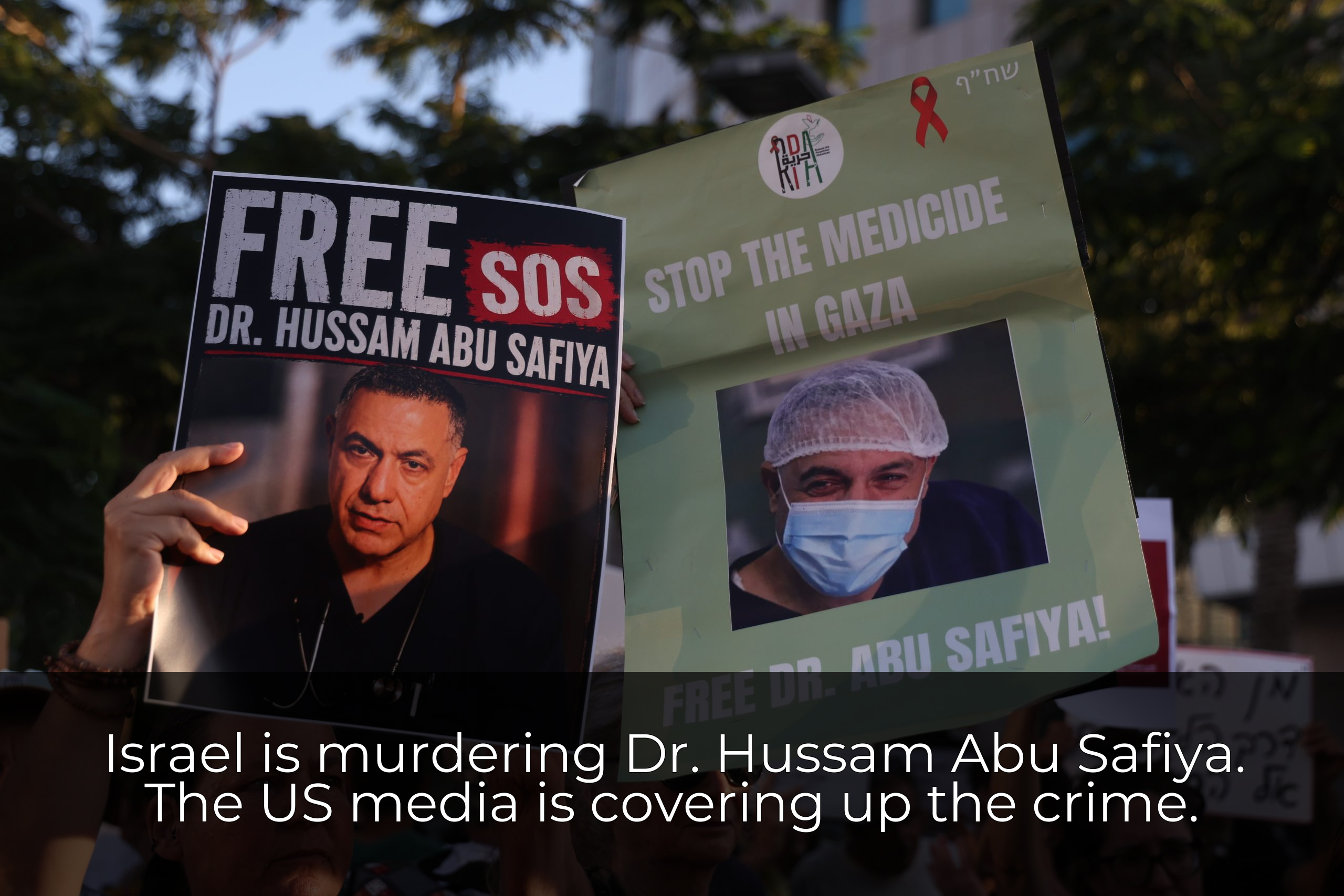
    (more…)

  • Rebels with a cause: The Black Panther Party and socialism in practice

    Rebels with a cause: The Black Panther Party and socialism in practice

    A teacher leads his students with the black power salute and slogans at a Black Panther liberation school. Photo via Getty Images

    On this episode of Rattling the Bars, to commemorate the 60th anniversary of the founding of the Black Panther Party in 1966, host and former political prisoner Mansa Musa speaks with Dr. Joy James and Dr. K. Kim Holder about the history of the Panthers and their unique approach to, and practice of, communal socialism.

    This is Part 2 of a two-part conversation. Watch Part 1 here.

    Guests:

    • Dr. Joy James is Ebenezer Fitch Professor of Humanities at Williams College. She is the author of numerous books, including: In Pursuit of Revolutionary Love; Resisting State Violence; and Shadowboxing: Representations of Black Feminist Politics. Creator of the digital Harriet Tubman Literary Circle at UT Austin, James is also editor of The New Abolitionists: (Neo)Slave Narratives and Contemporary Prison Writings; Imprisoned Intellectuals; Warfare in the American Homeland; The Angela Y. Davis Reader; and co-editor of the Black Feminist Reader.
    • Dr. K. Kim Holder is an assistant professor of educational foundations and Africana studies at Rowan University. Dr. Holder earned his doctorate from the University of Massachusetts Amherst in Multicultural Education and African American Studies, his masters in Early Childhood Education from Bank Street College of Education, and B.A. in History from Hampshire College.

    Credits:

    • Producer / Videographer / Editor: Cameron Granadino
    Transcript

    The following is a rushed transcript and may contain errors. It will be updated as soon as possible.

    Mansa Musa:

    Let me ask y’all this. We know that at this juncture right now where we stand at right now, the contradiction that exists between the leadership or the lack of leadership in this country, because when we come into space saying like we saying socialism, we defining and we making an analysis and we using it in our analysis, Bernie Sanders, Franklin Roosevelt, except Obama. Let’s move with the narrative. Let’s move the needle to how do y’all look at the Black Panther Party’s perspective in terms of socialism and how they was trying to implement their ideas along them lines? What’s the lesson we can take away from that to help people understand that?

    Dr. Joy James:

    Well, I could just say from my research and a little bit from organizing and Kim, correct me, right? Check me if I’m wrong. I think there were different parties after the assassination in Chicago with Hampton and Mark Clark, with Fred Hampton and Mark Clark in 69 and then their attempts to do additional assassinations a week later, I think December 11th in Southern California, Geronimo Pratt had fortified the house. So there was exchange of fire but nobody was killed in peaches. I can’t remember her full name, but Kim Can. When I think of that kind of history, I understand that it’s not going to be replicated whatever we end up doing as older people or younger people 50 years later, but there’s a continuous line. I’m sorry if I’m sounding too abstract, but what I see and what happened decades ago when I study it, when I work with my students, look at it, when we look at the documentaries and the films, I see a spirit and I know people usually don’t talk about spirit and we talk about material struggle, but there’s also a spiritual aspect to liberation movements.

    I think the youth have that embodied in them as well as we have it. It doesn’t come out with the same kind of narrative, but it’s going in the same kind of trajectory. I think that becomes a source that allows us to say we need to keep jobs, to keep family, whatever fed, but we do not need to pimp ourselves out in terms of politics and we don’t have to lie about the reality. So it doesn’t matter if you get a black man or a black woman as president, whatever, it’s still an imperial project and it’s going to continue to decimate countries and peoples around the globe and people inside the US. And I believe when we agree to that and we understand that agape, I’m a former seminarian. When we think of agape, which is a form of love, which is about sacrifice for the greater good, I think our capacity to resist just increases.

    I think what diminishes our capacity is that we have different pods of activists and radicals and abolitionists. And sometimes people want to hold onto their brand and their

    Mansa Musa:

    Identity

    Dr. Joy James:

    Rather than to let it go and to merge and try to create something that takes us somewhere beyond just circling around the camp. I don’t know if that was too abstract.

    Mansa Musa:

    Nah, nah, that was very astute and it’s a good observation because when we look at, and I’m going to go back to what you say, like it’s more than one party. My perspective about that is I’m in the space of that we didn’t understand the repression. We didn’t understand our opposition in response to who we were, the most fierce party in the country. We didn’t understand the response that we was going to get and not understand the response and making adjustments and then we making the adjustments as we go along and the adjustments is being made in response to like, oh, misinformation, disinformation, like you talk about Geronimo, he did all that time in prison. Why? Because somebody wouldn’t come forth and say, because the misinformation and disinformation, we killed each other from on coach to the next coast. Why? Because misinformation, discipline.

    Now we going from a position of organizing people to trying to survive. I’m not idealistic about … I don’t have that idea. I’m looking at the reality. Eddie Conway did close to 47 years in prison and nobody came and gave him no money. It was a lot of comrades that went to prison and didn’t get the support they supposed to got. That being said, our ability to respond to the repression put us in a position where we went from being on the offense in terms of organizing to them being on defense, then from being on defense to just trying to survive, trying to live.

    Dr. K. Kim Holder:

    I think there was a party. I think I would say from 67 until the marital candidacy where they shut down all the branches and brought them there, I think that’s where you stop talking about one party. I think it was a party. I know it’s populist say there was many different parties. There was one party, it was a revolutionary party. It had communist socialist trends to it. I believed in armed self-defense, believed in revolution. And you just go back to Youi Newton’s on revolution, executive mandate number one, two, three, et cetera, et cetera. So I think there was a party. I think there was a consistency. And I want to say this, while the youth got no clue what the party was about but love it, they got the essence.

    Mansa Musa:

    And the

    Dr. K. Kim Holder:

    Essence of what they like is that the party were no punks, they were no sellouts. What you got was true. It may have been made mistakes, but it was true struggle and they didn’t have no alternative agendas.

    Mansa Musa:

    Agenda, yeah. And I think

    Dr. K. Kim Holder:

    That’s what the youth see and what the party represents to them. They ain’t got no clue about all socialism, communism, revolution versus this. They grew up thinking they was free because of Obama and stuff, but what they do see was the party was uncompromising and that’s the essence of what they see of that. And that’s a good thing. But I do think that there was a party message. There was a party and it was a revolutionary party and I agree with you. It takes its place in historical continuing of Black liberation

    Mansa Musa:

    Along

    Dr. K. Kim Holder:

    With Nat Turner and what have you.

    Mansa Musa:

    Eddie wrote a book called The Greatest Thread Ever. But who would say the greatest, say the most fearful thing, two things of the party that he wanted to completely get rid of, free breakfast program and the Back Panther Party paper. He was systematic and trying to get rid of both of those entities because they had root in the community and the free breakfast program, sickle cell anemia test, all those institutions, those institutions was like started party members would go there and set it up, but ultimately they would phase themselves out when somebody in the community stepped up to start taking responsibility and we would just provide the services and the resources, but the whole goal was, the whole goal was to- For the people

    Dr. K. Kim Holder:

    To

    Mansa Musa:

    Take over. … turn it over to the community. Exactly. So that the community and then we would be in a position like it would provide security or help. What can some of the lessons that the young people can take from the party going forward if they was to ask you that question, what can I take away? What can be my take? What should I look at? Watch your

    Dr. K. Kim Holder:

    Back when

    Mansa Musa:

    You

    Dr. K. Kim Holder:

    Start organizing. I’m telling you, when you start organizing,

    Mansa Musa:

    You

    Dr. K. Kim Holder:

    Develop your underground, you’ve developed your railroad first.

    Mansa Musa:

    And

    Dr. K. Kim Holder:

    No matter what happens, that is going to be the ultimate thing they’re going to come after you and that you need to organize and structure yourself in a way where there is a railroad and that we can operate outside of that is ultimately … We say, oh, the party had disinformation and stuff. You know what? The system did their job. We was revolutionaries and they came after us, which is what they supposed to do. And we are the ones that have to come. My thing is that their ability to pay us off,

    But we need for them to understand now because just two years ago they thought everything was rosy. They need to understand that you start out with developing the railroad first, that you develop stuff in a manner in which you know that it’s not always going to be hunky-dory all up front and that you make sure that you understand that when you’re developing the most simplest things like the free breakfast program, like the free clinics and stuff, we got to understand the nature of this system. I don’t want to get all gloom and doom, but that is something that I’ve been dealing with for the last 60 years in terms of what the system … The system did what they were supposed to do and they’re nastier now.

    Dr. Joy James:

    Yeah. I would say to the youth, that’s their question, right? What would we say to the youth? So it’s almost like I’m talking to my students. Check out a number of the documentaries, All Power to the People, Black Panther Party and Beyond by Lil Lee. I was introduced to that by Kim Holder when they came to Boulder to a conference in 1997 or something. And it’s important. It’s online and I don’t think a lot of people know about it, but you could see the party, its evolution, and also the contradictions within it. Then there’s another film, The Spook Who Sat By The Door, which is not a documentary.

    Mansa Musa:

    Yeah, Samuel Greenlee.

    Dr. Joy James:

    Yep, you got it. And it’s an interesting film.

    I think for young people who are … I’m a military brat, so I grew up and I was in R2C handling stuff. Some people want to be pacifists and that’s fine. So the understanding for me is that the revolutionary is really based in the heart and that what you’ve talked about, the food programs, the sickle cell anemia, the healthcare, knocking on people’s door, providing housing. I know from Kim talking their sister was being harassed in Hell’s Kitchen decades ago when he was in the party by the Hell’s Angel and Kim being in the party came to her apartment and slept on her floor to give protection so she wouldn’t be harassed or kicked out of her apartment by some racist people on motorcycles. Those expressions of love and commitment builds of movement, but there’s a cautionary note because we referenced Geronimo. Huey was brilliant and there’s a book out on Huey Newton that’s coming out in a couple of months.

    And again, I never sacrificed or wasn’t old enough or whatever the reasons for not being there, but they’re the contradiction sometimes of leaders who lose their way and we have to have the capacity to pull them back. Geronimo did 27 years the same as Nelson Mandela. People cheered Nelson Mendela. They don’t remember what happened to Geronimo, how he was framed, how he was at a meeting in Northern California,

    Anthers. FBI set him up and Huey told people not to acknowledge the person who went rogue was Kathleen Cleaver. And so she ends up being with Stuart Hanlin and Johnny Cochran, part of that legal team to get Geronimo out. And I only met him once, but people have suffered a lot and people have given a lot, but what they’ve left is a legacy for us to study, whether you’re young, middle-aged or old. And I don’t think the Panthers were ever defeated. And I think that’s why there’s so many people focus on them. The last thing, which is more a question, from what little I looked at, there was an organization that identified young people as Panthers and then they were told to stand down and they became Black lions. I would hope that the party has the fluidity to embrace everyone who’s sincere about … And I don’t know these people, they’re based in Philly.

    I’m not in Philly, but I would say that to the candor that we have to deal with our contradictions despite the predatory violence of the state and people trying to buy out movements, we still have our inner mental, emotional registers that have to be calmed down. And so then I think of care, protest, movement, marinage, war resistance. That’s the whole thing I’ve been thinking about for a decade about the captive maternal, which is ungendered. And I see you both as captive maternals that you care. And I think that foundation of care will push us through into liberatory struggle.

    Mansa Musa:

    Let’s talk about how do we get young people to understand how the coalition built in terms of … Because the party, when they came into existence, they was big on coalition building. They was big on networking, they was big on any element that was anti-stagement or was protesting conditions. They network with them and build a relationship with them in order to change the conditions that our communities found themselves in. How do we get young people to understand that part of the party’s organizing strategy?

    Dr. K. Kim Holder:

    I think one thing I can only come from it from a negative perspective, unfortunately, but I think one thing that needs to stop, people tend to define their ideology by criticizing other people.

    Mansa Musa:

    Come

    Dr. K. Kim Holder:

    On. And I think that needs to stop. And what we need to start to do at the beginning is we need to start to develop some basic principles that we accept and that we live by

    Mansa Musa:

    And

    Dr. K. Kim Holder:

    That that allows us then to determine how we can go with somebody else. Right now we seem to be, “You said this one thing five years ago, you ain’t no good, blah, blah, blah.” It’s like, I show how bad I am by showing that as opposed to let’s establish what we actually believe some basic principles and then some basic principles of operation, how we can interact with each other and move forward. Why do we expect us to get along? Nobody gets along in this society. Because we have it be movement people, we get along. So we got to start basically on what are the basic principles so then we don’t be one ups on people.

    Dr. Joy James:

    We need to articulate, well, you already did the 10 point program, right? But we need to articulate for this generation, this century, what is emotional intelligence? I mean, we know little Bobby Hutton, I mean, Eldridge thought it was a good idea to do something and you lose people or people get disappeared. There’s a way in which even when we struggle at our best, and again, I was not in the party, but I know Kim from talking to you for 30 years a little bit about what you were saying. There’s a way in all political struggles when you’re being hunted by the state and you’re being infiltrated, there has to be a level of integrity or a set of ethics that’s not just from the party. It has to emanate from ourselves as a community. And that is how we all get to make mistakes and we all get to like, “I got to step this one out.

    I’m not brave enough,” whatever. “Okay, come back next week and we’ll try again. “But I’m not sure that we’ve articulated beyond the 10-point program, what are the ethics of emotional intelligence and a commitment and agape? And I know for some people that seems very abstract, but I think that’s the core that keeps us alive and from cross-shooting each other literally and figuratively.

    Mansa Musa:

    And to your point, we do this because we love it. We love our people. We love the fact that we’re in a position to try to do something to gain our freedom and our liberation. I was in Oakland and had the opportunity. I told Emory Douglas, Minister of Culture, Black Panther Party when I came back because we was doing some things and I told him when I come back, I wanted him to take me around Oakland and talk about the party and some of the early things they did and he’s a good storyteller as far as I’m concerned and he did. He took me around with the thing that he left me with was how simplistic the party was in terms of organizing how simplistic … He said every library in Oakland, wherever they had something party members was there and participating and any space they could get, they would be there.

    Any park, they would be at, they would do organized, they would play baseball, basketball. They always was doing something in the community. And I think that to your point, Kim, that we have to stop talking about what we don’t have in common and start talking about what we do have in common and find that commonality and then find that commonality.

    That’s just what we do. I’m going to give you one more example, then I’m going to give you all that y’all have the last word. Dominique Conway, Eddie’s wife, we was doing some organizing in the neighborhood. So in the neighborhood we in high drug area, there’s a lot of kids there. So we down there doing some organizing and we don’t have no space. So they said,” Well, we got to get us a space. “So we took a house, a house that was abandoned, that was livable. We took it, did all the research on it, found it was city property, took it and then held a press conversation like this house we taking for the community. And when Eddie got out, that became our base operation. We did everything in that neighborhood. Eddie in a meeting with some guys and they talking like they serious about organizing.

    And so Eddie looked out the window and seen some abandoned house said,” Just go take some houses and do just that simple. “And I think that we lose sight on the simplicity of things that we could be doing, but y’all got the last word, what y’all want to say about this subject matter.

    Dr. Joy James:

    I want to say thank you for inviting us to this conversation and for all the work that you’re doing and all you’ve contributed. And I was just thinking of a book, the importance of books, which we know many people inside and people who were in the party studied books, they read, they taught themselves, they taught each other. And so it was a book, it was a black women’s led book launch in the federal government building or something on 125th Street in Harlem. And I went there because it was a Sada’s memoir and it’s the first time I heard of her book was just coming out. And then when I went to teach at UMass, someone mentioned to Kim who got his degree from there that I was teaching this book, Asada, he autobiography and class and that’s how we met. That’s how the conversation started.

    So the word is with us.

    Mansa Musa:

    Right.

    Dr. Joy James:

    Yeah. Yeah, you’ve got it. And even what you’re doing- And

    Dr. K. Kim Holder:

    She took me to Cuba

    Mansa Musa:

    And

    Dr. K. Kim Holder:

    I took her to the sister. Hey,

    Mansa Musa:

    The word became fresher. The word became fashion. Yeah. I picked up on that look and the word became flesh.

    Dr. Joy James:

    And that’s what you’re doing now. You’re doing it with audio, but it’s still the word. Yes, that’s how I got to be in her kitchen and hear her say things. I’ve been in Cuba several times, but always like the collective, we’re all sitting, we’re tourists and something like that. But because they were both in the party in Harlem, that’s when you get these … This is when you learn. And I learned a lot and I’ve learned a lot from the party and a lot from how you’ve cared and loved and fought and so I’m grateful and thank you again.

    Dr. K. Kim Holder:

    You work with Eddie and you was in the joint, so that’s one perspective. Eddie was good with coalitions. Do not follow the party when it comes to coalitions. Party was Vanguard. We bossed everybody around and half the coalitions that we talk about, we made up.

    Mansa Musa:

    Yeah, okay.

    Dr. K. Kim Holder:

    I’m

    Mansa Musa:

    Just

    Dr. K. Kim Holder:

    Saying.

    Mansa Musa:

    The

    Dr. K. Kim Holder:

    Party and especially if you were black, if you were something else, we would deal with you. But if you were black, how come you ain’t a pather?

    Mansa Musa:

    Yeah.

    Dr. K. Kim Holder:

    You say? If you was Latino, okay, we could work with you. If you was white, okay, if you was this, but if you’re black, how come you ain’t a path? The only blacks that we respected outside of us was students. But I understand that prison was different and I know Eddie Conway is a good coalition builder, but so you getting the good side of the party,

    (more…)