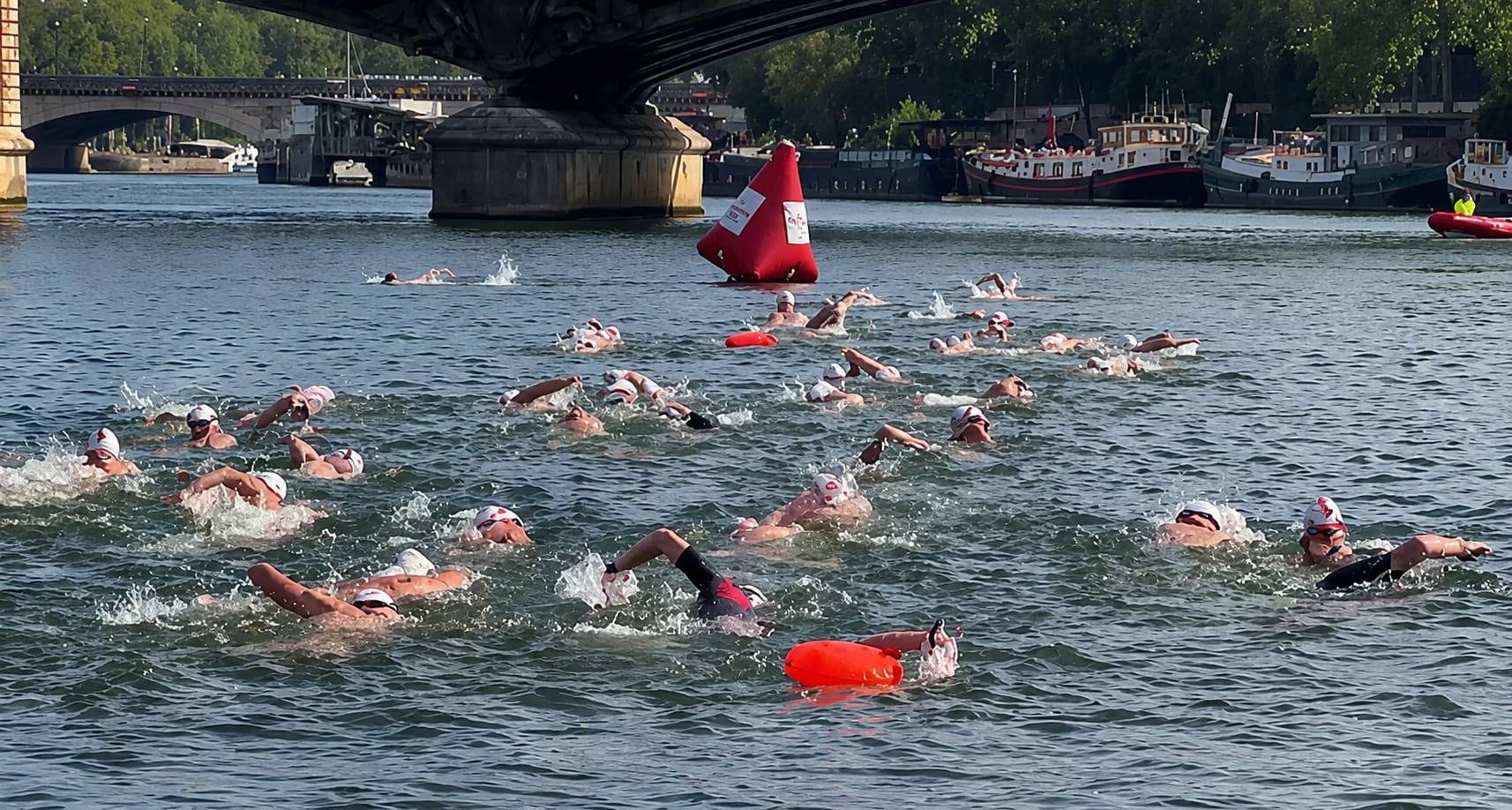
The image of hundreds of swimmers moving through the waters of the Seine in front of the Eiffel Tower marked the return of competitive swimming to Parisian waters after nearly 80 years of prohibition. The Open Swim Harmonie Mutuelle, held on Sunday, July 12, 2026, brought together amateur and professional athletes in an event that transformed the usual landscape of central Paris.
According to the local newspaper Le Monde, competitors from several countries took part, covering routes that passed some of the city’s most emblematic locations.
From early hours, there was anticipation along the banks of the Seine. Spectators gathered to cheer the swimmers, who began their course near the Eiffel Tower and headed toward the finish at Quai de Grenelle. Published information indicates the main race covered 8.5 kilometers, while other events included one- and two-kilometer distances.
A historic event in the city center
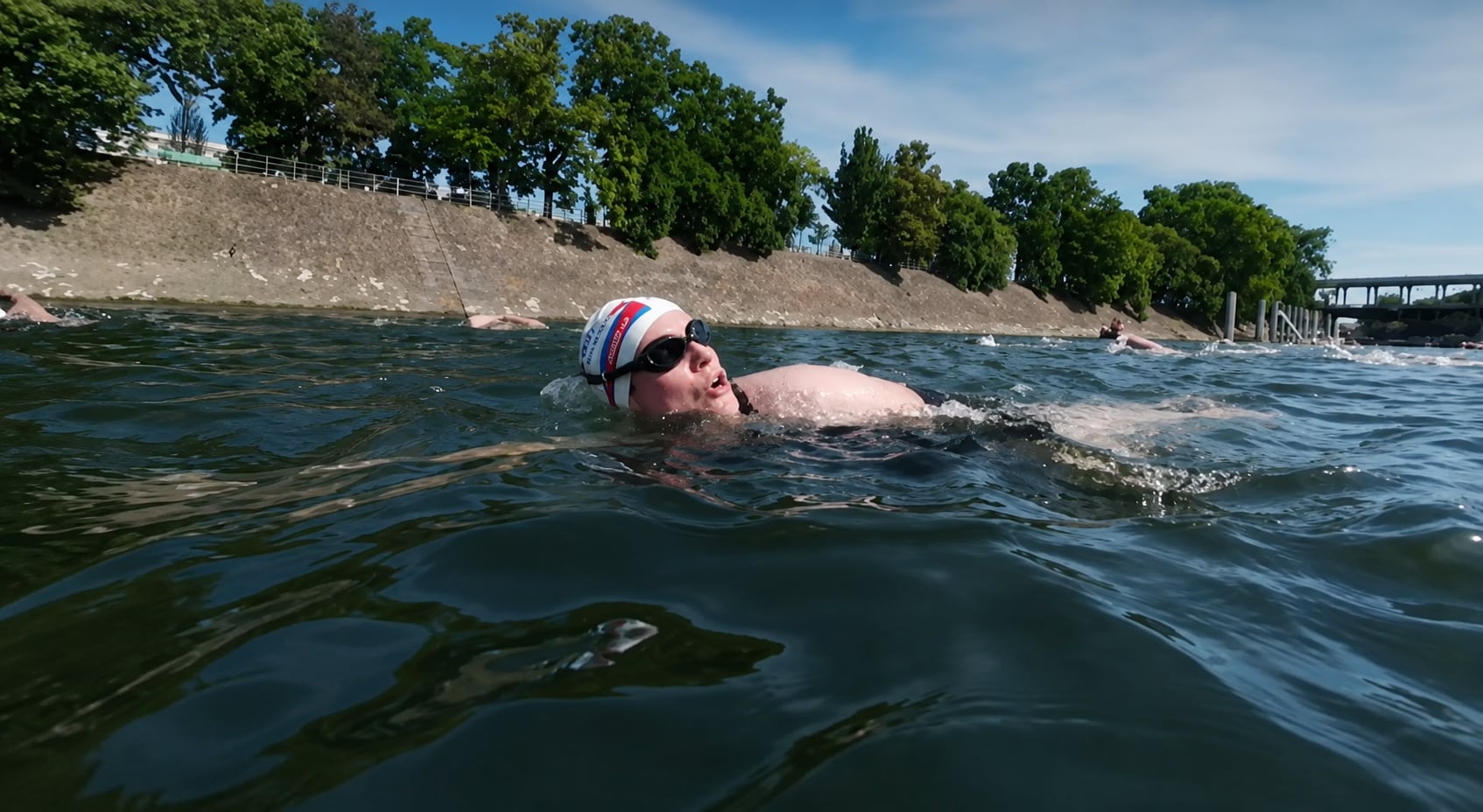
The Open Swim Harmonie Mutuelle was not only a sporting competition but also a milestone for the city of Paris. Le Monde reported that this was the first race in the river since the 1940s. The event was organized by Stéphane Caron, an Olympic medalist and one of the event’s founders, who said that the Seine’s water quality now meets exceptionally high standards. Local authorities and organizers confirmed these findings after conducting water analyses and ensured the swimmers’ safety throughout the day.
The main route started at the Bibliothèque nationale de France and finished at Quai de Grenelle, passing iconic sites such as Île de la Cité and Île Saint-Louis. Media footage showed participants progressing alongside historic monuments and well-known bridges. Many swimmers celebrated at the finish line by raising their arms before receiving their medals.
Organization and a precedent in French swimming
The event was created in 2012 by a group of former French swimmers, including Stéphane Caron, who has played a central role in its development and growth. For 11 years, the race has had the support of the insurer Harmonie Mutuelle, which helps with logistics and promotion. Previous editions were traditionally held on the Canal de l’Ourcq, near Paris, where 500-meter and five-kilometer races also took place that same weekend.
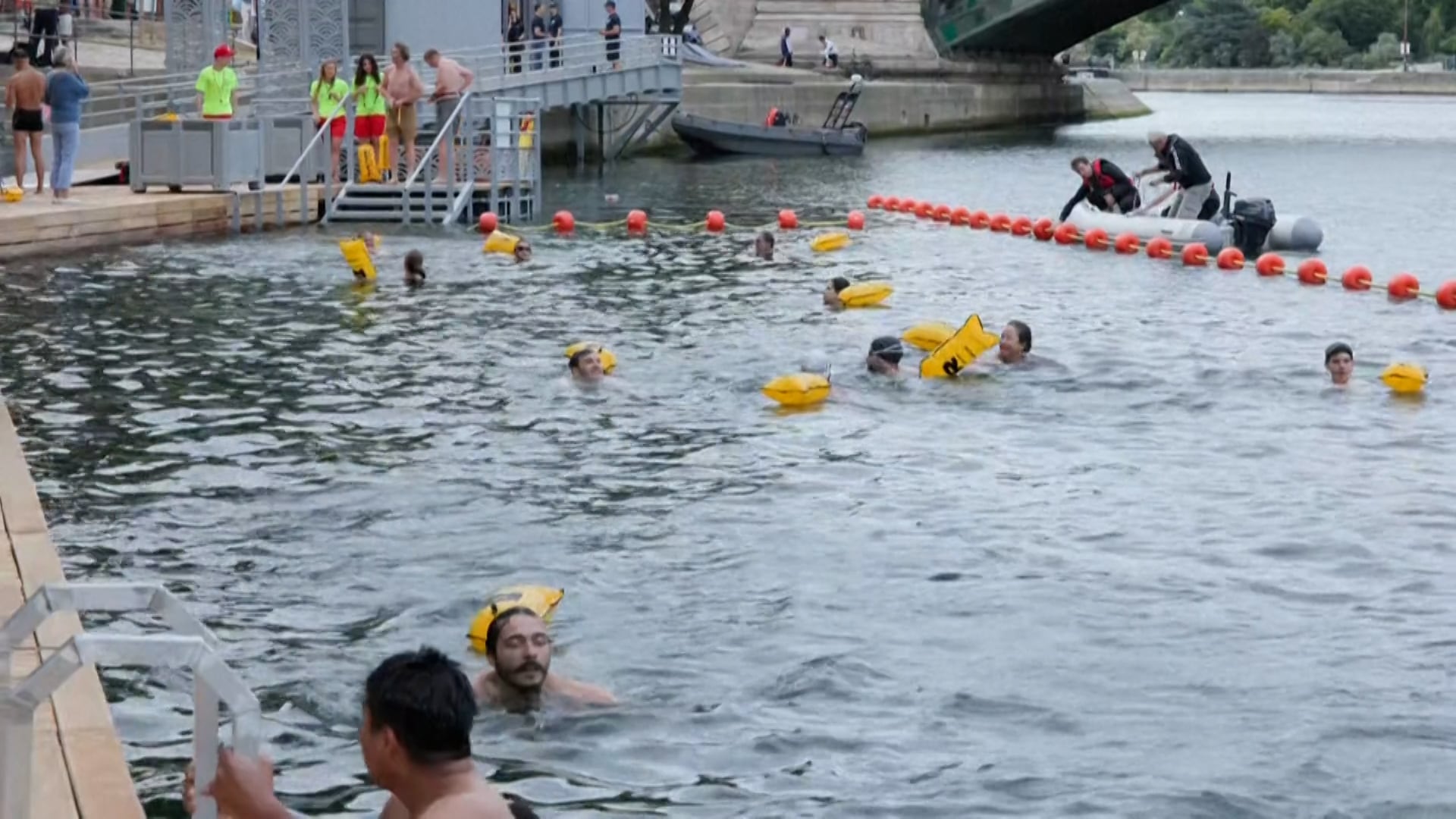
On Saturday, the Canal de l’Ourcq hosted swimmers of different ages and skill levels in the shorter events as part of a program that ran throughout the weekend. Organizers said the decision to include the Seine as the main venue in 2026 resulted from a joint effort by municipal authorities and sports organizations to reclaim the river for recreational and competitive activities.
Safety, quality standards and international reach
This year’s edition was characterized by strict water quality checks and safety protocols to ensure participants’ welfare. Stéphane Caron told Le Monde that “the Seine’s water quality now meets exceptionally high standards.”
Improvements in environmental and sanitary conditions made it possible for authorities to authorize moving the race to the city center, a long-standing goal of the event’s promoters.
The Open Swim Harmonie Mutuelle aims to establish itself as an international benchmark in the open-water swimming calendar. The visibility offered by a setting like Paris and the recovery of the Seine for sports were highlighted by international media. The goal is for the French capital to become an example of how sport, heritage and the environment can coexist.
The 2026 edition concludes a period of adaptation and preparation for the organizers, who expressed their intention to keep the race in the Seine in coming years. The event’s success and the positive outcomes regarding safety and participation marked a new era for swimming in Paris.