
Tag: originally

  • Mumia Abu-Jamal’s legal team appeals to UN

    Mumia Abu-Jamal, a 72‐year‐old incarcerated journalist and former Black Panther, is seriously ill and may die in prison, according to a new filing his legal team submitted to the United Nations’ Working Group on Arbitrary Detention. The petition, filed by lawyers including Abolitionist Law Center legal director Bret Grote, requests UN review and support after nearly all domestic legal options have been exhausted. Read the original report on Truthout and the filing itself here.

    The submission summarizes decades of alleged procedural failures: a contested 1981 conviction for the killing of Philadelphia police officer Daniel Faulkner (which Abu‐Jamal has long denied), the 2001 overturning of his death sentence, and a 2011 resentencing to life without parole. His attorneys argue that repeated attempts to secure a new, fair trial have been denied and that his detention may meet the UN’s criteria for arbitrary detention, which includes factors beyond strict legality—such as unfair process, lack of predictability, and injustice.

    Health and treatment concerns: Abu‐Jamal’s lawyers say he endured long periods of solitary confinement (1983–2011) and now faces multiple serious health conditions while incarcerated at SCI Mahanoy. Medical records cited in the UN submission report a 2012 hepatitis C diagnosis that led to cirrhosis, a severe skin condition treated with steroids that precipitated diabetic complications, and ongoing cardiological and ophthalmological problems. Human rights experts previously raised alarm when he was shackled to a hospital bed in 2021 while awaiting heart surgery; see the OHCHR statement.

    Vision at risk: Court and medical records indicate Abu‐Jamal suffers from cataract complications and complex eye diseases—proliferative diabetic retinopathy and glaucoma—that place him at significant risk of permanent blindness. In a 2025 commentary for Prison Radio, he described severe vision loss that has left him largely unable to read or write.

    Advocates including the Center for Constitutional Rights and the Abolitionist Law Center note that international review has previously influenced U.S. policy: a 2023 submission to the UN Human Rights Committee helped prompt a call for a moratorium on life sentences without parole. The petitioners hope the Working Group’s review will similarly spotlight alleged human rights violations and catalyze action.

    The filing cites precedent: in 2022 the UN Working Group concluded that Leonard Peltier’s detention was arbitrary after a petition by Yale Law School’s Lowenstein Clinic; Peltier later received commutation to home confinement in 2025. Advocates point to that case as an example of international scrutiny provoking domestic remedies.

    Possible routes to release are limited. Abu‐Jamal’s conviction is at the state level, so options include a gubernatorial commutation (politically unlikely), a successful appeal if new evidence emerges, or compassionate release. His lawyers say he does not have a terminal diagnosis that would automatically qualify him for compassionate release now, but they emphasize his age and serious health needs as factors that make continued incarceration problematic. Pennsylvania has not adopted a “second‐look” sentencing policy; review the nationwide status at The Sentencing Project.

    Supporters argue that international pressure and human rights findings have historically influenced U.S. sentencing reforms and release decisions. As Samah Sisay of the Center for Constitutional Rights explained, even when the U.S. resists international law, global advocacy has helped drive domestic change on extreme sentencing.

    Context and advocacy: Former political prisoner Laura Whitehorn and organizations such as Release Aging People in Prison (RAPP) emphasize the broader issue of long sentences for older incarcerated people and point to international examples—such as a recent Indian Supreme Court decision directing states to create early‐release policies for elderly and terminally ill prisoners.

    The legal team acknowledges the UN Working Group cannot enforce decisions directly, but hopes a formal finding will increase transparency and pressure for remedies. Their filing requests the UN to determine whether Abu‐Jamal’s detention violates international human rights norms and to recommend appropriate action.

    For more information and source documents, see the Truthout coverage, the Abolitionist Law Center’s submission, and statements from the Center for Constitutional Rights.

    Correction note: This summary clarifies that the Leonard Peltier petition was filed by Yale Law School’s Lowenstein Clinic and that the 2023 recommendation on life without parole came from the UN Human Rights Committee.

    Related internal resource: Full article and coverage on The Real News.

  • Mumia Abu-Jamal legal team appeals to UN

    Originally published by Truthout on July 28, 2026. Shared under a Creative Commons (CC BY-NC-ND 4.0) license. For related coverage, see our home page or our legal rights section.

    Summary: Legal representatives for long-imprisoned activist and journalist Mumia Abu-Jamal have filed a submission to the United Nations Working Group on Arbitrary Detention requesting international review and support for his release. The filing, prepared after exhausting domestic remedies in the United States, details alleged legal failures and serious health concerns that, according to his lawyers, make his continued detention arbitrary under international human rights standards.

    Case background: Abu-Jamal, a former Black Panther and longtime journalist, was convicted in the 1981 killing of Philadelphia police officer Daniel Faulkner. He has consistently maintained his innocence. His death sentence was overturned in 2001, and in 2011 Pennsylvania resentenced him to life without parole. Advocates say efforts to obtain a new, fair trial have repeatedly failed.

    The UN submission: The legal filing, led by attorney Bret Grote of the Abolitionist Law Center and supported by organizations including the Center for Constitutional Rights, summarizes decades of allegations: an unfair trial, biased appeals, prolonged solitary confinement, censorship, and what the lawyers describe as “death by incarceration.” The submission cites UN standards that define arbitrary detention broadly to include injustices and due process failings.

    Health and detention conditions: Abu-Jamal is in his early 70s and has multiple serious health conditions. His legal team reports long periods in solitary confinement (1983–2011) and claims inadequate medical care after transfer to SCI Mahanoy. Medical records referenced in the filing indicate he was diagnosed with hepatitis C in 2012, developed liver cirrhosis, suffered severe skin conditions treated with steroids that led to diabetic complications, and has faced delays or deficiencies in cardiac and ophthalmological care. United Nations experts previously expressed concern when he was reportedly shackled to a hospital bed in 2021; see the UN press note here.

    Risk of blindness: According to the submission, Abu-Jamal has experienced complications following cataract surgery and now faces several complex eye conditions—such as proliferative diabetic retinopathy and glaucoma—that place him at significant risk of permanent vision loss. He has described severe vision impairment in public commentaries, including a 2025 piece for Prison Radio.

    Legal and international context: While the UN Working Group can issue findings but lacks direct enforcement powers, past UN reviews have influenced U.S. outcomes. In 2022, the Working Group found the cumulative procedural deficiencies in Leonard Peltier’s detention arbitrary, and in 2025 President Biden commuted Peltier’s sentence to home confinement (coverage: Truthout).

    The legal teams behind Abu-Jamal’s submission, including the Abolitionist Law Center and CCR, previously persuaded the UN Human Rights Committee to call for a 2023 moratorium on life-without-parole sentences in certain circumstances; see the CCR statement here.

    Paths to release and advocacy: Domestic options in Pennsylvania are limited. The state has not adopted a formal “second look” sentencing review like many others; for context, see the Sentencing Project’s review of state policies here. Advocates note alternatives such as clemency or compassionate release, though each faces political and procedural hurdles. The campaigners argue that international scrutiny may help catalyze action and public attention.

    Voices and precedents: Supporters cite examples such as Russell “Maroon” Shoatz, who received compassionate release in Pennsylvania in 2021 after decades in custody but died shortly after release. Former prisoners and advocates, including members of Release Aging People in Prison (RAPP), have argued for policy changes that consider age and health in sentencing and release decisions. International rulings—such as a recent Indian Supreme Court directive on early release for elderly and terminally ill prisoners—are presented as comparative precedents that influenced national policy elsewhere.

    Conclusion: Abu-Jamal’s legal team asks the UN to determine whether his detention is arbitrary under international law and to issue findings that could amplify calls for his release or improved medical care. They acknowledge UN rulings are not directly enforceable but contend an international determination would expose the case publicly and support ongoing advocacy.

    Further reading and resources: • Abolitionist Law Center submission to the UN: PDF. • UN on arbitrary detention: information page. • Background on second-look laws: Sentencing Project. • For more on related advocacy, visit our human rights coverage.

    Correction note: This summary clarifies that the petition related to Leonard Peltier was filed by the Lowenstein Clinic for International Human Rights at Yale Law School and that the 2023 moratorium recommendation referenced came from the UN Human Rights Committee.

    (more…)

  • Mumia Abu-Jamal legal team appeals to UN

    Mumia Abu-Jamal, a 72-year-old incarcerated former Black Panther and journalist, is the subject of a new appeal to the United Nations asking for support for his release. His legal team, led by Bret Grote of the Abolitionist Law Center, filed a submission to the UN Working Group on Arbitrary Detention (WGAD) outlining decades of alleged legal and human-rights violations and asking the UN to recognize his continued detention as arbitrary. The full submission is available here.

    Case background: Abu-Jamal was convicted in 1981 of murdering Philadelphia police officer Daniel Faulkner; he has consistently maintained his innocence. His death sentence was overturned in 2001, and in 2011 he was resentenced to life without parole. According to his lawyers, repeated efforts to obtain a new and fair trial have been unsuccessful.

    Legal basis of the UN appeal: The WGAD evaluates detention not only for legality but also for elements such as unfair processes, lack of due process, and other factors the UN considers in defining “arbitrary detention.” More on the WGAD’s mandate is available from the UN Office of the High Commissioner for Human Rights.

    Health and detention conditions: Abu-Jamal’s lawyers document long-term confinement and medical neglect. He was held in near-continuous solitary confinement from 1983 until 2011 on death row, then transferred to SCI Mahanoy. Medical records cited by his team say he was diagnosed with hepatitis C in 2012, which progressed to cirrhosis. He later developed a severe skin condition treated with steroids that contributed to dangerously high blood sugar and an episode of diabetic shock. UN experts previously raised concerns when Abu-Jamal was shackled to a hospital bed in 2021 while awaiting heart surgery; that statement is summarized here.

    Vision problems and risk of blindness: Abu-Jamal — a prolific author of more than a dozen books — now faces severe ophthalmological issues. Court filings and medical notes indicate complications after cataract surgery in 2025 and ongoing conditions such as proliferative diabetic retinopathy and glaucoma, which place him at significant risk of permanent vision loss. He described his visual impairment in a 2025 Prison Radio commentary.

    Advocacy and precedent: The submission to the UN was prepared with support from civil-rights organizations including the Center for Constitutional Rights (CCR). CCR and the Abolitionist Law Center have previously used UN mechanisms successfully; for example, a 2023 review by the UN Human Rights Committee contributed to calls for a moratorium on life-without-parole (LWOP) sentences. Documentation of that UN Committee action is available via CCR here.

    The WGAD has previously reviewed cases involving long-incarcerated political prisoners. In 2022 it found the detention of Leonard Peltier to be arbitrary and recommended his release; Peltier’s case was submitted by Yale Law School’s Lowenstein Clinic, which is described here. Peltier’s confinement was later followed by an executive commutation to home confinement in 2025.

    Paths to release and limits: In Pennsylvania, options for release include a governor’s commutation, successful appeal based on new evidence, or compassionate release in cases of terminal illness. Abu-Jamal’s team notes he is not currently considered terminally ill, which complicates eligibility for compassionate release. Pennsylvania has not enacted a statewide “second look” law that allows routine sentence review; information on states with such statutes is available from The Sentencing Project.

    Why the UN appeal matters: Although the WGAD lacks power to enforce decisions directly, a ruling that detention is arbitrary can amplify international and domestic pressure and function as a catalyst for legal or political remedies. Advocates emphasize that international scrutiny has previously helped secure changes in U.S. criminal-justice policies, including reforms related to juvenile sentencing and LWOP.

    Related resources and coverage: – Original Truthout article: Truthout
    – Abolitionist Law Center submission (PDF): Submission
    – Prison Radio commentary by Abu-Jamal: Mumia’s Vision
    – UN WGAD information: About Arbitrary Detention
    – Center for Constitutional Rights: CCR

    Correction note: The original report was updated to clarify that the petition regarding Leonard Peltier was filed by the Lowenstein Clinic for International Human Rights at Yale Law School and that the 2023 LWOP moratorium recommendation came from the UN Human Rights Committee.

    For additional reporting from this site, see The Real News and related coverage under the Mumia Abu-Jamal tag.

    (more…)

  • ‘A pathetic power grab’: Trump purges bipartisan election assistance commission

    ‘A pathetic power grab’: Trump purges bipartisan election assistance commission

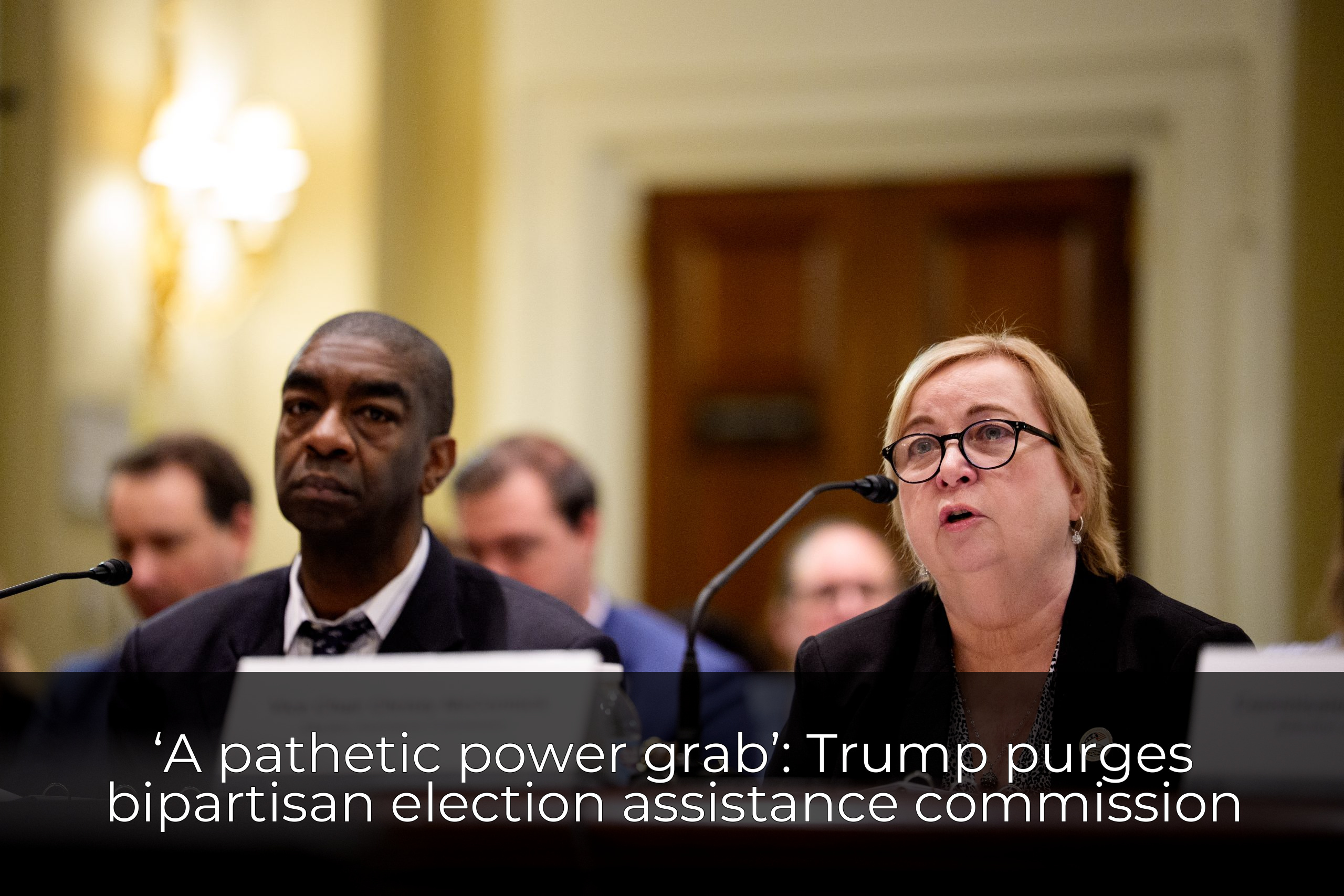
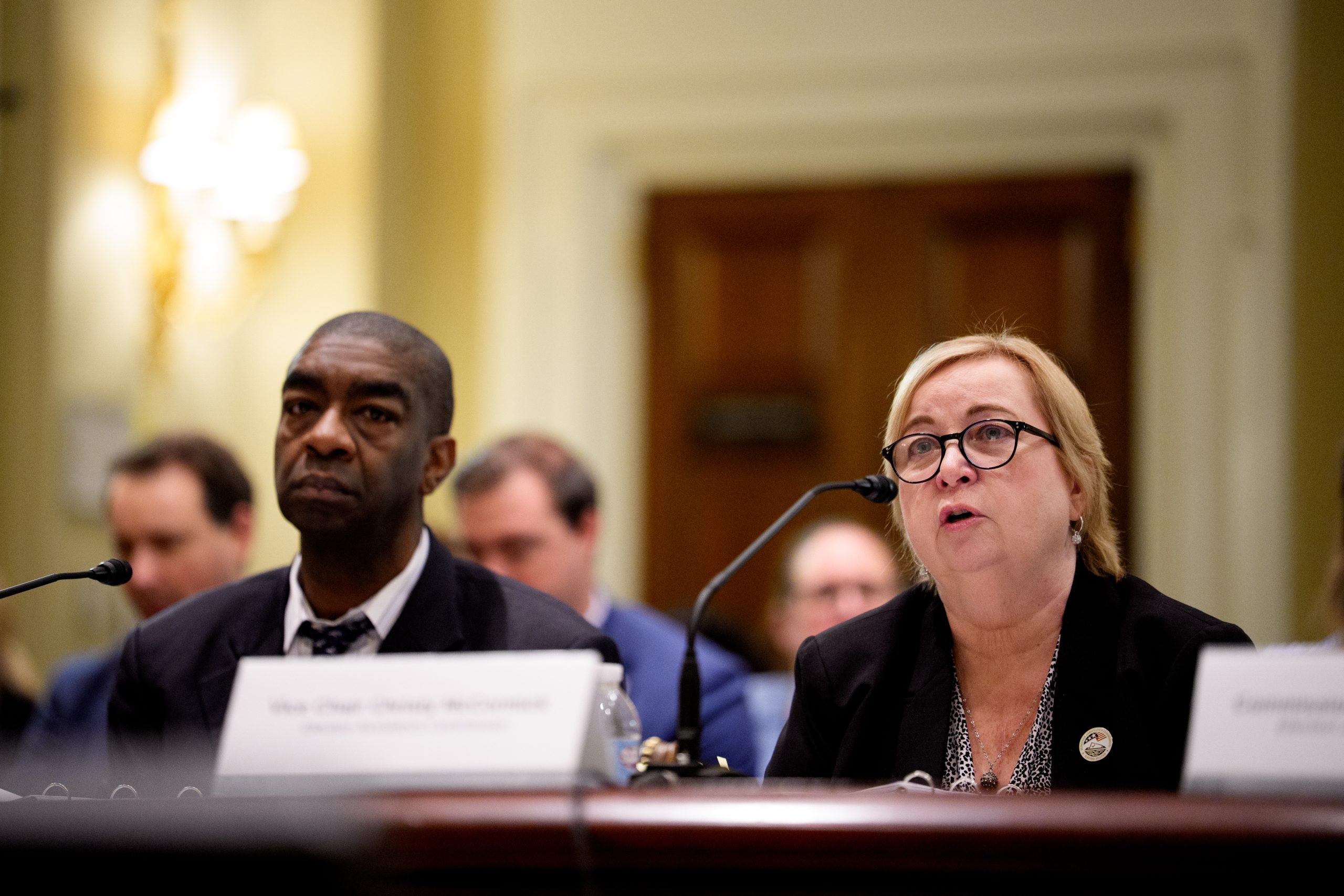
    U.S. Election Assistance Commission Vice Chair Christy McCormick (R), accompanied by U.S. Election Assistance Commission Chairman Thomas Hicks (L), speaks during a House Administration Subcommittee on Elections hearing on Capitol Hill on May 20, 2026 in Washington, DC. Photo by Andrew Harnik/Getty Images
    Common Dreams Logo

    This story originally appeared in Common Dreams on July 10, 2026. It is shared here under a Creative Commons (CC BY-NC-ND 3.0) license.

    US President Donald Trump late Thursday forced out the remaining three members of an independent, bipartisan commission that assists state election officials across the country, a move that critics condemned as a “pathetic power grab” ahead of the 2026 midterms.

    The two Democratic members of the Election Assistance Commission (EAC), Benjamin Hovland and Thomas Hicks, were fired, and Republican Commissioner Christy McCormick resigned at the White House’s request, according to ProPublica. The agency, established by Congress more than two decades ago, now lacks leadership and any ability to make decisions, just months before the 2026 elections.

    The EAC, as its website states, is “an independent, bipartisan commission whose mission is to help election officials improve the administration of elections and help Americans participate in the voting process.” In an executive order last year, Trump ordered the EAC to implement proof-of-citizenship requirements in the federal voter registration process, along with other changes. The president’s effort to impose his policy demands on the EAC was mostly blocked in federal court.

    Trump, who has said he wants his administration to “take over” voting nationwide ahead of the 2026 midterms, has since taken other steps that watchdogs and Democratic lawmakers say amount to an attempt to preemptively subvert the coming elections, including a sweeping assault on mail-in voting—which is also facing legal challenges. Legislatively, Trump is pushing Republicans to pass the SAVE America Act, a bill that experts say would prevent millions of Americans from voting.

    Michael Waldman, president and CEO of the Brennan Center for Justice, said Thursday’s EAC firings “are deeply concerning in light of President Trump’s relentless efforts to try to interfere in elections.”

    “These removals leave the agency without leadership and unable to carry out its major responsibilities,” said Waldman. “The guardrails Congress placed on this agency are clear and must be followed: The Election Assistance Commission was designed to be bipartisan with four members, no more than two of which can be from the same political party. The agency cannot make any significant decisions or take any significant actions unless three confirmed commissioners agree. Until bipartisan replacements are confirmed, the agency cannot lawfully make any decisions that affect how Americans vote.”

    Lisa Gilbert, co-president of Public Citizen, said Trump’s termination of EAC commissioners underscores that “he’s scared of the voting power of the American people.”

    “This move is another pathetic attempt to sow doubt in our elections, which are safely and expertly run by states and localities,” said Gilbert. “This agency deserves a steady hand and expert leadership. That said, it is important for voters to know that states and localities, not the EAC, run our elections. Even more importantly, it is the voters who decide who takes office.”

    The EAC firings came less than two weeks after the conservative-dominated US Supreme Court handed Trump the power to purge independent agencies at will with its Trump v. Slaughter ruling, erasing around 90 years of precedent.

    Election law expert Rick Hasen warned in a blog post on Thursday that Trump “could try to direct the commissioner-less EAC to do his bidding, for example by stating that the EAC must amend the federal voter registration form that states must accept for federal elections to include documentary proof of citizenship.”

    “Trump’s first voting-related EO tried to do this, and he was stymied. But that was acting through the commissioners and before the Slaughter case,” Hasen noted. “If he tries anything like this, it will be high-profile and very important litigation that will end up at the Supreme Court on the emergency docket over the summer.”

    Adrian Fontes, Arizona’s Democratic secretary of state, said in a statement late Thursday that the EAC purge was “irresponsible and dangerous,” accusing the administration of remaining “dead set on causing chaos for our election officials across this country.”

    “This move undermines the integrity of nonpartisan election administration,” Fontes added.
    (more…)

  • Israel is murdering Dr. Hussam Abu Safiya. The US media is covering up the crime.

    Israel is murdering Dr. Hussam Abu Safiya. The US media is covering up the crime.

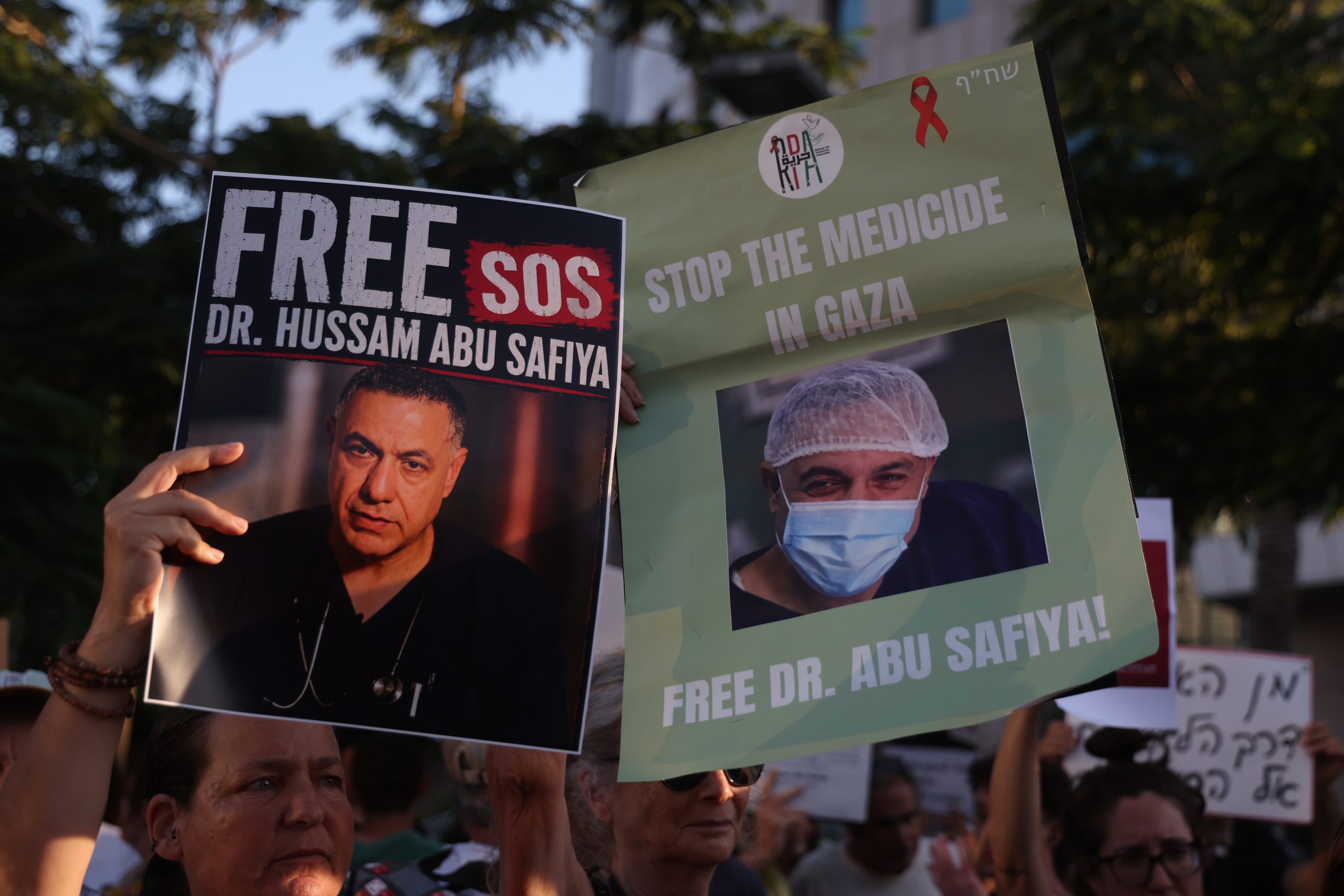
    Activists gather to stage a protest demanding the release of Dr. Hussam Abu Safiya, director of Kamal Adwan Hospital, in Tel Aviv, Israel on July 06, 2026. Photo by Saeed Qaq/Anadolu via Getty Images

    This story originally appeared in Mondoweiss on July 08, 2026. It is shared here with permission.

    By now, editors at the New York Times and producers at CNN are surely squirming over what to do about Dr. Hussam Abu Safiya, the Gazan doctor and hospital director who Israel has locked up for a year and a half without trial, and who says his jailers are trying to kill him.

    Worldwide campaigns, by Amnesty International and other human rights groups, have called for Dr. Abu Safiya’s release and global media coverage has been significant. Britain’s flagship newspaper, the Guardian, has naturally already reported about Dr. Abu Safiya. Here is its July 6 headline: “Detained Gaza doctor almost unrecognisable after injuries in Israel jail, lawyer says.” Even the Israeli press have reported about him, including covering a demonstration in Tel Aviv on July 6 drawing attention to his case.

    But in the American media, there has been a complete blackout about his case and his dire condition.

    As of July 7, the New York Times has not mentioned his name a single time since January 2025. The Washington Post did run an Associated Press report, but there was no fanfare on the Post home page and you had to search hard for the article. In the Wall Street Journal so far: nothing. CNN’s website did have a short video report, but it apparently never appeared on the network’s U.S. outlet. Dr. Abu Safiya is also missing on MS Now, supposedly the most progressive cable network.

    As this site and other alternative media have regularly reported, Dr. Abu Safiya, a pediatrician who was the administrator of the  Kamal Adwan hospital in Gaza, turned himself in to the Israeli army on December 27, 2024. There is an iconic photo of him, in his white physician’s coat, walking through the rubble in Gaza toward an Israeli tank. (Somehow that photo has never made it into the New York Times.) Since then, first-hand accounts from his lawyer and now his son have alerted the world about his terrible treatment in various Israeli jails and his physical deterioration. Dr. Abu Safiya, now held in Rekefet Prison, has said: “They’ve brought me here to kill me. I don’t see myself surviving. This is the end.”

    Israelis have insinuated that Dr. Abu Safiya is somehow linked to Hamas, but he has never been charged with any crimes. But the media is not supposed to decide on his guilt or innocence before reporting on his jailing. Hiding the story of Hussam Abu Safiya is clearly pro-Israel censorship, and unfortunately all too characteristic of America’s newspapers and cable networks in their coverage of Palestine.

    What’s more, the U.S. media is also covering up a much bigger story. Dr. Abu Safiya is being held without trial, in what Israel euphemistically sometimes calls “administrative detention.” Precise figures are hard to confirm, but Amnesty International has estimated that at the end of 2025 Israel was holding 4,622 Palestinians, from both Gaza and the occupied West Bank Palestine, without putting them on trial. 

    Dr. Abu Safiya’s terrible situation, which even just by itself is newsworthy, could also serve as a news peg to write about Israel’s administrative detention policy. National Public Radio, to its credit, did just that back on May 30. Its excellent on-air report even interviewed Dr. Abu Safiya’s son, Ilyas. 

    Mainstream media reporters based in Israel who want more background could drop into the offices of Israel’s premier human rights organization, B’Tselem, which monitors the detentions, even though Israel’s government no longer gives them the figures. Here’s one of their reports.

    What’s extraordinary about the U.S. self-censorship is that the Israeli media has reported about Dr. Abu Safiya’s plight. Haaretz, Israel’s newspaper of record, even ran an editorial charging the Netanyahu government with mistreating him and others, and urged Israeli courts to “halt the ongoing starvation, abuse and imprisonment.” And even the more right-wing Times of Israel has at least recognized his existence.

    What explains the cowardice at the New York Times and at CNN? Even those of us who have spent years monitoring the distorted and dishonest U.S. coverage are stupefied. 

    (more…)

  • In a divided country, U.S. residents agree on one thing: no data centers 

    In a divided country, U.S. residents agree on one thing: no data centers 

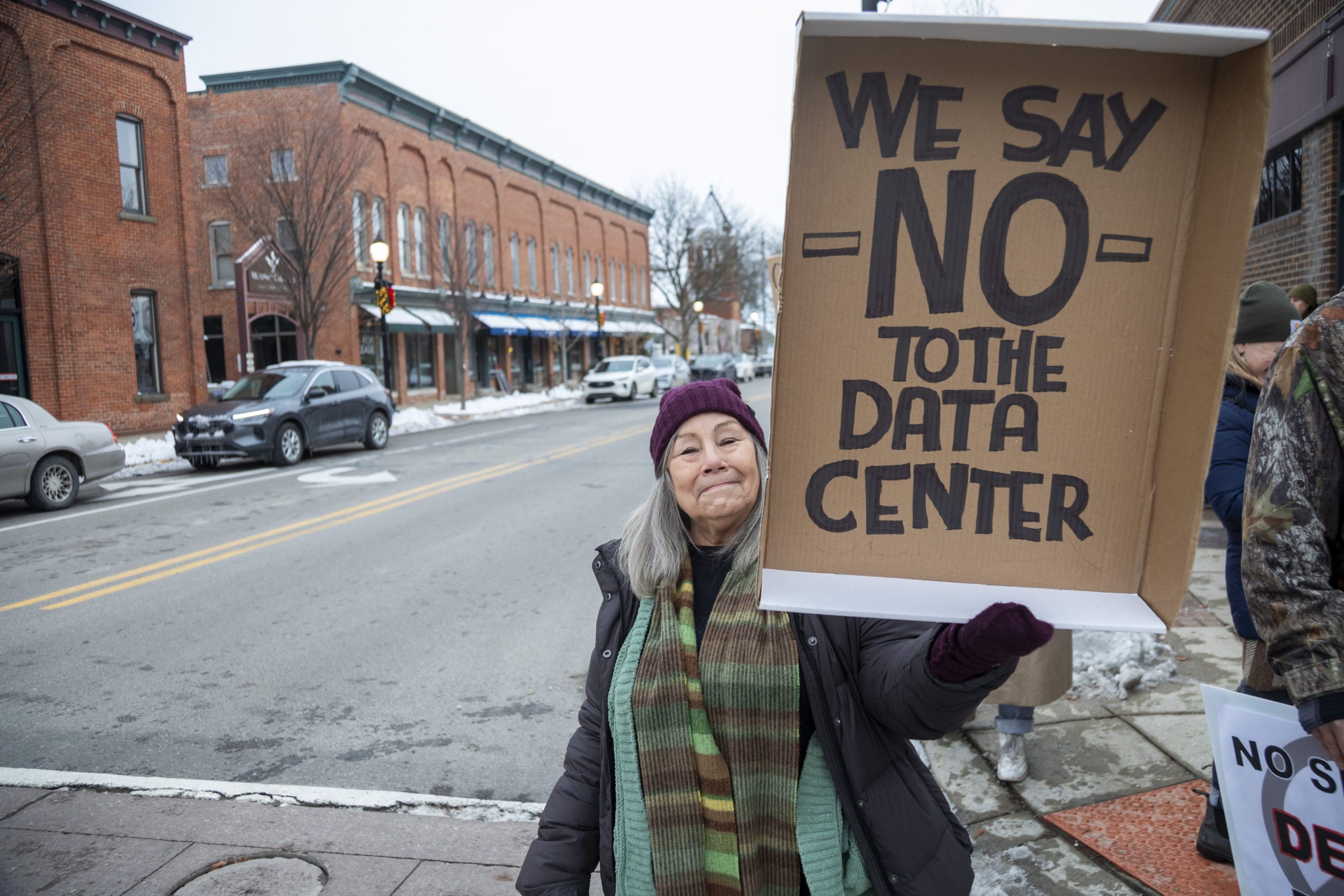
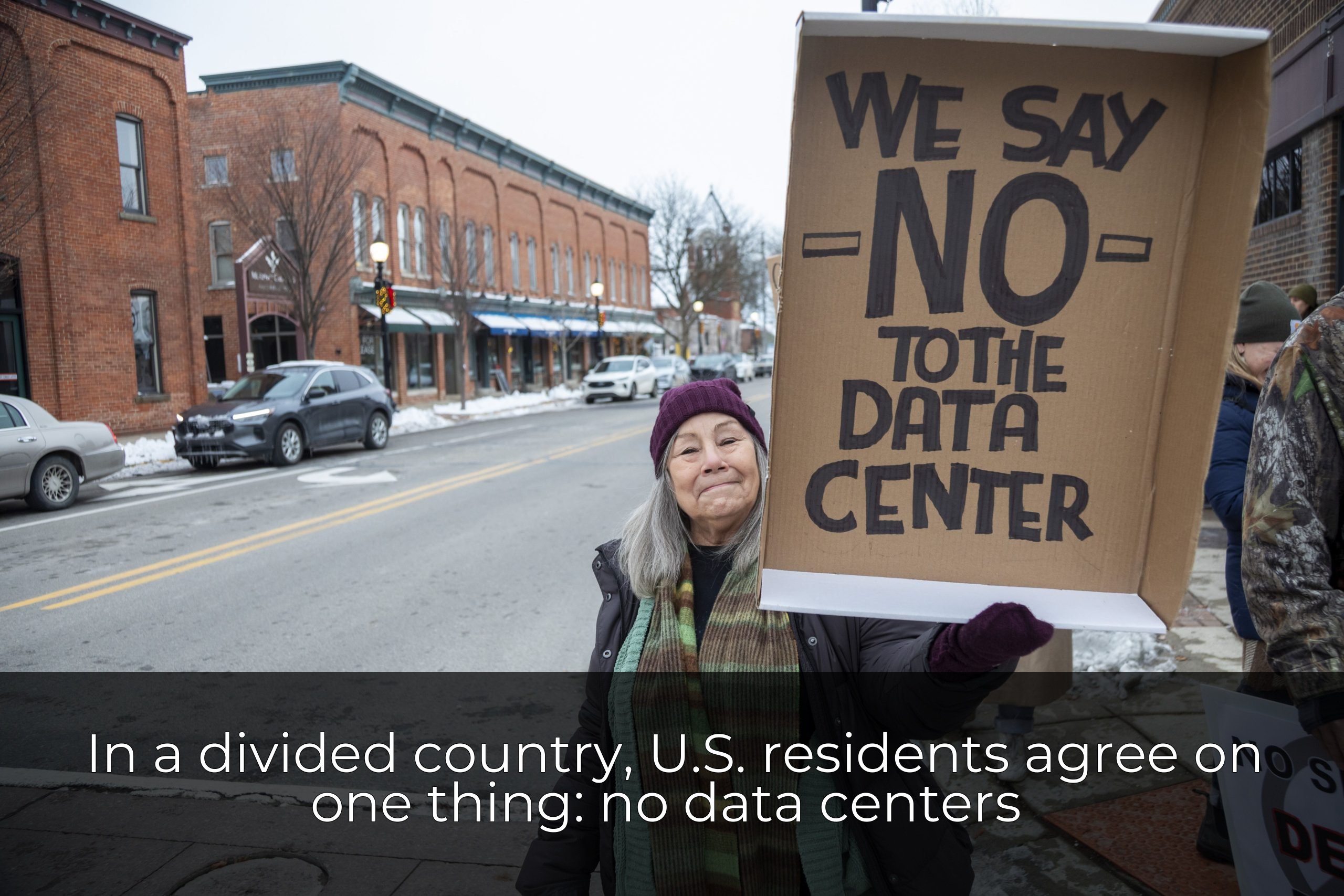
    Rural Michigan residents rally against the $7 billion Stargate data center planned on southeast Michigan farm land. Photo by: Jim West/UCG/Universal Images Group via Getty Images

    This story originally appeared in Prism on June 29, 2026.

    Across the country, politicians are starting to heed the public’s concerns about data centers. 

    Almost 75% of Americans across the political spectrum oppose constructing data centers near their homes, according to a recent Gallup poll. A majority—63%—are concerned by federal regulatory agencies’ practice of approving projects without first evaluating environmental and public health concerns. 

    These numbers not only paint a stark picture of the massive backlash to the rapid and rapacious buildout of data processing facilities (some of which consume enough energy to power a midsize city), but they’re also an indicator that the public feels very differently than the corporations pushing for their construction. The country has never been more divided, but on data centers, residents agree: It’s time to pump the brakes. 

    Communities that are already forced to contend with the consequences of data centers warn of their near-constant noise pollution, voracious consumption of water, and discharge of pollutants into local ecosystems. However, it’s not just environmental concerns that undergird the community-led protests against data center development. Many are also concerned about how data centers come to fruition—often through violations of democratic processes in the form of shadowy backroom deals and nondisclosure agreements. There’s also the continued rise in utility rates at a time when nearly half (49%) of American households don’t make enough money to cover expenses. Americans contend with issues of drought, fossil fuel dependence, and habitat loss. Generational farmland is being gobbled up to prop up acres of data warehouses. The list goes on. 

    Three years after OpenAI’s artificial intelligence (AI) tool Chat GPT forever changed the world’s orientation to computing, governments are responding to community needs for more information by implementing temporary moratoria on the construction of potentially harmful facilities. 

    “I would say this is the fastest I’ve ever seen [the legislature] move,” Pricey Harrison, a North Carolina state representative, said about her state’s approach to data-center regulation. “The reaction has been, I think, fast enough to do something about it. Thirty North Carolina municipalities—and counting—have considered or approved data center regulations and moratoria. 

    Where do other moratoria stand? Here’s what to know.

    States catching up with local government 

    Fourteen states have either introduced, passed, or rejected data center moratoria legislation, according to the National Conference of State Legislatures. A bill introduced in South Dakota would prevent new construction or expansion of hyperscale data centers for one year. Another in Oklahoma would pause data center construction until November 2029 to allow the legislative body to study impacts. Pennsylvania’s legislature is currently considering a three-year moratorium on new hyperscale centers. 

    Harrison introduced North Carolina’s legislation on a moratorium, though it didn’t get traction. “My hope was that it was about putting a stop to them until we had the guardrails in place,” Harrison said.

    No moratorium has been signed into law at the state level, though one in New York, which would halt data center construction for three years, is sitting on the governor’s desk. Another in Maine was vetoed by Democratic Gov. Janet Mills in April. 

    In March, Sen. Bernie Sanders and U.S. Rep. Alexandria Ocasio-Cortez, introduced federal legislation aimed at curbing the supercharged expansion of data centers, which the officials argue are a threat to millions of jobs and planetary health. Last year, Sanders presented a report to the Senate Committee on Health, Education, Labor and Pensions that artificial intelligence and automation could replace nearly 100 million jobs in the U.S. over the next decade. For perspective, there are approximately 170 million employed people in the country, per the Bureau of Labor Statistics. 

    The greatest success in passing moratoria has been found at the local level. 

    The benefit of a moratorium  

    A moratorium on data center construction and expansion is not a ban. An outright ban has only been achieved in one place in the country: Monterey Park, California. In the June election, 86.3% of voters approved a ban on data centers. “We hope that other communities will use the model set by residents here in Monterey Park as inspiration to stop datacenters from encroaching in their backyard,” Monterey Park city councilmember Jose Sanchez told The Guardian.

    As Prism previously reported, corporations benefit enormously when they can build data centers as quickly as possible because it diminishes the risk of public pushback. Companies lobby for environmental agencies to reduce the regulatory review process for construction of destructive facilities, support state legislation that hampers a local government’s ability to implement cautionary legislation, and prevent public officials from discussing ongoing negotiations for permits. By the time the public finds out about a planned facility, cement is already in the ground.

    Mitch Jones, managing director of policy and litigation at the government accountability organization Food & Water Watch, told Prism that what’s needed is more information. Construction and operations of data centers have been a black box, and residents need to know what’s happening to their local resources in order to protect themselves. 

    “The stronger moratoria are the ones that, one, last longer and thus give time; and two, require real detailed studies of the various impacts that data centers have in communities and states,” Jones said. “We don’t believe that these studies can be hurried, or we’re going to get the policy wrong.” 

    Pushing back against industry talking points

    After Mills, Maine’s governor, vetoed the country’s first bipartisan bill on a data center moratorium to favor the construction of a data center in the town of Jay, the company behind the facility pulled out, and cities got to work passing their own moratoria. 

    Bill Pluecker, a local representative in Maine, told Prism that in May, his town of Warren proposed its own moratorium in response to Mills’ veto. A special town meeting is now scheduled for July 8 to determine whether to enact the moratorium. 

    “I think she wasn’t nuanced or wasn’t looking at the way that AI and data center development is different than a Walmart going in, or different from what we all really want in Maine,” Pluecker said.

    According to Pluecker, this moment of data-center expansion requires more political discernment and a shift in approach to economic stimuli. “Development in any form is preferable over regulation” is the kind of perspective that “holds us back,” Pluecker added, noting that if Mills’ reaction to data centers was any indication, representatives can be easily swayed by the promise of jobs—even when there are no long-term jobs to be found. 

    According to Food & Water Watch research, one permanent job in the data center industry costs $13 million of investment. In Virginia, which has become ground zero for data center development, a non-data-center job requires an investment of about $137,000. Based on employment records, Food & Water Watch estimated that despite being the hub of data centers in the U.S., fewer than 8,000 people were permanently employed in Virginia data centers. Nationally, there are as few as 23,000 people employed in data centers, according to Jones. 

    As for moving forward, Harrison is hopeful that voters on either side of the aisle can come together in her usually Republican, industry-friendly state. “I feel very confident that there is bipartisan, widespread support in North Carolina to do something about data centers,” Harrison said. “People are concerned and legislators are hearing from their constituents all over, rural [and] urban. I’m encouraged about potential movements.”

    Editorial Team:
    Tina Vasquez, Lead Editor
    Sahar Fatima, Top Editor
    Stephanie Harris, Copy Editor

    (more…)

  • US provides $300 million in earthquake recovery money to Venezuela while sitting on $8 billion in stolen oil wealth

    US provides $300 million in earthquake recovery money to Venezuela while sitting on $8 billion in stolen oil wealth

    Rescue workers find corpses amid the rubble in Macuto, Vargas state, Venezuela, on July 5, 2026, following the June 24 twin earthquakes. Photo by Raul ARBOLEDA / AFP via Getty Images
    Common Dreams Logo

    This story originally appeared in Common Dreams on July 06, 2026. It is shared here under a Creative Commons (CC BY-NC-ND 3.0) license.

    The Trump administration has seized at least $8 billion worth of Venezuela’s oil wealth since it overthrew President Nicolás Maduro in January, according to the New York Times.

    Now, as Venezuela struggles to cope with a catastrophic pair of earthquakes late last month that killed at least 3,300 people and left tens of thousands more injured and homeless, and 41,000-50,000 people are reported missing, the US is providing just $300 million in humanitarian aid, a small fraction of the money it purloined.

    The Associated Press reported on Monday that international rescue teams have begun to pull out as hopes of finding missing loved ones alive dwindle each day after the disaster.

    Shortly after deposing Maduro, US President Donald Trump declared that the US “took over Venezuela… and the oil is flowing.”

    Economist Francisco Rodriguez has found that during the first quarter of 2026, after Trump overthrew Maduro and the US began expropriating Venezuelan oil, the country experienced the lowest rate of economic growth since 2021, even as oil exports rose.

    As Roxanna Vigil, a former senior sanctions policy adviser at the US Treasury Department’s Office of Foreign Assets Control, explained in an article for the Council on Foreign Relations last month, “almost 100 million barrels of oil worth an estimated $8 billion have flowed through a process marked by no transparency and minimal oversight.”

    “While the Trump administration has repeatedly framed this control as benefiting both countries, it has not publicly disclosed how much Venezuelan oil it has sold, how much revenue it has collected, or how it has used those funds,” she added.

    According to an initial report by the United Nations Development Program, the quakes caused $6.7 billion worth of damage.

    Former US Ambassador to Venezuela Jimmy Story credited what he said was a “robust” US effort to provide aid. But he told Reuters that it called into question “the transparency over the oil fund,” and asked, “Will these funds be released for the disaster response?”

    The Times noted that the Trump administration’s response to the Venezuela quakes is dwarfed by the humanitarian response to the earthquake that struck Haiti in 2010, when the US launched a more than $3 billion relief effort and deployed more than 7,000 troops.

    Just 900 US troops are on the ground in Venezuela, with another 800 positioned in Puerto Rico and Curaçao to support the operation.

    The Times’ Simon Romero, who has reported on earthquakes in both countries, noted that the Haiti earthquake was more destructive, but said:

    The parallels between the disasters are also haunting: Pancaked multistory concrete buildings, bodies flooding into overwhelmed morgues, survivors disparaging government responses, and civilians leading desperate rescues of people trapped in the rubble.

    Viewed against cityscapes clouded by dust from pulverized structures, the images speak to hollowed-out first responder agencies, generalized impoverishment, and political dysfunction in both Haiti and Venezuela.

    Beyond the $8 billion taken out of Venezuela since January, anti-war and human rights groups in the US have urged the Trump administration to lift the economic sanctions that have crippled the Venezuelan government, arguing that they have hobbled the recovery effort.

    The Washington Office on Latin America (WOLA) estimated that during just four years, between 2017-20, US sanctions caused the Venezuelan state to lose between $17 billion and $31 billion in revenue.

    A more recent report by the Tricontinental Institute for Social Research found that between 2017-24, Venezuela suffered an estimated $226 billion in lost oil revenue due to US sanctions, equivalent to 213% of its total gross domestic product.

    (more…)

  • ‘A pathetic power grab’: Trump purges bipartisan election assistance commission

    ‘A pathetic power grab’: Trump purges bipartisan election assistance commission

    U.S. Election Assistance Commission Vice Chair Christy McCormick (R), accompanied by U.S. Election Assistance Commission Chairman Thomas Hicks (L), speaks during a House Administration Subcommittee on Elections hearing on Capitol Hill on May 20, 2026 in Washington, DC. Photo by Andrew Harnik/Getty Images
    Common Dreams Logo

    This story originally appeared in Common Dreams on July 10, 2026. It is shared here under a Creative Commons (CC BY-NC-ND 3.0) license.

    US President Donald Trump late Thursday forced out the remaining three members of an independent, bipartisan commission that assists state election officials across the country, a move that critics condemned as a “pathetic power grab” ahead of the 2026 midterms.

    The two Democratic members of the Election Assistance Commission (EAC), Benjamin Hovland and Thomas Hicks, were fired, and Republican Commissioner Christy McCormick resigned at the White House’s request, according to ProPublica. The agency, established by Congress more than two decades ago, now lacks leadership and any ability to make decisions, just months before the 2026 elections.

    The EAC, as its website states, is “an independent, bipartisan commission whose mission is to help election officials improve the administration of elections and help Americans participate in the voting process.” In an executive order last year, Trump ordered the EAC to implement proof-of-citizenship requirements in the federal voter registration process, along with other changes. The president’s effort to impose his policy demands on the EAC was mostly blocked in federal court.

    Trump, who has said he wants his administration to “take over” voting nationwide ahead of the 2026 midterms, has since taken other steps that watchdogs and Democratic lawmakers say amount to an attempt to preemptively subvert the coming elections, including a sweeping assault on mail-in voting—which is also facing legal challenges. Legislatively, Trump is pushing Republicans to pass the SAVE America Act, a bill that experts say would prevent millions of Americans from voting.

    Michael Waldman, president and CEO of the Brennan Center for Justice, said Thursday’s EAC firings “are deeply concerning in light of President Trump’s relentless efforts to try to interfere in elections.”

    “These removals leave the agency without leadership and unable to carry out its major responsibilities,” said Waldman. “The guardrails Congress placed on this agency are clear and must be followed: The Election Assistance Commission was designed to be bipartisan with four members, no more than two of which can be from the same political party. The agency cannot make any significant decisions or take any significant actions unless three confirmed commissioners agree. Until bipartisan replacements are confirmed, the agency cannot lawfully make any decisions that affect how Americans vote.”

    Lisa Gilbert, co-president of Public Citizen, said Trump’s termination of EAC commissioners underscores that “he’s scared of the voting power of the American people.”

    “This move is another pathetic attempt to sow doubt in our elections, which are safely and expertly run by states and localities,” said Gilbert. “This agency deserves a steady hand and expert leadership. That said, it is important for voters to know that states and localities, not the EAC, run our elections. Even more importantly, it is the voters who decide who takes office.”

    The EAC firings came less than two weeks after the conservative-dominated US Supreme Court handed Trump the power to purge independent agencies at will with its Trump v. Slaughter ruling, erasing around 90 years of precedent.

    Election law expert Rick Hasen warned in a blog post on Thursday that Trump “could try to direct the commissioner-less EAC to do his bidding, for example by stating that the EAC must amend the federal voter registration form that states must accept for federal elections to include documentary proof of citizenship.”

    “Trump’s first voting-related EO tried to do this, and he was stymied. But that was acting through the commissioners and before the Slaughter case,” Hasen noted. “If he tries anything like this, it will be high-profile and very important litigation that will end up at the Supreme Court on the emergency docket over the summer.”

    Adrian Fontes, Arizona’s Democratic secretary of state, said in a statement late Thursday that the EAC purge was “irresponsible and dangerous,” accusing the administration of remaining “dead set on causing chaos for our election officials across this country.”

    “This move undermines the integrity of nonpartisan election administration,” Fontes added.

    (more…)

  • Israel is murdering Dr. Hussam Abu Safiya. The US media is covering up the crime.

    Israel is murdering Dr. Hussam Abu Safiya. The US media is covering up the crime.

    Activists gather to stage a protest demanding the release of Dr. Hussam Abu Safiya, director of Kamal Adwan Hospital, in Tel Aviv, Israel on July 06, 2026. Photo by Saeed Qaq/Anadolu via Getty Images

    This story originally appeared in Mondoweiss on July 08, 2026. It is shared here with permission.

    By now, editors at the New York Times and producers at CNN are surely squirming over what to do about Dr. Hussam Abu Safiya, the Gazan doctor and hospital director who Israel has locked up for a year and a half without trial, and who says his jailers are trying to kill him.

    Worldwide campaigns, by Amnesty International and other human rights groups, have called for Dr. Abu Safiya’s release and global media coverage has been significant. Britain’s flagship newspaper, the Guardian, has naturally already reported about Dr. Abu Safiya. Here is its July 6 headline: “Detained Gaza doctor almost unrecognisable after injuries in Israel jail, lawyer says.” Even the Israeli press have reported about him, including covering a demonstration in Tel Aviv on July 6 drawing attention to his case.

    But in the American media, there has been a complete blackout about his case and his dire condition.

    As of July 7, the New York Times has not mentioned his name a single time since January 2025. The Washington Post did run an Associated Press report, but there was no fanfare on the Post home page and you had to search hard for the article. In the Wall Street Journal so far: nothing. CNN’s website did have a short video report, but it apparently never appeared on the network’s U.S. outlet. Dr. Abu Safiya is also missing on MS Now, supposedly the most progressive cable network.

    As this site and other alternative media have regularly reported, Dr. Abu Safiya, a pediatrician who was the administrator of the  Kamal Adwan hospital in Gaza, turned himself in to the Israeli army on December 27, 2024. There is an iconic photo of him, in his white physician’s coat, walking through the rubble in Gaza toward an Israeli tank. (Somehow that photo has never made it into the New York Times.) Since then, first-hand accounts from his lawyer and now his son have alerted the world about his terrible treatment in various Israeli jails and his physical deterioration. Dr. Abu Safiya, now held in Rekefet Prison, has said: “They’ve brought me here to kill me. I don’t see myself surviving. This is the end.”

    Israelis have insinuated that Dr. Abu Safiya is somehow linked to Hamas, but he has never been charged with any crimes. But the media is not supposed to decide on his guilt or innocence before reporting on his jailing. Hiding the story of Hussam Abu Safiya is clearly pro-Israel censorship, and unfortunately all too characteristic of America’s newspapers and cable networks in their coverage of Palestine.

    What’s more, the U.S. media is also covering up a much bigger story. Dr. Abu Safiya is being held without trial, in what Israel euphemistically sometimes calls “administrative detention.” Precise figures are hard to confirm, but Amnesty International has estimated that at the end of 2025 Israel was holding 4,622 Palestinians, from both Gaza and the occupied West Bank Palestine, without putting them on trial. 

    Dr. Abu Safiya’s terrible situation, which even just by itself is newsworthy, could also serve as a news peg to write about Israel’s administrative detention policy. National Public Radio, to its credit, did just that back on May 30. Its excellent on-air report even interviewed Dr. Abu Safiya’s son, Ilyas. 

    Mainstream media reporters based in Israel who want more background could drop into the offices of Israel’s premier human rights organization, B’Tselem, which monitors the detentions, even though Israel’s government no longer gives them the figures. Here’s one of their reports.

    What’s extraordinary about the U.S. self-censorship is that the Israeli media has reported about Dr. Abu Safiya’s plight. Haaretz, Israel’s newspaper of record, even ran an editorial charging the Netanyahu government with mistreating him and others, and urged Israeli courts to “halt the ongoing starvation, abuse and imprisonment.” And even the more right-wing Times of Israel has at least recognized his existence.

    What explains the cowardice at the New York Times and at CNN? Even those of us who have spent years monitoring the distorted and dishonest U.S. coverage are stupefied. 

    (more…)

  • In a divided country, U.S. residents agree on one thing: no data centers 

    In a divided country, U.S. residents agree on one thing: no data centers 

    Rural Michigan residents rally against the $7 billion Stargate data center planned on southeast Michigan farm land. Photo by: Jim West/UCG/Universal Images Group via Getty Images

    This story originally appeared in Prism on June 29, 2026.

    Across the country, politicians are starting to heed the public’s concerns about data centers. 

    Almost 75% of Americans across the political spectrum oppose constructing data centers near their homes, according to a recent Gallup poll. A majority—63%—are concerned by federal regulatory agencies’ practice of approving projects without first evaluating environmental and public health concerns. 

    These numbers not only paint a stark picture of the massive backlash to the rapid and rapacious buildout of data processing facilities (some of which consume enough energy to power a midsize city), but they’re also an indicator that the public feels very differently than the corporations pushing for their construction. The country has never been more divided, but on data centers, residents agree: It’s time to pump the brakes. 

    Communities that are already forced to contend with the consequences of data centers warn of their near-constant noise pollution, voracious consumption of water, and discharge of pollutants into local ecosystems. However, it’s not just environmental concerns that undergird the community-led protests against data center development. Many are also concerned about how data centers come to fruition—often through violations of democratic processes in the form of shadowy backroom deals and nondisclosure agreements. There’s also the continued rise in utility rates at a time when nearly half (49%) of American households don’t make enough money to cover expenses. Americans contend with issues of drought, fossil fuel dependence, and habitat loss. Generational farmland is being gobbled up to prop up acres of data warehouses. The list goes on. 

    Three years after OpenAI’s artificial intelligence (AI) tool Chat GPT forever changed the world’s orientation to computing, governments are responding to community needs for more information by implementing temporary moratoria on the construction of potentially harmful facilities. 

    “I would say this is the fastest I’ve ever seen [the legislature] move,” Pricey Harrison, a North Carolina state representative, said about her state’s approach to data-center regulation. “The reaction has been, I think, fast enough to do something about it. Thirty North Carolina municipalities—and counting—have considered or approved data center regulations and moratoria. 

    Where do other moratoria stand? Here’s what to know.

    States catching up with local government 

    Fourteen states have either introduced, passed, or rejected data center moratoria legislation, according to the National Conference of State Legislatures. A bill introduced in South Dakota would prevent new construction or expansion of hyperscale data centers for one year. Another in Oklahoma would pause data center construction until November 2029 to allow the legislative body to study impacts. Pennsylvania’s legislature is currently considering a three-year moratorium on new hyperscale centers. 

    Harrison introduced North Carolina’s legislation on a moratorium, though it didn’t get traction. “My hope was that it was about putting a stop to them until we had the guardrails in place,” Harrison said.

    No moratorium has been signed into law at the state level, though one in New York, which would halt data center construction for three years, is sitting on the governor’s desk. Another in Maine was vetoed by Democratic Gov. Janet Mills in April. 

    In March, Sen. Bernie Sanders and U.S. Rep. Alexandria Ocasio-Cortez, introduced federal legislation aimed at curbing the supercharged expansion of data centers, which the officials argue are a threat to millions of jobs and planetary health. Last year, Sanders presented a report to the Senate Committee on Health, Education, Labor and Pensions that artificial intelligence and automation could replace nearly 100 million jobs in the U.S. over the next decade. For perspective, there are approximately 170 million employed people in the country, per the Bureau of Labor Statistics. 

    The greatest success in passing moratoria has been found at the local level. 

    The benefit of a moratorium  

    A moratorium on data center construction and expansion is not a ban. An outright ban has only been achieved in one place in the country: Monterey Park, California. In the June election, 86.3% of voters approved a ban on data centers. “We hope that other communities will use the model set by residents here in Monterey Park as inspiration to stop datacenters from encroaching in their backyard,” Monterey Park city councilmember Jose Sanchez told The Guardian.

    As Prism previously reported, corporations benefit enormously when they can build data centers as quickly as possible because it diminishes the risk of public pushback. Companies lobby for environmental agencies to reduce the regulatory review process for construction of destructive facilities, support state legislation that hampers a local government’s ability to implement cautionary legislation, and prevent public officials from discussing ongoing negotiations for permits. By the time the public finds out about a planned facility, cement is already in the ground.

    Mitch Jones, managing director of policy and litigation at the government accountability organization Food & Water Watch, told Prism that what’s needed is more information. Construction and operations of data centers have been a black box, and residents need to know what’s happening to their local resources in order to protect themselves. 

    “The stronger moratoria are the ones that, one, last longer and thus give time; and two, require real detailed studies of the various impacts that data centers have in communities and states,” Jones said. “We don’t believe that these studies can be hurried, or we’re going to get the policy wrong.” 

    Pushing back against industry talking points

    After Mills, Maine’s governor, vetoed the country’s first bipartisan bill on a data center moratorium to favor the construction of a data center in the town of Jay, the company behind the facility pulled out, and cities got to work passing their own moratoria. 

    Bill Pluecker, a local representative in Maine, told Prism that in May, his town of Warren proposed its own moratorium in response to Mills’ veto. A special town meeting is now scheduled for July 8 to determine whether to enact the moratorium. 

    “I think she wasn’t nuanced or wasn’t looking at the way that AI and data center development is different than a Walmart going in, or different from what we all really want in Maine,” Pluecker said.

    According to Pluecker, this moment of data-center expansion requires more political discernment and a shift in approach to economic stimuli. “Development in any form is preferable over regulation” is the kind of perspective that “holds us back,” Pluecker added, noting that if Mills’ reaction to data centers was any indication, representatives can be easily swayed by the promise of jobs—even when there are no long-term jobs to be found. 

    According to Food & Water Watch research, one permanent job in the data center industry costs $13 million of investment. In Virginia, which has become ground zero for data center development, a non-data-center job requires an investment of about $137,000. Based on employment records, Food & Water Watch estimated that despite being the hub of data centers in the U.S., fewer than 8,000 people were permanently employed in Virginia data centers. Nationally, there are as few as 23,000 people employed in data centers, according to Jones. 

    As for moving forward, Harrison is hopeful that voters on either side of the aisle can come together in her usually Republican, industry-friendly state. “I feel very confident that there is bipartisan, widespread support in North Carolina to do something about data centers,” Harrison said. “People are concerned and legislators are hearing from their constituents all over, rural [and] urban. I’m encouraged about potential movements.”

    Editorial Team:
    Tina Vasquez, Lead Editor
    Sahar Fatima, Top Editor
    Stephanie Harris, Copy Editor

    (more…)