
U.S. Central Command (CENTCOM) carried out a third consecutive wave of strikes against Iran in the early hours of Tuesday under orders from President Donald Trump, after the president warned the country would be hit “very hard” and said, “There is nothing they can do about it. They have nothing.” Hours later, the U.S. military command reported the offensive targeted Iranian military capabilities linked to the Strait of Hormuz.
Shortly after the bombings, the United Arab Emirates reported that Iranian cruise missiles struck two UAE tankers transiting the southern lane of the Strait of Hormuz, in Omani territorial waters. The attack left one crew member dead and eight people injured.
Following the nighttime strikes, Iran’s Islamic Revolutionary Guard Corps (IRGC) claimed new missile and drone attacks on the Jufair naval base in Bahrain, home to the U.S. Fifth Fleet, and said it also hit an air base in Jordan used by U.S. forces.
After the collapse of the U.S.-Iran memorandum of understanding and the resumption of hostilities last week, Trump said the Strait would remain open “with or without Iran” and announced that the United States would charge a 20% fee to ships transiting the waterway to cover security costs. In response, Iran’s senior military leadership said Washington has no authority over the Strait’s future, while Foreign Minister Abbas Araqchi wrote on X: “Tehran will always be the guardian of the strait.”
Below is the minute-by-minute coverage:
Iran submitted a bill to manage the Strait of Hormuz and warns it will defend its “red lines”
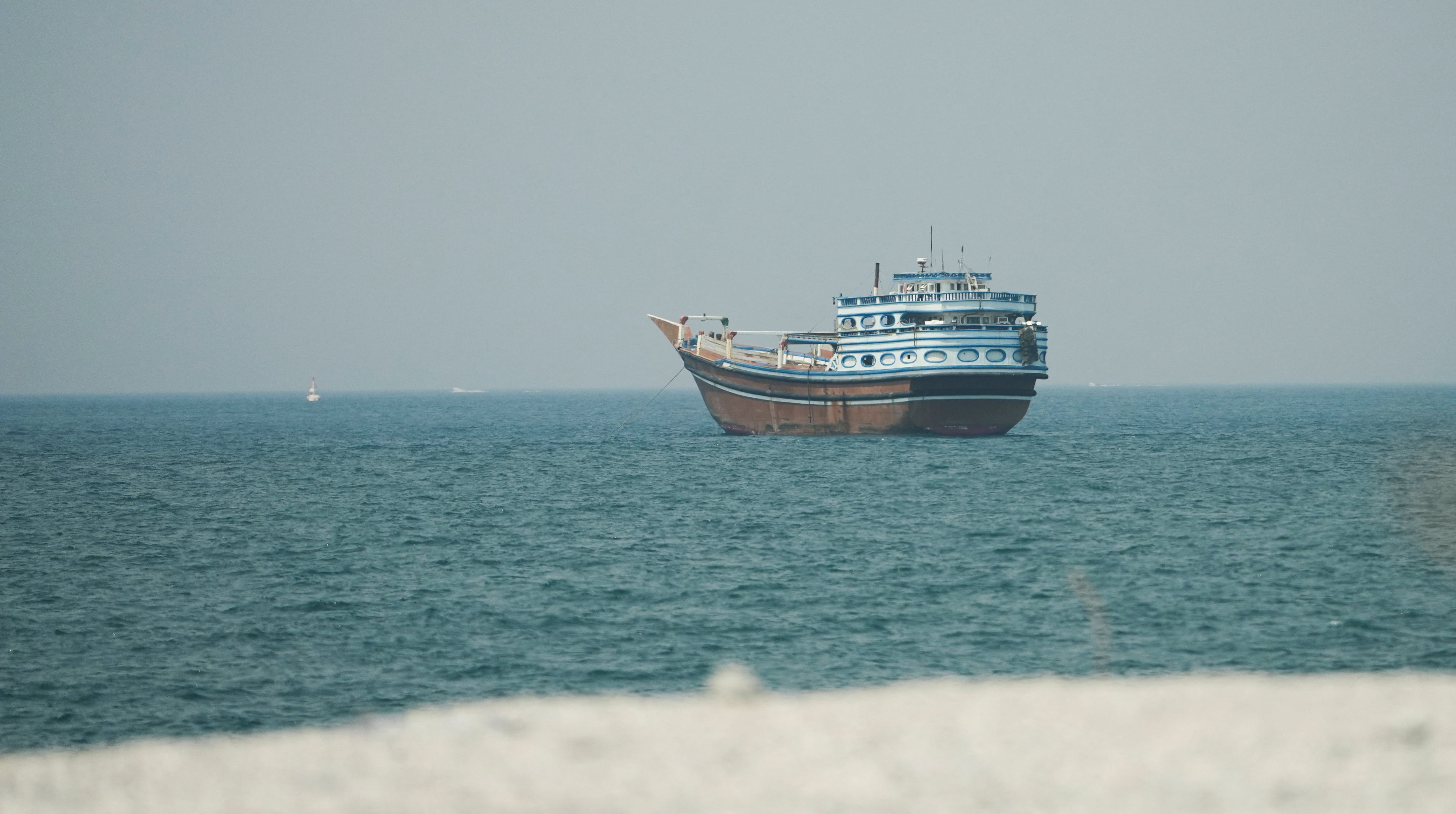
Iran presented a bill to Parliament to manage the Strait of Hormuz and warned it will defend its “red lines,” Ebrahim Azizi, chair of the legislature’s National Security Committee, said.
In a post on X, Azizi reported that “Last night, coinciding with the downing of U.S. drones, the bill ‘Strategic Action for the Security and Sustainable Progress of the Strait of Hormuz and the Persian Gulf’ was formally submitted to Iran’s Parliament.”
The lawmaker stated, “We remain firm in defending our red lines, particularly regarding the management of the Strait of Hormuz.” He also anticipated further measures, saying: “This is the first step; subsequent measures will follow.”
/america/mundo/2026/07/14/el-precio-del-petroleo-continua-subiendo-por-la-guerra-en-medio-oriente-y-agrava-la-incertidumbre-sobre-la-economia-mundial/
/america/mundo/2026/07/14/iran-reivindico-nuevos-ataques-contra-bases-estadounidenses-en-bahrein-y-jordania-tras-los-bombardeos-de-washington/
U.S. diplomatic missions in the United Arab Emirates cancel appointments
The U.S. Embassy in Abu Dhabi and the U.S. Consulate General in Dubai have canceled consular appointments through Wednesday due to regional security concerns, the embassy said in a security alert.
The announcement followed reports from the United Arab Emirates that two tankers flying the Emirati flag were struck by Iranian missiles in the Strait of Hormuz, resulting in the death of one seafarer.
Jordan shot down four missiles originating from Iran
Jordan says it intercepted and shot down four missiles that entered Jordanian airspace originating from Iranian territory, the state news agency reported.
Iran says it launched attacks against the U.S. Fifth Fleet in Bahrain
The Islamic Revolutionary Guard Corps (IRGC) reported it carried out missile and drone strikes against the U.S. Fifth Fleet in Bahrain.
According to the IRGC, the strikes caused a fire in the base’s fuel depots and destroyed a Patriot radar, the fleet’s air control radar, a C-RAM early warning radar system, and the control and monitoring center for unmanned surface vessels (USVs).
“The retaliation operation continues,” the statement added.
/estados-unidos/2026/07/13/estados-unidos-lanzo-una-nueva-ronda-de-ataques-contra-iran-para-degradar-su-capacidad-militar-en-estrecho-de-ormuz/