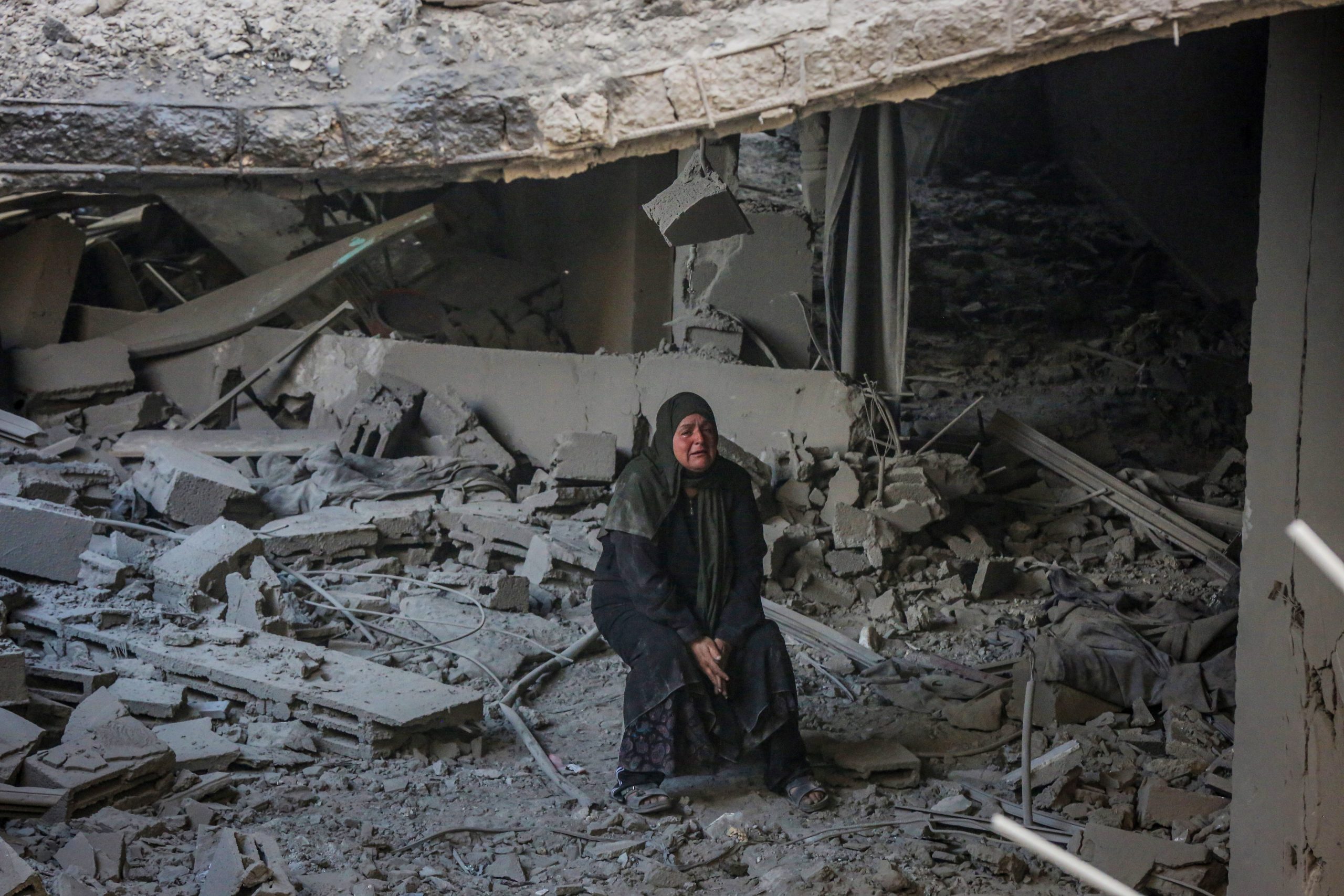
This episode of The Marc Steiner Show marks the Nakba anniversary and features an extended conversation with Dr. Ghada Karmi about the recent devastation in Gaza, the collapse of faith in a political solution, and the wider implications for Palestinians and Israelis. Karmi, a physician, scholar and author who was displaced from Jerusalem in 1948, reflects on the shattering of hopes for coexistence, the strengthening of settler-colonial dynamics, and the growing despair and insecurity felt across the region.
Guests:
Ghada Karmi was born in Jerusalem and was displaced during the Nakba. She trained in medicine in the UK, founded a British-Palestinian medical charity, and has written extensively about Palestine, including the memoir In Search of Fatima and One State: The Only Democratic Future for Palestine-Israel.
Credits:
Producer: Rosette Sewali
Studio Production: Cameron Granadino
Audio Post-Production: Stephen Frank
Transcript
The following is an unedited transcript of the interview and may contain errors; a corrected version will be published when available.
Marc Steiner opens by noting heavy Palestinian casualties since October 2023 and frames the episode for Nakba remembrance. In a wide-ranging interview, Dr. Ghada Karmi recalls being displaced from Jerusalem in 1948 and explains why the current Gaza onslaught and wider policies have, in her view, destroyed long-standing hopes for Palestinian-Israeli coexistence. She contrasts earlier beliefs that Israel might not endure with a new, painful doubt about Palestine’s future, describing intensified ethnic cleansing in Gaza and the West Bank.
Karmi outlines her long-held support for a single democratic state guaranteeing equal rights, including return for refugees, but says broad support within Israel for recent violence makes reconciliation harder to imagine. She highlights settler-colonial structures, dehumanizing attitudes, and persistent Western—especially U.S.—support for Israeli actions as key barriers. Without major shifts in international backing, she doubts Palestinians can redress the power imbalance through existing political channels.
The interview surveys potential catalysts for significant change: a wider regional conflict involving Iran and Hezbollah, a sudden U.S. policy reversal, internal fractures in Israeli society, or a sustained international popular movement for Palestinian rights. Karmi warns of grave risks, including the possibility of nuclear escalation, and expresses deep concern for both Palestinians and Israelis affected by perpetual conflict. She insists that any just resolution must recognize Palestinian rights—most importantly the right of return—and that advocates should continue to press for accountability, humanitarian protection, and political remedies despite the bleak prospects described.
Leave a Reply
You must be logged in to post a comment.