Blog

  • Trump to reinstate Iran blockade, charge for guarding Strait of Hormuz

    Trump to reinstate Iran blockade, charge for guarding Strait of Hormuz

    Los ataques militares de Estados Unidos contra objetivos en Irán continuaron por segundo día, en una nueva fase de combates por el control del estrecho de Ormuz que pone en riesgo un acuerdo interino y ha generado repercusiones en Yemen. El Mando Central de Estados Unidos (CENTCOM) confirmó una nueva ronda de ataques contra sistemas de defensa aérea, radares costeros, capacidades de misiles y drones iraníes. Por su parte, Irán sostuvo contactos diplomáticos con mediadores de Qatar, Pakistán y Omán en esfuerzos por evitar una mayor escalada.

    Fuentes locales informaron que los ataques estadounidenses causaron al menos dos muertos y tres heridos en la provincia de Juzestán, en el suroeste de Irán, y que se escucharon y reportaron explosiones cerca de Bandar Abbas y la isla de Qeshm. En respuesta, la Guardia Revolucionaria reivindicó ataques contra instalaciones en Baréin, Jordania, Kuwait y Omán. Baréin denunció que Irán apuntó contra civiles y Jordania dijo haber interceptado cuatro misiles. Además, Irán disparó tiros de advertencia contra dos buques que intentaban atravesar el estrecho de Ormuz.

    La escalada militar impulsó el precio del petróleo, que llegó a registrar subas pronunciadas, y tensó aún más la situación regional. El portavoz hutí en Yemen advirtió que el ataque al aeropuerto de Saná “no quedará sin respuesta”, lo que indica posibilidad de ampliación del conflicto fuera del enfrentamiento entre Teherán y Washington.

    Petróleo sube más de 4% por tensiones entre EEUU e Irán

    Los precios del crudo subieron con fuerza: el West Texas Intermediate cotizó alrededor de 74,53 dólares por barril, con un alza cercana al 4,4%, y el Brent alcanzó aproximadamente 79,28 dólares, alza de cerca del 4,3%. El repunte se produjo ante la creciente incertidumbre sobre la seguridad del tránsito por el estrecho de Ormuz.

    El aumento del precio del petróleo también afectó a los mercados financieros: el índice de volatilidad VIX subió casi un 8%, mientras que los rendimientos de los bonos del Tesoro estadounidense repuntaron a lo largo de la curva —con movimientos destacados en los plazos a 10 y 5 años—, reflejando la cautela de los inversores frente al riesgo de interrupciones en el comercio energético.

    CENTCOM confirma el primer uso de drones marinos en combate: atacó una base naval iraní en Bandar Abbas

    CENTCOM informó que sus fuerzas utilizaron múltiples drones de ataque aéreos desechables y embarcaciones no tripuladas de superficie en ataques contra una instalación de mantenimiento de submarinos y buques en la base naval de Bandar Abbas. Según el mando, tres unidades de superficie modelo Corsair impactaron en el puerto de la base.

    El organismo señaló que esta operación representa la primera vez que fuerzas estadounidenses emplean drones marinos en combate, y aseguró que los bombardeos redujeron la capacidad iraní para atacar el transporte marítimo comercial en la zona del estrecho de Ormuz.

    /america/mundo/2026/07/13/operaciones-militares-en-yemen-bombardearon-el-aeropuerto-de-sana-controlado-por-rebeldes-huties/

    Trump dice que EEUU cobrará un tasa del 20% para proteger los barcos en el estrecho de Ormuz

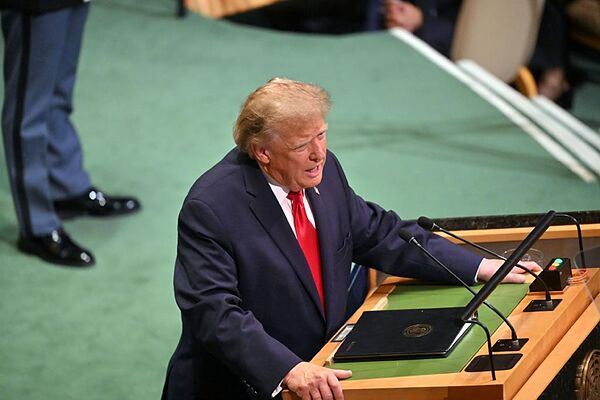
    El presidente Donald Trump declaró que el estrecho de Ormuz permanecerá abierto “con o sin Irán” y anunció la reinstauración de lo que denominó un “bloqueo iraní” orientado a impedir el paso de buques iraníes, mientras permitiría el tránsito de otras naciones. Según el mandatario, Estados Unidos asumirá el papel de “guardián del estrecho” y cobrará una tasa del 20% sobre la carga transportada para cubrir los costos de seguridad.

    Trump afirmó que se dará inicio inmediato a los procesos y entrenamientos necesarios para ese propósito y explicó la medida como una forma “justa” de compensación por la protección de una zona que describió como altamente volátil. Anteriormente había adelantado a la cadena Fox News su intención de que Washington actuara como custodio del paso marítimo en medio de la escalada con Irán.

    Más detalles y contexto se pueden consultar en la nota completa.

    Los Guardianes de la Revolución acusan a EEUU de poner en peligro el suministro global de petróleo por “interferir” en Ormuz

    La Guardia Revolucionaria de Irán acusó a Estados Unidos de poner en riesgo el suministro global de petróleo y gas al “interferir” en el estrecho de Ormuz tras la reanudación de los enfrentamientos. El portavoz Hosein Mohebi expresó que Washington debe asumir responsabilidad por cualquier amenaza a la seguridad energética mundial, y reiteró que Teherán seguirá ejerciendo su soberanía sobre la vía marítima.

    El pronunciamiento se sumó a la advertencia del comando militar Khatam Al-Anbiya, que calificó de “acto de guerra” cualquier colaboración de los países del Golfo con Estados Unidos en la gestión del estrecho, tras las declaraciones del presidente estadounidense sobre convertir a Washington en guardián de la ruta.

    Wall Street abre en baja por la escalada entre EEUU e Irán y una caída en semiconductores

    Las bolsas de Nueva York abrieron mayormente a la baja ante la subida de los precios del petróleo y retrocesos en el sector de semiconductores. El incremento del crudo renovó preocupaciones sobre la infraestructura energética en torno al estrecho de Ormuz, mientras un fuerte castigo en valores vinculados a memorias arrastró a la baja a índices sensibles a la tecnología.

    En los primeros minutos de la sesión el Dow Jones mostró ligeras variaciones al alza, mientras que el S&P 500 y el Nasdaq registraron caídas, impulsadas por el mal desempeño de empresas del sector de semiconductores tras pérdidas en mercados asiáticos. Analistas señalaron que las tensiones geopolíticas elevan los rendimientos de los bonos y pesan sobre la renta variable, en una semana con informes trimestrales bancarios, comparecencias ante el Congreso y datos de inflación en agenda.

    Irán advierte a los países del Golfo: cooperar con EEUU en el estrecho de Ormuz será considerado “un acto de guerra”

    El ejército iraní advirtió a las naciones del Golfo que cualquier cooperación con Estados Unidos en la gestión del estrecho de Ormuz sería considerada “un acto de guerra”. El mensaje, difundido por el vocero del comando Khatam Al-Anbiya en un video, busca disuadir a los aliados regionales de sumarse a esquemas conjuntos de administración del paso marítimo.

    El portavoz subrayó que Irán no permitirá, en ningún caso, que Estados Unidos interfiera en el manejo operativo del estrecho, y la advertencia se produjo después de que el presidente Trump afirmara que Estados Unidos se convertiría en el guardián de la vía.

    Trump afirma que EEUU está “tomando el control” del estrecho de Ormuz

    En una entrevista con Fox News, Donald Trump aseguró que Estados Unidos está “tomando el control” del estrecho de Ormuz y expresó que el país se convertirá en su “guardián”, reiterando que debería recibir compensación por brindar seguridad en la zona. El presidente afirmó además que las fuerzas estadounidenses habían atacado equipo militar iraní durante la noche y que gran parte de ese material había sido destruido.

    Las declaraciones se producen en medio de una escalada de hostilidades y tras amenazar Irán con cerrar el estrecho, al tiempo que ambos bandos relatan acciones y contraataques en la región mientras autoridades aseguran que el tráfico marítimo continúa, aunque bajo tensión.

    /america/mundo/2026/07/13/el-reino-unido-acuso-a-iran-de-respaldar-ataques-a-objetivos-judios-en-londres-y-declaro-ilegal-a-la-guardia-revolucionaria/

    Video: EEUU difunde imágenes de la nueva ola de ataques contra Irán

    CENTCOM difundió imágenes y reportes sobre una nueva oleada de ataques contra objetivos iraníes, indicando que fueron atacados sistemas de defensa aérea, radares costeros, capacidades de misiles y drones, así como embarcaciones menores, empleando aviones de combate, buques de guerra y drones aéreos y marítimos desechables.

    Medios iraníes informaron de impactos y explosiones en torno a las localidades portuarias de Sirik, Bandar Abbas y la cercana isla de Qeshm. El ministerio de Relaciones Exteriores de Irán calificó los ataques de agresivos. Agencias internacionales advirtieron que no pudieron verificar de forma independiente la fecha y ubicación exacta del material audiovisual difundido.

    Los hutíes advierten que responderán al ataque contra el aeropuerto de Saná

    Los hutíes en Yemen, apoyados por Irán, anunciaron que responderán al ataque contra el aeropuerto internacional de Saná, que el grupo atribuyó inicialmente a Arabia Saudita. El vocero militar hutí, Yahya Saree, afirmó que la agresión pone fin a una fase de distensión y que Riyadh asumirá la responsabilidad por las consecuencias.

    El gobierno yemení reivindica un ataque al aeropuerto de Saná; los hutíes responsabilizan a Arabia Saudita

    El gobierno yemení reconocido internacionalmente afirmó haber atacado la pista del aeropuerto de Saná tras un incidente vinculado a un avión iraní que trasladaba a una delegación hutí y que, según las autoridades de Yemen, impidió el aterrizaje de aeronaves nacionales. El ministerio de Defensa explicó que la operación buscó responder a la situación creada por las milicias hutíes, que a su vez habían acusado a Arabia Saudita del ataque.

    Los hutíes, por su parte, reiteraron que responderán al bombardeo y responsabilizaron a Arabia Saudita, advirtiendo que la agresión “no quedará sin respuesta ni sin castigo”, en medio de la tensión regional vinculada a los enfrentamientos entre Irán y Estados Unidos.

    /america/mundo/2026/07/13/como-esta-el-trafico-maritimo-en-el-estrecho-de-ormuz-que-iran-asegura-haber-cerrado-y-eeuu-quiere-mantener-abierto/

    Bahrein interceptó drones y misiles iraníes en medio de reportes de ataques en el sur de Irán

    Las fuerzas de defensa de Baréin informaron que sus sistemas antiaéreos interceptaron y destruyeron varios misiles y drones lanzados durante la jornada, tras reivindicaciones de la Guardia Revolucionaria sobre ataques a instalaciones estadounidenses en la región. El comando de defensa acusó a Irán de dirigir sus ataques contra la población civil del reino.

    En paralelo, la agencia ISNA reportó que un ataque estadounidense en la provincia de Isfahán dejó al menos un muerto y siete heridos según autoridades locales. Irán no ha publicado un balance oficial de víctimas desde la reanudación de los ataques, pero fuentes estatales y reportes puntuales sugieren que decenas de personas podrían haber fallecido en los recientes bombardeos.

    El ejército de Bahrein acusa a Irán de atacar a civiles

    El comando general de las fuerzas armadas de Baréin declaró que Irán continúa con ataques “hostiles y atroces” dirigidos contra civiles en el reino y aseguró que las defensas aéreas interceptaron y destruyeron varias amenazas aéreas durante la mañana.

    Los medios iraníes informan de explosiones cerca del Estrecho de Ormuz

    Medios locales reportaron explosiones de origen no confirmado en el sur de Irán, cerca del estrecho de Ormuz. Testimonios de residentes y agencias señalaron que las detonaciones se escucharon alrededor del mediodía en áreas próximas a Bandar Abbas y la isla de Qeshm, con signos de actividad militar en la costa occidental de Bandar Abbas.

    Irán dice que sigue hablando con los mediadores para “evitar una escalada” con EEUU

    Teherán declaró que mantiene gestiones diplomáticas con Qatar, Omán y Pakistán para intentar evitar una escalada con Estados Unidos. El portavoz de la cancillería, Esmail Baqai, dijo que el papel de los mediadores es continuar sus esfuerzos para reducir las tensiones y que las conversaciones se han intensificado en los últimos días.

    Irán afirma que dejará de cumplir con el acuerdo si Estados Unidos no respeta sus compromisos

    El gobierno iraní anunció que dejará de respetar el memorando de entendimiento firmado con Estados Unidos si Washington no cumple con sus compromisos para poner fin a la confrontación. El portavoz del ministerio de Relaciones Exteriores, Esmaeil Baqaei, señaló que Teherán actuará de forma recíproca cuando considere que la otra parte no ha cumplido sus obligaciones.

    /america/mundo/2026/07/13/el-petroleo-sube-mas-de-4-tras-la-reanudacion-de-los-ataques-entre-eeuu-e-iran-y-la-amenaza-de-cierre-del-estrecho-de-ormuz/

    /america/mundo/2026/07/13/el-regimen-de-iran-lanzo-ataques-contra-bases-militares-de-estados-unidos-en-jordania-bahrein-y-kuwait/

  • Swimmers Conquer the Seine in Historic Eiffel Tower Feat

    Swimmers Conquer the Seine in Historic Eiffel Tower Feat

    Cientos de aficionados y profesionales compiten en el Open Swim Harmonie Mutuelle, la primera prueba en el río parisino desde la década de 1940 (Captura de video)

    The sight of hundreds of swimmers moving through the Seine in front of the Eiffel Tower marked the return of competitive swimming to Parisian waters after nearly 80 years of prohibition. The Open Swim Harmonie Mutuelle, held on Sunday, July 12, 2026, brought together amateur and professional athletes in an event that reshaped the usual landscape of central Paris.

    According to the local newspaper Le Monde, competitors from several countries participated, passing many of the city’s most emblematic sites.

    From early hours, anticipation built along the riverbanks. Spectators gathered to cheer the swimmers, who started near the Eiffel Tower and finished at Quai de Grenelle. The main race covered 8.5 kilometers, while additional events included one- and two-kilometer distances.

    A historic event in the city center

    El Open Swim Harmonie Mutuelle reúne a participantes de varios países en un circuito que cruza la Île de la Cité y la Île Saint-Louis (Captura de video)

    The Open Swim Harmonie Mutuelle was not only a sporting competition but also a milestone for Paris. Le Monde noted it was the first race held on the river since the 1940s. The event was organized by Stéphane Caron, an Olympic medalist and one of the founders, who stated that the Seine’s water quality now meets exceptionally high standards. Authorities and organizers confirmed water analyses and assured the safety of participants throughout the day.

    The main route began at the Bibliothèque nationale de France and ended at Quai de Grenelle, crossing iconic areas such as Île de la Cité and Île Saint-Louis. Media images showed swimmers passing historic monuments and well-known bridges. Many competitors raised their arms as they crossed the finish line before receiving medals.

    Organization and a precedent in French swimming

    The event was created in 2012 by a group of former French swimmers, including Stéphane Caron, who has played a central role in its growth. For 11 years the race has been supported by the insurer Harmonie Mutuelle, which assists with logistics and promotion. Previous editions were held on the Canal de l’Ourcq near Paris, where this same weekend shorter races of 500 meters and five kilometers also took place.

    
La cita reunió a público y atletas en aguas parisinas con una prueba reina de 8,5 kilómetros, además de distancias de uno y dos - Captura de video AFP

    On Saturday, the Canal de l’Ourcq hosted swimmers of different ages and levels in the shorter events, as part of a weekend program. Organizers said that including the Seine as the main venue in 2026 was the result of coordinated efforts by municipal authorities and sports organizations to restore the river for recreational and competitive use.

    Safety, quality standards and international outlook

    This year’s edition featured strict water-quality controls and safety protocols to protect participants. Stéphane Caron told Le Monde that “the Seine’s water quality now meets exceptionally high standards.”

    These environmental and sanitary improvements enabled the organizers to obtain authorization to move the race to the city center, a long-held objective for the event’s promoters.

    The Open Swim Harmonie Mutuelle aims to become an international benchmark on the open-water swimming calendar. The visibility of Paris as a setting and the recovery of the Seine for sport were noted by international media. Organizers hope the French capital will become an example of coexistence between sport, heritage and the environment.

    The 2026 edition concludes a phase of adaptation and preparation for the organizers, who said they intend to keep the race on the Seine in coming years. The strong turnout and positive outcomes in safety and participation marked a new chapter for swimming in Paris.

    (more…)

  • Historic swim in the Seine by the Eiffel Tower

    Historic swim in the Seine by the Eiffel Tower

    Cientos de aficionados y profesionales compiten en el Open Swim Harmonie Mutuelle, la primera prueba en el río parisino desde la década de 1940 (Captura de video)

    The sight of hundreds of swimmers gliding through the River Seine in front of the Eiffel Tower marked the return of competitive swimming to Parisian waters after nearly 80 years of prohibition. The Open Swim Harmonie Mutuelle, held on Sunday, July 12, 2026, brought together amateur and professional athletes in an event that transformed the usual landscape of central Paris.

    According to the local newspaper Le Monde, the race featured competitors from various countries who passed several of the city’s most emblematic sites.

    From early hours there was a sense of anticipation along the Seine. Spectators gathered on the banks to cheer the swimmers, who started near the Eiffel Tower and proceeded toward the finish at the Quai de Grenelle. Published information indicated the main race covered 8.5 kilometers, while other events included one- and two-kilometer distances.

    A historic event in the heart of the city

    El Open Swim Harmonie Mutuelle reúne a participantes de varios países en un circuito que cruza la Île de la Cité y la Île Saint-Louis (Captura de video)

    The Open Swim Harmonie Mutuelle was not only a sporting competition but also a milestone for the city of Paris. Le Monde reported that it was the first race on the river since the 1940s. The event was organized by Stéphane Caron, an Olympic medalist and one of the founders, who said the Seine’s water quality now reaches exceptionally high standards. Authorities and organizers confirmed this after tests, assuring the swimmers’ safety throughout the day.

    The main course began at the Bibliothèque nationale de France and finished at the Quai de Grenelle, crossing iconic areas such as the Île de la Cité and the Île Saint-Louis. Media footage showed participants moving past historic monuments and world-renowned bridges. Many swimmers celebrated by raising their arms as they crossed the finish line before receiving their medals.

    Organization and a precedent in French swimming

    The event was created in 2012 by a group of former French swimmers, including Stéphane Caron, who has played a central role in its development and growth. For 11 years the race has been supported by the insurer Harmonie Mutuelle, which helps with logistics and promotion. Previous editions were traditionally held on the Canal de l’Ourcq near Paris, where this same weekend shorter 500-meter and five-kilometer races took place.

    
La cita reunió a público y atletas en aguas parisinas con una prueba reina de 8,5 kilómetros, además de distancias de uno y dos - Captura de video AFP

    On Saturday, the Canal de l’Ourcq hosted swimmers of different ages and levels in the shorter events, as part of a program that ran through the weekend. Organizers said including the Seine as the main venue in 2026 was the result of joint efforts by municipal authorities and sporting bodies to reclaim the river for recreational and competitive activities.

    Safety, quality standards, and international outlook

    This year’s edition was marked by strict water-quality checks and safety protocols to ensure participants’ well-being. Stéphane Caron told Le Monde, “the Seine’s water quality now meets exceptionally high standards.”

    This improvement in environmental and sanitary conditions made it possible for organizers to obtain authorization to move the race into the city center, a long-standing goal for the event’s promoters.

    The Open Swim Harmonie Mutuelle aims to establish itself as an international reference on the open-water swimming calendar. The visibility offered by a setting like Paris and the recovery of the Seine for sporting use were highlighted by international media. The objective is for the French capital to become an example of how sport, heritage, and the environment can coexist.

    The 2026 edition closes a phase of adaptation and preparation for the organizers, who said they intend to keep the race in the Seine in coming years. The strong turnout and positive outcomes in terms of safety and participation marked a new era for swimming in Paris.

    (more…)

  • Paris recreates historic swim on the Seine by the Eiffel Tower

    Paris recreates historic swim on the Seine by the Eiffel Tower

    Cientos de aficionados y profesionales compiten en el Open Swim Harmonie Mutuelle, la primera prueba en el río parisino desde la década de 1940 (Captura de video)

    The image of hundreds of swimmers gliding through the Seine in front of the Eiffel Tower marked the return of competitive swimming to Parisian waters after nearly 80 years of prohibition. The Open Swim Harmonie Mutuelle, held on Sunday, July 12, 2026, brought together amateur and professional athletes in a day that transformed the usual landscape of central Paris.

    According to the local newspaper Le Monde, the event featured competitors from several countries who passed by some of the city’s most emblematic sites.

    From early morning, the atmosphere along the Seine was one of anticipation. Spectators gathered on the banks to cheer the swimmers, who began their crossing near the Eiffel Tower and headed toward the finish at the Quai de Grenelle. Published reports indicate the main race covered 8.5 kilometers, while other events included one- and two-kilometer distances.

    A historic event in the city center

    El Open Swim Harmonie Mutuelle reúne a participantes de varios países en un circuito que cruza la Île de la Cité y la Île Saint-Louis (Captura de video)

    The Open Swim Harmonie Mutuelle was not only a sporting competition but also a milestone for the city of Paris. Le Monde reported that this was the first race held on the river since the 1940s. The event was organized by Stéphane Caron, an Olympic medalist and one of the founders, who said the Seine’s water quality now reaches exceptionally high standards. Analyses carried out by local authorities and the organizers confirmed this assessment and ensured the swimmers’ safety throughout the day.

    The main route started at the Bibliothèque nationale de France and finished at the Quai de Grenelle, crossing iconic areas such as the Île de la Cité and the Île Saint-Louis. Media footage showed participants moving past historic monuments and world-famous bridges. Many swimmers celebrated by raising their arms as they crossed the finish line before receiving their medals.

    Organization and a precedent in French swimming

    The event was created in 2012 by a group of former French swimmers, including Stéphane Caron, who has played a central role in its development and growth. For 11 years the race has been supported by the insurer Harmonie Mutuelle, which helps with both logistics and promotion. Previous editions were traditionally held on the Canal de l’Ourcq, near Paris, where this same weekend races of 500 meters and five kilometers took place.

    
La cita reunió a público y atletas en aguas parisinas con una prueba reina de 8,5 kilómetros, además de distancias de uno y dos - Captura de video AFP

    On Saturday, the Canal de l’Ourcq hosted swimmers of different ages and levels for the shorter events as part of a program that extended through the weekend. According to the organizers, including the Seine as the main venue in 2026 was the result of a joint effort by municipal authorities and sports organizations to reclaim the river for recreational and competitive use.

    Safety, quality standards and international projection

    This year’s edition was marked by strict water-quality controls and safety protocols to ensure participants’ wellbeing. As Stéphane Caron told Le Monde, “the quality of the Seine’s water now meets exceptionally high standards.”

    Improvements in environmental and sanitary conditions enabled the organizers to obtain authorization to move the race to the city center, a long-held objective of the event’s promoters.

    The Open Swim Harmonie Mutuelle aims to establish itself as an international reference on the open-water swimming calendar. International media highlighted the visibility offered by a setting like Paris and the Seine’s recovery for sporting activities. The goal is for the French capital to become an example of coexistence among sport, heritage and the environment.

    The 2026 edition concludes a phase of adaptation and preparation for the organizers, who said they intend to keep the race on the Seine in the coming years. The strong turnout and positive results in safety and participation marked a new era for swimming in Paris.

    (more…)

  • Paris celebrates historic Seine swim by the Eiffel Tower

    Paris celebrates historic Seine swim by the Eiffel Tower

    Cientos de aficionados y profesionales compiten en el Open Swim Harmonie Mutuelle, la primera prueba en el río parisino desde la década de 1940 (Captura de video)

    The image of hundreds of swimmers gliding through the waters of the Seine in front of the Eiffel Tower marked the return of competitive swimming to Parisian waters after nearly 80 years of prohibition. The Open Swim Harmonie Mutuelle, held on Sunday, July 12, 2026, brought together amateur and professional athletes in an event that transformed the usual landscape of central Paris.

    According to the local newspaper Le Monde, the race featured competitors from several countries who passed by many of the city’s most emblematic locations.

    From early hours, the atmosphere around the Seine was full of anticipation. Spectators gathered on the banks to cheer the swimmers, who began the route near the Eiffel Tower and proceeded toward the finish at the Quai de Grenelle. Published information indicates the main race covered 8.5 kilometers, while other events included one- and two-kilometer distances.

    A historic event in the city center

    El Open Swim Harmonie Mutuelle reúne a participantes de varios países en un circuito que cruza la Île de la Cité y la Île Saint-Louis (Captura de video)

    The Open Swim Harmonie Mutuelle was not only a sporting competition but also a milestone for the city of Paris. Le Monde reported that this was the first race held on the river since the 1940s. The event was organized by Stéphane Caron, an Olympic medalist and one of the founders, who stated that the Seine’s water quality now reaches exceptionally high standards. This claim was confirmed by analyses carried out by local authorities and the organizers, who ensured the swimmers’ safety throughout the day.

    The main course started at the Bibliothèque nationale de France and finished at the Quai de Grenelle, crossing iconic areas such as the Île de la Cité and the Île Saint-Louis. Media images showed participants moving past historic monuments and famous bridges. Many swimmers celebrated at the finish line by raising their arms before receiving their medals.

    Organization and a precedent in French swimming

    The event was created in 2012 by a group of former French swimmers, including Stéphane Caron, who has played a central role in its development and growth. For 11 years, the race has been supported by the insurer Harmonie Mutuelle, which assists with logistics and promotion. Previous editions were traditionally held on the Canal de l’Ourcq, near Paris, where this same weekend races of 500 meters and five kilometers took place.

    
La cita reunió a público y atletas en aguas parisinas con una prueba reina de 8,5 kilómetros, además de distancias de uno y dos - Captura de video AFP

    On Saturday, the Canal de l’Ourcq welcomed swimmers of different ages and levels for the shorter events, as part of a program that ran throughout the weekend. According to the organizers, including the Seine as the main venue in 2026 was the result of a joint effort by municipal authorities and sports organizations to reclaim the river for recreational and competitive activities.

    Safety, quality standards and international projection

    This year’s edition was marked by strict water quality checks and safety protocols to ensure participants’ well-being. As Stéphane Caron explained to Le Monde, “the Seine’s water quality now meets exceptionally high standards.”

    This improvement in environmental and sanitary conditions allowed the organizers to obtain authorization to move the race to the city center, a long-sought goal for the event’s promoters.

    The Open Swim Harmonie Mutuelle aims to establish itself as an international reference on the open-water swimming calendar. The visibility provided by a setting like Paris and the recovery of the Seine for sporting use were highlighted by international media. The goal is for the French capital to become an example of coexistence between sport, heritage and the environment.

    The 2026 edition concludes a period of adaptation and preparation for the organizers, who expressed their intention to keep the race on the Seine in coming years. The strong turnout and positive results in safety and participation marked a new era for Parisian swimming.

    (more…)

  • Seine welcomes swimmers as Paris revives historic Eiffel Tower swim

    Cientos de aficionados y profesionales compiten en el Open Swim Harmonie Mutuelle, la primera prueba en el río parisino desde la década de 1940 (Captura de video)

    The image of hundreds of swimmers moving through the waters of the Seine in front of the Eiffel Tower marked the return of competitive swimming to Parisian waters after nearly 80 years of prohibition. The Open Swim Harmonie Mutuelle, held on Sunday, July 12, 2026, brought together amateur and professional athletes in an event that transformed the usual landscape of central Paris.

    According to the local newspaper Le Monde, competitors from several countries took part, covering routes that passed some of the city’s most emblematic locations.

    From early hours, there was anticipation along the banks of the Seine. Spectators gathered to cheer the swimmers, who began their course near the Eiffel Tower and headed toward the finish at Quai de Grenelle. Published information indicates the main race covered 8.5 kilometers, while other events included one- and two-kilometer distances.

    A historic event in the city center

    El Open Swim Harmonie Mutuelle reúne a participantes de varios países en un circuito que cruza la Île de la Cité y la Île Saint-Louis (Captura de video)

    The Open Swim Harmonie Mutuelle was not only a sporting competition but also a milestone for the city of Paris. Le Monde reported that this was the first race in the river since the 1940s. The event was organized by Stéphane Caron, an Olympic medalist and one of the event’s founders, who said that the Seine’s water quality now meets exceptionally high standards. Local authorities and organizers confirmed these findings after conducting water analyses and ensured the swimmers’ safety throughout the day.

    The main route started at the Bibliothèque nationale de France and finished at Quai de Grenelle, passing iconic sites such as Île de la Cité and Île Saint-Louis. Media footage showed participants progressing alongside historic monuments and well-known bridges. Many swimmers celebrated at the finish line by raising their arms before receiving their medals.

    Organization and a precedent in French swimming

    The event was created in 2012 by a group of former French swimmers, including Stéphane Caron, who has played a central role in its development and growth. For 11 years, the race has had the support of the insurer Harmonie Mutuelle, which helps with logistics and promotion. Previous editions were traditionally held on the Canal de l’Ourcq, near Paris, where 500-meter and five-kilometer races also took place that same weekend.

    
La cita reunió a público y atletas en aguas parisinas con una prueba reina de 8,5 kilómetros, además de distancias de uno y dos - Captura de video AFP

    On Saturday, the Canal de l’Ourcq hosted swimmers of different ages and skill levels in the shorter events as part of a program that ran throughout the weekend. Organizers said the decision to include the Seine as the main venue in 2026 resulted from a joint effort by municipal authorities and sports organizations to reclaim the river for recreational and competitive activities.

    Safety, quality standards and international reach

    This year’s edition was characterized by strict water quality checks and safety protocols to ensure participants’ welfare. Stéphane Caron told Le Monde that “the Seine’s water quality now meets exceptionally high standards.”

    Improvements in environmental and sanitary conditions made it possible for authorities to authorize moving the race to the city center, a long-standing goal of the event’s promoters.

    The Open Swim Harmonie Mutuelle aims to establish itself as an international benchmark in the open-water swimming calendar. The visibility offered by a setting like Paris and the recovery of the Seine for sports were highlighted by international media. The goal is for the French capital to become an example of how sport, heritage and the environment can coexist.

    The 2026 edition concludes a period of adaptation and preparation for the organizers, who expressed their intention to keep the race in the Seine in coming years. The event’s success and the positive outcomes regarding safety and participation marked a new era for swimming in Paris.

    (more…)

  • ‘A pathetic power grab’: Trump purges bipartisan election assistance commission

    ‘A pathetic power grab’: Trump purges bipartisan election assistance commission

    U.S. Election Assistance Commission Vice Chair Christy McCormick (R), accompanied by U.S. Election Assistance Commission Chairman Thomas Hicks (L), speaks during a House Administration Subcommittee on Elections hearing on Capitol Hill on May 20, 2026 in Washington, DC. Photo by Andrew Harnik/Getty Images
    Common Dreams Logo

    This story originally appeared in Common Dreams on July 10, 2026. It is shared here under a Creative Commons (CC BY-NC-ND 3.0) license.

    US President Donald Trump late Thursday forced out the remaining three members of an independent, bipartisan commission that assists state election officials across the country, a move that critics condemned as a “pathetic power grab” ahead of the 2026 midterms.

    The two Democratic members of the Election Assistance Commission (EAC), Benjamin Hovland and Thomas Hicks, were fired, and Republican Commissioner Christy McCormick resigned at the White House’s request, according to ProPublica. The agency, established by Congress more than two decades ago, now lacks leadership and any ability to make decisions, just months before the 2026 elections.

    The EAC, as its website states, is “an independent, bipartisan commission whose mission is to help election officials improve the administration of elections and help Americans participate in the voting process.” In an executive order last year, Trump ordered the EAC to implement proof-of-citizenship requirements in the federal voter registration process, along with other changes. The president’s effort to impose his policy demands on the EAC was mostly blocked in federal court.

    Trump, who has said he wants his administration to “take over” voting nationwide ahead of the 2026 midterms, has since taken other steps that watchdogs and Democratic lawmakers say amount to an attempt to preemptively subvert the coming elections, including a sweeping assault on mail-in voting—which is also facing legal challenges. Legislatively, Trump is pushing Republicans to pass the SAVE America Act, a bill that experts say would prevent millions of Americans from voting.

    Michael Waldman, president and CEO of the Brennan Center for Justice, said Thursday’s EAC firings “are deeply concerning in light of President Trump’s relentless efforts to try to interfere in elections.”

    “These removals leave the agency without leadership and unable to carry out its major responsibilities,” said Waldman. “The guardrails Congress placed on this agency are clear and must be followed: The Election Assistance Commission was designed to be bipartisan with four members, no more than two of which can be from the same political party. The agency cannot make any significant decisions or take any significant actions unless three confirmed commissioners agree. Until bipartisan replacements are confirmed, the agency cannot lawfully make any decisions that affect how Americans vote.”

    Lisa Gilbert, co-president of Public Citizen, said Trump’s termination of EAC commissioners underscores that “he’s scared of the voting power of the American people.”

    “This move is another pathetic attempt to sow doubt in our elections, which are safely and expertly run by states and localities,” said Gilbert. “This agency deserves a steady hand and expert leadership. That said, it is important for voters to know that states and localities, not the EAC, run our elections. Even more importantly, it is the voters who decide who takes office.”

    The EAC firings came less than two weeks after the conservative-dominated US Supreme Court handed Trump the power to purge independent agencies at will with its Trump v. Slaughter ruling, erasing around 90 years of precedent.

    Election law expert Rick Hasen warned in a blog post on Thursday that Trump “could try to direct the commissioner-less EAC to do his bidding, for example by stating that the EAC must amend the federal voter registration form that states must accept for federal elections to include documentary proof of citizenship.”

    “Trump’s first voting-related EO tried to do this, and he was stymied. But that was acting through the commissioners and before the Slaughter case,” Hasen noted. “If he tries anything like this, it will be high-profile and very important litigation that will end up at the Supreme Court on the emergency docket over the summer.”

    Adrian Fontes, Arizona’s Democratic secretary of state, said in a statement late Thursday that the EAC purge was “irresponsible and dangerous,” accusing the administration of remaining “dead set on causing chaos for our election officials across this country.”

    “This move undermines the integrity of nonpartisan election administration,” Fontes added.

    (more…)

  • ‘He did not deserve to die’: son of man killed by ICE demands independent investigation

    ‘He did not deserve to die’: son of man killed by ICE demands independent investigation

    Ronaldo Salgado, son of Lorenzo Salgado, reacts as he speaks during a press conference in Houston, on July 8, 2026. Photo by RONALDO SCHEMIDT / AFP via Getty Images
    Common Dreams Logo

    This story originally appeared in Common Dreams on July 09, 2026. It is shared here under a Creative Commons (CC BY-NC-ND 3.0) license.

    The family of Lorenzo Salgado Araujo is demanding a full, independent investigation into his killing by an Immigration and Customs Enforcement agent in Houston earlier this week, as they and their lawyers warn that the government is being dishonest about the incident.

    The Department of Homeland Security (DHS) said the agent shot Salgado, a 52-year-old construction worker from Mexico who has lived in the US for over three decades, in self-defense on Tuesday after he attempted to ram them with his vehicle while trying to evade arrest, though it has not provided evidence to corroborate this account.

    At a press conference on Wednesday, Salgado’s 29-year-old son, Ronaldo, a teacher in Houston, described coming to the harrowing realization that his father had been shot when he saw video of the incident as it circulated on social media.

    “I recognized him immediately,” Ronaldo said, beginning to tear up. “Not from his appearance, but from his voice crying for help as he lay on the street, bleeding out.”

    After hearing rumors that “something bad” had happened to his father, Ronaldo said it took hours for him to figure out what had happened—after going to the scene of the shooting, he found that nobody could give him any answers.

    He did not find out where his father was until he approached Conchita Reyes, a representative from the League of United Latin American Citizens (LULAC), who contacted Rep. Sylvia Garcia (D-Texas) and informed Ronaldo that his father was in the hospital.

    “I learned of my father’s passing from a news report on social media, not the hospital, not law enforcement,” he said.

    Ronaldo described his father as a “family man” who “dedicated his life in the United States to giving his family the American dream.”

    DHS described Lorenzo Salgado as an “illegal alien” who was living and working in the US without legal status. Ronaldo said he had lived in the US for 35 years, had no criminal record, and was in the process of obtaining a legal work permit when he was killed.

    “We dotted every I, crossed every T, filled every document, attended every appointment,” Ronaldo said. “He was close to obtaining his legal status.”

    He added that his father “worked the last 30 years of his life building homes in the Houston suburbs” and that “part of his dream was to build a house for himself and his family, just like the hundreds he had built for himself over his career.”

    “And he did, after he built his own house with his crew composed of family members and other loved ones,” Ronaldo said. “You could find him every evening after work, resting on his porch, listening to music, petting his dog.”

    “I am deeply heartbroken to see that the man who taught me the value of hard work, family values, and education will no longer spend an evening on that porch,” Ronaldo said.

    Ronaldo said he was “calling for a full investigation into the events that transpired yesterday, July 7.”

    “He did not deserve to die,” Ronaldo said. “He deserved to live a quiet life as Lorenzo Salgado Araujo, a husband, a father, and a job creator for dozens of men who also wanted the American dream.”

    Ronaldo noted that three other men, including his uncle, were also “rounded up” by ICE at the scene.

    “I have not heard from them,” Ronaldo said, “but I hope that they are able to provide their own statements to prove that my father feared for his life as unmarked cars followed my dad, who only wanted to get back to work and back to us.”

    Security cameras near the scene of the incident have captured some footage of Salgado’s white van appearing to be followed by unmarked ICE vehicles, but none captured the events leading up to the shooting, and there is no publicly available visual evidence of ICE’s claim that Salgado attacked officers.

    The lawyers representing Salgado’s family have called for DHS to release body camera footage of the incident. LULAC leaders called into question ICE’s official account, noting that there had been no damage to Salgado’s vehicle.

    Ronaldo said his father has “always been aware of what to do in the event that he got pulled over” by ICE agents and that “he wasn’t supposed to give them a hard time.”

    The legal team representing his family has said Salgado likely panicked when he saw he was being followed by masked men in unmarked cars and feared that criminals were attempting to steal his van and work equipment.

    “One of his worst fears is that someone took away his work tools because that is how he made his livelihood,” Ronaldo said.

    So far, the federal government has not announced plans for a public, independent investigation into the agents involved in Salgado’s shooting. The FBI has said it is investigating the alleged assault on the ICE agent, while the Department of Homeland Security Office of Inspector General is conducting an internal investigation.

    DHS has not publicly released the name of the ICE agent who shot Salgado, citing what it said were rising threats to federal agents.

    “We want a full and transparent investigation,” said Juan Proaño, the CEO of LULAC. “Every piece of evidence, body camera footage, dash cam footage, bystander video, dispatch records must all be preserved and released to an independent investigator and to the public.”

    In several cases over the past year, DHS and other law enforcement agencies under the Trump administration have claimed that people shot by ICE agents had attempted to harm them, only for video evidence to later prove those assertions to have been exaggerated or outright fabricated.

    LULAC national president Domingo Garcia told The Texas Tribune, “We don’t expect the truth from the Department of Justice or from the FBI. We expect a whitewash.”

    Garcia and other Democratic members of Congress sent a letter to DHS and ICE on Wednesday calling for an “immediate, fully independent, and transparent investigation” into Salgado’s killing.

    “This is not the first time ICE agents have used unnecessary, deadly force,” she wrote, referencing the killings of US citizens Renee Good and Alex Pretti during a surge of immigration agents to Minneapolis in January.

    “ICE shot and killed Lorenzo Salgado Araujo in our community. His family deserves answers,” she said in a public statement. “ICE cannot investigate itself.”

    (more…)

  • Brazil’s battle against fake news and the US war to undermine it | Ep. 6

    Brazil’s battle against fake news and the US war to undermine it | Ep. 6

    This is really a tale of two countries: the United States and Brazil. In both countries, far-right presidents come to power — Donald Trump and Jair Bolsonaro. In both those countries, the presidents spent several years unraveling democratic institutions and public policy. Both presidents then ran for reelection. Both presidents lied about their country’s voting systems in order to undermine the elections and whip up their base. 

    Both those presidents lost their reelections — Trump in 2020. Bolsonaro in 2022. They both claimed fraud and tried to carry out a coup to stay in power. 

    But that is where these two paths diverged. In the United States, President Donald Trump continued to peddle his lies about the elections. He created his own social media platform and he used it to push his agenda. He was reelected in 2024 and returned to power. In Brazil, however, the country’s Supreme Electoral Court blocked former President Jair Bolsonaro from running for office for eight years, because of the lies he told about the country’s electoral system.

    It wasn’t censorship. it was a different interpretation of free speech. One that said the right to free expression must be balanced with the other rights in the country and the country’s democratic system. The United States doesn’t agree. And the Trump administration has been pushing to bend Brazil toward its definition of “free speech.”

    In this episode, Michael Fox journeys to Brazil to understand the lengths that the country has gone to fight disinformation. 

    Michael is joined in the episode by Maximillian Alvarez, editor-in-chief and co-executive director of The Real News Network and the host of the Working People Podcast.

    The Battle for Free Speech Podcast is a production of The Real News Network. 

    Hosted by Michael Fox and Marc Steiner. Theme music by Michael Fox, Jordan Klein and Daniel Nuñez. Other music from Blue Dot Sessions and Epidemic Sound. Production and Sound Design by Michael Fox and Stephen Frank. Editorial support by Kayla Rivara. Research by Ben Schweiger. 

    Guests

    Resources

    Transcript

    The following is a rushed transcript and may contain errors. An updated version will be made available as soon as possible.

    Michael Fox: Okay. Max, can you hear me?

    Maximillian Alvarez: Yeah, brother, you’re coming in loud and clear on this.

    Michael Fox: All right, fantastic. Max, I want to tell you a story. It’s a tale of two countries, the United States and Brazil. They are the two countries with the largest populations and the largest economies in the Western hemisphere. Brazil is about the size of the lower 48 of the United States. And politically in both countries, something very similar has happened in recent years. In both countries, far right presidents come to power. In both those countries, the president spends several years unraveling democratic institutions and public policy. Then both those presidents run for reelection. Both the presidents lie about their country’s voting systems in order to undermine the elections and whip up their base. Both those presidents lose their reelections. They both claim fraud and then they both try to carry out a coup to stay in power. But that is where these two paths diverge. In the United States, President Donald Trump continues to peddle his lies about the election.
    He creates his own social media platform and uses it to push his agenda. He returns to power in 2025. You know the story. In Brazil, however, the country’s supreme electoral court blocks former President Jair Bolsonaro from running for office for eight years because of the lies he told about the country’s electoral system. It is not censorship. It’s a different interpretation of free speech, one that says the right to free expression must be balanced within the other rights in the country and the country’s democratic system. To quote Robert Frost, that has made all the difference.

    Fabio de Sa e Silva: Bolsonaro is basically being punished by something that he said about the electoral system.

    Michael Fox: I’ve been speaking lately with Fabio de Sae Silva. He’s a Brazilian legal expert and an associate professor of international studies at the University of Oklahoma.

    Fabio de Sa e Silva: And in the United States saying things, propagating lies and misinformation about the electoral system, I don’t think it would be punishable at all under any circumstance because of how strong the protection to free speech rights is in the United States. And in the past, I think a lot of people though of this as an advantage of the United States in comparison to other societies. But I think more recently there has been a rethinking of this and there has been an understanding that it’s not that other countries lack free speech rights. It’s just that they have other rights that they balance free speech rights against. And in the case of Brazil, because we all understood in the 2018 election that misinformation was a serious threat to democracy, the legal system began to offer a response.

    Michael Fox: In 2023, Bolsonado was banned from running again. And if you’ve been following news on Brazil, you know that he was later sentenced to 27 years in jail. He’s currently under house arrest because of health issues. He was sentenced for his participation in a plot to carry out a coup and overturn his 2022 electoral loss and to even assassinate leftist President Luis Idnacio Lula de Silva. In other words, in the United States, Trump is allowed to say what he wants, disparage the electoral system, create his own social media platform, spread as many lies as he likes, and he is awarded for it by being allowed to run again and win reelection where he is now presiding over an assault on free speech rights, the likes of which we have not seen in modern day history in the United States. Meanwhile, in Brazil, Bolsonado is banned from running and he is in jail.
    And here’s the point. The roots of all of this, the roots of this difference are the two countries’ vision and interpretation of free speech.

    Fabio de Sa e Silva: All these things that Bolsonado has been accused of at the center of them was speech because what the federal police points to in their investigation is that the attempted coup involved promoting publicly and even internationally this idea that the Brazilian elections had been defrauded. They associated with the attempt to co-ops the military to take over and nullify the elections basically. And also including maybe some more unorthodox activities such as assassinating the elected president and some judges. But just to stay in the first component of this criminal enterprise, it is something that involves limitations to speech in Brazilian law.

    Michael Fox: In past episodes, we’ve been looking at the attacks on free speech in the United States. Today we look at how another country, Brazil, has pushed back on the fascist and far right wave with its own interpretation of free speech. And here’s the thing, Brazil’s understanding of free speech, as we will look at throughout this episode, is pretty similar to most of the rest of the world. The United States is the outlier, but Trump far right activists and owners of big tech platforms are trying to change that in order to push their absolutest interpretation of free speech abroad and undermine Brazilian democracy in the process. All of that in a minute. This is the Battle for Free Speech, a multi-part narrative podcast brought to you by The Real News. In this series, we take you on a journey to understand the important role free speech has played in US history and the fight being waged over it today.
    I’m your co-host, Michael Fox, and I’m so excited to be joined today by Max Alvarez. He’s the editor-in-chief and co-executive director of The Real News and the host of the Working People Podcast. Max, seriously, thank you so much for joining me.

    Maximillian Alvarez: So grateful to be here, brother, and grateful for all the incredible work that you and Marc and the whole team have been doing on this very, very necessary podcast. And also I’m just like a massive fan as you know of Under the Shadow and everything else that you do. So I’m very excited to finally be on one of the podcasts I’m going to be listening to from you.

    Michael Fox: Aw, thanks Max. And in particular, I’m really excited to speak with you today because you are on the front lines of standing up for free speech, but also the working class and also covering the rise of the right. So you kind of straddle all of these things at the same time, which we’re going to be digging into today. All right. We are going to begin on our journey here. Let me just say this before we get started. So far in this podcast, we’ve looked back on the attacks on free speech and press freedoms today. Under the Trump administration, we’ve looked at movements using free speech to stand up for their rights. Today we’re going to look at how Trump and the far right are trying to push a US definition of free speech abroad in order to lift their agenda internationally and so much more.
    I got into this a little bit in the beginning. Today’s episode is going to focus completely on Brazil and the role the United States is playing in the country. And today’s episode is a joint collaboration together with my podcasts, Under the Shadow and Brazil on Fire. Because as you will see, there are connections throughout. If you haven’t heard those, I suggest you go check them out.

    Maximillian Alvarez: Oh my God. If you haven’t heard those, I envy you because you have a feast in front of you. Under the shadow, Brazil on Fire. They are so good and so essential. And they’re award winning contributions that I guarantee if you’re listening to this, you are going to love them. So go check them out. And I don’t say that just as a collaborator with Mike on producing these series, but as a devoted listener who always learns a lot from them.

    Michael Fox: Thanks, Max. Three things to say before we get started. If you have been listening to this podcast series, The Battle for Free Speech, you know how this works. I go out, I do a ton of reporting. I bring that back to discuss it here. Two, I love time travel. I often say that podcasting for me is the closest thing we have to actually traveling in time. So my goal here is to take you to another time and place and I’m glad you’re along for the ride, Max. And three, I know Brazil well. My wife is Brazilian. I’ve lived here for years. I’m here now. And I say this so that you know that everything that we’re digging into today isn’t just based on my interviews for this podcast, but on my on the ground reporting on this over the last decade. And I seriously have been wanting to do an episode like this for a very long time, so I’m super excited.
    Okay. Max, are you ready?

    Maximillian Alvarez: Let’s do it, baby.

    Michael Fox: Okay, here we go. I want to begin exactly one year ago today, July 9th, 2025. US President Donald Trump writes a letter to Brazilian President Luis Idnacio Lula de Silva. In the letter, he announces that he’s levying a 50% tariff on all Brazilian goods. Among the reasons for this new tariff is the country’s legal case against Trump ally, former President Jair Bolsonaro, for attempting to carry out a coup amid the 2022 elections. He also chastises Brazil for allegedly violating free speech rights. In the letter, Trump denounces Brazil’s insidious attacks on free elections and the fundamental free speech rights of Americans. He also criticizes the Brazilian Supreme Court’s secret and unlawful censorship orders to US social media platforms. It’s incredible to see the Trump administration lecturing anyone on free speech, but that is how our most basic right is being weaponized today. Anyway, moving on. A few weeks after that letter, the US Embassy in Brazil releases a fact sheet explaining Trump’s new tariffs.

    Artur Romeu: It was like a one and a half page document.

    Michael Fox: And I spoke with Arturo Romeo about this. He’s a Brazilian journalist and the director of Reporters Without Borders for Latin America. And he says he’s reading this and they mention free speech, free expression or censorship like 10 times. It’s only a page and a half, but the entire thing, it gets into just repeating this line basically saying that the United States is tariffing Brazil because it was promoting censorship.

    Artur Romeu: Free speech is being weaponized against freedom off expression.

    Michael Fox: He describes this as the United States trying to make it look like a free speech champion.

    Artur Romeu: But actually what your distorted vision of free speech is doing is fragmenting the diferent ideas behind what freedom of expression really is and mostly the social and collective dimension of freedom of expression. You are only saying that people should say whatever they want without any kind of interference. You are basically ignoring completely the fact that people live in a society and part of the freedom of expression right is related to receive pluralistic, diverse, reliable information.

    Michael Fox: And I should just pause here to say that internationally, and this is really important, especially for our US audience. Internationally, many definitions of free speech include the right to receive reliable or truthful information. And that’s key because in the United States, that clearly is not part of the equation. Anyway, this is a really important distinction between how free speech is generally understood in the United States and elsewhere around the world. I got into this a bunch in the last episode. If you haven’t heard that, you can go back and check it out now, but the idea is this. In the US, your right to free speech is generally seen as absolute. In other words, you can pretty much say what you want without repercussions regardless of how bad it is or racist or homophobic or discriminatory. In every other country in the world, every one, your free speech rights are seen as balanced with other rights.
    So your right to free speech isn’t more important than my right not to be harmed. For instance –

    Brian Mier: The view followed in Germany, France, and especially for the case of this conversation, Brazil said according to the Constitution, all human rights are equally important.

    Michael Fox: Brian Mier is a correspondent for a Telesur who’s lived in Brazil for more than 30 years. And I spoke with him about this. You

    Brian Mier: Can’t say that one human right is more important than another human right. So you can’t have one human right that’s absolutist in its nature, free speech, that would enable someone to limit or deny other people’s human rights.

    Michael Fox: For instance, in Brazil or in Germany, Nazism is a crime. It’s illegal to be a Nazi or to spread Nazi propaganda.

    Brian Mier: Because it damages the peace of mind, the freedom to come and go as they please, the freedom to interact with the public of certain minority groups in Brazil, mainly Afro-Brazilians, Northeasterners, but also Jewish people as well. So in Brazil, this is called the harmony of rights according to the Brazilian Constitution. All rights are equally important. Freedom of a speech is a very important right, but it can’t be used to trample over some other group of people’s rights.

    Michael Fox: That’s the idea and this distinction is really important. And let me just say that as I touched on last time, in the United States, we also had this kind of balancing definition of free speech until roughly the Cold War in the 1960s. And that’s when our current day libertarian absolutist view of free speech really took hold. What’s interesting is that we don’t even really realize this. We don’t know this past, right? And yet our definition now of free speech, absolutist definition within the United States is now being weaponized by Trump and his far right supporters and far right allies abroad to push their agenda as we will look into throughout this podcast. Before we move on, Max, do you see this? Have you been seeing this battle over free speech? And do you think that people understand this within the United States, understand how free speech kind of is being weaponized and this interpretation of free speech is being weaponized?

    Maximillian Alvarez: Yes. And I would say that we are not only aware of the hypocrisy of these people using free speech to take our free speech away or to impose their will on Brazil or other countries because that’s what we’ve come to realize our country does. That’s as American as apple pie. That’s in fact what most of the world knows America to be. They don’t know it anymore as the America my parents knew it to be. And my dad came to this country for, his family came to this country for. So the world today does not know us as that. They know us as the place that the most powerful country and military empire in the world that has been going around the world undemocratically overthrowing democratically elected leaders, undemocratically invading other countries and bombing other countries and torturing people in the name of democracy and saying like, we’re spreading democracy to you, you’re welcome.
    And now smash cut to 2026 these sort of fascist posters of Donald Trump are draping Washington DC and everything that we’re talking about on this series unfolding before our eyes. And I don’t think a lot of us know what free speech means in this context. And I think that is why the takeaway for this discussion and any discussion that we have about it is like, well, what are we going to fight for it to be?

    Michael Fox: Yeah. Max, I really appreciate you wrapping in this question of how the United States has justified interventions abroad in the name of democracy and how what we’re seeing now is the justification for the tariffs in the name of free speech, which I think is a great connection. In order to understand all of this, Trump’s letter in particular, his pushback on Brazil and Trump’s rationale for imposing these tariffs, we need to back up a little bit. So we’re going to go back in time. We’re jumping in the time machine, Max. Here we go.

    Maximillian Alvarez: Let’s go.

    Michael Fox: The year is 2018. It’s the lead up to Brazil’s huge presidential elections. Former President Lula was the front runner, but he was jailed on trumped up charges of corruption. Bolsonaro is the Trump outsider candidate, longtime congressman, former captain under the Brazilian military dictatorship, something he is still vocally proud of. And he’s surging in the polls because of a slew of fake news and disinformation, the likes of which the country has never seen. Just one example. I was covering the election for numerous outlets and I went to this press conference for the then leftist candidate, Fernando Adaji. And in this press conference, it was just a couple of days before the first round vote and he had called it because his workers’ party had created a WhatsApp hotline to receive complaints of false or misleading news and memes being spread. They said that within 24 hours they’d received 15,000 messages.
    24 hours, 15,000 messages. The day before I spoke with this street artist who told me, “Our election will not be decided by the candidate’s proposals or their speeches. It’ll be decided by the lies spread online. The Brazilian elections will be decided by the ability of some groups to push fake news and the ability of us, the voters, to discern what is and what is not real.” And that is exactly what happened. The voters could not discern. Most but not all of the fake news or misleading news were being pushed by Bolsonaro’s allies and supporters. The country was overwhelmed and unprepared for the disinformation campaign and so was the Supreme Electoral Court, which oversees the elections.
    They were able to request that dozens of posts be taken down, but they just didn’t have the breadth of being able to handle a barrage of posts like this. In the end, the result. This is Bolsonaro’s, Brazil. The world’s fourth largest democracy has voted on a new president. Bolsonaro won the election with roughly 55% of the vote. I was covering the election outside of his home that night in Rio de Janeiro. And then Bolsonaro came into power and proceeded to run the country into the ground like I detailed in depth in Brazil on Fire, my podcast. He guided social programs, privatized state businesses, denied the COVID pandemic, pushed unproven drugs, attacked universities, much of which we saw under Trump in the United States as well. But in Brazil, and this is the reason why I’m bringing all this up now, the courts learned their lesson.

    Fernando Paulino: Joseph’s system learned to create and to stimulate some vaccines for this information and misinformation during the electoral periods.

    Michael Fox: Fernando Paulino is a communications professor at the University of Brazilia. He’s also the president of the Latin American Communication Researchers Association and a fan of heavy metal rock music, Max. In particular, he likes stuff from Rage Against the Machine, Metallica and Sipultra, who he said stand for free speech. And I think that’s like, I’m sorry for the aside, but I think it’s really cool because in our conversation we got into some of these questions about how this heavy metal music has stood up for free speech in time. Anyway, he says that the

    Fernando Paulino: Judicial system using the constitutional principles established some procedures to avoid misinformation information during the campaign and also before the campaign because Jaibosonaro tried to disseminate misinformations information or in other words, fake news against the political and electoral system.

    Michael Fox: The other thing that came out of the 2018 election was they created Brazil, the Brazilian courts created a precedent for making it illegal to promote conspiracy theories about the safety of the electoral system. And this is key. I spoke with Professor Fabio de Saisilva.

    Fabio de Sa e Silva: Because there was one candidate who started spreading videos, fake videos of Bambagi trying to vote for Bosona and the vote going for Adat at the time. And there was a case that was filed against him by the public prosecutor’s office for violating electoral laws. And that case got up to the Superior Electoral Court where the justices on that court ruled that if you spread conspiracy theories about the safety of our electoral mechanisms, you’re violating the law and you can even lose your seat if you have been elected.

    Michael Fox: Let me just pause here to explain why this is so important for Brazil because I think a lot of people in the United States might not get this. Brazil, if you remember, is a country that returned to democracy again in just 1985. For the 21 years prior to this, from 1964 until 1985, it was ruled by a brutal military dictatorship that censored speech disappeared and killed hundreds and imprisoned and tortured thousands. That was not long ago. My wife was born under the dictatorship. For Brazilians, the right to free speech and every other right for that matter fall under the umbrella of their democracy. The democracy is most important. That’s what comes first. And that’s codified into their laws. It’s codified into their constitution. As Brian Meir mentioned earlier, their right to free speech doesn’t trump their right to free and fair elections. Okay, just want to say that fast-forward to the 2022 vote.

    Speaker: Their politics couldn’t be more different, but both of Brazil’s main presidential candidates have gone into overdrive online.

    Michael Fox: Campaigns try to push the same fake news and disinformation. You’ve got Bolsonado running for reelection against President Luis Ignacio Lula de Silva, who is now out of jail clearly. And so campaigns try to push the same fake news and disinformation in particular on behalf of Bolsonado, but the Supreme Electoral Council’s ready. They demand flag posts must be taken down within two hours and then just one hour when it got close to the election. Bolsonado tries to raise doubts about the country’s electoral system. Fabio de Saisilva says that the discourse was central to Bolsonado’s attempt to cause disruption in the country and to maybe open the space for military intervention.

    Fabio de Sa e Silva: So it was very central to Bolsonago’s speech as well as to the activity of his supporters on social media. And what the Lula candidacy did and the public prosecutor’s office sometimes did was to take those cases to court saying, “We have a law that says that you can’t say those things and these people are saying those things.” And so what Mogayas did, he was presiding over the Superior Electoral Court, was to just try those cases and enforce the decisions sending communications to social media platforms, ordering the social media platforms to remove those forms of content. And so there were some profiles that were taken down during the elections for spreading that conspiracy theory all based on Brazilian law, just as he took down some posts against Bosonago by the Lula campaign that violated other aspects of Brazilian law. So that was happening on both sides.
    The only difference was that the Bosonago campaign was using this to victimize itself and to say that it was being persecuted by this censorship judge.

    Michael Fox: So later on when you hear that, and we’re going to be talking about it in this episode, but from the United States and from elsewhere, you hear people talking about this censorship judge or censorship that’s been happening.

    Fabio de Sa e Silva: That accounts for a large number of the cases involving guys and this accusation of censorship.

    Michael Fox: Because there are measures in place to stop fake news and disinformation from being spread and trying to roll that back amid this electoral moment. Max, let’s stop your pause really quick. I mean, is this all making sense? Do you have any questions?

    Maximillian Alvarez: Sadly, it is making sense. I mean both in terms of why these things happened the way that they did and why they didn’t happen the same way here in the United States. I
    Mean, because you talked about where the roads really diverged in the past five to six years especially with how we dealt with these attempted coups. Donald Trump is not in jail. Donald Trump was not barred from running for president. In fact, he used the presidency to outrun the legal system and proving that actually power wins over principle in America and has now thus taken all of our institutions to serve his will. But I think in terms of why we didn’t do that, I mean the answers are very complex, but I think what folks just need to know is that should we have a more stringent, robust kind of understanding of the people’s right to truthful information and the harm, the social harm, the harm to our society and our democracy and not our health and safety by treating lies and truth as having equal standing.
    That problem that really showed the differences in how America and the USA and Brazil have treated this question in much deeper ways.

    Michael Fox: Absolutely. Absolutely. Max, I want to bring in an important figure here. His name is Aleshande de Morais.
    Fabio de Saisilva just mentioned him. He’s a member of the Brazilian Supreme Court and he presided over the Supreme Electoral Court during the 2022 elections. As you will hear today, he has been a major thorn in the side of Bolshonato and his supporters for years, but he’s not necessarily left wing. He’s a bit of a wild card. He was appointed by Michelle Temmer, who was the right wing president back in 2017. Bolsonado supporters understandably hate him. After President Lula, he’s pretty much public enemy number one for the right and they’ve actually compared him to Superman’s archenemy Lex Luther. I know you like that reference, Max. He kind of does actually look like him, which is the reason why they make this comparison. Mordaise is the top person who they have accused of censorship in recent years. Trump and his supporters have joined the campaign because Aleshander Morais has been the top Supreme Court judge in Brazil to push back on Bolsonaro’s measures during his presidency and the fake news over the last eight years and the power of US social media companies in Brazil, which we’ll get into in a second.
    But as Fabio Desai Silva says, he didn’t ever do it alone.

    Fabio de Sa e Silva: He was backed, for the most part, he was backed by two courts because he sat on the superior electoral court where he handled some cases that had to do with speech and he sits on the Supreme Court where he handled other of such cases. And like I said, he was for the most part backed by if not all the other justices in those courts by the vast majority of those justices.

    Michael Fox: But he was always the most visible figure, Lex Luther, but a good guy if you like democracy. Anyway, he was also the judge charged with investigating what would become known as Bolshonato’s hate cabinet. And this is crazy, Max. I don’t know if you remember hearing about this, but imagine if you will, a troll farm inside the White House with connections to right-wing influencers within the United States who used their power, influence and social media prominence to attack political opponents. This is what you had in Bolshinado’s government.

    Maximillian Alvarez: Wait, that’s what we got now, baby.

    Michael Fox: That’s what we have now. Okay, true. But this is an actual entity. It’s like its own little office within Brazilia. Fabio de Sali Silva, talk to me about this.

    Fabio de Sa e Silva: As far as we know, it was a relatively well organized and hierarchical structure where you had people whose job was to produce content. You had people then outside of the presidency, big influencers whose job was to disseminate the content.

    Michael Fox: This is all coordinated so they would target someone and say, “We want to take this person out. ” And it wasn’t always someone on the left. In many cases, it was a bolsonado supporter who split with bolsonado or criticized bolsonado for some reason. And they say, “This is the enemy of the day.” And everyone would just pile on posting whatever they could about that person to intimidate them and make them stop criticizing bolsonada or whatever. And when you say it’s what we have now, in many ways it’s true because there is no doubt in my mind that this tactic is influenced not just by… It didn’t just come out of thin air in Brazil. Clearly the far right is organizing when it has to do with tactics and things like this.

    Maximillian Alvarez: Yeah. And Bolsonaro is like government. It was like sort of a department within a government that was still trying to present itself as a government. In the United States, it’s Trump. And so the fish drops from the head down. So it’s just like Trump is the megaphone who owns his own social media platform who is sicking his entire government apparatus and his billionaire oligarch network to gobble up all the legacy media, destroy the ones that he doesn’t like, yada, yada, yada.

    Michael Fox: So Ali Shander de Morais is the point person for the investigations. He coordinates this together with the federal police and they work to undo this and they do an incredible job at it. So they issue search and seizure warrants, arrest warrants. Some Bolsonaro influencers went to jail, others had their social media accounts blocked. And this is just another example of why Morais is so hated by Bolsonaro and his people. Anyway, 2022. Lulu wins the elections, but then Bolsonaro supporters hit the streets.

    Maximillian Alvarez: The president’s office may have conceded a feat, but many of J. Bolsonaro’s millions of supporters have not

    Michael Fox: They’re spurred on by Bolsonaro’s claims of fraud in the elections. They block roads across the country. They set up vigils in front of military barracks all across Brazil demanding that the military rise up to overturn the results and they stay there for more than two months and then on January 8th, 2023. Balsinado supporters invade the Brazilian Congress and Supreme Court. They attacked the buildings causing more than $3 million in damage in a copycat performance of January 6th, 2021, Washington.
    I should probably also say that the police response, because we’re talking about free speech right now, but I should probably say that the police response to the Bolsonaro protests before January 8th was initially pretty lenient, like far more lenient than you would see in the United States if thousands of people decided to block roads all across the country and then set up vigils in front of military barracks, you probably wouldn’t see that like, “Okay, you can stay there.” But in Brazil, they basically let him do what they needed to do. But after January 8th, when it was clear that an attempted coup was underway, the response was far quicker than in the wake of January 6th in the United States.
    They did away with the encampments. Hundreds were arrested in Brazilia. The Supreme Court would convict more than 1,400 people for their involved in the Capitol invasion in Brazilia. Hundreds are still in jail. I mention this all because like in the United States, many of the claims that Brazil has been imprisoning political opposition come from the legal response to the country’s capital invasion. In other words, some of the people that they call political prisoners are those people who are in jail or who were in jail or who were convicted by the Supreme Court for their role in the Capitol invasion. But again, this comes back to the idea of the importance of democracy in Brazil and particular Brazil’s interpretation of free speech. The point is here, you have a right to protest. You have a right to speak. You even have a right to protest for months.
    You just don’t have a right to try to overthrow the country and don’t mess with the country’s democracy. June 30th, 2023, six months after Brazil’s capital invasion. The Supreme Electoral Court bans Bolsonaro from running for political office for eight years for spreading lies about the country’s electoral system. Five judges agreed that he used government channels and social media to spread misinformation about Brazil’s elections.
    The ruling focused on this meeting that Bolsonaro held a few months before the election, where he told foreign ambassadors that the country’s electoral voting system was rigged and the elections could be manipulated. Of course, this was despite the fact that Brazil’s electoral system had long been internationally recognized as safe and secure. Brazilians celebrated the ruling across the country. It was the first time a Brazilian president had been borrowed from holding public office for election violations. Bolsonaro denounced the judgment against him calling it politically motivated. Max, can you ever imagine something like this happening in the United States?

    Maximillian Alvarez: Now, no, but I think a lot of us had still had lingering hope that our institutions would hold and that we would prove ourselves capable of this as well, but we didn’t.

    Michael Fox: So I just want to focus on this point I made at the very beginning of the episode right now to kind of tie this into where we were at the beginning. Remember how I mentioned that the two paths diverge between the United States and Brazil. Clearly I’m generalizing, but in many ways, this is one of those moments where you can really tell the difference. Bolsonaro is blocked from holding electoral office. Meanwhile, in the United States, Trump continues being Trump. It

    Donald Trump [Recording]: Is great to be your president. It is great.

    Michael Fox: In Brazil, something else is happening at the same time Bolsonaro is banned from holding office. There is a nationwide debate over a new bill that would regulate social media platforms as if they were television or radio. Tech platforms push back with all of their might. Telegram, for instance, sends millions of Brazilians a message telling them that if Brazil passes the law, it will “end freedom of expression.” Congressional leaders attack the message on the floor of the lower house. The head of the government coalition of the Senate, Randolph Rodriguez, told press, “To the heads of the big tech companies and their shareholders, Brazil will not be no man’s land. It’s a threat against Brazilian democracy. We need regulation. The big tech companies say they are tech companies, but more and more they’re acting like communication companies and our telecommunication sector has been regulated since 1964. Social media is the same.
    Brazil had suddenly become the battleground over the power of tech companies to remain unregulated and free to push their agenda. At the time I sat down with David Nemer. He’s a Brazilian University of Virginia communications professor who studied social media platforms for years. And he told me that these platforms, as we’ve looked at in this podcast, they are not neutral.

    David Nemer: These platforms are not just publishers. They are part of the message as well in curating the message.

    Michael Fox: And this bill is really just about bringing transparency from big techs.

    David Nemer: In terms of access to the algorithm, access to reports about the algorithm, understanding how these platforms behave. So we have a more transparent way of understanding how these platforms, like the role of these platforms in everyday life. This is why the big techs are playing hardball in Brazil because they know that if Brazil pisses this bell, then it sets the precedent and the other countries will follow as well.

    Michael Fox: Sxzo that was enough for these tech firms to fight tooth and nail and the bill stalled in Congress. Max Brazilian lawmakers, they want to regulate the social media platform, say its censorship. Where do you stand on this? Do we need regulations for tech firms and social media platforms?

    Maximillian Alvarez: I mean, absolutely. And when I say yes, we need regulation. I don’t want the current powers that be being the ones who to regulate it, nor do I want the ones who are in power before to be the ones regulating it. So do I think they need to be regulated? Yes. Do I think we need a better system of regulation and a better sort of societal understanding of what the hell regulation is and is for? Yes. But right now that ain’t going to happen in this country where the worst parts of capitalism will kill the best parts of democracy. Any semblance of an understanding of free speech that we have had as Americans that gets that free speech is important for a healthy democratic society has been eroded by this sort of individualistic consumer capitalist model of free speech for me is the only thing that matters.
    Like my rights and my ability to say whatever I want whenever I want is the only point of free speech and no one can take that away. But it’s like Margaret Thatcher saying society doesn’t exist. There’s only a collection of individuals in pursuit of their own self-interest.
    That’s what they have tried to make true in America. Out of the same country that birthed so many incredible contributions to democratic history, that same country has been overtaken by this democracy killing capitalist serving system.

    Michael Fox: Well, no, and it’s interesting that you mentioned Margaret Thatcher because I got into this a little bit several episodes ago. We don’t think that, for instance, a financial system can be completely unregulated. You have to have rules. It can’t just be a free for all. There have to be certain rules or else what happens? You have massive monopolies. You have massive corporations with huge power, which we do right now, but still there needs to be regulations and all these things. And it works the same way with social media platforms and with communications. That’s why we have communications, telecommunications laws. That’s why TV and radio are regulated. Newspapers are regulated. The way that most people get their news nowadays is through social media. There has to be some form of regulation. It can’t just be a free for all, but these companies are using the discourse of free speech in order to push their vision for the world and really sell their agenda, really push their bottom line, their profit margin.
    They don’t want to be regulated because they’re a business. And of course, now they’re in cahoots with Trump even more.

    Maximillian Alvarez: America is the land of deregulation. And so when we say we need to regulate these companies and that we live in a more deregulated kind of society, I don’t know if people outside of America fully grasp how deregulated we are. I mean, look at the way that big tech has forced AI into our lives with like no regulations whatsoever. And look at the effects that it’s having on our society, on our politics, on our children, on our sense of truth. I mean, it’s such a big world changing technology that has been allowed to just kind of flood every device that we use and change society however it’s going to under a system where the companies that own and invest in these technologies are consolidating power and collaborating with state power to ultimately, like you said, serve their agenda. And their agenda is basically continue to twist and bend and force the world to be something that continuously delivers more and more power and wealth to them at our expense.

    Michael Fox: So I want to underline something here that underscores the question at the heart of this debate and I think is really important. All of these tech companies are from abroad. None of them are in Brazil, mostly from the United States, but not all. And they’re all pushing their corporate agenda, wrapped in the discourse of free speech, but they’re companies. They’re concerned with profit like you were just talking about Max and yet they’re actually attacking the sovereignty of foreign countries in the name of free speech. There’s something just so wrong with this, but because of the way that this discourse kind of permeates into the mainstream or the way that it’s covered and the way that they sell it, that’s not the way that people read this. It’s usually seen, oh, well, Brazil is censoring speech, whatever else. But here’s the thing, Max, Brazil’s battle with the tech platforms is just heating up.
    Fast forward one year August, 2024. Brazil’s dispute with tech billionaire Elon Musk is heating up. One of Brazil’s. Elon Musk. Richest man on earth, owner of Tesla SpaceX, old buddy of Trump’s, or I guess frenemy now perhaps. Of course, he ran Doge, Department of Government Efficiency in the first 120 days of Trump’s second term. Remember that he bought Twitter in 2022 and transformed it into X. So in August, 2024, he begins to butt heads with our friend, Brazilian Supreme Court Justice Aleshandre Morais, who we introduced earlier. Mordais orders X to take down a number of users on Musk’s platform who are actively sharing fake news online and who in some cases are wanted by the Brazilian judiciary. They are all supporters of far right President Bolsonaro and here’s just one example of someone Morais ordered to be taken offline. Alen Lopez Do Santos. He’s a Brazilian blogger who fled to the United States after being under investigation in two Supreme Court inquiries for threatening justices, spreading false content online and financing anti-Democratic acts.
    Musk refuses Mordeise’s order. He calls it censorship. His app X still works in the country, but he pulls his team out of Brazil so they can’t face reprisals from the Brazilian judiciary. In response on August 30th

    Speaker: A Brazilian Supreme Court judge has ordered the immediate suspension of the social media platform X in Brazil, meaning people there can no longer acces or use it. Ex-owner Elon Musk failed to meet a deadline set by the court to name a new legal representative in the country. The Brazilian court and –

    Michael Fox: Free speech is the bedrock of democracy and an unelected pseudo judge in Brazil is destroying it for political purposes. I spoke with Fabio de Saisilv about this.

    Fabio de Sa e Silva: Elon Musk is a businessman and like all businessmen, he doesn’t want to see his business regulated and this is what the Brazilian judiciary is doing indirectly to the extent that Mr. Musk’s platform is hosting speech that’s contrary to Brazilian law in different ways and the judiciary is pushing back against that.

    Michael Fox: Again, these are corporations pushing their bottom line and Musk is also a free speed absolutist aligned with the far right. Aleshandani Morais pushes back defending his opinion. He says basically. Spread hate, racism, misogyny, and homophobia. David Nemer.

    Donald Trump [Recording]: The Brazilian politicians have very specific interest in keeping Twitter the way it is. They prevail because of misinformation. They prevail because of hate speech that they promote and in Brazil, that’s not allowed. So they need a platform to create that sort of engagement and build their base. So it’s like a win-win situation for both of them.

    Michael Fox: X was blocked for 40 days until the company finally gave in. Musk paid the fines and began taking down the accounts ordered removed by Morais. So in the end, X did everything that Morais wanted them to, but Musk created this whole problem for himself in the meantime and actually convinced thousands, if not hundreds of thousands or millions of Brazilians that they should move to other platforms because during those 40 days, they couldn’t use Twitter. So a bunch of people started moving to Blue Sky or Mastodon or other places. Max, did you see this unfolding? Do you remember watching this?

    Maximillian Alvarez: Not only do I remember watching it, I mean, I’ve lived through it and I’ve tried to navigate a media organization through it. Musk buying Twitter was a seismic change to our industry, the entire kind of way that our public discourse operated and who participated in it, right? I mean, the Twitter of old was in no way perfect. None of these platforms are, but it was a space where politicians, corporations, journalists, artists like public figures of all sorts kind of had access to each other in a way that they never had before and it is not that after Musk bought it. And I would actually just push back when you called Elon Musk a free speech absolutist, he is absolutely not a free speech absolutist. I mean, I think so many people on the right, particularly people in power on the right, like Musk embodies what in the internet age has come to be known as Wilhoit’s law, which boils down to this quote, which was actually left in a comment section on the internet, but it so succinctly articulated this problem that it’s become a meme in and of itself.
    But Wilhoit’s law states that conservatism consists of exactly one proposition to which there must be in groups whom the law protects but does not bind alongside outgroups whom the law binds but does not protect. I think this applies not just to kind of like how people like Elon Musk see free speech. It’s always free speech for me and the people who agree with me and not for thee. Musk has censored plenty of people on X. Totally. Musk artificially alters the algorithm so that it’s artificially like visibilizing certain views over others.That’s the way that this stuff operates. And then you add on top of that, like you said, just the bare fact of these people are businessmen and capitalists whose primary goal is to get more money and power for themselves.

    Michael Fox: Yeah. Yeah. And I think that’s so important because what we often see is so – called self-described free speech absolutists use that discourse to say that, “Oh, I believe in free speech for everybody and it’s part of this image,” which is exactly what Musk is. When he bought then Twitter, now X, his whole thing was, “Oh, I believe in free speech and everyone should have it. ” But in the end of the day, what they’re actually doing is canceling and censoring people that don’t believe in their viewpoint.

    Maximillian Alvarez: And this is, again, the continuing line of how the sort of media ecosystem in America, it’s not just Musk and X. This is why the freaking Ellison family who just acquired Warner Brothers also has control of CBS and a controlling stake in the American owned TikTok. This is why Silicon Valley oligarch and Trump advisor Mark and Dreesen is the primary backer of Substack. This is why Jeff Bezos bought the Washington Post, right? This is why Mark Zuckerberg controls not just Facebook but Instagram and WhatsApp and threads and so much more. You can subvert the sort of democratic principles of a healthy public sphere in which truth wins out through debate, inquiry and honest, open discussion by buying all of the platforms and networks and artificially imposing your designs and desires on the discourse and subject everyone else who depends on it for their information.That’s kind of how things work in this country.

    Michael Fox: And here’s the thing, it’s not just the tech platforms. Far right activists have also been pushing their agenda of free speech absolutism or quote free speech absoluism and using it to cry censorship against Brazil. Here’s an example. The

    Speaker: Hearing of the subcommittee will come to order and I want to welcome our very distinguished witnesses and –

    Michael Fox: May 7th, 2024. Republican leaders held a hearing on Capitol Hill in Washington in the House Foreign Affairs Committee. It’s titled Brazil: A Crisis of Democracy Freedom and the Rule of Law. The hearing was chaired by New Jersey Republican Representative Chris Smith. He kicked off the meeting.

    US Rep. Chris Smith: Since late 2022, Brazilians have been subject to grave human rights violations committed by Brazilian officials on a vast scale. Documented right violations in Brazil include the political abuse of legal procedures to persecute political opposition, including jailing opposition figures on sparious charges, violations of freedom of speech and media freedom, including persecution of journalists, the silencing of opposition media, banning individuals from social media, thinly veiled censorship laws claiming to fight disinformation and many violations of rule of law and judicial malfeasance.

    Michael Fox: If you heard what he was saying, you would imagine that the country had been taken over by a tinpot dictatorship and not just saved from an attempted coup. Among the individuals invited to speak are Paolo Figueredo, the son of the former Brazilian dictator, Christopher Favlotsky, the Canadian founder of the video platform, Rumble, considered the right-wing YouTube. And unsurprisingly, they painted a terribly disturbing vision of Brazil as if the country had fallen into an authoritarian censorship regime.

    Donald Trump [Recording]: There’s one single name behind every one of these decisions. That’s Alexander DeMaris. Remember this name. He’s the defacto dictator of Brazil.

    Michael Fox: Rumble will never back down from our mission. We are the tip of the spear in this fight and we relish that. We urge everyone, especially the US State Department to join us. The other person invited to speak at the hearing, the only legal expert invited, in fact, Brazilian University of Oklahoma Professor Fabio Desai Silva. Remember, I’ve been speaking with him throughout the episode.

    Speaker: In your assessment, how high was the risk of the coup succeeding had then President Bolsonaro managed to gain the support of these branches of the armed forces?

    Fabio de Sa e Silva: Thank you, Congresswoman. It was very high. I believe when you draft a decree outlining what’s going to happen once the military take over, which in some versions of this drafting even included the arrest of Justice Mogais. I think you’re trying to anticipate what you’re going to do when push comes to shove.

    Michael Fox: And Fabio told me that he was there to basically clarify that in Brazil

    Fabio de Sa e Silva: It has been a violation of the law to articulate speech that’s intended to undermine confidence, public confidence in the electoral system if you don’t have any proof of that as well as to, as I was mentioning before, pit the military against civilian power and incentivize the military to take over because of the history of the country. So one of the reasons why I was there was precisely to share my knowledge of Brazilian law and to show to the people in Congress that You cannot say that the Brazilian judiciary is abusing its powers because it’s holding people accountable for committing those violations of the law. And even if in the United States, these things would not be necessarily a crime or could not be criminalized. In Brazil, it’s been well established in Brazilian law that you can’t do those things. You can’t convey those messages, especially if you are in office sitting in the president’s office and therefore having all that attention at your disposal as the chief executive in the country.

    Michael Fox: So that was 2024 and that’s happening on Capitol Hill Max. These are the debates that are happening in Washington, which are then pushing this image that there is censorship happening in Brazil. And it’s the same thing we’ve seen from Trump time and time again and his people is that if you repeat a lie long enough, then it becomes truth. But the threats from Washington and Silicon Valley are ongoing.

    Speaker: Also developing this morning, the Trump administration placing sanctions on a Brazilian Supreme Court justice over concerns of human rights violations and politicized prosecutions.

    Michael Fox: Just last year, alongside the 50% tariff on Brazil that Trump levied that we started this episode, the United States also issued sanctions on Supreme Court Justice Alice Andre Morais and his wife.

    Speaker: Well, look, Muris is an activist judge that abused his authority by engaging in a targeted and politically motivated effort designed to silence political critics through the issuance of secret orders, compelling online platforms, including US social media companies, banning the accounts of individuals for posting protected speech. The actions taken by Muris impact US persons and companies and the United States did not tolerate maligned foreign actors who abuse their positions of authority to undermine freedom of expression of American citizens.

    Michael Fox: Mordeise called the sanctions illegal and deplorable. He said the court would not quote bow to cowardly and fruitless threats and that he would ignore the sanctions. The sanctions were later dropped in December of last year, shortly after Trump also removed the 50% tariff he levied on Brazil. But the thing is, is here again, it’s the use of this vision of literally fake news and a false narrative to spread these lies in order to undermine a Democratic country, Brian Meir.

    Brian Mier: The American far right supported by these crypto fascist libertarians in Silicon Valley like Elon Musk has teamed up through Steve Bannon, the point man between the US far right and the Brazilian far right and the bolsonaros and their allies to try and force a change in Brazilian laws citing free speech absolutism to legalize Nazis in Brazil and other hate groups and to undo the hate speech legislation and things like that. And the reason the Silicon Valley tech fascist social media companies are interested in this is that it’s to eliminate any kind of liability for their platforms being used to disseminate hate speech. And so they’re interested in weakening Brazil’s regulatory atmosphere so that they can’t be held liable for crimes, currently crimes committed on their platforms by Brazilians.

    Michael Fox: And the problem, Max, is that this is not the end of what the far right and the US campaign is planning against the government in Brazil. There are high stakes elections happening again this October. President Lula will be running against him is Bolsonaro’s senator son Flavia Bolsonaro.

    Speaker: At the end of this last year, my father gave me the greatest mission of my life to run for president in his place in October 2026 elections.

    Michael Fox: Flavio recently wrote to Marco Rubio and told him that if he won, he would be willing to place a transition team at the disposal of the Trump administration. Meanwhile, Trump is considering new tariffs on Brazil over the country’s financial system of payments and the US government has placed Brazil’s two largest gangs on the US foreign terrorist list. So it all is clearly leading up to the October vote. It’s clear that Trump and his people will be pulling out all the stops to influence the elections in the same way they’ve done all across so many other countries in Latin America. Brazil at this point is one of only a handful of countries still on the left in Latin America. All of the others have fallen to Trump’s sphere of influence and many are concerned that the US pressure is going to only get worse in the coming months and it will likely be using free speech as a weapon, using it in absolute free speech terms.
    Brian Meir told me that they’ve been successful in Brazil with that language because it’s become a rallying cry for the far right.

    Brian Mier: And so free speech is one of those things. It’s on their list of things that weaponizing anti-corruption, rhetoric against leftist politicians. And this take of free speech is definitely a weaponization of the concept of free speech.

    Michael Fox: But he says it’s not necessarily an end in itself. It’s just a tactic for the far right to achieve its goals.

    Brian Mier: That’s what it really comes down to. I don’t even know how much these tech fascists even believe in their own ideology. It’s just being spread around because the end goal from a business standpoint is to have total regulatory liberty or freedom. I feel bad calling it freedom, but total deregulation so that they can’t have any kind of scrutiny. They can’t be punished in any way for collectively brainwashing large segments of the population to supporting them and their goals.

    Michael Fox: This is a really useful tool, this kind of absolutist free speech framework. And we’ve seen over these platforms, speech has become privatized. It’s not about our right to speak freely. What these tech platforms and absolutist free speeches are pushing is the censorship of other viewpoints of free speech in the name of their vision of free speech. It’s again, like I’ve talked about so oftentimes in this podcast, censorship in the name of free speech.

    Maximillian Alvarez: So like the very reality of the world that we live in today kind of proves that free speech needs to mean more than just like my ability to say what I want when I want.
    It’s much more complicated than that. These big tech oligarchs and the platforms that they own, the oligarchs who own the legacy media that we still have, they are proving that you can accomplish censorship in a number of ways while still sort of ostensibly bearing the flag of freedom of speech.

    Michael Fox: Yes, absolutely. Max, I want to close on a couple of thoughts here that I think are really important for this discussion and also that shine a little bit of positive light on things that were where they are right now despite everything. First, in Brazil, according to recent surveys, roughly 60% of Brazilians are in favor of some form of social media regulation. According to a Nexus poll from this time last year, 80% of Brazilians believe social media companies should take more responsibility for the content they publish online. 60% of those surveys say they believed digital platforms should remove more posts than they do and 60% of Brazilians said that regulating these platforms is essential to tackling anti-democratic content and hate speech. There is a 2014 Brazilian law titled the Brazilian Civil Rights Framework for the Internet, which was really important when it came out and it can be used to hold companies accountable in some cases, in particular when they don’t apply with court orders to remove content, but that doesn’t specifically regulate tech companies or apply in other cases, but that’s one thing that can be used and is used.
    The other thing that people are thinking about is how to democratize this space in particularly around what we want, public policy. So I spoke with Fernando Paulino. He’s a communications professor from the University of Brazilia. He’s the guy we heard up from up top and I love how he says this, Max. He said we should be thinking in terms not of freedom but of fairness.

    Fernando Paulino: It’s important to establish these parameters, especially during electoral periods to organize fair competition. I think maybe we need to use this word as well, maybe the society needs more fair, more accountable, more equal principles to defend and promote democracy

    Michael Fox: We talk about free and fair elections, but oftentimes there’s so many barriers to actually holding those elections, but the same thing works within the communication sphere in which in social media. How do we create equal principles to defend and promote democracy and to replace the authoritarian push that we’ve seen recently? And I think what’s important about this is also to look at something that Brazil’s been really successful at over the last 30, 40 years since democratization. Like I’ve mentioned in this episode, Brazilians really care about their democracy. And so one of the things that they’ve done really well since the end of the dictatorship is pushed to try and incorporate all sectors of society in the decision making of public policies

    Fernando Paulino: To involve social organizations, universities, researchers, to expand the debate about communication and democracy. And I think especially in terms of the social media regulation and the internet context right now, this debate expanded a lot with more people involved in this discussion.

    Michael Fox: And I think this is really, really important because what Trump and Silicon Valley tech moguls are largely demanding is corporate free speech, not free speech for everybody. They want speech that can be decided behind closed doors. They want speech where there’s hidden algorithms in which nobody knows what they are and they’re decided by Musk or some high end people within these social media firms. That is not free. That does not create a free media. That doesn’t create free speech. It’s the exact opposite. And so what Fernando talks about is the need for diversity when we build public policies around things like social media, online speech and regulations.
    We need to think about how do we make these decisions in which more people are included, other voices are included, and not just rich powerful men from Silicon Valley. I think this is really important as we’re looking forward and trying to grapple with these questions, free speech, the whole idea of free speech is it has to be at the root of our democracy. And if it is leading us in the direction of less speech, if it is leading us in the direction not of democracy, but of authoritarianism, if it’s leading us in the direction of a space where less people have a voice and less people have the ability for their speech to be heard, then something is drastically wrong. And this goes back a little bit, Max, to what I was talking about in the last episode with Maryanne Franks.

    Speaker: The First Amendment’s one job is to keep us from becoming a totalitarian society. That’s its primary job. Everything else is secondary. And if your free speech doctrine, if your free speech law isn’t keeping us from sliding into fascism, but is instead accelerating our path to fascism, then it’s not working.

    Michael Fox: And I think we need to look at what do we want from our free speech? What do we want of our media sphere? And this is something that people in Brazil are trying to grapple with. When they weren’t able to pass the social media regulation law, then they started to piecemeal things. And so they started to look at, okay, well, let’s pass a law having to do with children and social media. Let’s look at this other case. And so they’re looking at how to break this apart and pass these smaller laws in order to still get in the direction they want to get into. We need to understand speech within democracy. And if that is being undermined as it clearly is right now and when countries like the United States are using the discourse of free speech to attack and undermine the Democratic principles of a foreign sovereign nation, we absolutely have a problem and we need to understand it like that.

    Maximillian Alvarez: Mike, you said earlier that Brazilians are very proud of their democracy. I don’t think a lot of Americans are anymore. I think that we grew up to feel proud about it, but like right now there’s so little to be proud about. But also like I remember growing up again in the ’90s and early aughts and sort of being berated by older generations of how we didn’t know what these freedoms meant. We didn’t know what it meant to sacrifice and die for our country and the freedom of speech and freedom of religion and yada, yada, yada. And that was the sort of message that we got, but simultaneous with you should be grateful for all the rights that you have and go live the best life that you can with them. And like now is the moment where we got to fight for something and it’s not just something we got to fight for everything.
    Everything that we hold dear is at risk of going away. Democracy and all the people who fought for that idea over the centuries is at risk and we are now the ones who have to pick up that fight. And I don’t know about you, brother, but like I’m ready to rumble. Like I said, I ain’t going down without a fight and I’m not giving up on these principles. This is too beautiful of a country. This is too important of an idea and people’s lives are worth too much to just give up on so that Jeff Bezos can have three more yachts and Elon Musk can have another trillion dollars and a space rocket to Mars. No, no, no, no, no, no, no. That is unacceptable and I will not accept it. Neither will you and neither should anyone listening to this.

    Michael Fox: Max, thank you so much for joining me, man. I really appreciate it. It’s been fantastic.

    Maximillian Alvarez: Thanks for having me, brother. Sorry I talked so much.

    Michael Fox: Folks, that is all for now. Thanks for listening. Next time we hop across the pond to Europe to take a deep look at their definition of free speech, how countries there are fighting disinformation and also grappling with these same questions of social media. That’s next time on The Battle for Free Speech. If you enjoyed today’s podcast and you like this series, please do us a favor. Go to your podcasting app and give us a like, a follow, a subscribe, or tell a friend about it and leave us a comment or a review. It really helps to spread the word about the show and the state of free speech in the United States today. This podcast is now on Blue Sky, not X. Just search for the Battle for Free Speech. If you’d like to find out more about the Battle for Free Speech and my work on other podcasts, you can find me at patreon.com/mfox, or you can follow the link in the show notes.
    There you can also support my work, become a monthly sustainer, or sign up to stay abreast of all the latest on this podcast and my other reporting across Latin America. This really helps me to continue to do this important work. I’m adding links to all the people who I spoke with today in the show notes. A huge thanks and shout out to Max Alvarez. You can find his Working People Podcast wherever you listen. Also, please make sure to sign up for the Real News Network’s newsletter so you never miss an episode. You can find that at therealnews.com. The Battle for Free Speech is a production of the Real News. Thanks for listening. See you next time.

    (more…)

  • Israel is murdering Dr. Hussam Abu Safiya. The US media is covering up the crime.

    Israel is murdering Dr. Hussam Abu Safiya. The US media is covering up the crime.

    Activists gather to stage a protest demanding the release of Dr. Hussam Abu Safiya, director of Kamal Adwan Hospital, in Tel Aviv, Israel on July 06, 2026. Photo by Saeed Qaq/Anadolu via Getty Images

    This story originally appeared in Mondoweiss on July 08, 2026. It is shared here with permission.

    By now, editors at the New York Times and producers at CNN are surely squirming over what to do about Dr. Hussam Abu Safiya, the Gazan doctor and hospital director who Israel has locked up for a year and a half without trial, and who says his jailers are trying to kill him.

    Worldwide campaigns, by Amnesty International and other human rights groups, have called for Dr. Abu Safiya’s release and global media coverage has been significant. Britain’s flagship newspaper, the Guardian, has naturally already reported about Dr. Abu Safiya. Here is its July 6 headline: “Detained Gaza doctor almost unrecognisable after injuries in Israel jail, lawyer says.” Even the Israeli press have reported about him, including covering a demonstration in Tel Aviv on July 6 drawing attention to his case.

    But in the American media, there has been a complete blackout about his case and his dire condition.

    As of July 7, the New York Times has not mentioned his name a single time since January 2025. The Washington Post did run an Associated Press report, but there was no fanfare on the Post home page and you had to search hard for the article. In the Wall Street Journal so far: nothing. CNN’s website did have a short video report, but it apparently never appeared on the network’s U.S. outlet. Dr. Abu Safiya is also missing on MS Now, supposedly the most progressive cable network.

    As this site and other alternative media have regularly reported, Dr. Abu Safiya, a pediatrician who was the administrator of the  Kamal Adwan hospital in Gaza, turned himself in to the Israeli army on December 27, 2024. There is an iconic photo of him, in his white physician’s coat, walking through the rubble in Gaza toward an Israeli tank. (Somehow that photo has never made it into the New York Times.) Since then, first-hand accounts from his lawyer and now his son have alerted the world about his terrible treatment in various Israeli jails and his physical deterioration. Dr. Abu Safiya, now held in Rekefet Prison, has said: “They’ve brought me here to kill me. I don’t see myself surviving. This is the end.”

    Israelis have insinuated that Dr. Abu Safiya is somehow linked to Hamas, but he has never been charged with any crimes. But the media is not supposed to decide on his guilt or innocence before reporting on his jailing. Hiding the story of Hussam Abu Safiya is clearly pro-Israel censorship, and unfortunately all too characteristic of America’s newspapers and cable networks in their coverage of Palestine.

    What’s more, the U.S. media is also covering up a much bigger story. Dr. Abu Safiya is being held without trial, in what Israel euphemistically sometimes calls “administrative detention.” Precise figures are hard to confirm, but Amnesty International has estimated that at the end of 2025 Israel was holding 4,622 Palestinians, from both Gaza and the occupied West Bank Palestine, without putting them on trial. 

    Dr. Abu Safiya’s terrible situation, which even just by itself is newsworthy, could also serve as a news peg to write about Israel’s administrative detention policy. National Public Radio, to its credit, did just that back on May 30. Its excellent on-air report even interviewed Dr. Abu Safiya’s son, Ilyas. 

    Mainstream media reporters based in Israel who want more background could drop into the offices of Israel’s premier human rights organization, B’Tselem, which monitors the detentions, even though Israel’s government no longer gives them the figures. Here’s one of their reports.

    What’s extraordinary about the U.S. self-censorship is that the Israeli media has reported about Dr. Abu Safiya’s plight. Haaretz, Israel’s newspaper of record, even ran an editorial charging the Netanyahu government with mistreating him and others, and urged Israeli courts to “halt the ongoing starvation, abuse and imprisonment.” And even the more right-wing Times of Israel has at least recognized his existence.

    What explains the cowardice at the New York Times and at CNN? Even those of us who have spent years monitoring the distorted and dishonest U.S. coverage are stupefied. 

    (more…)