Category: Sin categoría

  • Live: Iran attacks two tankers in Strait of Hormuz, one crew member killed

    Live: Iran attacks two tankers in Strait of Hormuz, one crew member killed

    Estados Unidos lanzó una tercera ronda de ataques contra objetivos en Irán y anunció la reimposición de un bloqueo naval sobre puertos iraníes, en un contexto de reanudación de enfrentamientos tras el colapso de un memorando de entendimiento alcanzado días antes.

    Horas antes de los ataques, el presidente Donald Trump declaró que el estrecho de Ormuz está abierto y que seguirá siéndolo “con o sin Irán”. Anunció además la intención de restablecer un bloqueo sobre puertos iraníes y de cobrar una tasa a los buques que transiten por esa vía.

    Trump propuso una tasa del 20% para cubrir “todos y cada uno de los costos necesarios” para garantizar la seguridad de la navegación en el estrecho. El Comando Central de las Fuerzas Armadas de Estados Unidos informó que los preparativos para aplicar el bloqueo comenzarían a las 20:00 GMT del martes.

    La Organización Marítima Internacional (OMI) rechazó tanto la imposición de tarifas como el uso de la fuerza en la zona, y afirmó que, de acuerdo con el derecho internacional, el paso por el estrecho de Ormuz debe permanecer libre de peajes y cargos.

    A continuación, un resumen de los principales desarrollos y reacciones internacionales.

    /america/mundo/2026/07/14/iran-ataco-dos-petroleros-en-el-estrecho-de-ormuz-un-tripulante-muerto/

    Bahréin informa haber interceptado ataques aéreos

    Fuentes oficiales en Bahréin indicaron que sus sistemas de defensa aérea interceptaron y destruyeron una serie de proyectiles y vehículos aéreos no tripulados que, según el reino, fueron lanzados desde Irán.

    /estados-unidos/2026/07/14/tras-los-nuevos-ataques-contra-iran-donald-trump-aseguro-que-hay-posibilidad-de-llegar-a-otro-acuerdo-con-teheran/

    Sirenas de alerta sonaron en Bahréin

    Las autoridades de Bahréin activaron sirenas y pidieron a la población que busque refugio mientras se monitoreaba la situación de seguridad en distintas zonas del país.

    El Ministerio del Interior urgió a mantener la calma y dirigirse a los lugares seguros más cercanos tras la activación de las alarmas.

    Dos petroleros atacados: un tripulante fallecido

    El Ministerio de Defensa de los Emiratos Árabes Unidos informó que dos buques cisterna nacionales fueron alcanzados por misiles de crucero en el canal sur del estrecho de Ormuz, en aguas cercanas a Omán. El ataque dejó un fallecido de nacionalidad india y varios heridos.

    Las autoridades emiratíes señalaron que se controlaron incendios a bordo de las naves y condenaron el ataque como una violación del derecho internacional, advirtiendo que conservan el derecho de responder para proteger su soberanía.

    /america/mundo/2026/07/13/la-onu-y-la-organizacion-maritima-exigieron-el-paso-libre-en-el-estrecho-de-ormuz/

    /america/mundo/2026/07/13/el-comando-central-de-estados-unidos-confirmo-que-el-bloqueo-naval-contra-iran-comenzara-este-martes/

    Trump afirma que Irán buscaba renegociar el acuerdo

    El presidente dijo que Estados Unidos había alcanzado un acuerdo con Irán recientemente, pero que Teherán intentó renegociar los términos, por lo que Washington optó por endurecer su respuesta.

    Al ser consultado sobre la viabilidad de un nuevo acuerdo, Trump aseguró no haber descartado nunca la negociación, aunque defendió la combinación de medidas militares y bloqueo naval como método de presión.

    Añadió que considera la nueva estrategia como la forma más efectiva de reducir la capacidad iraní para atacar el transporte marítimo.

    /estados-unidos/2026/07/13/estados-unidos-lanzo-una-nueva-ronda-de-ataques-contra-iran-para-degradar-su-capacidad-militar-en-estrecho-de-ormuz/

    La OMI recordó que, según el derecho internacional, el tránsito por el estrecho debe permanecer libre de aranceles y tasas y subrayó que cualquier acuerdo regional debe garantizar un derecho de paso no discriminatorio para todos los buques.

    /america/mundo/2026/07/13/las-acciones-tecnologicas-hundieron-a-wall-street-tras-la-escalada-entre-estados-unidos-e-iran/

    /america/mundo/2026/07/13/el-petroleo-registro-su-mayor-alza-diaria-desde-el-inicio-del-conflicto-entre-estados-unidos-e-iran/

    /america/mundo/2026/07/13/las-defensas-saudies-interceptaron-misiles-huties-en-la-mayor-escalada-en-yemen-desde-2022/

    Donald Trump anunció que dará un discurso televisado el jueves por la noche en medio de la escalada de hostilidades con Irán y las medidas anunciadas sobre el estrecho de Ormuz.

    “El presidente Trump se dirigirá a la nación el jueves por la noche, a las 21:00, hora del Este (01:00 GMT del viernes)”, informó el mandatario en su red social.

    Suspensión de citas consulares en Emiratos Árabes Unidos

    Estados Unidos suspendió las citas consulares en Abu Dabi y Dubái del 13 al 15 de julio debido a la situación de seguridad regional. Las misiones diplomáticas indicaron que quienes tengan citas para esas fechas serán contactados para su reprogramación.

    La medida se aplicó como precaución ante la escalada militar en el Golfo y la cercanía de operaciones en la región.

    El canciller de Irán criticó la propuesta de tasas de Trump para proteger la navegación en Ormuz y la calificó de exagerada, insinuando que Irán cobraría una tarifa inferior por la gestión del estrecho.

    El ministro de Exteriores iraní defendió que Irán ha sido históricamente guardián del estrecho y seguirá ejerciendo esa función, y consideró desproporcionada la tasa propuesta por Estados Unidos.

    Los precios del petróleo suben con fuerza

    Los mercados energéticos reaccionaron al restablecimiento del bloqueo y a la posibilidad de peajes en Ormuz: el Brent subió alrededor de 9% y el WTI registró un incremento similar, situándose en más de 77 y 82 dólares por barril según cotizaciones del día.

    EE. UU. anuncia inicio del bloqueo naval

    El Centro Conjunto de Información Marítima (JMIC) comunicó que el bloqueo naval contra puertos y terminales petroleras iraníes comenzará el martes y se aplicará a todos los buques, independientemente de su bandera, con excepciones para tráfico neutral hacia y desde lugares fuera de Irán.

    Envíos humanitarios podrán transitar sujetos a inspección, según el comunicado.

    /estados-unidos/2026/07/13/nueva-ofensiva-contra-iran-estados-unidos-bombardeo-una-instalacion-naval-del-regimen-con-drones-maritimos-no-tripulados/

    Arabia Saudita responde a ataque con misiles desde Yemen

    La coalición liderada por Arabia Saudita dijo haber interceptado un ataque con misiles lanzado por los hutíes de Yemen y afirmó que sus defensas respondieron a la amenaza, en un episodio vinculado a la escalada regional.

    Las bolsas europeas cierran con leves avances

    Los mercados europeos terminaron la jornada con pequeñas subidas, en un contexto de incertidumbre por la reanudación de hostilidades en el Golfo, el alza del petróleo y dudas sobre el sector tecnológico y la política monetaria.

    Principales plazas cerraron con variaciones moderadas: Londres, París, Fráncfort, Milán y Madrid registraron movimientos al alza marginales.

    Guterres expresa preocupación por la escalada militar

    El secretario general de la ONU, António Guterres, manifestó profunda preocupación por la intensificación de enfrentamientos en el Golfo tras los ataques entre Estados Unidos e Irán y llamó a evitar una mayor escalada.

    El petróleo sigue subiendo ante la tensión

    Los precios del crudo repuntaron otra jornada, con aumentos superiores al 4% en algunos índices, reflejando el temor a una interrupción del tráfico por el estrecho de Ormuz y el impacto en el suministro energético global.

    El repunte también afectó mercados financieros, con aumentos en la volatilidad y subidas en los rendimientos de bonos como respuesta del mercado al riesgo geopolítico.

    CENTCOM confirma uso de drones marinos en ataque a base iraní

    El Mando Central de Estados Unidos informó haber empleado drones marinos de superficie en un ataque contra una instalación naval en Bandar Abbas, describiendo la operación como un primer empleo de ese tipo de plataformas en combate para golpear capacidades iraníes.

    /america/mundo/2026/07/13/operaciones-militares-en-yemen-bombardearon-el-aeropuerto-de-sana-controlado-por-rebeldes-huties/

    Trump anuncia que EE. UU. cobrará una tasa del 20% por la protección en Ormuz

    El presidente reiteró que Estados Unidos se considera el “guardián” del estrecho de Ormuz y sostuvo que, por equidad, su país cobrará una tasa del 20% sobre la carga para cubrir los costos de seguridad. Afirmó que el acceso para otros países permanecerá abierto bajo condiciones que definió como “uso justo”.

    El anuncio provocó reacciones regionales y objeciones de organismos internacionales que señalan incompatibilidades con el derecho de paso marítimo.

    Los Guardianes de la Revolución acusan a EE. UU. de poner en riesgo suministro energético

    La Guardia Revolucionaria iraní aseguró que la intervención estadounidense en el estrecho de Ormuz amenaza el suministro global de petróleo y exigió responsabilidades por lo que calificó de interferencia en la gestión de la vía marítima.

    El portavoz militar iraní enfatizó que Irán continuará ejerciendo su soberanía sobre el estrecho y advirtió contra cualquier intento de administrar la ruta sin su consentimiento.

    Wall Street abre a la baja por tensión y caída en semiconductores

    Las bolsas estadounidenses registraron retrocesos al inicio de la sesión, afectados por el alza del petróleo y por caídas en valores de semiconductores tras datos y movimientos en mercados asiáticos. El clima de aversión al riesgo se reflejó en menores cotizaciones de índices tecnológicos.

    Analistas señalaron que la combinación de riesgo geopolítico, revisiones de beneficios corporativos y noticias macro hace que los inversores actúen con cautela.

    Irán advierte a países del Golfo sobre cooperar con EE. UU.

    El comando militar iraní advirtió a las naciones del Golfo que cualquier cooperación con Estados Unidos para gestionar el estrecho de Ormuz será considerada “un acto de guerra”, intentando disuadir a aliados regionales de sumarse a iniciativas lideradas por Washington.

    El mensaje buscó reforzar la posición de Irán sobre su prerrogativa de controlar y administrar el tránsito marítimo en la zona.

    Trump afirma que EE. UU. “toma el control” del estrecho

    En una entrevista, el presidente dijo que Estados Unidos estaba “tomando el control” del estrecho de Ormuz y reiteró que su país actuará como guardián de la vía, advirtiendo que ya había dañado capacidades militares iraníes en acciones recientes.

    Sus declaraciones se dieron en medio de una confrontación abierta sobre la soberanía y la seguridad del paso estratégico.

    /america/mundo/2026/07/13/el-reino-unido-acuso-a-iran-de-respaldar-ataques-a-objetivos-judios-en-londres-y-declaro-ilegal-a-la-guardia-revolucionaria/

    Video: EE. UU. difunde imágenes de los ataques

    El Mando Central de Estados Unidos publicó imágenes y reportes sobre una nueva ola de ataques contra objetivos iraníes, en los que, según la entidad, se alcanzaron sistemas de defensa aérea, radares, capacidades de misiles y embarcaciones menores mediante distintos vectores de ataque.

    Medios iraníes informaron de explosiones en áreas costeras y portuarias del sur del país, mientras que las autoridades iraníes calificaron los bombardeos como agresiones.

    Los hutíes prometen responder por ataque al aeropuerto de Saná

    Los hutíes en Yemen anunciaron que responderán al ataque contra el aeropuerto de Saná, atribuido por ellos a Arabia Saudita, y acusaron a Riad de provocar el fin de una fase de distensión en el conflicto yemení.

    El vocero militar hutí advirtió que la respuesta no se hará esperar y que habrá consecuencias por lo ocurrido.

    Gobierno yemení reivindica ataque al aeropuerto; conflicto de versiones

    El gobierno reconocido internacionalmente afirmó haber atacado la pista del aeropuerto de Saná en respuesta a incidentes relacionados con un avión iraní, mientras que canales pro-hutíes denunciaron un bombardeo saudí. Las partes se responsabilizan mutuamente, aumentando la tensión en el país.

    El episodio ilustra la complejidad del conflicto y la multiplicidad de versiones sobre operaciones militares en la región.

    /america/mundo/2026/07/13/como-esta-el-trafico-maritimo-en-el-estrecho-de-ormuz-que-iran-asegura-haber-cerrado-y-eeuu-quiere-mantener-abierto/

    Baréin intercepta misiles y drones mientras se reportan explosiones en el sur de Irán

    Baréin informó la intercepción de misiles y drones lanzados, según el reino, desde territorio iraní. Al mismo tiempo, agencias iraníes reportaron explosiones en las cercanías del Estrecho de Ormuz, en áreas alrededor de Bandar Abbas y la isla de Qeshm.

    También hubo reportes no confirmados sobre víctimas en ataques dirigidos por Estados Unidos dentro de Irán, mientras que las autoridades iraníes no han publicado un balance oficial consolidado.

    El ejército de Baréin acusa a Irán de atacar a civiles

    Las fuerzas armadas de Baréin denunciaron que los recientes ataques indiscriminados iraníes han apuntado contra objetivos civiles en el reino, y reafirmaron que sus defensas aéreas interceptaron múltiples proyectiles y drones.

    Explosiones reportadas cerca del Estrecho de Ormuz

    Medios locales iraníes registraron y difundieron informaciones sobre explosiones de origen incierto en la costa sur de Irán, en una jornada marcada por intercambios de fuego y operaciones militares en la región.

    Irán mantiene conversaciones con mediadores para evitar una mayor escalada

    Teherán afirmó que continúa dialogando con mediadores regionales —incluyendo Qatar, Omán y Pakistán— con el objetivo declarado de evitar una escalada mayor con Estados Unidos y buscar vías diplomáticas para reducir la tensión.

    Irán advierte que no cumplirá el acuerdo si EE. UU. incumple

    El Ministerio de Relaciones Exteriores iraní declaró que dejará de respetar el memorando de entendimiento con Estados Unidos si Washington no cumple con sus compromisos para poner fin al conflicto, indicando que actuarán recíprocamente ante incumplimientos.

    /america/mundo/2026/07/13/el-petroleo-sube-mas-de-4-tras-la-reanudacion-de-los-ataques-entre-eeuu-e-iran-y-la-amenaza-de-cierre-del-estrecho-de-ormuz/

    /america/mundo/2026/07/13/el-regimen-de-iran-lanzo-ataques-contra-bases-militares-de-estados-unidos-en-jordania-bahrein-y-kuwait/

  • Ten European countries form coalition to strengthen continental missile defense

    Ten European countries form coalition to strengthen continental missile defense

    Emmanuel Macron y Volodímir Zelensky, junto a los líderes de los países fundadores, antes de la reunión en París en la que se anunció el lanzamiento de FREYJA. 13 de julio de 2026. (Teresa Suarez/Pool via REUTERS)

    Ten European countries signed in Paris on Monday to create the Anti-Ballistic Coalition, a “purely defensive” alliance intended to build a common missile-interception architecture for the continent.

    The initiative, named FREYJA, brings together Denmark, France, Germany, Italy, the Netherlands, Norway, Spain, Sweden, the United Kingdom and Ukraine. It was driven by French President Emmanuel Macron, who took advantage of the fact that Ukraine’s allies were already gathered in the French capital that day for the Volunteer Coalition summit.

    The declaration sets as a priority the rapid development of capabilities to face ballistic threats. According to the document, Europe needs a response based on “collective effort, technological openness and trusted industrial cooperation,” and the new framework will complement systems already in place among member states.

    Emmanuel Macron impulsó la alianza FREYJA durante la cumbre de la Coalición de Voluntarios convocada en París con los aliados de Ucrania. (REUTERS/Tom Nicholson/Pool)

    To achieve this, the bloc plans to establish common requirements, technical working groups and governance mechanisms, with a roadmap aimed at reaching initial operational capabilities. Members also committed to promoting joint research projects, exploring financing avenues and strengthening data sharing, in a scheme that gives a central role to Ukraine’s “unique” experience gained since the Russian invasion began in 2022. FREYJA will remain open to other countries that share its principles and objectives.

    Against that background, leaders present took the floor. Pedro Sánchez announced Spain’s participation on social media and said that “cooperating is the best way to face the challenges of the present and the future.” Volodymyr Zelensky described the meeting as one that “can, and should, become a historic milestone” and called for anti-ballistic coverage that is “solid, reliable and more cost-effective than other systems.”

    Friedrich Merz, Volodímir Zelenski, Emmanuel Macron y Keir Starmer durante la rueda de prensa posterior a la cumbre de la Coalición de Voluntarios en el Hotel de los Inválidos. París, 13 de julio de 2026. (Teresa Suarez/Pool via REUTERS)

    Rob Jetten, the Dutch prime minister, justified the initiative by pointing to “the rapid increase in ballistic missile production by Russia” and urged pooling technology and industrial capacity to achieve “a shared shield.” His Swedish counterpart, Ulf Kristersson, promised that Stockholm and the aerospace manufacturer Saab will play a significant role in the project.

    The meeting was divided into a technical session and a leaders’ session. Institutional representatives included the President of the European Council, Antonio Costa; the President of the European Commission, Ursula von der Leyen; and the Secretary General of NATO, Mark Rutte.

    On the industry side, Spain was represented by SENER, alongside France’s Safran and Thales; Germany’s Diehl Defence and Hensoldt; Italy’s Leonardo; Norway’s Kongsberg Defence & Aerospace; and Ukraine’s Fire Point. The list was completed by the MBDA consortium — a pan-European missile manufacturer part-owned by Airbus — and Eurosam, which is responsible for the SAMP/T air-defence system.

    (With information from EFE and Europa Press)

    (more…)

  • Ten European countries form coalition to bolster missile defense

    Ten European countries form coalition to bolster missile defense

    Emmanuel Macron y Volodímir Zelensky, junto a los líderes de los países fundadores, antes de la reunión en París en la que se anunció el lanzamiento de FREYJA. 13 de julio de 2026. (Teresa Suarez/Pool via REUTERS)

    Ten European countries signed an agreement in Paris to create a Ballistic Missile Defense Coalition: a statedly defensive alliance aimed at developing a shared missile interception architecture for the continent.

    Named FREYJA, the initiative brings together Denmark, France, Germany, Italy, the Netherlands, Norway, Spain, Sweden, the United Kingdom and Ukraine. French President Emmanuel Macron promoted the project during a gathering in Paris held alongside the Coalition of Volunteers summit for Ukraine.

    The declaration prioritizes the rapid development of capabilities to face ballistic threats. It argues that Europe needs a response based on collective effort, technological openness and trusted industrial cooperation, and that the new structure will complement existing national systems.

    To achieve these aims, the coalition plans to define common requirements, set up technical working groups and create governance mechanisms, following a roadmap toward initial operational capabilities. Members also committed to joint research projects, exploring funding options and strengthening data sharing, with Ukraine’s battlefield experience highlighted as a central contribution. FREYJA will remain open to other countries that share its principles and goals.

    Leaders at the meeting spoke in support of the initiative. Spanish Prime Minister Pedro Sánchez announced Spain’s participation via social media, saying cooperation is the best way to meet current and future challenges. Ukrainian President Volodymyr Zelensky described the meeting as potentially historic and called for a ballistic defense capability that is solid, reliable and more cost-effective than alternative systems.

    Dutch Prime Minister Rob Jetten said the initiative responds to a rapid rise in Russian ballistic missile production and urged pooling technology and industrial resources to build a shared shield. Sweden’s Prime Minister Ulf Kristersson said Sweden and aerospace company Saab would play a significant role in the project.

    The meeting included both technical sessions and a leaders’ segment. Institutional representatives present included European Council President António Costa, European Commission President Ursula von der Leyen, and NATO Secretary General Mark Rutte.

    Industry participants included Spain’s SENER; France’s Safran and Thales; Germany’s Diehl Defence and Hensoldt; Italy’s Leonardo; Norway’s Kongsberg Defence & Aerospace; Ukraine’s Fire Point; and the pan-European missile consortium MBDA, along with Eurosam, the developer of the SAMP/T air defense system.

    (With information from EFE and Europa Press)

    (more…)

  • Ten European nations form coalition to reinforce missile defense

    Ten European nations form coalition to reinforce missile defense

    Emmanuel Macron y Volodímir Zelensky, junto a los líderes de los países fundadores, antes de la reunión en París en la que se anunció el lanzamiento de FREYJA. 13 de julio de 2026. (Teresa Suarez/Pool via REUTERS)

    Diez países europeos firmaron en París la creación de la Coalición Antibalística, una alianza de carácter “puramente defensivo” destinada a desarrollar una arquitectura común para la intercepción de misiles balísticos en el continente.

    Bautizada FREYJA, la iniciativa integra a Dinamarca, Francia, Alemania, Italia, los Países Bajos, Noruega, España, Suecia, Reino Unido y Ucrania. El proyecto fue promovido por el presidente francés Emmanuel Macron, quien lo presentó durante la reunión en París de la Coalición de Voluntarios convocada ese mismo día.

    La declaración conjunta establece como prioridad desarrollar con la mayor celeridad posible una capacidad contra amenazas balísticas. Señala que Europa necesita una respuesta basada en el esfuerzo colectivo, la apertura tecnológica y una cooperación industrial de confianza, y que la nueva estructura complementará los sistemas existentes en los distintos Estados miembros.

    Emmanuel Macron impulsó la alianza FREYJA durante la cumbre de la Coalición de Voluntarios convocada en París con los aliados de Ucrania. (REUTERS/Tom Nicholson/Pool)

    Para avanzar en esa meta, los países acordaron establecer requisitos comunes, crear grupos técnicos de trabajo y definir mecanismos de gobernanza, apoyados por una hoja de ruta orientada a alcanzar las primeras capacidades operativas. También se comprometieron a impulsar proyectos conjuntos de investigación, explorar opciones de financiación y reforzar el intercambio de datos, con un reconocimiento explícito del valor de la experiencia acumulada por Ucrania desde el inicio de la invasión rusa en 2022. FREYJA permanecerá abierta a otros países que compartan sus principios y objetivos.

    En las intervenciones públicas, varios mandatarios destacaron la importancia del acuerdo. El presidente del Gobierno español, Pedro Sánchez, confirmó la participación de España a través de redes sociales y defendió la cooperación como la mejor respuesta a los retos actuales y futuros. Volodímir Zelensky calificó la iniciativa como un posible hito histórico y pidió una cobertura antibalística «sólida, fiable y más económica que otros sistemas».

    Friedrich Merz, Volodímir Zelenski, Emmanuel Macron y Keir Starmer durante la rueda de prensa posterior a la cumbre de la Coalición de Voluntarios en el Hotel de los Inválidos. París, 13 de julio de 2026. (Teresa Suarez/Pool via REUTERS)

    El primer ministro neerlandés, Rob Jetten, argumentó la iniciativa ante el “rápido aumento en la producción de misiles balísticos por parte de Rusia” y abogó por aunar capacidades tecnológicas e industriales para crear un escudo compartido. Su homólogo sueco, Ulf Kristersson, expresó que Suecia y el fabricante aeronáutico Saab desempeñarán un papel relevante en el proyecto.

    La reunión se organizó en una sesión técnica y otra dedicada a los líderes. Entre las autoridades presentes estuvieron el presidente del Consejo Europeo, Antonio Costa; la presidenta de la Comisión Europea, Ursula von der Leyen; y el secretario general de la OTAN, Mark Rutte.

    En representación del sector empresarial asistieron SENER por España; Safran y Thales por Francia; Diehl Defence y Hensoldt por Alemania; Leonardo por Italia; Kongsberg Defence & Aerospace por Noruega; y la ucraniana Fire Point. También participaron los consorcios MBDA —fabricante paneuropeo de misiles con participación de Airbus— y Eurosam, responsable del sistema antiaéreo SAMP/T.

    (Con información de EFE y Europa Press)

    (more…)

  • What is a hovercraft, how it works and why the US uses it to deliver aid to Venezuela

    What is a hovercraft, how it works and why the US uses it to deliver aid to Venezuela

    El uso de hovercraft por parte de Estados Unidos para apoyar la entrega de ayuda humanitaria en Venezuela volvió a poner en evidencia una tecnología creada hace más de cincuenta años que sigue siendo relevante en operaciones anfibias.

    En su columna en Infobae al Mediodía, el analista Andrei Serbin Pont describió el funcionamiento de estos vehículos, las ventajas que ofrecen frente a embarcaciones tradicionales y su importancia tanto en misiones civiles como militares.

    Qué son los hovercraft y por qué Estados Unidos los utiliza en Venezuela

    Los hovercraft son vehículos anfibios que se desplazan sobre un colchón de aire generado por turbinas potentes. Esa característica les permite trasladarse sobre agua, arena y otras superficies sin necesidad de muelles o puertos, lo que los hace especialmente útiles cuando la infraestructura costera está dañada o es inaccesible.

    Según Serbin Pont, esa es la función que cumplen ahora en Venezuela: desde el buque anfibio estadounidense LPD San Antonio, se pueden desplegar hovercraft para llevar ayuda directamente a la playa, evitando las limitaciones de un puerto afectado. El analista señaló que estas unidades pertenecen a comandos de asalto anfibio de la Infantería de Marina y permiten desembarcar personas, vehículos y suministros en lugares donde otras embarcaciones no pueden operar.

    Estados Unidos utiliza hovercraft para distribuir ayuda humanitaria en Venezuela sin depender de puertos o muelles (REUTERS/Francis Mascarenhas)

    Una de las principales ventajas del hovercraft es su capacidad para desplazarse sobre distintas superficies sin infraestructura específica: el aire contenido por los faldones de goma crea un colchón que le permite deslizarse por encima de obstáculos y terrenos variados, lo que explica su valor en operaciones militares y de asistencia.

    Cómo esta tecnología cambió los desembarcos anfibios

    Serbin Pont recordó que los hovercraft se desarrollaron en el Reino Unido en la década de 1950 con el objetivo de superar las limitaciones de los desembarcos tradicionales, que solo podían operar en una fracción reducida de las costas accesibles.

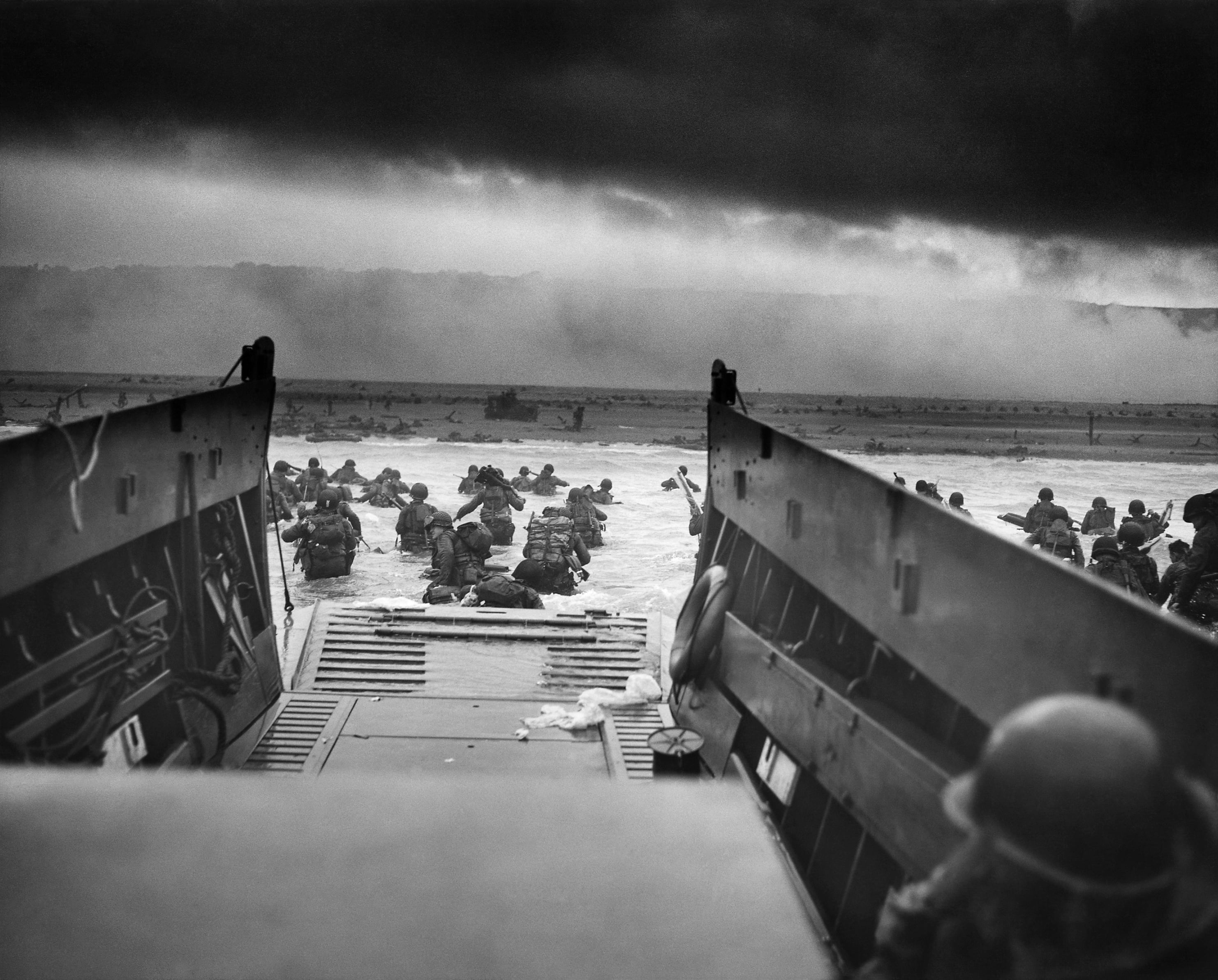
    Para ilustrar esas limitaciones citó el desembarco de Normandía en la Segunda Guerra Mundial, cuando muchas embarcaciones quedaron detenidas antes de la playa y los soldados tuvieron que avanzar varios metros en el agua bajo fuego enemigo, con numerosas víctimas incluso antes de alcanzar la costa.

    La tecnología de hovercraft comenzó a desarrollarse en el Reino Unido en la década de 1950 para mejorar los desembarcos anfibios

    El hovercraft modificó ese panorama porque su desplazamiento sobre aire le permite sortear bancos de arena, obstáculos sumergidos e incluso minas poco profundas sin tocar el fondo. Serbin Pont explicó que, al no tener una estructura rígida en la parte inferior, estos vehículos aumentaron significativamente las zonas de desembarco posibles, pasando de operar en alrededor del 15% de las costas a poder hacerlo en cerca del 70%.

    La evolución de los hovercraft y su capacidad de transporte

    La tecnología continuó evolucionando durante la guerra de Vietnam y se consolidó entre las décadas de 1970 y 1980, cuando Estados Unidos incorporó decenas de unidades para mejorar su capacidad anfibia. Rusia y otros países también desarrollaron modelos propios, algunos de mayor tamaño que fueron adquiridos posteriormente por naciones como China y Grecia.

    Además de su movilidad, los hovercraft destacan por su capacidad de carga: pueden transportar vehículos pesados —incluido un tanque Abrams de alrededor de 70 toneladas— además de tropas, blindados y grandes cantidades de suministros.

    El hovercraft amplió las posibilidades de desembarco al permitir operaciones en cerca del 70% de las playas del mundo (REUTERS/Mike Blake)

    Ese rendimiento se logra mediante turbinas que impulsan aire hacia la base del vehículo, donde grandes faldones de goma retienen el aire y forman el colchón sobre el que el hovercraft se desplaza, lo que le permite “flotar” por encima de la superficie.

    Por qué siguen siendo una herramienta estratégica

    Sobre el costo, Serbin Pont indicó que cada hovercraft implica una inversión aproximada de 150 millones de dólares y recordó que Estados Unidos llegó a operar más de ochenta unidades. No obstante, también señaló limitaciones importantes, sobre todo en escenarios de combate.

    En particular, explicó que estos vehículos dependen del colchón de aire para su funcionamiento, por lo que cualquier daño en los faldones puede afectar gravemente su desempeño. Bajo fuego enemigo, la vulnerabilidad de esos faldones convierte al hovercraft en una plataforma con un punto débil significativo.

    Estados Unidos incorporó decenas de hovercraft, capaces de transportar un tanque Abrams, tropas y vehículos blindados (EFE/ Henry Chirinos)

    Aun así, Serbin Pont sostuvo que el hovercraft mantiene un gran valor estratégico porque combina velocidad, capacidad de carga y la posibilidad de operar en costas inaccesibles para otras embarcaciones. El despliegue en Venezuela muestra esa versatilidad: la misma tecnología diseñada para desembarcar tropas y vehículos blindados también sirve para llevar alimentos, medicamentos y otros insumos en emergencias.

    Para el analista, esa adaptabilidad a escenarios variados explica por qué los hovercraft siguen siendo centrales en las operaciones anfibias modernas. Estados Unidos, dijo, busca mantener la capacidad de proyectar fuerzas a nivel global, y estas plataformas son una herramienta clave tanto para la respuesta humanitaria como para el despliegue militar.

    Infobae te acompaña cada día en YouTube con entrevistas, análisis y la información más destacada, en un formato cercano y dinámico.

    • De 7 a 9: Infobae al Amanecer: Nacho Giron, Luciana Rubinska y Belén Escobar.

    • De 9 a 12: Infobae a las Nueve: Gonzalo Sánchez, Tatiana Schapiro, Ramón Indart y Cecilia Boufflet.

    • De 12 a 15: Infobae al Mediodia: Maru Duffard, Andrei Serbin Pont, Jimena Grandinetti, Fede Mayol y Facundo Kablan.

    • De 15 a 18: Infobae a la Tarde: Manu Jove, Maia Jastreblansky y Paula Guardia Bourdin; rotan en la semana Marcos Shaw, Lara López Calvo y Tomás Trapé.

    • De 18 a 21: Infobae al Regreso: Gonzalo Aziz, Diego Iglesias, Malena de los Ríos y Matías Barbería; rotan en la semana Gustavo Lazzari, Martín Tetaz y Mica Mendelevich

    Seguinos en nuestro canal de YouTube @infobae.

    (more…)

  • From Naval Drone Attacks to Robotic Landings: Evolving Unmanned Military Operations

    From Naval Drone Attacks to Robotic Landings: Evolving Unmanned Military Operations

    In just 72 hours three unprecedented events occurred that show how artificial intelligence and autonomous systems have already begun to transform warfare at sea. The United States carried out for the first time an attack with its own naval drone, Ukraine executed the first fully robotic amphibious landing on record, and a U.S. company unveiled a new generation of hybrid aircraft capable of patrolling large maritime areas at lower cost and without crews.

    During Infobae al Regreso, international analyst Andrei Serbin Pont reviewed these three episodes and argued that, although they took place in different contexts, they reflect the same trend: the growing integration of unmanned vehicles into missions that until a few years ago depended exclusively on soldiers and human crews.

    The first U.S. attack with a naval drone

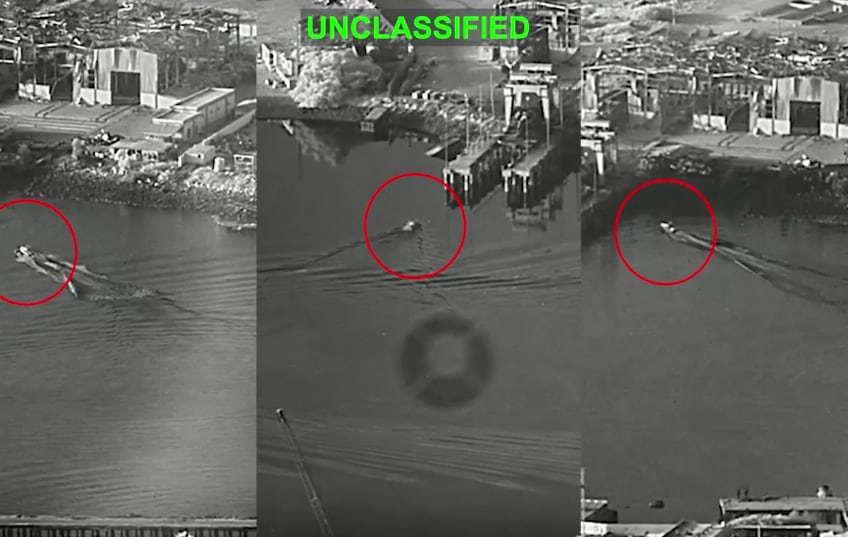
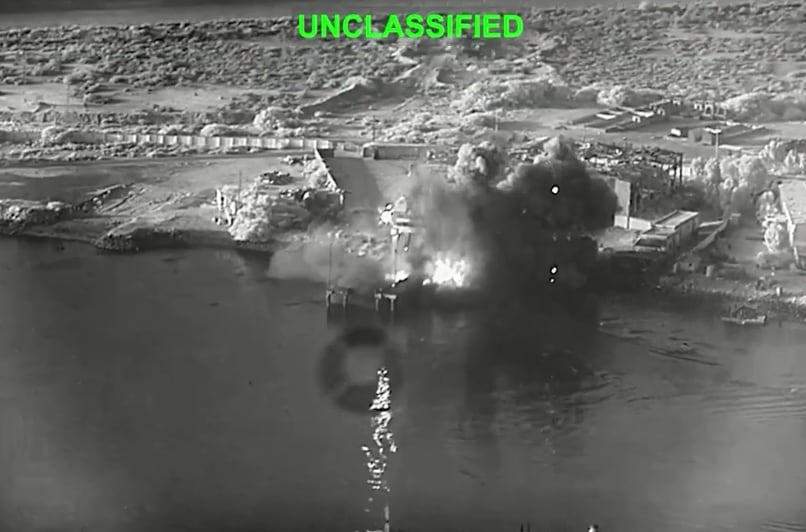
    The first case involved Task Force 59, the U.S. Navy unit specialized in unmanned systems. According to Serbin Pont, that force carried out the first known U.S. attack using an autonomous vessel, a capability that until now had been mainly focused on surveillance, reconnaissance and logistical support.

    La Task Force 59 de la Armada de Estados Unidos utilizó una embarcación autónoma configurada para destruir instalaciones en una misión de un solo uso (Infobae en Vivo)

    “It’s not a Ukrainian suicide drone like those we’ve seen operate in the Black Sea, but an American maritime drone that was used specifically to destroy installations,” the specialist explained. Although he described the vehicle as “a bomb boat,” he clarified that it is a multi-purpose platform that, for this mission, was configured to carry out a single-use attack, similar to the concept of a kamikaze system.

    The analyst recalled that weeks earlier the same vessel had been involved in another unprecedented incident when it rescued the crew of an Apache helicopter shot down near the Strait of Hormuz without exposing other servicemembers. The ability to employ the same vehicle for rescue, patrol or attack missions, he explained, demonstrates the technological leap these platforms are achieving.

    Beyond its offensive capability, Serbin Pont warned that these developments also pose new challenges for coastal defense. As naval drones take on sizes similar to recreational or fishing boats, distinguishing a threat from a civilian vessel becomes increasingly complex. “What are you going to do? Monitor every small boat that appears near the coast?” he asked, describing one of the dilemmas navies will face in the coming years.

    Ucrania ejecutó el primer desembarco anfibio completamente robótico con un dron marítimo que trasladó a la costa un vehículo terrestre armado (Infobae en Vivo)

    During the discussion, Gonzalo Aziz emphasized another consequence of this technological evolution: the reduction of risk for combatants. “If war is inevitable and you have to choose between sending five people or sending an unmanned boat, even within the horror of war there is an enormous reduction in human cost,” said the host, a reflection that permeated much of the debate.

    The first fully robotic amphibious landing

    The second episode occurred on the front between Ukraine and Russia. There, the 123rd Territorial Defense Brigade of Ukraine carried out an operation that Serbin Pont described as the first fully robotic amphibious landing on record.

    The maneuver involved using a maritime drone to transport a ground vehicle armed with a machine gun to the shore. Once ashore, the robot began operating in an area controlled by Russian forces carrying out harassment and reconnaissance tasks, with no soldier directly participating in the landing.

    Estados Unidos realizó su primer ataque con un dron naval propio y amplió el uso militar de los sistemas no tripulados en el mar (Infobae en Vivo)

    For the specialist, the value of the operation lay less in its tactical impact than in the concept it tested. “The novelty is not that a robot fights, but that a robot landed another robot to begin an amphibious operation,” he explained. While he noted the action did not change the course of the war, he considered it a relevant precedent because it demonstrates that this type of maneuver can already be executed with fully unmanned systems.

    Serbin Pont also pointed out that military innovation is advancing at an unprecedented speed today. Technologies developed by one country are quickly observed, adapted and adopted by others, which accelerates the evolution of combat systems. In that sense, he said many of the solutions Ukraine began implementing in the Black Sea are already being studied by various armed forces around the world.

    The new generation of hybrid aircraft

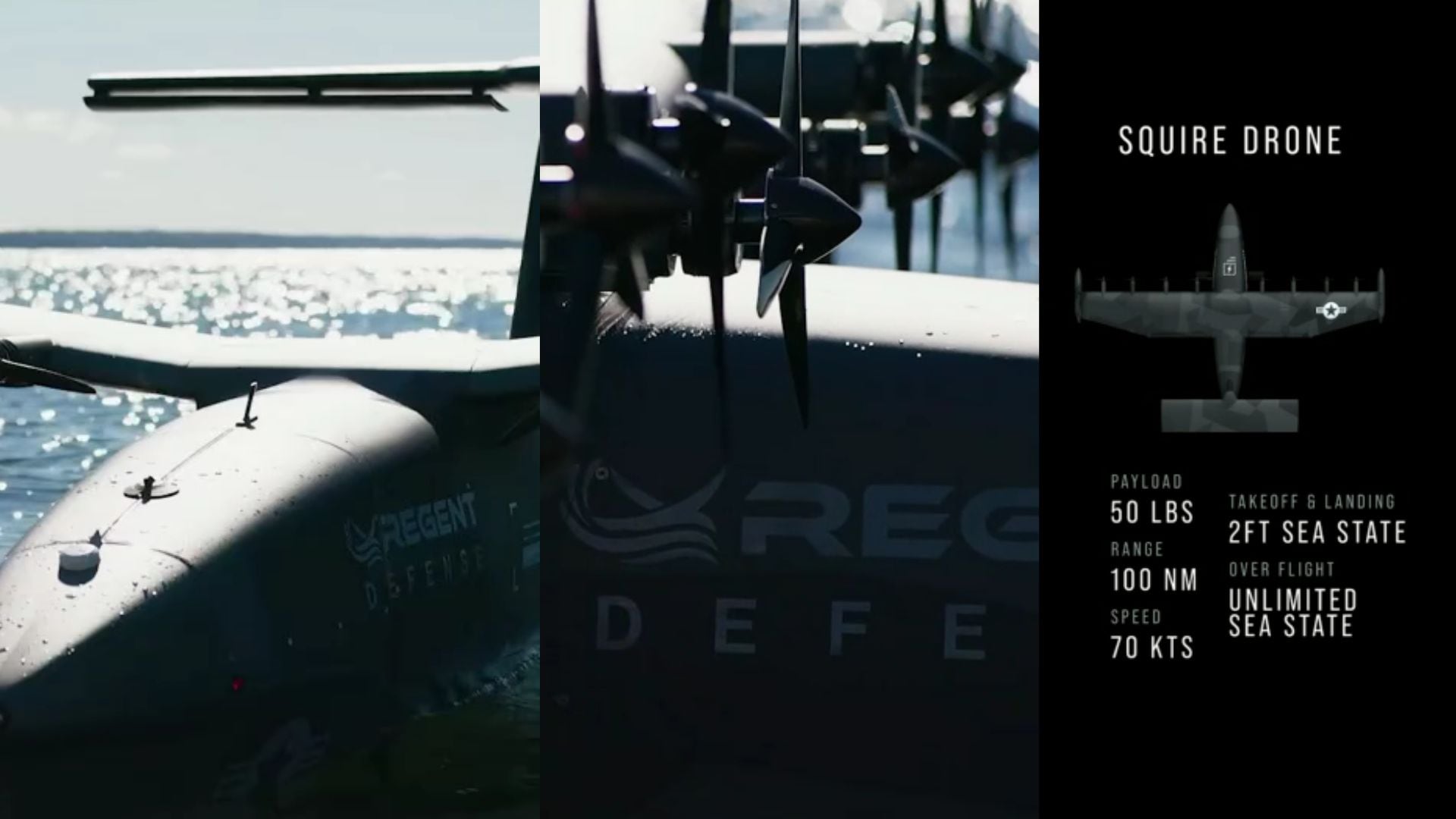
    The third development analyzed was linked to hybrid vehicles designed by the U.S. company Squire, a platform that combines features of a boat and an airplane to travel very close to the water surface using the so-called “ground effect,” an aerodynamic principle known since the Cold War that is regaining prominence thanks to automation and artificial intelligence.

    According to Serbin Pont, these aircraft can carry out maritime surveillance, patrol, search and rescue, or light transport missions at significantly lower cost than a helicopter or conventional airplane.

    La empresa estadounidense Squire presentó aeronaves híbridas que usan el efecto suelo para patrullaje, vigilancia marítima, búsqueda y rescate sin tripulación (Infobae en Vivo)

    “They allow for a relatively inexpensive, easy-to-deploy platform that can perform many tasks for which we still rely on much more expensive helicopters or aircraft that also require crews,” the specialist said, describing the system’s operational advantages.

    Aziz added that this type of solution could be particularly useful for monitoring maritime traffic in sensitive areas, such as the Pacific or the Caribbean, where the United States concentrates part of its efforts to combat drug trafficking. In that context, Serbin Pont estimated the cost of these platforms would be around one million dollars, a figure he considered low by U.S. military budget standards and competitive compared with other alternatives currently in development.

    A paradigm shift that has already begun

    For Serbin Pont, the three episodes should not be seen as isolated incidents but as manifestations of a deeper transformation. Automation is no longer limited to assisting armed forces; it is beginning to replace people in tasks such as reconnaissance, rescue, patrol and even combat, changing the way states plan and conduct military operations.

    El avance de los drones navales plantea nuevos desafíos para la defensa costera por la dificultad de distinguir una amenaza de una lancha civil (Infobae en Vivo)

    In that context, the analyst argued that democracies tend to invest increasingly in technologies that reduce their own casualties and summed up that logic with a definition: “In democracies, lives are more expensive than in non-democracies.” In his view, that reality explains much of the drive behind artificial intelligence, robotics and unmanned vehicles in major defense programs today.

    Beyond the specific scenarios, the first U.S. attack with a naval drone, Ukraine’s entirely robotic landing, and the emergence of new hybrid platforms for maritime operations illustrate the same phenomenon: machines are no longer just complementing soldiers but are beginning to take their place in some of the most complex missions. Experts say this transition is already underway and promises to redefine warfare in the coming decades.

    Infobae accompanies you every day on YouTube with interviews, analysis and the most important news, presented in a close and dynamic format.

    • From 7 to 9: Infobae al Amanecer: Nacho Giron, Luciana Rubinska and Belén Escobar.

    • From 9 to 12: Infobae a las Nueve: Gonzalo Sánchez, Tatiana Schapiro, Ramón Indart and Cecilia Boufflet.

    • From 12 to 3 PM: Infobae al Mediodia: Maru Duffard, Andrei Serbin Pont, Jimena Grandinetti, Fede Mayol and Facundo Kablan.

    • From 3 to 6 PM: Infobae a la Tarde: Manu Jove, Maia Jastreblansky and Paula Guardia Bourdin; Marcos Shaw, Lara López Calvo and Tomás Trapé rotate during the week.

    • From 6 to 9 PM: Infobae al Regreso: Gonzalo Aziz, Diego Iglesias, Malena de los Ríos and Matías Barbería; Gustavo Lazzari, Martín Tetaz and Mica Mendelevich rotate during the week

    Follow us on our YouTube channel @infobae.

    (more…)

  • Naval drones to robotic landings: evolution of unmanned military operations

    Naval drones to robotic landings: evolution of unmanned military operations

    En 72 horas se registraron tres hechos inéditos que muestran cómo la inteligencia artificial y los sistemas autónomos están cambiando las operaciones marítimas: Estados Unidos usó por primera vez un dron naval en un ataque, Ucrania realizó un desembarco anfibio totalmente robótico y una empresa estadounidense presentó aeronaves híbridas no tripuladas para patrullaje marítimo.

    En el programa Infobae al Regreso, el analista Andrei Serbin Pont analizó estos episodios y destacó que, aunque ocurrieron en contextos distintos, todos reflejan la creciente incorporación de vehículos no tripulados en misiones que hasta ahora exigían personal humano.

    El primer ataque de Estados Unidos con un dron naval

    El primer caso involucró a la Task Force 59, la unidad de la Armada de EE. UU. especializada en sistemas no tripulados. Serbin Pont explicó que esa fuerza empleó por primera vez una embarcación autónoma para atacar e destruir instalaciones, una capacidad que hasta ahora se había concentrado en vigilancia, reconocimiento y apoyo logístico.

    El vehículo fue configurado para una misión de un solo uso, similar a un sistema kamikaze, aunque la plataforma en sí es multipropósito. Días antes, la misma embarcación había rescatado a la tripulación de un helicóptero Apache derribado cerca del estrecho de Ormuz sin exponer a personal adicional, lo que ejemplifica la versatilidad de estas plataformas.

    Serbin Pont advirtió además que los drones navales plantean nuevos desafíos para la defensa costera: a medida que adoptan tamaños comparables a embarcaciones recreativas o pesqueras, se complica distinguir una amenaza de un bote civil, lo que obliga a replantear los procedimientos de vigilancia y respuesta.

    El conductor Gonzalo Aziz señaló que, aunque la guerra sea inevitable, usar vehículos no tripulados reduce el riesgo para las personas: reemplazar a cinco soldados con una embarcación sin tripulación disminuye el costo humano de la operación.

    El primer desembarco anfibio completamente robótico

    En el frente entre Ucrania y Rusia, la 123.a Brigada de Defensa Territorial ucraniana ejecutó lo que Serbin Pont describió como el primer desembarco anfibio íntegramente robótico registrado. Un dron marítimo llevó hasta la costa un vehículo terrestre armado, que luego operó en una zona controlada por fuerzas rusas realizando hostigamiento y reconocimiento sin intervención directa de soldados.

    El valor de la maniobra, según el analista, fue más conceptual que táctico: demostró que es posible que un robot desembarque a otro robot para iniciar una operación anfibia. Aunque la acción no alteró el curso general del conflicto, constituye un precedente relevante y subraya la rápida adopción y adaptación de tecnologías militares entre distintos países.

    La nueva generación de aeronaves híbridas

    El tercer desarrollo fue la presentación por parte de la empresa estadounidense Squire de aeronaves híbridas que combinan características de barco y avión y operan a baja altura aprovechando el “efecto suelo”. Gracias a la automatización y la IA, estas plataformas vuelven a poner en valor un principio aerodinámico conocido desde la Guerra Fría.

    Serbin Pont explicó que estos vehículos pueden cubrir misiones de vigilancia marítima, patrullaje, búsqueda y rescate o transporte ligero a costos significativamente inferiores a los de helicópteros o aviones tripulados. Aziz añadió que resultan útiles para controlar tráfico en áreas sensibles, como el Pacífico o el Caribe, con un costo estimado en torno al millón de dólares, competitivo frente a otras alternativas militares.

    Un cambio de paradigma que ya comenzó

    Para Serbin Pont, los tres episodios forman parte de una transformación más profunda: la automatización ya no solo asiste a las fuerzas armadas, sino que empieza a reemplazar a personas en tareas de reconocimiento, rescate, patrullaje e incluso combate, cambiando la planificación y ejecución de operaciones militares.

    El analista agregó que las democracias tienden a priorizar tecnologías que reduzcan bajas propias, lo que explica en parte la fuerte inversión actual en inteligencia artificial, robótica y vehículos no tripulados dentro de los programas de defensa.

    En conjunto, el ataque estadounidense con un dron naval, el desembarco anfibio robótico de Ucrania y las nuevas plataformas híbridas muestran que las máquinas dejan de ser solo un complemento y empiezan a ocupar el lugar de personas en algunas de las misiones más complejas; esa transición ya está en curso y probablemente redefina los conflictos futuros.

    Infobae te acompaña cada día en YouTube con entrevistas, análisis y la información más destacada, en un formato cercano y dinámico.

    • De 7 a 9: Infobae al Amanecer: Nacho Giron, Luciana Rubinska y Belén Escobar.

    • De 9 a 12: Infobae a las Nueve: Gonzalo Sánchez, Tatiana Schapiro, Ramón Indart y Cecilia Boufflet.

    • De 12 a 15: Infobae al Mediodia: Maru Duffard, Andrei Serbin Pont, Jimena Grandinetti, Fede Mayol y Facundo Kablan.

    • De 15 a 18: Infobae a la Tarde: Manu Jove, Maia Jastreblansky y Paula Guardia Bourdin; rotan en la semana Marcos Shaw, Lara López Calvo y Tomás Trapé.

    • De 18 a 21: Infobae al Regreso: Gonzalo Aziz, Diego Iglesias, Malena de los Ríos y Matías Barbería; rotan en la semana Gustavo Lazzari, Martín Tetaz y Mica Mendelevich

    Seguinos en nuestro canal de YouTube @infobae.

    (more…)

  • Naval drone attack to robotic landing: unmanned warfare evolution

    Naval drone attack to robotic landing: unmanned warfare evolution

    En un lapso de 72 horas se registraron tres sucesos inéditos que evidencian cómo la inteligencia artificial y los sistemas autónomos ya están transformando la guerra en el mar: Estados Unidos ejecutó por primera vez un ataque con un dron naval propio; Ucrania realizó el primer desembarco anfibio completamente robótico documentado; y una empresa estadounidense presentó una nueva generación de aeronaves híbridas capaces de patrullar extensas áreas marítimas sin tripulación y a menor costo.

    En el programa Infobae al Regreso, el analista internacional Andrei Serbin Pont repasó estos tres episodios y afirmó que, pese a sus diferencias contextuales, responden a una misma tendencia: la incorporación creciente de vehículos no tripulados en misiones que hasta hace poco requerían exclusivamente personal y tripulaciones humanas.

    El primer ataque de Estados Unidos con un dron naval

    El primer caso involucró a la Task Force 59, la unidad de la Armada de Estados Unidos especializada en sistemas no tripulados. Según Serbin Pont, esa fuerza realizó el primer ataque conocido por Washington empleando una embarcación autónoma, una capacidad hasta ahora enfocada principalmente en vigilancia, reconocimiento y apoyo logístico.

    La Task Force 59 de la Armada de Estados Unidos utilizó una embarcación autónoma configurada para destruir instalaciones en una misión de un solo uso (Infobae en Vivo)

    El analista señaló que no se trató de un dron suicida similar a los empleados por Ucrania en el mar Negro, sino de una embarcación marítima estadounidense configurada específicamente para destruir instalaciones en una misión de un solo uso. Aunque la describió como una “lancha bomba” en el sentido funcional, aclaró que la plataforma es multipropósito y fue adaptada para esta operación con un carácter únicamente consumible, parecido al concepto de un sistema kamikaze.

    Serbin Pont recordó que semanas antes la misma embarcación había intervenido en un rescate: recuperó a la tripulación de un helicóptero Apache derribado cerca del estrecho de Ormuz sin exponer a otros militares. Ese tipo de reutilización —rescate, patrullaje o ataque con el mismo vehículo— ilustra el avance tecnológico de estas plataformas.

    Más allá de su capacidad ofensiva, el analista advirtió que estos desarrollos plantean desafíos para la defensa costera. A medida que los drones navales adquieren tamaños y formas semejantes a lanchas de recreo o pesqueras, distinguir entre una amenaza y una embarcación civil se complica. “¿Se va a monitorear cada bote pequeño que aparece cerca de la costa?”, planteó, remarcando uno de los dilemas que enfrentarán las marinas en los próximos años.

    Ucrania ejecutó el primer desembarco anfibio completamente robótico con un dron marítimo que trasladó a la costa un vehículo terrestre armado (Infobae en Vivo)

    Durante el intercambio, el conductor Gonzalo Aziz subrayó otra consecuencia de esta evolución tecnológica: la disminución del riesgo para los combatientes. Señaló que, si la guerra es inevitable, elegir entre enviar personal o una embarcación no tripulada reduce de manera significativa el costo humano, una reflexión presente a lo largo del debate.

    El primer desembarco anfibio completamente robótico

    El segundo episodio se dio en el conflicto entre Ucrania y Rusia. La 123.a Brigada de Defensa Territorial ucraniana llevó a cabo una operación que, según Serbin Pont, constituye el primer desembarco anfibio completamente robótico registrado.

    La maniobra implicó el uso de un dron marítimo para trasladar hasta la costa un vehículo terrestre armado con una ametralladora. Una vez en tierra, el vehículo robótico operó en una zona bajo control ruso realizando tareas de hostigamiento y reconocimiento, sin participación directa de soldados en el desembarco.

    Estados Unidos realizó su primer ataque con un dron naval propio y amplió el uso militar de los sistemas no tripulados en el mar (Infobae en Vivo)

    Para el especialista, el valor de la operación está menos en su efecto táctico inmediato que en el concepto que probó: no solo que un robot participe en combates, sino que un robot entregue a otro robot para iniciar una operación anfibia. Aunque la acción no cambió decisivamente el curso del conflicto, constituye un antecedente relevante que demuestra la viabilidad de maniobras anfibias totalmente no tripuladas.

    Serbin Pont también subrayó la rapidez con la que avanza la innovación militar: las tecnologías desarrolladas por un país son observadas, adaptadas e incorporadas por otros actores, acelerando la evolución de los sistemas de combate. En ese sentido, muchas de las soluciones que Ucrania ha introducido en el mar Negro ya reciben atención de distintas fuerzas armadas en el mundo.

    La nueva generación de aeronaves híbridas

    El tercer desarrollo analizado se relaciona con los vehículos híbridos de la empresa estadounidense Squire. Estas plataformas combinan rasgos de barco y aeronave para desplazarse a muy baja altura sobre el agua aprovechando el “efecto suelo”, un principio aerodinámico conocido desde la Guerra Fría que vuelve a cobrar relevancia gracias a la automatización y la inteligencia artificial.

    Según Serbin Pont, estas aeronaves pueden realizar misiones de vigilancia marítima, patrullaje, búsqueda y rescate o transporte ligero a costos significativamente inferiores a los de helicópteros o aviones convencionales.

    La empresa estadounidense Squire presentó aeronaves híbridas que usan el efecto suelo para patrullaje, vigilancia marítima, búsqueda y rescate sin tripulación (Infobae en Vivo)

    “Permiten disponer de una plataforma relativamente económica, de despliegue sencillo y capaz de ejecutar tareas para las que hoy se requiere un helicóptero o un avión mucho más caro y tripulado”, explicó el analista al detallar las ventajas operativas del sistema.

    Aziz añadió que estas soluciones podrían ser especialmente útiles para el control del tráfico marítimo en áreas sensibles como el Pacífico o el Caribe, donde Estados Unidos concentra esfuerzos contra el narcotráfico. Serbin Pont estimó que el costo de estas plataformas rondaría el millón de dólares, una cifra baja para los estándares del gasto militar estadounidense y competitiva frente a otras alternativas en desarrollo.

    Un cambio de paradigma que ya comenzó

    Para Serbin Pont, los tres episodios deben leerse como indicios de una transformación más profunda: la automatización deja de ser meramente asistencial y comienza a reemplazar a personas en tareas de reconocimiento, rescate, patrullaje e incluso combate, modificando la manera en que los Estados planifican y ejecutan operaciones militares.

    El avance de los drones navales plantea nuevos desafíos para la defensa costera por la dificultad de distinguir una amenaza de una lancha civil (Infobae en Vivo)

    En ese marco, el analista observó que las democracias tienden a invertir cada vez más en tecnologías que reduzcan sus propias bajas y resumió esa lógica en una frase: “en las democracias las vidas son más caras que en las no democracias”. A su juicio, esa realidad explica parte del impulso actual a la inteligencia artificial, la robótica y los vehículos no tripulados en los principales programas de defensa.

    Más allá de los escenarios concretos, el primer ataque estadounidense con un dron naval, el desembarco íntegramente robótico de Ucrania y la aparición de plataformas híbridas para operaciones marítimas evidencian un mismo fenómeno: las máquinas no sólo complementan a los soldados, sino que comienzan a ocupar su lugar en algunas de las misiones más complejas. Para los especialistas, esa transición ya está en marcha y promete redefinir las guerras de las próximas décadas.

    Infobae te acompaña cada día en YouTube con entrevistas, análisis y la información más destacada, en un formato cercano y dinámico.

    • De 7 a 9: Infobae al Amanecer: Nacho Giron, Luciana Rubinska y Belén Escobar.

    • De 9 a 12: Infobae a las Nueve: Gonzalo Sánchez, Tatiana Schapiro, Ramón Indart y Cecilia Boufflet.

    • De 12 a 15: Infobae al Mediodia: Maru Duffard, Andrei Serbin Pont, Jimena Grandinetti, Fede Mayol y Facundo Kablan.

    • De 15 a 18: Infobae a la Tarde: Manu Jove, Maia Jastreblansky y Paula Guardia Bourdin; rotan en la semana Marcos Shaw, Lara López Calvo y Tomás Trapé.

    • De 18 a 21: Infobae al Regreso: Gonzalo Aziz, Diego Iglesias, Malena de los Ríos y Matías Barbería; rotan en la semana Gustavo Lazzari, Martín Tetaz y Mica Mendelevich

    Seguinos en nuestro canal de YouTube @infobae.

    (more…)

  • US joins international alarm over router hacks as NSA blames Russia

    US joins international alarm over router hacks as NSA blames Russia

    FOTO DE ARCHIVO: Un hombre teclea en un teclado 
REUTERS/Steve Marcus/Foto de archivo/Foto de archivo

    The U.S. National Security Agency (NSA) issued an alert Monday attributing a systematic campaign to compromise routers and other network devices with weak or outdated configurations to Center 16 of Russia’s Federal Security Service (FSB). The advisory, produced in cooperation with 17 cybersecurity organizations from 11 other countries, lists the most exposed sectors — defense, energy, communications, finance, government facilities and health — and urges operators to implement measures to close the access paths that Russian attackers have exploited for more than a decade.

    The Washington notice was not isolated. Hours earlier, the U.K. National Cyber Security Centre (NCSC), part of GCHQ, published a parallel guide with the same focus: Center 16 acts opportunistically against strategic networks worldwide, and basic misconfigurations in network devices remain its primary entry point. The coordinated release of both advisories coincided with the first joint sanctions announced by London and Brussels against members of that FSB unit since Brexit. The immediate trigger was the December 29, 2025 attack on Poland’s power grid, formally attributed to Center 16, which could have left about 500,000 people without electricity in mid-winter. The malware used, DynoWiper, is a destructive tool historically linked to Russian state operations. The attack ultimately failed, but only narrowly.

    The technical mechanism described in the alert is telling. Center 16 scans the internet for routers still using default passwords or insecure SNMP community strings — keys such as “public” or “private” that manufacturers include by default and many administrators never change. Once a vulnerable device is identified, operators issue SNMP commands to copy its configuration file and redirect it, via the TFTP transfer protocol, to servers they control. That file effectively provides a complete map of the network: routing tables, firewall rules, stored credentials and subnet architecture. For intelligence operations seeking to understand a network’s interior without triggering intrusion-detection systems, that document can be more valuable than most conventional malware, the advisory says.

    FOTO DE ARCHIVO: Un hombre sostiene una computadora portátil mientras se proyecta código cibernético sobre ella en esta ilustración tomada el 13 de mayo de 2017
REUTERS/Kacper Pempel/Ilustración/Foto de archivo

    The NSA and its partners — including CISA, the FBI and agencies from Australia, Canada, New Zealand, the Czech Republic, Denmark, Estonia, Finland, France, Italy, Poland and Sweden — say the group, also tracked under names such as Berserk Bear, Energetic Bear, Dragonfly or Static Tundra, has been active since at least the early 2010s. In addition to abusing SNMP, it has exploited known flaws in Cisco Smart Install and in device management web portals. Since August 2025, the FBI had already documented the collection of configuration files from thousands of devices tied to U.S. critical infrastructure. Monday’s alert expands that assessment with new tactics and adds a notable detail: Center 16’s techniques partially overlap with those used by a China-linked actor known as Salt Typhoon, suggesting the vulnerabilities exploited by Moscow are the same ones other foreign intelligence services exploit.

    The recommended measures are technically straightforward: adopt SNMP version 3 — the only version offering strong authentication and encryption — disable Cisco Smart Install, enforce unique, strong passwords on every network device, block TFTP and SMI protocols at the firewall, and keep device firmware up to date.

    The tempo of incidents attributed to Russia against European infrastructure has increased in recent months. In April 2026, Sweden reported that an FSB-linked group had attacked a district heating plant. France has attributed intrusions in 2014 against ministerial systems and in February 2025 against a defense-industry research institute to the same operational environment. The Kremlin has repeatedly denied any involvement. The coordination of 18 agencies from 12 countries to publish a technical guide, impose sanctions and formally attribute a specific attack is the broadest Western response to date, though Center 16’s record —more than a decade of sustained operations with few visible consequences— raises reasonable doubts about how effective this response will be as a deterrent.

    (more…)

  • Iran attacks two tankers in Strait of Hormuz, one crew member killed

    Iran attacks two tankers in Strait of Hormuz, one crew member killed

    The United States launched a third round of strikes against Iran and announced the reinstatement of a naval blockade on Iranian ports, amid the collapse of the memorandum of understanding (MoU) signed by both sides after fighting resumed last week.

    Hours before announcing the strikes, Trump said the Strait of Hormuz is open and will remain so “with or without Iran.” He also announced that the United States would reimpose its blockade on Iranian ports and begin charging fees to ships transiting the waterway.

    The president set a 20% levy “for each and every cost necessary” to guarantee the security of vessels in the strait. The United States Central Command said preparations to resume blocking ships bound for or departing from Iranian ports would begin at 20:00 GMT on Tuesday.

    The International Maritime Organization (IMO) rejected both the proposed fees and the military actions in the area. In a statement, the IMO Council reaffirmed its commitment to protecting vital sea routes and said passage through the Strait of Hormuz “must remain free of tolls and charges, in accordance with international law.”

    Two tankers attacked by Iran: one Indian crew member killed

    The United Arab Emirates Ministry of Defense reported on Monday that two national tankers were attacked with two Iranian cruise missiles in the southern channel of the Strait of Hormuz, in Omani territorial waters. The attack killed one Indian crew member and injured eight others, four of them seriously.

    The ministry said fires broke out on both vessels but were brought under control. It condemned the attack as a serious violation of international law and said the UAE retains the full right to respond and take all necessary measures to protect its sovereignty and security.

    /america/mundo/2026/07/13/la-onu-y-la-organizacion-maritima-exigieron-el-paso-libre-en-el-estrecho-de-ormuz/

    /america/mundo/2026/07/13/el-comando-central-de-estados-unidos-confirmo-que-el-bloqueo-naval-contra-iran-comenzara-este-martes/

    Trump says Iran sought further negotiations after agreement was reached

    The U.S. president said the United States had reached an agreement with Iran two days earlier, but that Tehran wanted to continue negotiating it.

    When asked by a reporter whether he had decided a negotiated agreement with Iran was no longer possible, Trump replied: “I never reached that conclusion.”

    He added that he believed the most effective way to pressure Iran was a combination of a blockade and strikes.

    /estados-unidos/2026/07/13/estados-unidos-lanzo-una-nueva-ronda-de-ataques-contra-iran-para-degradar-su-capacidad-militar-en-estrecho-de-ormuz/

    The International Maritime Organization (IMO) reiterated on Monday that passage through the Strait of Hormuz must remain free of charges, following U.S. President Donald Trump’s announcement the same day that the United States would impose a 20% fee for what he called security protection.

    Under international law, passage must remain free of customs duties and charges, the UN specialized agency based in London said. The IMO emphasized that any agreement among the region’s littoral states must guarantee nondiscriminatory and unimpeded transit rights for all ships.

    /america/mundo/2026/07/13/las-acciones-tecnologicas-hundieron-a-wall-street-tras-la-escalada-entre-estados-unidos-e-iran/

    /america/mundo/2026/07/13/el-petroleo-registro-su-mayor-alza-diaria-desde-el-inicio-del-conflicto-entre-estados-unidos-e-iran/

    /america/mundo/2026/07/13/las-defensas-saudies-interceptaron-misiles-huties-en-la-mayor-escalada-en-yemen-desde-2022/

    Donald Trump announced he will address the nation in prime time on Thursday, an announcement that comes amid a significant escalation of hostilities with Iran.

    “President Trump will address the nation on Thursday night at 9 p.m. Eastern Time (01:00 GMT Friday). Thank you for your attention!” Trump posted on his social network Truth on Monday.

    U.S. missions in the United Arab Emirates suspend consular appointments

    The United States announced the suspension of consular appointments in the United Arab Emirates for three days beginning Monday, due to the escalation of military tensions in the Gulf region.

    “The U.S. Embassy in Abu Dhabi and the U.S. Consulate General in Dubai have canceled consular appointments from July 13 to July 15 due to the regional security situation. If you have an appointment scheduled for those dates, please do not go to the embassy or consulate. We will contact you to reschedule,” the notice said.

    Iran’s foreign minister mocks Trump’s fee to protect ships in Hormuz

    Iranian Foreign Minister Abbas Araghchi mocked U.S. President Donald Trump’s proposal to impose fees to protect ships navigating the Strait of Hormuz, saying his country would charge a cheaper toll.

    “Whoever guarantees the safe passage of commercial ships through the Strait of Hormuz should receive compensation for the service. Iran has always been the guardian of the strait and will remain so forever. Twenty percent is, of course, too much. We will be fair,” the minister wrote on social media, referring to the fee Trump proposed earlier.

    Oil prices jump more than 9%

    Oil prices surged on Monday, driven by the U.S. reinstatement of a naval blockade on Iranian ports and Washington’s intention to charge a toll for vessels crossing the Strait of Hormuz.

    By 18:20 GMT, the North Sea Brent benchmark rose 9.06% to $82.90 a barrel. U.S. West Texas Intermediate (WTI) advanced 9.05% to $77.87 a barrel.

    U.S. naval blockade against Iran to begin Tuesday

    The United States will begin enforcing a naval blockade against all Iranian ports and oil terminals on Tuesday, the Joint Maritime Information Center (JMIC) of the U.S.-led Combined Maritime Forces said in a statement on Monday.

    According to the JMIC, the blockade will apply to all vessels regardless of flag. The blockade will not prevent neutral traffic transiting the Strait of Hormuz destined to or from locations outside Iran, the statement added.

    Humanitarian shipments will be allowed passage, subject to inspections, the JMIC said.

    /estados-unidos/2026/07/13/nueva-ofensiva-contra-iran-estados-unidos-bombardeo-una-instalacion-naval-del-regimen-con-drones-maritimos-no-tripulados/

    Saudi coalition says it responded to ballistic missile attack by Yemen’s Houthis

    The Saudi-led military coalition intervening in Yemen since 2015 said on Monday it had responded to a ballistic missile attack launched by the Houthi rebels, after the Shiite movement accused Riyadh of bombing Sanaa International Airport.

    “Air defenses responded to a ballistic missile threat launched by the terrorist Houthi militia toward the southern region,” Turki al-Maliki, spokesperson for the Coalition to Support Yemeni Legitimacy, said on X.

    European stock markets close slightly higher amid Middle East uncertainty

    European stock markets closed slightly higher on Monday after a session marked by the resumption of hostilities and rising oil prices, along with concerns about the technology sector and the outlook for interest rates.

    London finished up marginally at 0.01%, Paris gained 0.31%, Frankfurt 0.19%, Milan 0.37% and Madrid 0.25%.

    Guterres warns of military escalation in the Gulf after U.S. and Iranian attacks

    UN Secretary-General António Guterres warned on Monday about U.S. attacks on Iran and Tehran’s strikes on vessels in the Strait of Hormuz and on neighboring countries.

    Guterres expressed his “deep concern about the serious escalation and the resumption of military confrontations in the Gulf region,” his spokesperson Stéphane Dujarric said.

    Oil rises more than 4% as tensions between the U.S. and Iran grow

    Oil prices climbed strongly on Monday, with West Texas Intermediate trading at $74.53 a barrel, up 4.37%, while Brent rose 4.30% to $79.28. The increase occurred amid growing military tensions between the United States and Iran, which revived doubts about the security of transit through the Strait of Hormuz.

    The energy rally also affected stock and bond markets: the VIX volatility index jumped 7.77%, while U.S. Treasury yields rose across the curve — the 10-year yield increased 0.63% and the 5-year yield 0.88% — reflecting investor caution over a possible prolonged disruption to global energy trade.

    CENTCOM confirms first combat use of maritime drones: struck Iranian naval base in Bandar Abbas

    U.S. Central Command (CENTCOM) said its forces successfully struck a submarine and ship maintenance facility in Iran using multiple single-use aerial attack drones. According to CENTCOM, three unmanned surface vessels of the Corsair model impacted the port at Bandar Abbas Naval Base.

    CENTCOM said the attack marked the first time U.S. forces have used maritime drones in combat. The command stated that the nighttime strikes “degraded Iran’s ability to continue attacking commercial maritime traffic,” amid the military escalation that has put transit through the Strait of Hormuz on edge.

    /america/mundo/2026/07/13/operaciones-militares-en-yemen-bombardearon-el-aeropuerto-de-sana-controlado-por-rebeldes-huties/

    Trump says the U.S. will charge a 20% fee to protect ships in the Strait of Hormuz

    President Donald Trump said the Strait of Hormuz is and will remain “OPEN,” with or without Iran, and that the United States is reinstating what he termed the “IRANIAN BLOCKADE,” which, as he explained, will only prevent Iranian ships or customers from entering or leaving.

    “All other countries will have fair and open use of the strait,” the president wrote on Truth Social.

    Trump said the United States will from now on be known as “THE GUARDIAN OF THE STRAIT OF HORMUZ,” and argued that, “as a matter of FAIRNESS,” the country should be reimbursed at a rate of 20% on all transported cargo, to cover the costs necessary to provide security in “this very volatile section of the world.” “The process and training will begin immediately,” he added.

    The announcement intensifies Trump’s rhetoric over the strait, after he had earlier told Fox that Washington would become the “guardian” of the waterway and be compensated for guarding it, amid the military escalation with Iran and Tehran’s warning that it would consider any Gulf state cooperation with the U.S. over the passage “an act of war.”

    The full report is at this link.

    Iran’s Revolutionary Guards accuse the U.S. of endangering global oil supply by “interfering” in Hormuz

    Iran’s Islamic Revolutionary Guard Corps accused the United States on Monday of endangering the global supply of oil and gas by “interfering” in the Strait of Hormuz after hostilities between the two countries resumed. IRGC spokesperson Hosein Mohebi said the United States “must be held accountable” for putting global energy security at risk.

    In a post on X, Mohebi added that Tehran “will continue to exercise its sovereignty and management of the Strait of Hormuz,” signaling that Iran is unwilling to cede operational control of the route despite U.S. pressure.

    The accusation followed an earlier warning from the Khatam Al-Anbiya military command, which said any Gulf state cooperation with Washington regarding management of the strait would be considered “an act of war,” after President Trump said the United States would become the strait’s “guardian” and should be compensated for doing so.

    Wall Street opens lower on U.S.-Iran escalation and a drop in semiconductors

    Stocks on Wall Street opened mostly lower on Monday morning as markets weighed rising oil prices and a pullback in semiconductor shares, while investors looked ahead to upcoming corporate earnings and economic data. Crude prices rose more than 3% amid growing tensions between the United States and Iran, reviving concerns about oil infrastructure in the Strait of Hormuz.

    U.S. semiconductor shares fell early after a weak session on South Korea’s Kospi, driven by a sharp decline in SK hynix. About ten minutes after the open, the Dow Jones was up 0.1% at 52,676.53 points, while the S&P 500 was down 0.4% at 7,547.53 and the Nasdaq Composite fell 0.9% to 26,039.50.

    “Tensions with Iran, which are intensifying, are pushing oil prices up, and that is raising Treasury yields, while the liquidation of SK hynix drags memory-linked stocks down, which in turn pressures the Nasdaq and the S&P,” said Art Hogan of B. Riley Wealth Management. This week’s agenda includes major U.S. bank earnings, a congressional appearance by Federal Reserve Chair Kevin Warsh, and the latest consumer price index data.

    Iran warns Gulf states: cooperating with the U.S. in the Strait of Hormuz will be considered “an act of war”

    The Iranian military warned Gulf states on Monday that any cooperation with the United States in managing the Strait of Hormuz would be considered “an act of war,” as hostilities between Tehran and Washington resumed. A spokesperson for the Khatam Al-Anbiya military command made the warning in a video message addressed to regional nations.

    The same spokesperson said Iran “under no circumstances will allow… the United States to interfere in the management” of the strategic waterway, aiming to dissuade Washington’s regional allies from joining any joint scheme to administer the strait.

    The statement follows President Donald Trump’s remarks that the U.S. would become the “guardian” of the Strait of Hormuz and should be compensated for protecting it, amid the military escalation that has put this key energy trade route at risk.

    Trump says the U.S. is “taking control” of the Strait of Hormuz

    President Donald Trump said on Monday that the United States was “taking control” of the Strait of Hormuz after several days of exchanges with Iran in the vital maritime corridor. “We are taking control of the strait. They have nothing. They have nothing,” Trump said in an interview with Fox News, referring to Iran’s supposed military vulnerability.

    The president added that the United States would become the “guardian” of the strait and should be paid for protecting it. “We will become the guardian of the strait (…) And we should be compensated for that,” he said in the interview.

    He also warned Iran sharply after the breakdown of the existing military agreement, saying the United States struck Iranian military equipment during the night. “Most of their equipment no longer exists. Their anti-aircraft guns — we hit them very hard last night,” he said. “Every time they send a drone, we hit them very hard.” Trump asserted that Washington had reached an agreement with Tehran that was later violated: “We had an agreement… and they broke it. They always break it. So we are going to hit them very hard and stay in the strait, and we will probably administer it.”

    The remarks come amid a dispute over control of the strait, after Iran threatened to close it and fired “warning shots” at ships attempting to cross, while Washington insists maritime traffic continues to flow normally despite the military escalation.

    /america/mundo/2026/07/13/el-reino-unido-acuso-a-iran-de-respaldar-ataques-a-objetivos-judios-en-londres-y-declaro-ilegal-a-la-guardia-revolucionaria/

    Video: U.S. releases footage of new wave of strikes against Iran

    U.S. forces completed a new wave of strikes against Iran on Sunday, hitting dozens of targets at multiple locations with precision munitions, the U.S. Central Command (CENTCOM) reported. CENTCOM said it struck air defense systems, coastal radars, missile and drone capabilities, and small Iranian vessels using combat aircraft, warships, and single-use aerial and maritime attack drones.

    Iranian media reported on Sunday missile strikes and explosions around the port cities of Sirik and Bandar Abbas — where military installations near the strait are located — and the nearby island of Qeshm. Iran’s foreign ministry condemned the U.S. strikes over the weekend as “aggressive.” Reuters could not independently verify the location or date of the video footage, nor find any earlier version posted online before July 12.

    The Houthis warn they will retaliate for the attack on Sanaa airport

    Yemen’s Iran-backed Houthis said on Monday they will respond to the attack on Sanaa airport, which they attributed to Saudi Arabia, although the operation was claimed by the Yemeni government backed by Riyadh. Houthi military spokesperson Yahya Saree accused Saudi Arabia of “ending the de-escalation phase and assuming full responsibility for the consequences of its aggression.”

    Saree warned that “this aggression will not go unanswered or unpunished,” indicating the rebel group could intensify its actions amid the region’s growing tensions linked to the U.S.-Iran confrontation.

    Yemeni government claims attack on Sanaa airport; Houthis blame Saudi Arabia

    The internationally recognized government of Yemen said on Monday it attacked Sanaa airport after a dispute over an Iranian plane carrying a Houthi delegation, an operation the government claimed despite Houthi accusations that Saudi Arabia was responsible. “The Houthi terrorist militias — backed by the Iranian regime — prevented national Yemeni aircraft from landing at the capital’s airport while insisting on allowing an Iranian plane to violate Yemeni territory; accordingly, the airport runway was attacked,” Yemen’s Defense Ministry said.

    Earlier, the Houthi channel Al Masirah reported that “the Saudi aggression attacked the takeoff and landing runways of Sanaa International Airport.” The Houthis said they would respond to the attack they attributed to Saudi Arabia, even though the Riyadh-backed Yemeni government claimed responsibility. Houthi spokesperson Yahya Saree said Saudi actions “end the de-escalation phase” and warned: “We affirm that this aggression will not go unanswered or unpunished.”

    /america/mundo/2026/07/13/como-esta-el-trafico-maritimo-en-el-estrecho-de-ormuz-que-iran-asegura-haber-cerrado-y-eeuu-quiere-mantener-abierto/

    Bahrain intercepts Iranian drones and missiles amid reports of strikes in southern Iran

    Bahrain’s military said on Monday that its air defenses intercepted and destroyed several missiles and drones launched by Iran during the day, following claims by the Islamic Revolutionary Guard Corps that it had struck U.S. military installations in the Gulf, including bases on Bahraini territory. Bahrain’s Defense Forces accused Iran of continuing to target the kingdom’s civilian population.

    Separately, Iran’s semi-official ISNA news agency reported that a U.S. strike on a target in Isfahan province in central Iran killed one person and injured seven in the early hours of Monday, according to the province’s deputy security governor. Iran has not released an official casualty count since the recent large-scale exchange of strikes began last week, but state media reports and incident statements suggest about 20 people have died from renewed U.S. bombardments. At the start of the war thousands were killed, mostly in Iran and Lebanon.

    Bahrain’s military accuses Iran of attacking civilians

    On Monday, Bahrain’s armed forces accused Iran of attacking civilians in their latest strikes against the kingdom, after Tehran said it had hit U.S. military facilities and infrastructure there.

    “Iran continues its systematic hostile behavior through its atrocious missile and drone attacks directed at civilians in the Kingdom of Bahrain,” the armed forces’ general command said in a statement, adding that air defenses “intercepted and destroyed several Iranian air attacks” on Monday morning.

    Iranian media report explosions near the Strait of Hormuz

    Explosions of unknown origin were heard on Monday in southern Iran, near the Strait of Hormuz, a news agency reported, after an exchange of strikes between Tehran and Washington.

    “Media outlets and residents reported hearing explosions on Monday at midday near Bandar Abbas and the island of Qeshm,” Mehr news agency said, adding that the explosions “appear to originate from the west coast of Bandar Abbas.”

    Iran says it continues talks with mediators to “avoid escalation” with the U.S.

    Iran said on Monday it is continuing diplomatic efforts with mediators Qatar, Pakistan and Oman to “avoid an escalation” with the United States amid the renewed hostilities between the two countries.

    “The role of the mediators is to continue their efforts to prevent an escalation of tensions,” Foreign Ministry spokesperson Esmail Baqai said, adding that Tehran had been in contact “in recent days” with Qatar and Oman — two countries that Iran had attacked militarily — as well as with Pakistan.

    Iran says it will stop complying with the agreement if the U.S. does not meet its commitments

    Iran announced on Monday that it would no longer abide by the memorandum of understanding signed with the United States if Washington failed to fulfill its commitments to end the war.

    “Whenever the other party has not fulfilled its obligations, we have not fulfilled ours… We will continue to act in this manner,” Foreign Ministry spokesperson Esmaeil Baqaee said at a press conference in Tehran after the latest wave of hostilities between the two adversaries.

    /america/mundo/2026/07/13/el-petroleo-sube-mas-de-4-tras-la-reanudacion-de-los-ataques-entre-eeuu-e-iran-y-la-amenaza-de-cierre-del-estrecho-de-ormuz/

    /america/mundo/2026/07/13/el-regimen-de-iran-lanzo-ataques-contra-bases-militares-de-estados-unidos-en-jordania-bahrein-y-kuwait/

    (more…)