Find Working People wherever you get your podcasts — or sign up to get the latest TRNN stories by email.
Episode summary
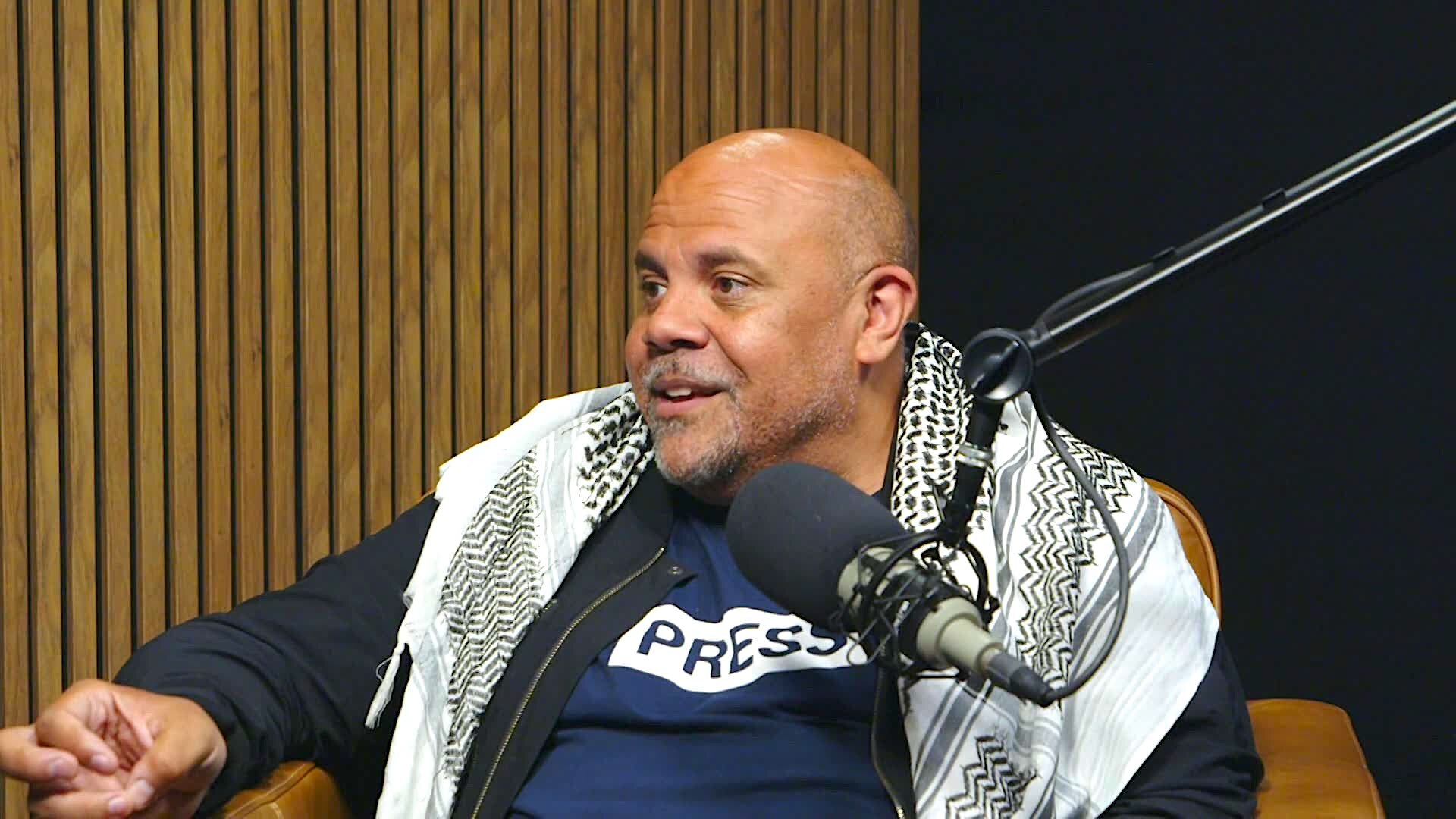
This episode features an interview with Dr. Steven W. Thrasher about his new book, The Overseer Class: A Manifesto. The conversation covers the book’s central argument connecting historical systems of slavery and plantation management to contemporary institutions of control, including policing and workplace supervision. Dr. Thrasher also discusses his experience being publicly targeted and effectively removed from teaching after intervening on behalf of student protesters during the Palestine encampment movement in 2024.
Guest
Steven W. Thrasher, PhD, is the author of The Overseer Class: A Manifesto and The Viral Underclass: The Human Toll When Inequality and Disease Collide. His second book received notable recognition and awards and his writing appears in major publications and academic journals. Dr. Thrasher holds the Daniel Renberg Chair for Social Justice in Reporting at Northwestern’s Medill School of Journalism and is a faculty member of Northwestern’s Institute of Sexual and Gender Minority Health and Wellbeing. He is known for scholarship on race, gender, and infectious disease.
Production credits
Studio production and post-production: David Hebden
Transcript note
The following transcript was prepared quickly and may contain errors. It will be updated when possible.
Interview highlights (condensed)
– Book overview: Dr. Thrasher explains that The Overseer Class examines how people from marginalized backgrounds sometimes rise to roles that enforce power and discipline against their own communities. The book began as a study of Black police officers but expanded to analyze how supervisory and policing mentalities operate across institutions — from plantations to factories, universities, and modern law enforcement.
– Class dynamics and intent: He frames overseers as intermediaries between the ruling class and workers, arguing that class structures and incentives shape behavior regardless of individuals’ personal intentions. Managers or employees placed in positions of authority may perpetuate systems of control because the institutional rewards and threats persist independently of personal morality.
– Historical link to plantations: Dr. Thrasher traces techniques of managing and controlling labor from the plantation era into industrial and contemporary settings. He emphasizes that, while not identical to slavery, modern supervisory practices can continue to produce similar forms of coercion, including threats to livelihoods and family stability.
– Cultural examples and archetypes: He discusses cultural representations such as the TV series Severance to illustrate modern “overseer” dynamics, and uses four archetypes (in conversation with film scholarship) — including reinterpreting the figure of Uncle Tom and the idea of tokens — to distinguish different roles people occupy within oppressive systems.
– Workplace and corporate mechanisms: Dr. Thrasher describes how corporations co-opt employee resource groups and other diversity initiatives, sometimes using insiders to police dissent or block organizing. He also notes how recruitment and pay differentials steer people toward roles that function as overseers, for example in corrections or immigration enforcement, where relatively higher short-term pay can encourage entry into punitive positions.
– Personal history and vulnerability: He shares aspects of his own background — including a time he applied to be a police officer when options were limited — to illustrate how economic necessity and career choice can intersect with structural pressures.
– Blacklisting and higher education: Dr. Thrasher recounts his experience at NYU and later at Northwestern, where tensions over speech and campus protests around Israel and Gaza escalated. He describes intervening physically to protect students during an encampment, being photographed in that role, and subsequently facing public criticism and institutional sanctions that effectively sidelined him from teaching. He frames these events as an illustration of how university governance, donor influence, and political pressure can enforce compliance and punish dissent.
– University funding and influence: The interview discusses how university funding — from federal contracts to philanthropic and corporate ties, including military contractors — shapes campus priorities and constrains critique. Encampments and student protests, he argues, posed a threat to the established public/private relationships and power structures by exposing those connections.
– Surveillance and repression of protest: The guests note a broader pattern of surveillance, policing, and punitive responses to student activism across institutions, with lasting consequences for students and faculty who challenge powerful interests.
– What individuals can do: Dr. Thrasher stresses naming and identifying the problem as a first step. He offers a personal ethic: be kind to people and resolute in opposing systems that harm them. He encourages readers to recognize moments when they can act on principle and to support alternatives that break the dynamics of oversight and coercion. The book aims to give language to experiences that can feel unspeakable and to help people understand the class dynamics that motivate overseer behavior.
The Real News Network
Independent · Nonprofit · Nonpartisan
TRNN describes itself as a viewer-funded nonprofit newsroom producing reporting it says is overlooked or distorted by corporate media. The organization highlights that it operates without paywalls, advertisers, or billionaire ownership and is sustained by donations from viewers.
Themes covered on the site
– Workers & Labor Rights
– U.S. Politics & Democracy
– Palestine & Global Justice
– Economic Inequality
– Media Accountability
Support information
TRNN accepts monthly, one-time, and annual donations and emphasizes that it is tax-deductible, secure, and cancelable. The network states it is 100% viewer supported, reports no corporate funding, and has over 20 years of independent journalism. Republish rights are offered under a Creative Commons license for online or print use where applicable.
Leave a Reply
You must be logged in to post a comment.