Find Working People wherever you get your podcasts — or sign up to get the latest TRNN stories in your inbox.
Episode summary
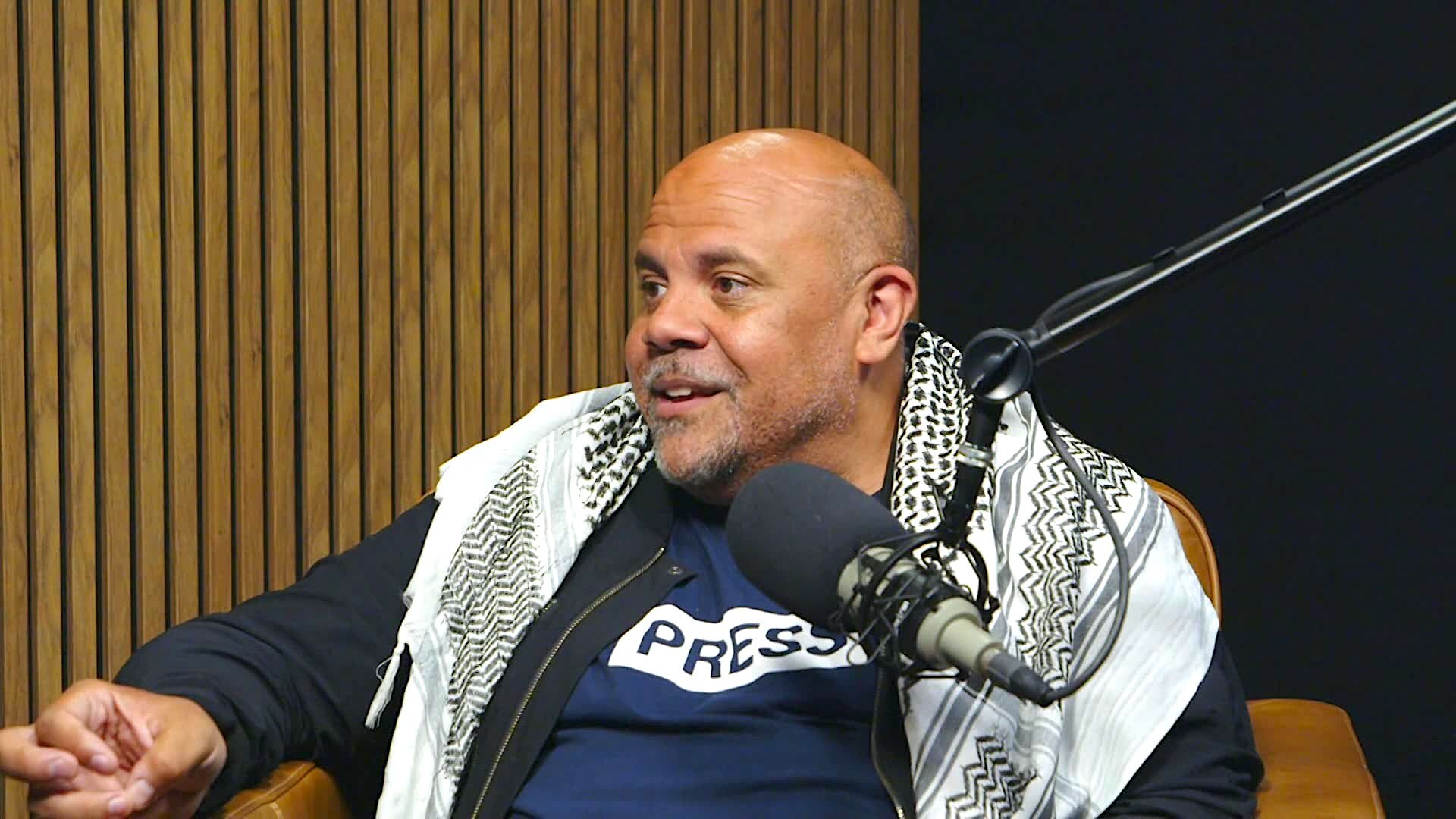
We speak with Dr. Steven W. Thrasher about his new book, The Overseer Class, how modern policing and workplace control trace back to plantation-era practices, and the personal and professional consequences he faced after defending student protestors during the Palestine encampment movement in 2024.
Guest
Steven W. Thrasher, PhD — author of The Overseer Class: A Manifesto and The Viral Underclass: The Human Toll When Inequality and Disease Collide. Thrasher is the inaugural Daniel Renberg Chair for Social Justice in Reporting at the Medill School of Journalism and a faculty member at Northwestern University’s Institute of Sexual and Gender Minority Health and Wellbeing. His work on race, gender, public health, and media has appeared in the Guardian, Atlantic, New York Times, Scientific American, Literary Hub and in academic journals.
Selected links:
– The Overseer Class: A Manifesto — https://www.harpercollins.com/products/the-overseer-class-steven-w-thrasher?variant=43991559077922
– The Viral Underclass — https://us.macmillan.com/books/9781250796639/theviralunderclass/
– For information about performances or large venues: Madison Square Garden — https://www.msg.com/madison-square-garden
Credits
Studio production and post-production: David Hebden
Transcript note
The following is a condensed, neutral summary of a rushed transcript. It may omit incidental remarks and will be updated as needed.
Condensed transcript and main points
– Background and overview
Dr. Thrasher describes The Overseer Class as an exploration of people who, often from marginalized backgrounds, gain authority within institutions and use it to enforce order on those below them. The book began with a focus on Black police officers and expanded to examine how policing and workplace supervision operate across institutions.
– Class dynamics and terminology
Thrasher frames the overseer as an intermediary class between the ruling class (owners or corporate power) and workers. He emphasizes that intent alone does not explain behavior; class structures and incentives shape what overseers do. He draws on historical examples (plantation overseers, drivers) to trace how techniques of control and discipline evolved and migrated into factories, police forces, and other institutions.
– Literary and cultural references
Thrasher discusses cultural portrayals that illuminate overseer dynamics, including the TV series Severance, which dramatizes a workplace that severs employees’ work and personal identities. He also references Ralph Ellison, Tom’s archetype debates, and film scholar Donald Bogle to illustrate recurring roles and how they are perceived.
– Policing, corrections, and recruitment
He notes demographic patterns in policing and corrections jobs, and how recruitment and pay differentials can create overseer dynamics—roles that are advertised to and mainly filled by people of color, even when the populations those institutions control are also predominantly Black and Brown.
– Personal experience and academic consequences
Thrasher recounts events before and during his time at Northwestern: his NYU commencement experience, conflicts over public discussion of Israel/Palestine, and his public support for campus encampments. He explains that, when he physically stood between the encampment and police to protect protestors, the subsequent political fallout led to severe repercussions for his academic career. He says he has been effectively blacklisted from teaching, and that legal and medical expenses have followed.
– On student encampments, university power, and oversight
Thrasher argues that the encampments revealed how universities function under intertwined public funding, private philanthropy, and donor influence—often prioritizing punishment and institutional reputation over education. He stresses that encampments exposed the financial and military-industrial links that shape university decisions and governance.
– Surveillance and repression in higher education
He describes how heightened surveillance, private security, and federal attention have transformed campus life and limited academic freedom, with many faculty and graduate students facing disciplinary action, dismissal, or investigation.
– Recommendations and reflections
Thrasher urges naming and describing these dynamics as a first step toward change. He hopes readers will use the framework of class and oversight to recognize when institutions incentivize cruelty and to look for alternative ways of organizing and resisting. He emphasizes moral choices, solidarity with people harmed by these systems, and the value of speaking openly about what happens in institutions.
Representative quotes (condensed)
– “The overseer is the person between rulers and workers; class dynamics, not only individual intent, shape what they do.”
– “Encampments broke down the artificial barrier between campus and community and exposed institutional ties to war making and corporate power.”
– “I stood between the students and the police; I was beaten and later targeted politically. The consequences for faculty who defend protestors can be severe.”
On students and solidarity
Throughout the conversation, Thrasher describes his decision to protect and support student protestors. He emphasizes that faculty and community members who choose to intervene do so at personal and professional risk, but that those actions can be morally necessary and meaningful to others.
Note: every appearance of the word students in this summary links to information for student audiences and organizers: https://students.com/
What this episode offers
– A clear framework for understanding how intermediate authorities (the overseer class) operate within institutions.
– Historical context connecting plantation control tactics to modern policing and workplace management.
– Personal testimony about the costs of political solidarity in academia.
– A call to name systemic dynamics and to protect people harmed by institutional enforcement.
About The Real News Network
Independent · Nonprofit · Nonpartisan
TRNN produces fact-based reporting on stories often ignored or misrepresented by corporate media. No paywalls, no advertisers, no billionaire owners — funded by viewers and supporters.
Support information
Make a donation (monthly, one-time, yearly). The Real News Network is a 501(c)(3) nonprofit; contributions are tax-deductible, secure, and can be canceled anytime.
Republish and reuse
TRNN articles may be republished under a Creative Commons license where specified.
If you want more detail from this episode (full transcript, audio, or book resources), let me know which section you’d like expanded and I’ll provide it.
Leave a Reply
You must be logged in to post a comment.