
President Donald Trump’s decision to restore a maritime blockade against Iranian ports opens a new phase in the confrontation between Washington and Tehran and places the Strait of Hormuz back at the center of a crisis with implications beyond a bilateral military clash. The measure aims to prevent maritime trade with the Islamic Republic, increase economic pressure on the Iranian regime and, according to the White House, ensure the security of one of the world’s most important energy routes.
The United States Central Command (CENTCOM) announced that its naval forces will resume the naval blockade of vessels entering or leaving Iranian ports, an operation that was previously in effect from April 13 to June 18 before being suspended after the ceasefire agreement signed by both sides.
Although presented as a “naval blockade,” the action does not mean the physical closure of the Strait of Hormuz nor a total halt to commercial navigation in the Persian Gulf. Its aim is more specific: to prevent commercial ships from trading with Iran through a system of surveillance, interception and diversion of vessels managed by the U.S. Navy.
In practice, any ship whose origin or destination is an Iranian port can be identified, intercepted and forced to change course. If the captain complies with orders, the vessel continues sailing. If the orders are ignored, the United States warns it may immobilize the ship through military operations.
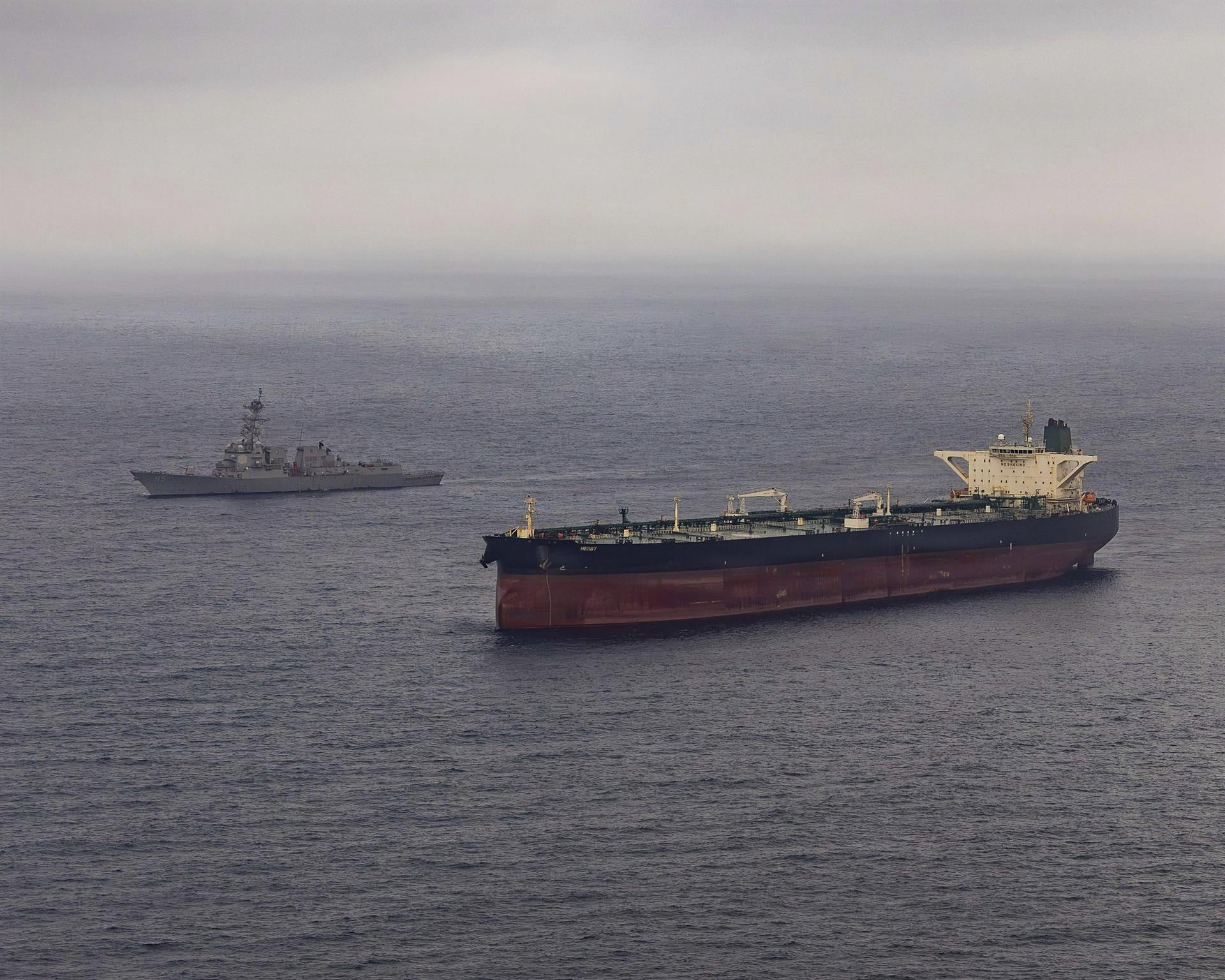
Washington maintains that other commercial traffic will continue to receive protection while transiting the region, and it has asked all mariners to stay in contact with U.S. naval forces when approaching the Gulf of Oman and the approaches to the Strait of Hormuz.
The distinction between blocking Iranian ports and closing the Strait of Hormuz is key to understanding the measure’s scope. Hormuz remains an international maritime corridor open to vessels from different countries. However, nearly all of Iran’s major Persian Gulf ports rely on that passage to connect with international trade, so controlling access to those terminals exerts significant pressure on Iran’s economy without fully disrupting global navigation.
The reimposition of the maritime blockade follows President Trump’s statement that the memorandum of understanding reached in June had been broken, alleging that Iran continued to attack merchant ships near the Strait of Hormuz despite a commitment to reduce hostilities. The move also coincides with an intensification of U.S. military operations.
Over the weekend, U.S. forces reported striking around 140 Iranian military targets using combat aircraft, drones and warships. CENTCOM also confirmed the first operational use of maritime drones to destroy a maintenance facility for submarines and boats in Bandar Abbas, Iran’s main naval port and one of the strategic sites along the Strait of Hormuz.
Tehran responded by raising the level of its rhetoric. Army spokesperson Brigadier General Mohamad Akraminia said the Armed Forces “will not yield an inch” regarding the Strait of Hormuz and asserted that the waterway “will never be reopened through war, aggression or U.S. attacks.” The Islamic Revolutionary Guard Corps reiterated that the closure of the strait will remain in effect while U.S. intervention continues in the region and warned that any attempt to change that situation will receive a military response.

At the same time, Iran has stepped up attacks on vessels navigating near the Strait of Hormuz and launched missiles and drones against U.S. bases and countries allied with Washington, including Bahrain, Qatar, Kuwait, the United Arab Emirates, Jordan and Oman, expanding the regional scope of the conflict.
The new U.S. offensive also revives a strategy used during the first phase of the maritime blockade. Between April and June, CENTCOM said it had diverted more than 140 vessels that complied with naval orders, disabled nine ships that violated the blockade and authorized the passage of over 50 commercial vessels carrying humanitarian aid.
Beyond its military dimension, the reinstated naval blockade carries a strong economic component. Shipping companies that continue operations with Iran will face a higher risk of interception, and maritime insurance and transport costs could rise if tensions continue to escalate.

The strategic importance of the Strait of Hormuz explains market concerns. Before the outbreak of war, roughly one-fifth of the world’s traded oil passed through that maritime corridor each day. Although the United States insists that international navigation will remain open for vessels not trading with Iran, any military incident in the area could disrupt energy supply chains and create new upward pressure on international crude prices.
Adding to the uncertainty, President Trump announced that the United States will begin charging a fee equal to 20% of the value of the cargo carried to vessels that request U.S. protection to cross the Strait of Hormuz. If implemented, the move would not only raise maritime trade costs but also reinforce the role Washington seeks to play as guarantor of security in one of the world’s most strategic sea lanes — a claim Iran flatly rejects and one that risks prolonging the confrontation in the Persian Gulf.