Find “Working People” wherever you get your podcasts — or sign up to get the latest TRNN stories in your inbox.
Episode summary
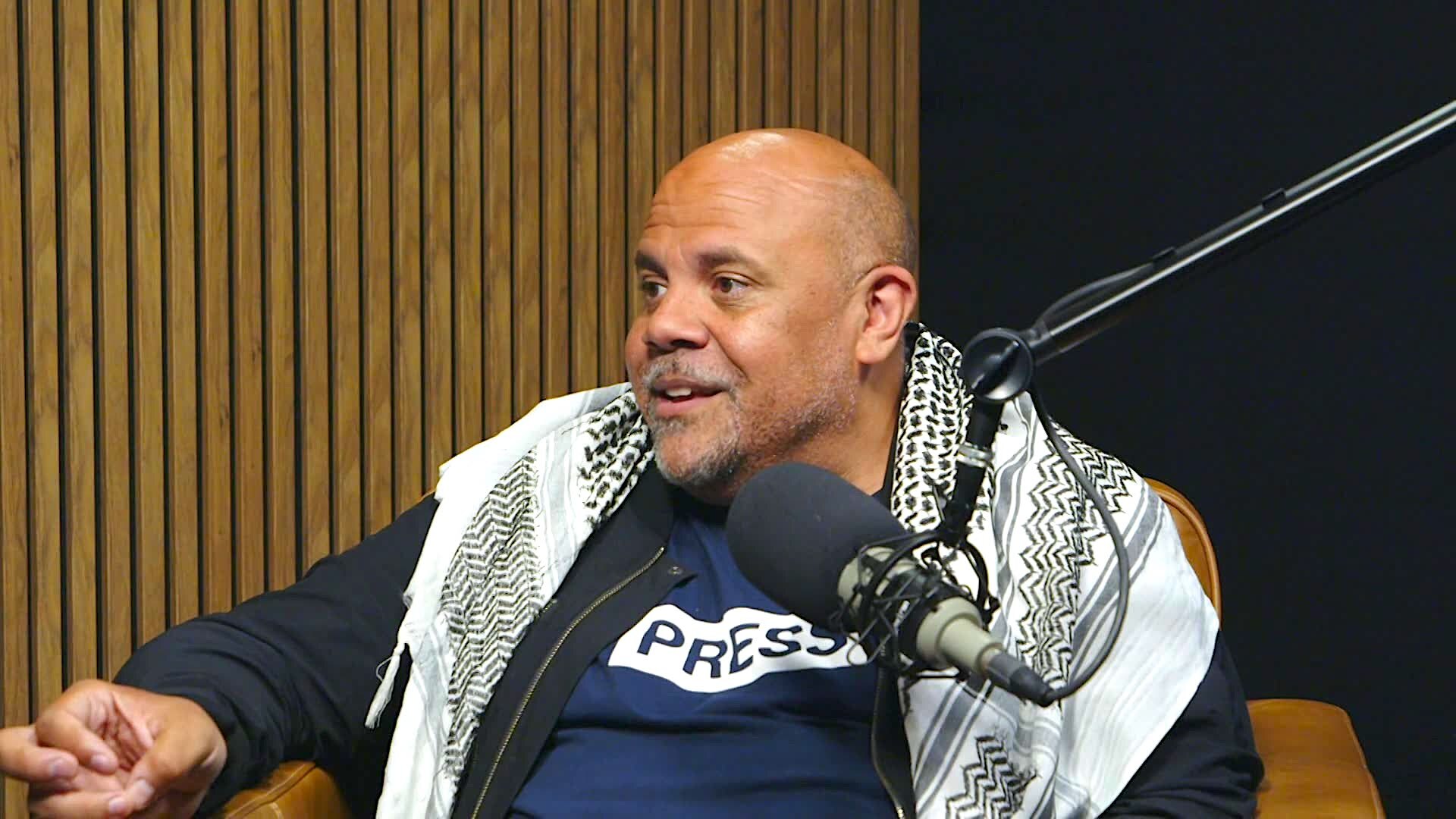
This episode features an extended conversation with Dr. Steven W. Thrasher about his new book, The Overseer Class: A Manifesto, and how patterns of control that emerged under slavery continue to shape policing, management, and institutions today. Thrasher also describes the consequences he faced after intervening to protect student protesters during a Palestine encampment at Northwestern University in 2024, including suspension from teaching and what he calls effective blacklisting from academia.
Guest
Steven W. Thrasher, PhD — author of The Overseer Class: A Manifesto and The Viral Underclass: The Human Toll When Inequality and Disease Collide. He holds the Daniel Renberg Chair for Social Justice in Reporting at Northwestern’s Medill School of Journalism and is affiliated with Northwestern’s Institute of Sexual and Gender Minority Health and Wellbeing. Thrasher is an internationally recognized scholar on race, gender, and infectious disease and has written for publications including The Guardian, The Atlantic, The New York Times, and Scientific American.
Production credits
Studio production / Post-production: David Hebden
Transcript note
A rushed transcript of the interview is available and may contain errors; it will be updated when possible.
Key points from the interview
– The Overseer Class — concept and scope
– Thrasher defines the “overseer class” as people who come from marginalized backgrounds but exercise coercive power on behalf of institutions or ruling interests: managers, certain police and corrections officers, and other intermediaries who enforce rules and maintain existing hierarchies.
– The book traces a historical lineage from plantation overseers to modern workplace and policing practices, arguing that techniques of control and incentives to police communities have been adapted across time and institutions.
– Class dynamics matter more than individual intent: even well-intentioned people can be compelled by structural incentives to act as overseers.
– Archetypes and examples
– Thrasher discusses several archetypes of people who occupy intermediary roles — from those who are tokenized and powerless to those who wield real coercive authority — and explains the psychological and social costs of those positions.
– He draws on cultural examples such as the TV series Severance to illustrate how supervisors can be positioned to observe, control, and manipulate workers’ private lives.
– He recounts visiting the Whitney Plantation to explain the physical and social realities of how plantation divisions were enforced, and how those methods inform later institutional control.
– Policing, corrections, and immigration enforcement
– Thrasher highlights how corrections and immigration enforcement hiring often target nonwhite applicants and how pay differentials make those roles more attractive than other public-service jobs, contributing to an overseer dynamic.
– He cites available demographic data showing a slim Latino majority among ICE agents, and notes how these roles can be appealing when other economic opportunities are limited.
– Workplaces, employee resource groups, and co-optation
– Employee resource groups and other internal diversity mechanisms can be co-opted or monitored by employers; Thrasher describes cases where organizers were fired or surveilled, sometimes by colleagues placed in intermediary roles.
– He notes corporate strategies to seed and manage dissent, including using overseers to disrupt unionization or other organizing.
– Higher education, the Palestine encampments, and blacklisting
– Thrasher recounts his experience at NYU and later Northwestern, describing moments when administrators warned him against public remarks on Israel and Palestine and when institutional power sought to limit speech.
– During the 2024 student encampment at Northwestern he stood between students and police, was beaten, and afterward faced public attacks — including his image being used in Congressional hearings — and institutional retaliation that led to suspension from teaching and difficulty finding work in academia.
– He frames university trustees, donors, and federal funding relationships as central to understanding how modern universities maintain ties to military and corporate interests; the encampments exposed these ties and helped erase the rhetorical border between campus and broader society.
– Personal reflections and recommendations
– Thrasher shares personal history — including early jobs and an application to NYPD years earlier — to explain how economic precarity can push people into overseer roles.
– He emphasizes the corrosive psychological effect of acting as an overseer and the way institutions gradually strip people of parts of themselves to make them complicit.
– The core practical takeaway he offers is the importance of naming the problem: recognizing and naming overseer dynamics is the first step to resisting them.
– He echoes a moral stance of being kind to people while targeting and challenging systemic harms: protect the vulnerable where possible, and work to change structures that incentivize cruelty.
– Thrasher expresses hope that the book provides language and solidarity to people who have been harmed by overseer dynamics and that it helps readers interrogate their own positions in institutions.
Closing
Thrasher’s book and the conversation aim to give readers and listeners a framework for identifying how intermediaries reproduce harm, to document his own experience confronting those dynamics in higher education, and to encourage collective responses that challenge institutional incentives rather than vilify individuals alone.
About The Real News Network
Independent · Nonprofit · Nonpartisan
TRNN describes itself as viewer-funded investigative journalism: “The journalism that refuses to be bought. Funded by people like you.” They emphasize fearless, fact-based reporting on stories they say corporate media ignores, with no paywalls, advertisers, or billionaire ownership.
Topics highlighted on TRNN
– Workers & Labor Rights
– U.S. Politics & Democracy
– Palestine & Global Justice
– Economic Inequality
– Media Accountability
Support and republication
TRNN is a 501(c)(3) nonprofit that accepts donations (monthly, one-time, yearly options) to support its work. The network states it is 100% viewer-supported with no corporate funding and more than 20 years of independent journalism. Their content may be republished under a Creative Commons license, subject to the license terms.
End of summary.
Leave a Reply
You must be logged in to post a comment.